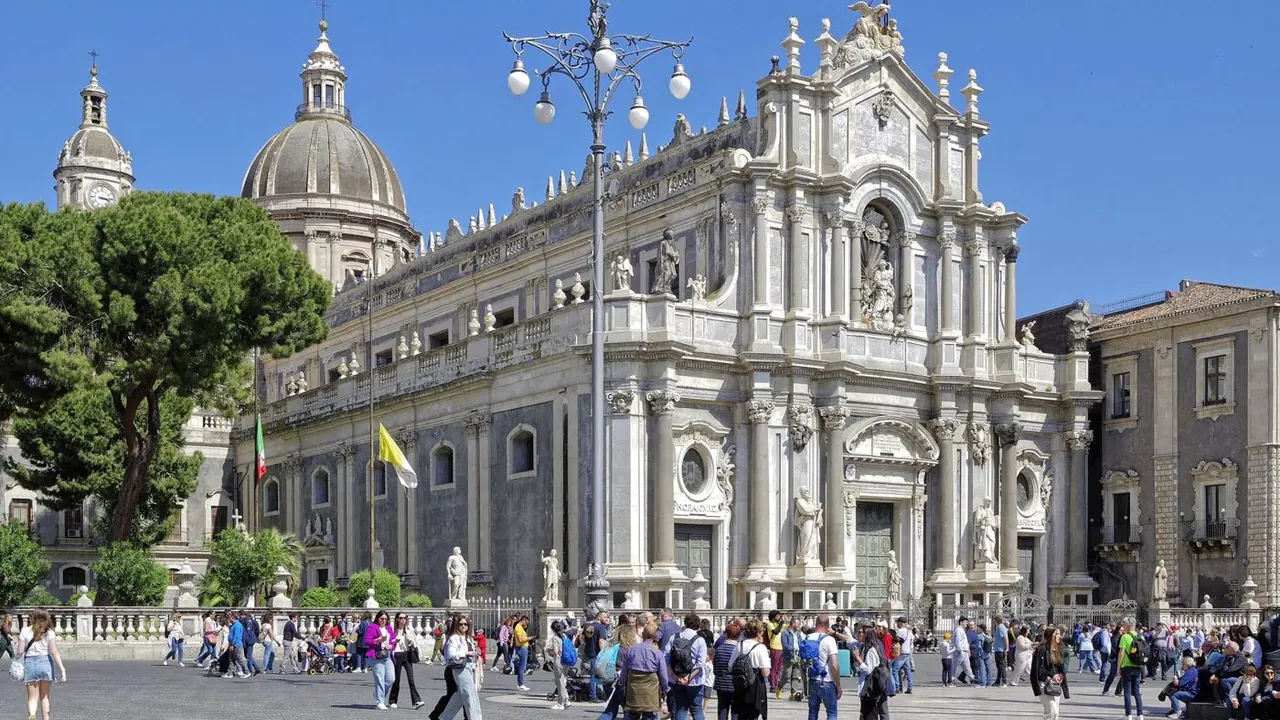
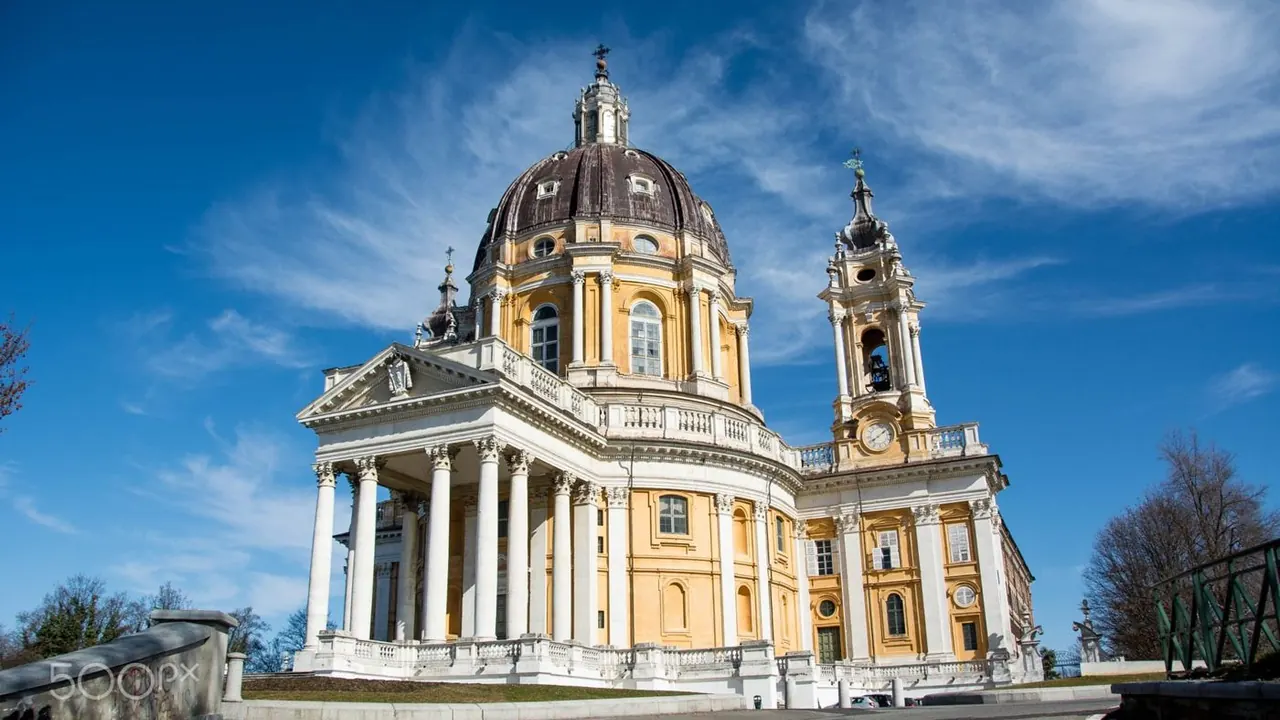
Photos: Catania by Berthold Werner, CC BY-SA 4.0, cropped; Turin by Konstantin Dacosta, CC BY 3.0, cropped.
Catania or Turin?
Our verdict in twelve categories, each scored against the same fixed benchmark cities, and the climate month by month, so you can choose for your trip.
Choose Catania for
- beaches
- nightlife
- nature and the outdoors
Catania is the choice for a warm-weather trip that mixes sea, volcano and street life. You can swim off the lava rocks of the Riviera dei Ciclopi in the morning, walk old craters on Etna in the afternoon and eat arancini in a late, loud old centre at night. Siracusa and Taormina sit within easy reach. The price is a city that is noisy, hot in summer and awkward to get around.
Choose Turin for
- getting around
- culture and sights
- shopping
Turin suits travellers who want a calmer, more polished city with serious museums, a full opera and concert season and some of Italy's most refined cooking. Its flat, arcaded centre is easy on foot in any weather, the Alps and the Langhe wine hills are close, and fast trains reach Milan. There is no sea, so it works best for culture, food and mountains rather than sun.
Scoreboard
Twelve categories on one fixed scale from 0 to 100. The shaded stretch is the gap between the two.
Your match
Pick a travel style or drag the sliders, and both match scores follow your weighting.
Too close to call, 1 point apart
Wins on beaches and nightlife with your weighting.
Wins on getting around and culture and sights with your weighting.
What matters to you?
Category by category
What the scores mean for a trip.
Beaches & swimming
This is the widest gap between the two cities. Catania has two kinds of coast on its doorstep. La Playa gives you broad, easy sand and beach clubs, and the Riviera dei Ciclopi gives you ladders down from black basalt into clear water beside the sea stacks. Isola Bella at Taormina is there for a prettier cove.
Turin has no beach at all. The Ligurian Riviera is close to two hours away, and in summer locals settle for lakes such as Avigliana or Lago Maggiore. If swimming matters to your trip, Turin can't really compete.
Food & drink
Both eat superbly, but in opposite registers. Catania's best food is casual and on the move: arancini and crispelle from the counters, granita with brioche at breakfast, grilled horse meat on Via Plebiscito, and fish fresh from La Pescheria. Etna's volcanic wines go with all of it.
Turin is a sit-down city of rich Piedmontese dishes such as agnolotti del plin, vitello tonnato and white truffles in autumn, with Barolo and Barbaresco on the list. It adds the aperitivo, gianduiotti and bicerin in arcaded cafés. Turin is thin on street food, and Catania is thin on fine dining.
Culture & sights
Turin has the deeper sightseeing. The Museo Egizio alone justifies a visit, and around it stand the Royal Palace, Palazzo Madama, the Galleria Sabauda, the Savoy residences out to Venaria, and strong contemporary art at Rivoli. The industrial story at Lingotto and the car museum adds a layer few Italian cities have.
Catania's appeal lies in the streets themselves: the lava-and-limestone baroque of Piazza del Duomo and Via dei Crociferi, the vast San Nicolò monastery, and Roman ruins showing through the modern city. Its museums are modest, though, and two or three days covers it, where Turin rewards a longer stay.
Nightlife
Catania is the livelier night out. Thanks to its big student population, the lanes around Piazza Bellini and the Teatro Massimo fill with people drinking outside until long after midnight, and in summer the beach clubs at La Playa become open-air dance floors. It is all young and informal, with little real club culture.
Turin's evenings revolve around the aperitivo, then wine bars in the Quadrilatero Romano, crowded pavements in San Salvario and the riverside Murazzi in summer. It has a few clubs in old industrial buildings, but the mood is sociable rather than late and loud.
Nature & outdoors
Both have big mountains close by, and they could hardly be more different. From Catania you are under an hour from an active volcano of about 3,300m, with lava flows, side craters, a cable car towards the summit and, further off, the wadeable Alcantara Gorge. The lava coast adds snorkelling and kayaking around the sea stacks.
From Turin you reach the Alps instead: ibex and high trails in the Gran Paradiso, hut-to-hut hiking, climbing, and proper ski resorts around Sestriere that are far bigger than Etna's small slopes. Turin has no sea for outdoor sport, and Catania has no glaciated range.
Day trips
From Catania the days out go back in time, while from Turin they head for wine country and other cities. Around Catania there is Ortigia and the Greek theatre at Siracusa, Taormina's theatre above the sea, the baroque towns of Noto, Modica and Ragusa Ibla, and the mosaics at Piazza Armerina. A hire car makes the circuit much easier.
From Turin, the Langhe hills around Alba and Barolo are an hour south and Milan is an hour away by fast train, with Genoa and Aosta further out. The Sacra di San Michele on its rock adds drama, and good rail links mean you need a car less often.
Good for families
Turin is the easier city with children. The flat grid and long arcades suit pushchairs in rain or sun, and the glass lift up through the Mole, the mummies at the Museo Egizio, Valentino park and the rack railway to Superga all make good outings. A zoo park sits out at Cumiana.
Catania is better on the beach than in town. The gently shelving sand at La Playa, a crater walk on Etna and Etnaland can fill a summer week. But narrow pavements, heavy traffic, little shade and few attractions for children make the city itself tiring.
Getting around
Turin is much simpler. You can walk its grid of streets and arcades from Porta Nuova through Piazza Castello to the Mole and the Po, a driverless metro runs to Lingotto, and the stations connect well with the rest of Italy. Trams take some learning, but you rarely need a car.
In Catania the walkable part stops at the compact core around Via Etnea and the Duomo. After that you face a single metro line, slow buses stuck in traffic and drivers who don't always stop for pedestrians. Most visitors end up hiring a car for Etna and the baroque towns, then struggle to park it.
Shopping & style
Turin offers more variety. The big fashion labels sit under the arcades of Via Roma, with high-street shops on Via Garibaldi, small boutiques around Via Lagrange, antique dealers on Via Maria Vittoria and the Balon flea market on Saturdays. Its chocolate makers and delicatessens are a reason to bring an empty bag.
Catania is mostly chain stores along Via Etnea, plus the noisy daily market of La Fiera. The best buys are edible, such as Bronte pistachio cream and Etna wine, along with Caltagirone ceramics.
Affordability
The two cost about the same overall, but they get expensive in different places. In Catania street food makes a cheap meal, but rooms go up in July and August, sunbeds add up, and guided summit trips on Etna and car hire are the big costs.
In Turin a generous aperitivo can stand in for dinner and the centre is walked for free, but hotels go up during trade fairs, and fine dining, truffle season and museum tickets are where the money goes.
Live music & performing arts
Turin has the fuller calendar. The Teatro Regio runs a complete opera and ballet season, and the RAI National Symphony Orchestra and the Lingotto auditorium add concerts. On top of that there are jazz clubs and long-running festivals, though spoken theatre is in Italian.
Catania has the more unusual offering. As Bellini's birthplace it has the grand Teatro Massimo Bellini, small companies still perform the Sicilian marionette theatre of knights and Saracens, and in summer there are concerts in ancient theatres. Beyond that, a few evenings will cover it.
Wellness & relaxation
Neither city has its own bathing culture, but Turin is the calmer place to slow down. You can take long coffee breaks in historic cafés, stroll under the arcades and along the Po, and spend quiet afternoons in Valentino park. Thermal waters at Acqui Terme or in the Aosta valley are close to two hours away.
Catania is noisy and full of traffic, and its spas are mostly in coastal and Etna hotels. Long lunches and the evening passeggiata help, but anyone after real rest is better off in the villages on the volcano.
When should you go?
Pick your month. The climate figures are measured averages, not a forecast.
Catania in July
Turin in July
Daytime high, °C
Rainfall in the month, mm
Where the figures come from
Catania's sunshine is measured 88 km from the centre, at Messina.
Turin has no rain gauge within 25 km of the centre, so its rainfall comes from a gridded climate dataset read at the city rather than from a gauge further away.
Temperature and rainfall are climate normals, averaged over the years shown. Catania: 1991-2020 normals, Catania / Fontanarossa (5.2 km from centre). Turin: 1991-2020 normals, Torino / Caselle (15.4 km from centre).
Catania is a warm, sunny southern city. The sea is comfortable for swimming from June into October and is warmest in August, at around 26°C. July and August are hard work for sightseeing, with afternoons near 32°C and almost no rain, so walk the streets in the morning and evening. May is the best time for the baroque centre and for Etna: warm, dry and bright, though the sea is still too cool for most swimmers. Late September and October still have warm water, but the rain is back by then, with about 51mm in October, and winter is the wettest season, though mild enough for walking.
Turin is cooler and wetter, with a real winter. January highs of around 7°C suit the cafés and the ski slopes more than long walks outdoors. Rain falls all year, heavier in late spring and heaviest in autumn, peaking in November at about 88mm. June is the most comfortable month for walking the city and hiking in the Alps. September is also mild, although the autumn rain starts then, and in midsummer the plain gets warm and sticky. Catania is at its best in late spring and early autumn, and Turin in early summer.
Which traveller are you?
On a beach and sun trip, Catania is the clear pick. It has a long sandy beach south of the centre and clear water off the lava platforms at Aci Trezza, while Turin is inland and the nearest sea is a long day out.
For a culture and arts trip, Turin offers far more. The Museo Egizio, the Savoy palaces, the Cinema Museum in the Mole and a full season at the Teatro Regio outweigh Catania's handsome baroque streets and modest museums.
On a food and nightlife trip, Catania has the livelier evenings. Street food runs from tavola calda counters to the horse-meat grills of Via Plebiscito, and the crowds around Piazza Bellini stay out late, against Turin's more measured aperitivo-and-wine-bar nights.
Before you go
| Measure | Catania | Turin |
|---|---|---|
| Official language | Italian | Italian |
| Currency | Euro (EUR) | Euro (EUR) |
| Sockets | CFL230 V, 50 Hz | CFL230 V, 50 Hz |
| Driving side | Right | Right |
| Time zone | UTC+1, UTC+2 in summer | UTC+1, UTC+2 in summer |
| Emergency number | 112 | 112 |
| Elevation | 7 m | 239 m |
| Main airport | Catania-Fontanarossa Airport (CTA)4 km from centre96 non-stop destinations | Turin Airport (TRN)14 km from centre65 non-stop destinations |
| Public holidays this year | 13 days | 13 days |
By the numbers
| Measure | Catania | Turin |
|---|---|---|
| City population | 311,584 | 841,600 |
| People per km² | 1,704 | 6,474 |
| Museums within 10 km | 25 | 72 |
| UNESCO World Heritage sites within 50 km | 3 | 4 |
| Swim season, months above 21 °C | 5 months | - |
Where else could you go?
Every comparison below shares a destination with this one, so you can follow Catania or Turin somewhere new.