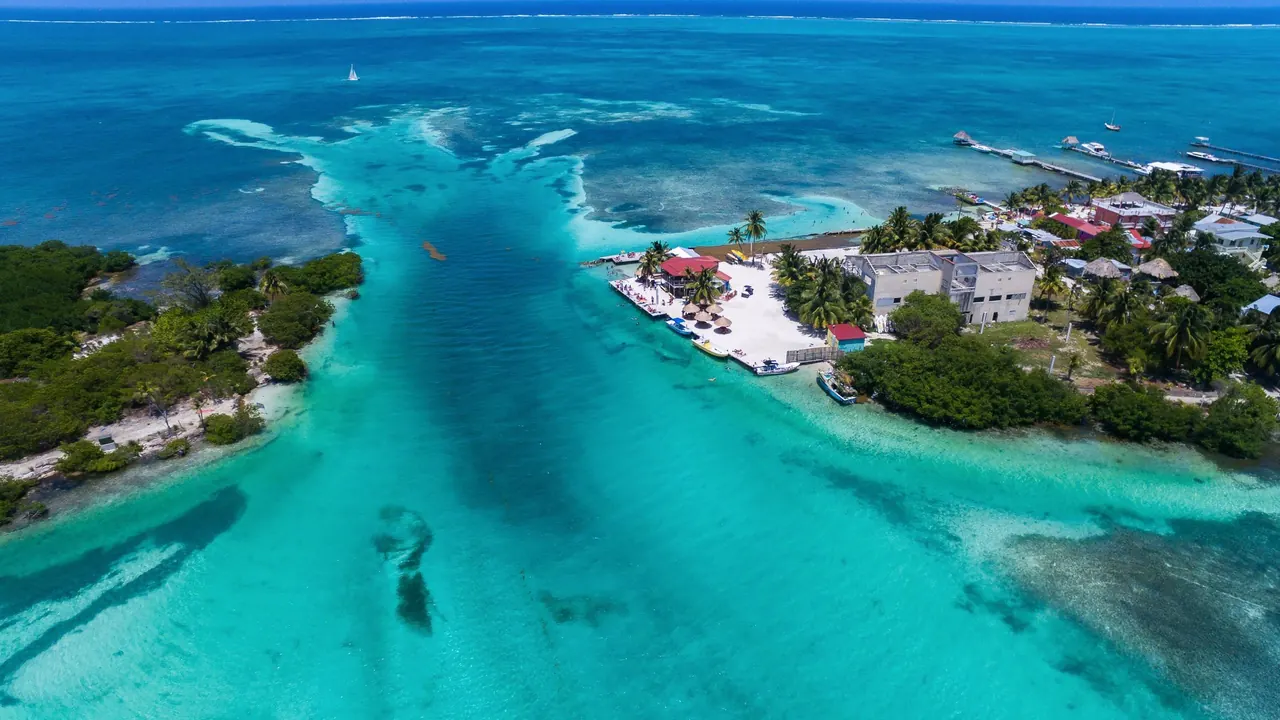
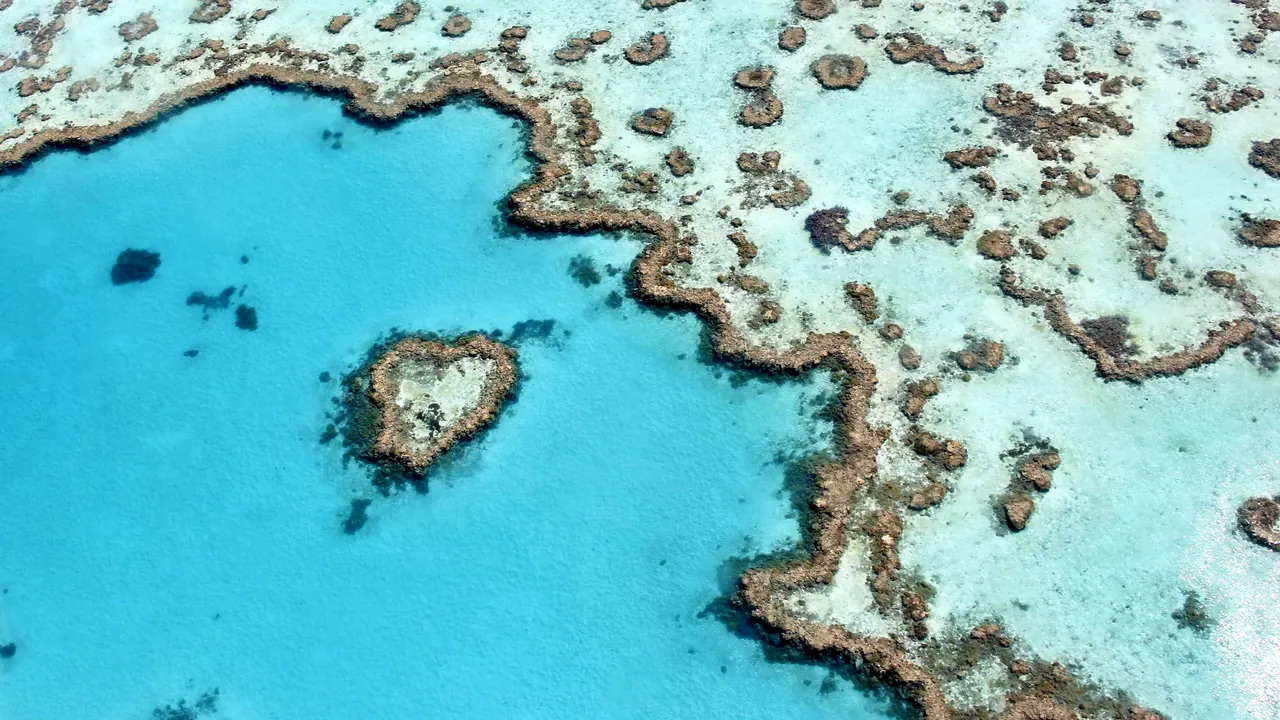
Photos: Caye Caulker by dronepicr, CC BY 2.0, cropped; Great Barrier Reef by Ayanadak123, CC BY-SA 4.0, cropped.
Caye Caulker or Great Barrier Reef?
Our verdict in twelve categories, each scored against the same fixed benchmark cities, and the climate month by month, so you can choose for your trip.
Choose Caye Caulker for
- getting around
- prices
Caye Caulker suits travellers who want a reef vacation with no planning and few moving parts. You stay in one small car-free village, walk to the dock each morning and snorkel with rays and nurse sharks before lunch. It costs less, and it asks nothing of you beyond a hammock and a boat ticket. The price is a thin beach, simple food and almost nothing to do once you are out of the water.
Choose Great Barrier Reef for
- families
- nature and the outdoors
- beaches
The Great Barrier Reef is the bigger trip in every way, and the better choice for anyone who wants the reef at its grandest and something else beside it. You get white island beaches in the Whitsundays, the Daintree rainforest running down to the coast, and pontoons where even non-swimming children can see the coral. In return it costs more and the distances are long, so you either pick one base or fly between hubs.
Scoreboard
Twelve categories on one fixed scale from 0 to 100. The shaded stretch is the gap between the two.
Your match
Pick a travel style or drag the sliders, and both match scores follow your weighting.
Wins on getting around and prices with your weighting.
Wins on families and nature and the outdoors with your weighting.
What matters to you?
Category by category
What the scores mean for a trip.
Beaches & swimming
Caye Caulker's sea is lovely but its shore is not. Most of the edge is seagrass and coral rubble, so you swim off wooden docks or at the Split, the channel left by Hurricane Hattie, and the proper sand is on the uninhabited cayes the snorkel boats visit.
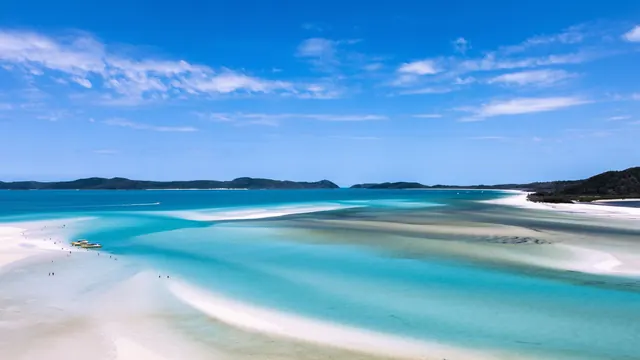
The Great Barrier Reef has the beaches Caye Caulker lacks: Whitehaven's silica sand, the turquoise swirls of Hill Inlet and the palm-lined Four Mile Beach at Port Douglas. The catch is stingers from about November to May and crocodiles in mainland creeks, so beach days work best on the islands and in the dry months.
Food & drink
Caye Caulker's one real meal is grilled lobster on Front Street, caught that day and at its best in season. Around it there are Creole fry jacks, rice and beans and tamales from carts, and the choice starts to repeat after a few days.
Queensland's coast goes further. It has coral trout, barramundi and mud crab, tropical fruit from the farms, Cairns' weekend produce market and Asian kitchens along the Esplanade. Port Douglas has proper restaurants, and the Tablelands add coffee, cheese and rum for an afternoon inland.
Culture & sights
Neither is a sightseeing destination, but the Great Barrier Reef gives a curious traveller more. Townsville's Museum of Tropical Queensland tells the HMS Pandora story, and Cairns has a gallery of Indigenous and Torres Strait Islander art. Best of all are the walks led by Aboriginal Traditional Owners at Mossman Gorge and in the Daintree.
On Caye Caulker the culture is the village itself, with its stilt houses and fishing families of Creole and Mestizo heritage. For Maya ruins you have to take a boat to the mainland.
Nightlife
Both are backpacker scenes rather than proper nightlife, but Queensland has more of it. Airlie Beach's strip of loud bars fills with crews off the sailing trips, and Cairns has pubs, beer gardens and a few clubs that stay open late.
Caye Caulker's night begins with rum punch at the Split at sunset and drifts to reggae bars on Front Street. It is friendly and barefoot, there are no clubs, and the island is mostly asleep before midnight.
Nature & outdoors
Both are first-rate reef destinations. Caye Caulker gives easy access to Hol Chan and Shark Ray Alley, with manatees in the seagrass, long dive days to the Great Blue Hole and a steady trade wind for kitesurfing. All of it sits a short boat ride from your bed.
The Great Barrier Reef works on a different scale. It has the outer reef and the Ribbon Reefs, liveaboards, and islands like Lady Elliot where the reef starts at the sand. The land matters as much as the sea: the Daintree meets the coast at Cape Tribulation, cassowaries and tree kangaroos live in the forest, and the Tablelands have crater lakes. Caye Caulker has nothing to match that on land.
Day trips
From Caye Caulker, almost every outing is another reef trip. The alternatives are San Pedro on Ambergris Caye, Belize City with Altun Ha behind it, or a long day of boats and roads to Lamanai.
Queensland gives you more variety on dry land. You can ride the scenic railway or cableway up to Kuranda, drive the coast road to Mossman, tour the dairies and distilleries around Yungaburra, or take the ferry to Magnetic Island. It still runs short of towns and heritage for a second week.
Good for families
The Great Barrier Reef is the much easier family trip. Pontoons with viewing chambers and glass-bottom boats show the coral to children who cannot swim, and there are wildlife parks at Kuranda, Cairns' lifeguarded lagoon and kids' clubs at the Whitsunday resorts. You still have to manage seasickness on the crossings and stinger suits in summer.
Caye Caulker's charm for families is the absence of cars and the slow pace. Confident young swimmers will be thrilled by the rays, but toddlers have little sand, the current at the Split and sandflies at dusk.
Getting around
Once you arrive, Caye Caulker takes no effort at all. The village is a few flat sand streets you can walk or cycle, and the dive boats leave from the front. The work is all in reaching it and leaving it: a water taxi or small plane from Belize City, and another boat for any outing.
The Great Barrier Reef is a long coast. Marinas in Cairns, Port Douglas and Airlie Beach make a short stay without a car possible, but the rainforest and Tablelands need a hire car. Combining the north with the Whitsundays usually means a flight.
Shopping & style
Shopping is no reason to visit either, though Queensland has a little more. The thing worth taking home is Aboriginal and Torres Strait Islander art from community-owned galleries, and there are also Kuranda's craft markets and Port Douglas boutiques.
Caye Caulker has gift stalls, sarongs and carved wood along Front Street and small grocery stores, so it is best to pack everything you need.
Affordability
Caye Caulker is the cheaper trip of the two, although it is still expensive by Central American standards. Hostels, guesthouses and the Front Street grills keep the basics modest, but anything that comes over by boat costs more.
On the Great Barrier Reef, meals are at full Australian prices and the Whitsunday island resorts are very expensive. Cairns and Airlie Beach are the cheaper bases. In both places most of the money goes on the water, on boat trips, diving and scenic flights.
Live music & performing arts
Queensland has at least a little to plan an evening around. Townsville holds a respected chamber music festival each winter, and Cairns has a regional performing arts centre with touring shows. Traditional Indigenous performance mostly appears as a short demonstration on a cultural tour.
On Caye Caulker, live music means a reggae band at a beach bar or drumming at the Split, whenever you happen to come across it.
Wellness & relaxation
For a rest with some comfort, the Great Barrier Reef has the edge. Port Douglas has resort spas that use rainforest botanicals, the Daintree has eco-lodges, and on the small islands the day runs to the tides. Cairns and Airlie Beach are too taken up with tours to rest in.
On Caye Caulker the whole island does the relaxing for you. It is a "go slow" village of hammocks and docks with no traffic. Beyond that there are only a few small massage rooms and yoga classes on the waterfront.
When should you go?
Pick your month. The climate figures are measured averages, not a forecast.
Caye Caulker in July
Great Barrier Reef in July
Daytime high, °C
Rainfall in the month, mm
Where the figures come from
Caye Caulker's temperatures are measured 38 km from the centre, at Belize / Phillip Goldston Intl. Airport.
Caye Caulker has no rain gauge within 25 km of the centre, so its rainfall comes from a gridded climate dataset read at the destination rather than from a gauge further away.
Great Barrier Reef has no rain gauge within 25 km of the centre, so its rainfall comes from a gridded climate dataset read at the destination rather than from a gauge further away.
Temperature and rainfall are climate normals, averaged over the years shown. Caye Caulker: 1991-2020 normals, Belize / Phillip Goldston Intl. Airport (37.8 km from centre). Great Barrier Reef: 1993-2010 (rainfall 1991-2020) normals, Green Island Aws (1.1 km from centre).
The two seasons run almost opposite ways. On Caye Caulker the driest stretch is February to April, and March and April also bring the longest sunny days, with the sea already warm. From May the days stay hot, around 32°C, and the rains build through summer to a peak in October, which makes autumn the riskiest time to go. The sea stays warm enough to swim in every month.
On the Great Barrier Reef, measured around the northern mainland hubs, the best time is June to October. Rain almost stops and the water is at its clearest. The air is a mild 24°C in midwinter and warms to about 30°C by October, while the sea cools to around 24°C. From December to March heavy tropical downpours set in, over 500mm in February, and the stinger season makes swimming in suits or nets the norm. So Belize suits an escape from the northern late winter, and Queensland fits a northern summer.
Which traveller are you?
On a trip on a tight budget, Caye Caulker is the easier one to afford. Its hostels, street grills and short walk to the snorkel boats keep the basics within reach, while Queensland charges full Australian prices for meals, rooms and every reef day.
On a family trip with children, the Great Barrier Reef is far better set up. Reef pontoons have roped swimming areas and underwater viewing chambers, Cairns has its lagoon pool, and Magnetic Island has koalas and wallabies. Caye Caulker offers little for children too young to snorkel confidently.
For an outdoors trip, the Great Barrier Reef wins clearly. It adds outer reef walls, liveaboards and whale encounters to the Daintree rainforest, Whitsunday sailing and the Hinchinbrook wilderness walk. Caye Caulker is superb in the water but flat scrub on land.
Before you go
| Measure | Caye Caulker | Great Barrier Reef |
|---|---|---|
| Official language | English | English |
| Currency | Belize Dollar (BZD) | Australian Dollar (AUD) |
| Sockets | ABG60 Hz | I230 V, 50 Hz |
| Driving side | Right | Left |
| Time zone | UTC-6 | UTC+10 |
| Emergency number | 911 | 000 |
| Main airport | Philip S. W. Goldson International Airport (BZE)29 non-stop destinations | Cairns International Airport (CNS)32 non-stop destinations |
| Public holidays this year | 14 days | 11 days |
By the numbers
| Measure | Caye Caulker | Great Barrier Reef |
|---|---|---|
| Population | 2,729 | - |
| People per km² | 700 | - |
| Swim season, months above 21 °C | 12 months | 12 months |
Where else could you go?
Every comparison below shares a destination with this one, so you can follow Caye Caulker or Great Barrier Reef somewhere new.
- Ambergris Cayevs Caye Caulker
- Roatánvs Caye Caulker
- Cozumelvs Caye Caulker
- Riviera Mayavs Caye Caulker
- Yucatanvs Caye Caulker
- Isla Mujeresvs Caye Caulker