Australia
Great Barrier Reef
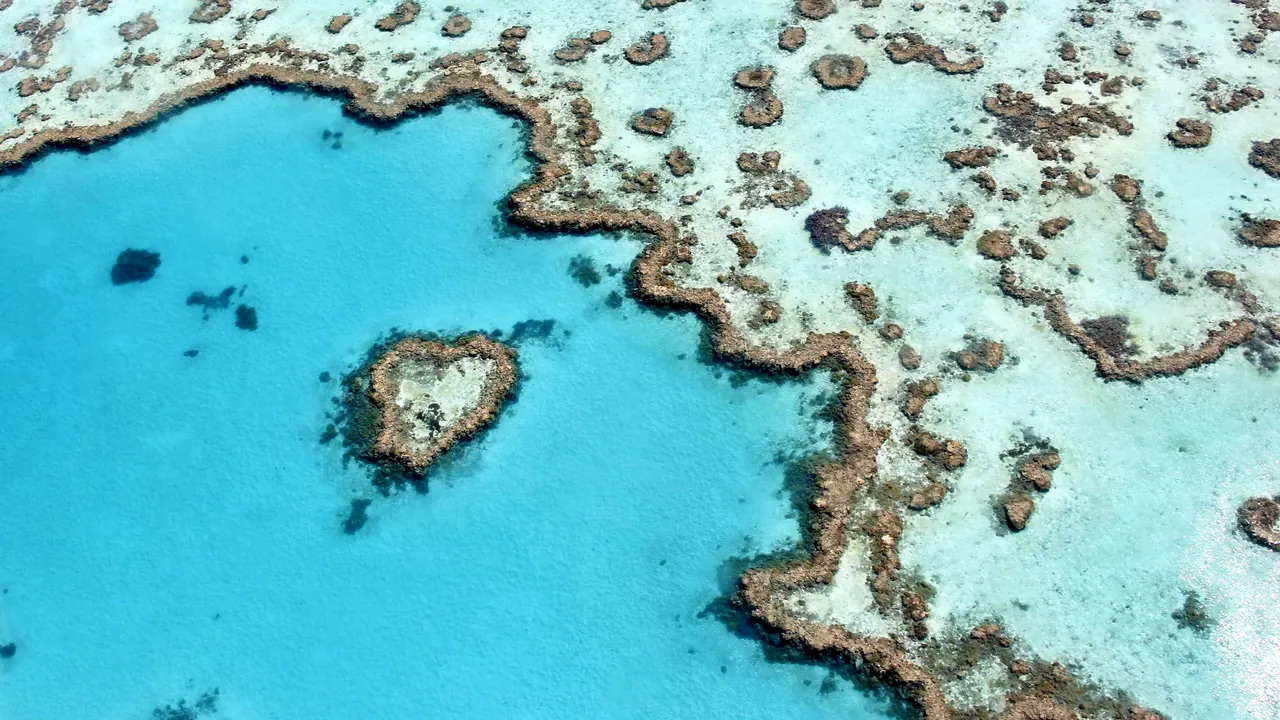
Heart Reef in the Great Barrier Reef off the Whitsundays
- Nature & outdoors98
- Beaches78
- Families62
Photo: Ayanadak123, CC BY-SA 4.0, cropped
Match
46
Every category weighted equally
- Beach & sun52
- Culture & arts37
- Food & nightlife38
- Family trip52
- Outdoors55
- Relax & unwind52
- Shopping & style39
- On a budget44
Great Barrier Reef in twelve categories
Our verdict on each, scored 0 to 100 against the same fixed benchmark cities, so a score means the same thing on every page.
Beaches & swimming. Scores 78 out of 100.
Food & drink. Scores 42 out of 100.
Culture & sights. Scores 20 out of 100.
Nightlife. Scores 38 out of 100.
Nature & outdoors. Scores 98 out of 100.
Day trips. Scores 42 out of 100.
Good for families. Scores 62 out of 100.
Getting around. Scores 40 out of 100.
Shopping & style. Scores 25 out of 100.
Affordability. Scores 30 out of 100.
Live music & performing arts. Scores 22 out of 100.
Wellness & relaxation. Scores 52 out of 100.
Great Barrier Reef category by category
Beaches & swimming
78The great beaches are on the islands, and you should stay there if beaches are the point of the trip. In the Whitsundays, Whitehaven Beach has fine white silica sand and Hill Inlet has swirling turquoise shallows. You reach both by boat from Airlie Beach or from the resort islands, and the smaller island coves have coral a few strokes offshore. Further north, Green and Fitzroy islands are a short ferry ride from Cairns. Port Douglas has the long, palm-lined Four Mile Beach. Cairns itself faces mudflats, not sand.
The sea is warm all year, from about 23°C in winter to 29°C in summer, but two hazards shape how you swim. From roughly November to May, box jellyfish and Irukandji drift inshore, so people wear stinger suits or swim inside netted enclosures. Saltwater crocodiles live in mainland estuaries and creeks, so follow the signs. The easiest swimming months are June to October.
Food & drink
42Most eating here is relaxed and outdoors. The real local strengths are the produce: coral trout, barramundi, mud crab and prawns from local waters, plus mangoes, lychees and odd tropical fruit from the farms inland. Cairns has a big produce market at weekends and a long strip of casual seafood places and Asian kitchens along the Esplanade.
Port Douglas has the most polished dining, with a run of good restaurants on its main street. The Atherton Tablelands grow coffee and make cheese and rum, which gives an afternoon up in the hills some interest. Outside these places the choice is pub meals, resort buffets and whatever comes on the reef boat. It is pleasant eating, but there is not much depth.
Culture & sights
20People come here for the sea, not for sights. Cairns and Townsville are young, practical towns with a few weatherboard and art deco buildings. Townsville's Museum of Tropical Queensland tells the story of the wreck of HMS Pandora, and Cairns has a good regional art gallery that focuses on Indigenous and Torres Strait Islander art. The most rewarding cultural experiences are guided walks and talks led by the region's Aboriginal Traditional Owners, especially around the Daintree and Mossman Gorge, which explain the land and sea in a way that adds real depth to a trip. Away from these there are war memorials, sugar-town main streets and very little else.
Nightlife
38Nights out here mostly mean the backpacker scene. Airlie Beach's main street has a run of loud bars that fill with young travellers coming off sailing trips, and Cairns has a cluster of pubs, beer gardens and a few late clubs near the Esplanade that stay busy through the dry season. Port Douglas is more about cocktails and dinner, and Magnetic Island has the occasional beach party. The island resorts and smaller coastal towns are quiet by ten, partly because reef boats leave early. If you like a big, mixed night out, there is not much here beyond a few rowdy evenings.
Nature & outdoors
98This is the world's largest coral reef system, and it is reason enough to cross the world. From Cairns and Port Douglas, fast boats go out to the outer reef and to Agincourt and the Ribbon Reefs, where the coral walls, giant clams, turtles, reef sharks and huge shoals of fish suit snorkellers and divers of every level. Liveaboard trips go deeper, and Lady Elliot and Heron islands in the far south let you walk straight off the sand onto the reef. Minke whales pass near the northern reefs in winter, and turtles nest on the southern islands in summer.
The land is just as remarkable. The Daintree rainforest meets the reef at Cape Tribulation, and cassowaries, tree kangaroos and crocodiles live in its forests and rivers. The Whitsundays are ideal for sailing and sea kayaking, Hinchinbrook Island has one of the country's great wilderness walks, and the Tablelands behind Cairns are full of waterfalls and crater lakes. The dry months from June to October are clearest and calmest.
Day trips
42From Cairns, the classic day out climbs the range by the old scenic railway or by cableway to Kuranda, a village of markets and craft stalls in the rainforest. The coast road north to Port Douglas and the old sugar town of Mossman is a good drive, and the Atherton Tablelands have small towns such as Yungaburra, with dairy farms, coffee plantations and distilleries to visit. Green and Fitzroy islands are easy by ferry. From Townsville, Magnetic Island is twenty minutes across the water, and from Airlie Beach you can hop between the Whitsunday islands. Most other outings are to the reef and rainforest rather than to towns, and there are no heritage sites to fill a second week.
Good for families
62For children old enough to snorkel, this is an unforgettable trip. Outer-reef pontoons have roped swimming areas, underwater viewing chambers and semi-submersible or glass-bottom boats, so even non-swimmers can see the coral. Cairns has a lifeguarded saltwater lagoon pool on the Esplanade and a reef aquarium. Kuranda has wildlife parks and a butterfly house, and on Magnetic Island children can spot koalas in the trees and feed rock wallabies at the bays. The Whitsunday island resorts have kids' clubs and calm water.
There are real drawbacks. Reef trips mean long days and open-water crossings that can make children seasick. In summer, small children need stinger suits, and mainland creeks and beaches come with crocodile warnings. The trip works best with children over about six, in the dry season, from a single base.
Getting around
40The reef is long, so choose one base and go out from it. In Cairns, Port Douglas and Airlie Beach, reef boats and island ferries leave daily from central marinas, and many tour operators collect you from your hotel. You can do a short stay without a car. The rainforest, the Tablelands and the quieter coast are best by hire car, on good but winding roads. The distances between the main hubs are long: Cairns to Airlie Beach is a full day's drive, and the southern islands are reached from separate airports. Most visitors who want both the northern reef and the Whitsundays fly between them.
Shopping & style
25Shopping here is casual. Cairns has an evening market of souvenir stalls and massage chairs, and a big weekend produce market. Kuranda's markets sell crafts, leather and local honey, and Port Douglas has a short main street of resort-wear boutiques and galleries. The thing most worth buying is Aboriginal and Torres Strait Islander art, which is best bought from community-owned galleries and art centres. Beyond that it is surf shops, swimwear and shopping centres.
Affordability
30This is an expensive trip. The reef itself costs the most: every reef day means a boat, and diving, liveaboards, seaplane flights and island stays add up fast. Sleeping on the islands, especially the exclusive resorts of the Whitsundays and the far north, is very expensive. Cairns and Airlie Beach are cheaper bases, with plenty of hostels, motels and self-catering apartments that suit backpackers and families. Eating out is at full Australian prices. The dry season from June to October is when prices are highest and rooms are hardest to find.
Live music & performing arts
22There is not much live performance here. Townsville hosts a well-regarded chamber music festival each winter, and Cairns has a regional performing arts centre with touring shows and local companies. The Indigenous dance festivals of Cape York and the Torres Strait are remarkable but rare, and most visitors' only taste of traditional performance is a short demonstration on a cultural tour. On most nights the live music is a cover band in a pub.
Wellness & relaxation
52There is no bathing tradition here, but this is a good place to slow down. The best places to rest are the small island resorts, where days are set by the tides and the reef boat. Port Douglas has a cluster of resort spas using rainforest botanicals, and there are quiet eco-lodges and retreats in the Daintree and on the Tablelands. Cairns and Airlie Beach are busier and built around tours, so they are more for doing than resting. For a restful stay, choose a small island or a lodge in the forest.
Where to stay in Great Barrier Reef
For a first visit, most people stay in the north. Cairns is the practical base: reef boats and island ferries leave daily from the central marina, there are plenty of hostels, motels and self-catering apartments, and the lagoon pool on the Esplanade makes it easy with children or on a budget. The town faces mudflats rather than sand, so it suits doing more than lazing. Port Douglas, about an hour's drive north, suits couples and food lovers. It has Four Mile Beach, the region's best restaurants and quick access to the outer reef and the Daintree.
The Whitsundays are the choice for beach days and sailing. Airlie Beach is the cheaper mainland base, with a loud backpacker bar scene and boats out to Whitehaven Beach and Hill Inlet. The island resorts are quieter and very expensive, with calm water and kids' clubs for families. Cairns is a full day's drive away, so if you want both areas, fly between them, or save the Whitsundays for a second trip.
For a quiet stay, pick an eco-lodge in the Daintree or on the Atherton Tablelands, best with a hire car, or one of the far southern islands, Lady Elliot or Heron, where the reef starts at the edge of the sand.
When should you go?
Pick a month to see what it is like. The climate figures are measured averages, not a forecast.
Great Barrier Reef in July
Daytime high, °C
Rainfall in the month, mm
The whole year
Shaded against this destination’s own year: the deepest cell is its best month for that figure and the palest its weakest.
Where the figures come from
Great Barrier Reef has no rain gauge within 25 km of the centre, so its rainfall comes from a gridded climate dataset read at the destination rather than from a gauge further away.
Temperature and rainfall are climate normals, averaged over the years shown. Great Barrier Reef: 1993-2010 (rainfall 1991-2020) normals, Green Island Aws (1.1 km from centre).
Before you go
| Measure | Great Barrier Reef |
|---|---|
| Official language | English |
| Currency | Australian Dollar (AUD) |
| Sockets | I230 V, 50 Hz |
| Driving side | Left |
| Time zone | UTC+10 |
| Emergency number | 000 |
| Main airport | Cairns International Airport (CNS)32 non-stop destinations |
| Public holidays this year | 11 days |
By the numbers
| Measure | Great Barrier Reef |
|---|---|
| Swim season, months above 21 °C | 12 months |
Compare Great Barrier Reef with
Every comparison with a written verdict behind it.