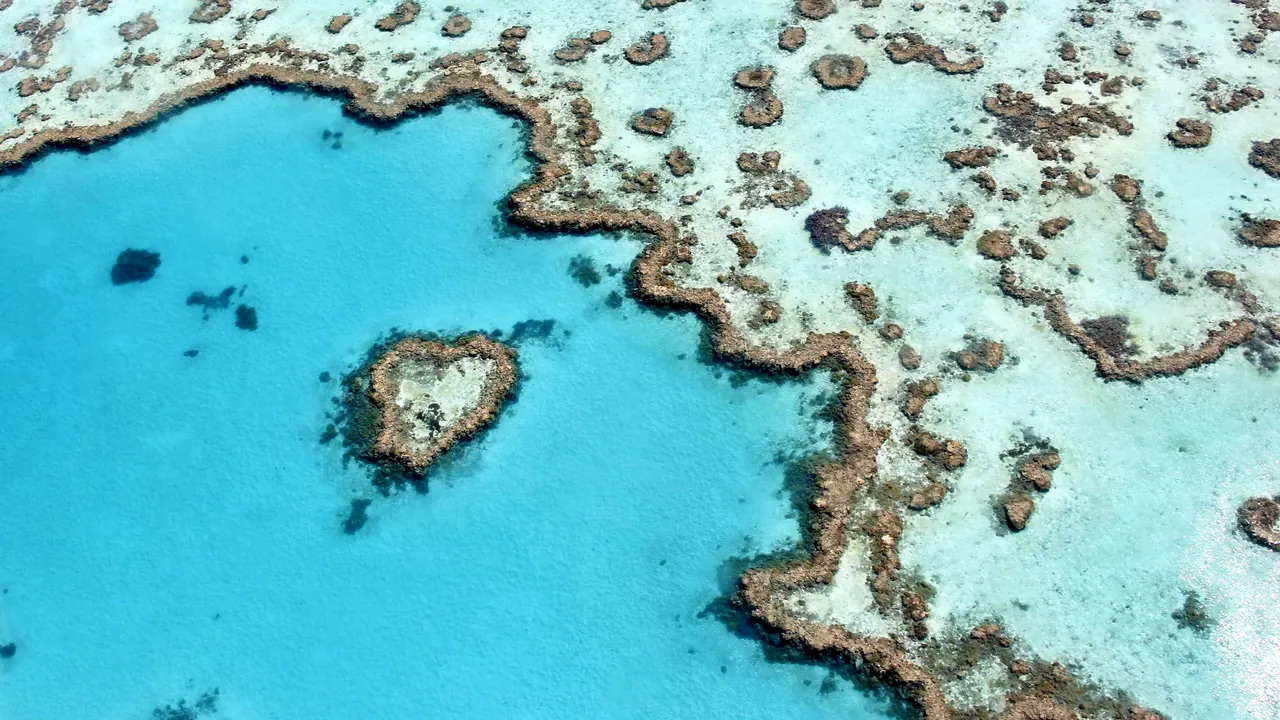
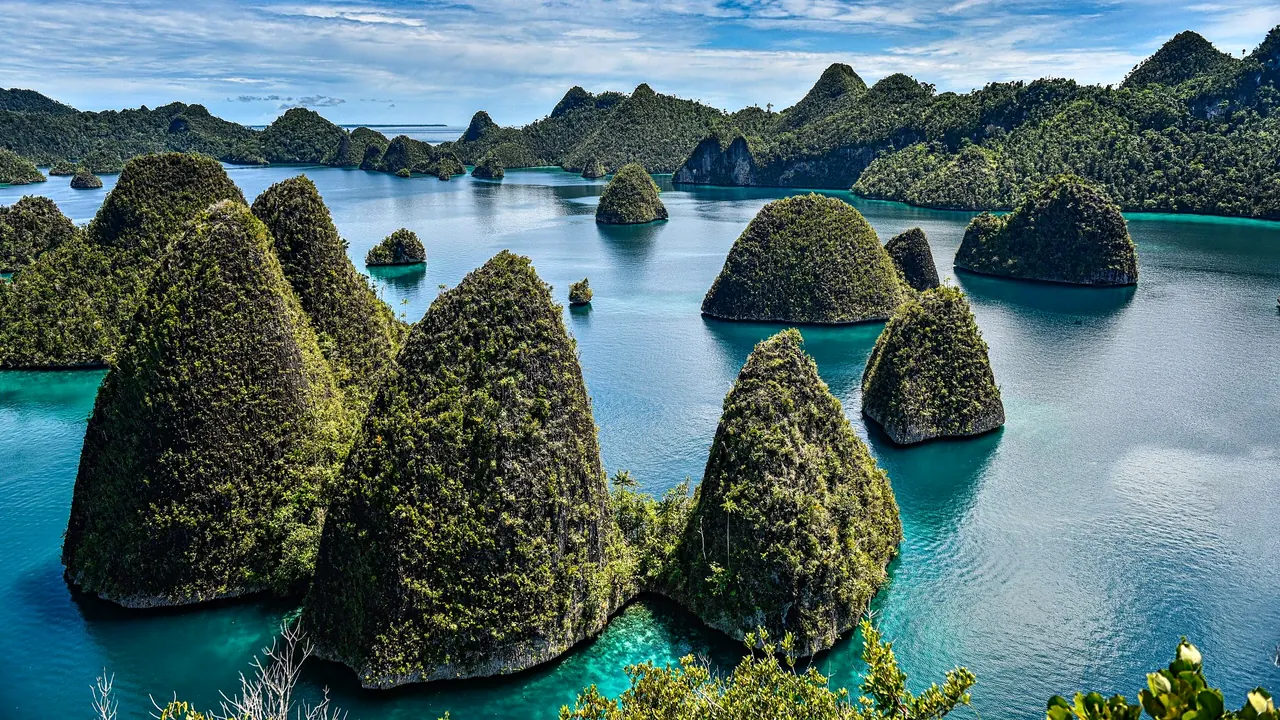
Photos: Great Barrier Reef by Ayanadak123, CC BY-SA 4.0, cropped; Raja Ampat by Rolandandika, CC BY-SA 4.0, cropped.
Great Barrier Reef or Raja Ampat?
Our verdict in twelve categories, each scored against the same fixed benchmark cities, and the climate month by month, so you can choose for your trip.
Choose Great Barrier Reef for
- families
- nightlife
- day trips
The Great Barrier Reef suits travellers who want world-class reef without giving up comfort or variety. You can snorkel an outer-reef pontoon one day, walk in the Daintree the next and eat well in Port Douglas that evening. It is the clear choice for families, for first-time snorkellers and for anyone who wants restaurants, a few bars and an easy base to come back to.
Choose Raja Ampat for
- prices
- beaches
Raja Ampat is for people who will put up with a long journey and simple living to be among the richest reefs on earth. You sleep in a wooden homestay a few steps from the coral and spend your days on speedboats between karst islets. Evenings are early and there is little else to do. Choose it if diving or snorkelling is the whole trip and you want to feel far from everywhere.
Scoreboard
Twelve categories on one fixed scale from 0 to 100. The shaded stretch is the gap between the two.
Your match
Pick a travel style or drag the sliders, and both match scores follow your weighting.
Wins on families and nightlife with your weighting.
Wins on prices and beaches with your weighting.
What matters to you?
Category by category
What the scores mean for a trip.
Beaches & swimming
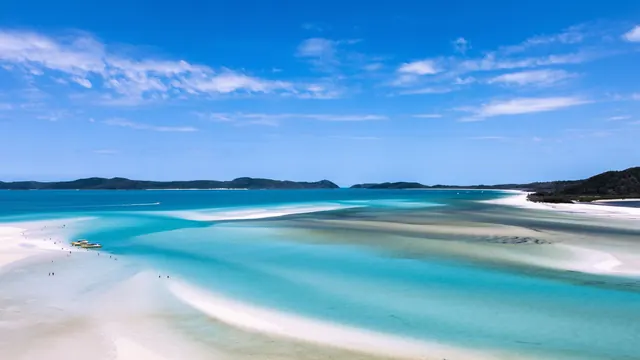
The two are broadly level for swimming, but the beaches are very different. The Great Barrier Reef has proper postcard sand: Whitehaven's white silica beach in the Whitsundays and the long, palm-lined Four Mile Beach at Port Douglas. You need a boat or an island stay for the best of it, because Cairns faces mudflats, and from November to May the stinger season means suits or netted enclosures.
Raja Ampat's beaches are short strips of coral sand outside homestays on Kri, Gam and Arborek, and you can wade straight onto the reef from them. They are made for snorkelling, not for walking the shore or lounging, and there are no beach bars.
Food & drink
The Australian reef eats far better. Coral trout, mud crab and barramundi come from local waters, the Esplanade in Cairns is lined with casual seafood and Asian kitchens, and Port Douglas has a run of good restaurants. Up on the Atherton Tablelands you can try local coffee, cheese and rum.
In Raja Ampat you eat whatever the homestay cooks: rice, that morning's fish, greens, sambal and sometimes sago papeda, much the same each day. It is fresh and filling, but bring snacks and coffee if they matter to you.
Culture & sights
Neither is a trip for sights, and both are thin on them. On the Great Barrier Reef the most rewarding culture is a guided walk with Aboriginal Traditional Owners around Mossman Gorge and the Daintree. Townsville's museum on the wreck of HMS Pandora and the Cairns gallery of Indigenous art also give a rainy afternoon some purpose.
Raja Ampat has no museums at all. What you see instead is Papuan village life in the stilt villages of Arborek and Sawinggrai, with their wooden churches, plus the ochre hand paintings on the cliffs around Misool, which you view from a boat.
Nightlife
The Great Barrier Reef at least has a night out. Airlie Beach's main street fills with young sailors and backpackers, Cairns has pubs, beer gardens and a few late clubs near the Esplanade, and Port Douglas goes in for cocktails over dinner.
Raja Ampat has nothing of the kind. Evenings end on the homestay deck under a very dark sky, alcohol is scarce, and most people are asleep early for the morning boats.
Nature & outdoors
Both are among the world's great marine destinations, and the difference is in kind. The Great Barrier Reef gives you more variety. Its outer reefs and Ribbon Reefs sit beside the Daintree rainforest, where cassowaries and tree kangaroos live, and there is sailing in the Whitsundays, Hinchinbrook's wilderness walk and minke whales in winter.
Raja Ampat packs more life into each dive. At the heart of the Coral Triangle, sites such as Cape Kri and Blue Magic draw mantas, wobbegongs and huge schools of fish, and even the homestay jetty is rewarding. Above water there are the karst lagoons of Wayag and Piaynemo, and birds of paradise display at dawn on Waigeo.
Day trips
The Australian reef has more on land to fill spare days. From Cairns, the scenic railway or the cableway climbs to Kuranda's rainforest markets. You can also drive up to Port Douglas and Mossman, tour the dairy and coffee country around Yungaburra, or cross to Magnetic Island from Townsville.
In Raja Ampat almost every outing is a boat trip to a reef or a viewpoint. Arborek's handicraft jetty and the small town of Waisai are about the only places to visit, and Sorong is not worth a special trip.
Good for families
With children, the Great Barrier Reef is much the better choice. Outer-reef pontoons have roped swimming areas and underwater viewing chambers, so non-swimmers can see the coral too, and the island resorts have kids' clubs. Long boat days, seasickness and stinger suits in summer still make it best for children over about six.
Raja Ampat asks a lot of a family. The journey is long, the huts have shared bathrooms, there is malaria, and serious medical care is a boat ride and a flight away. Only older children who swim confidently will get the jetty snorkelling adventure out of it.
Getting around
On the Great Barrier Reef you can manage with one base. Reef boats leave daily from central marinas in Cairns, Port Douglas and Airlie Beach, many pick you up from your hotel, and a hire car opens up the Daintree and Tablelands. The hubs are far apart, though, so most people who want the Whitsundays as well as the north fly between them.
Raja Ampat takes much more effort. You fly to Sorong, take a ferry of about two hours to Waisai and then a boat to your homestay. Every outing after that is a speedboat. Wayag is hours away, Misool is a separate trip, and rough seas in the middle of the year can cancel crossings.
Shopping & style
Neither is a shopping trip, but the Australian reef gives you a little more. In Cairns and the Port Douglas galleries, Aboriginal and Torres Strait Islander art from community-owned centres is the thing worth buying, and Kuranda's markets sell crafts and local honey.
In Raja Ampat you buy straight from the maker: pandanus hats and bags woven with a manta ray on Arborek, and noken string bags. Beyond that there are only basic supplies, so bring sunscreen, medicines and cash from Sorong.
Affordability
Neither is cheap, but Raja Ampat can cost less if you stay in one place. A family homestay on Kri or Gam with meals included is modest, and snorkelling from the jetty is free. The costs are in permits, flights to Sorong, speedboat charters to Wayag and diving, which is pricier here than elsewhere in Indonesia.
On the Great Barrier Reef, every reef day means a paid boat, meals are at full Australian prices, and the island resorts are very expensive. Hostels and apartments in Cairns or Airlie Beach soften the bill, but not by much in the dry season.
Live music & performing arts
The Australian reef clearly has more live performance, even if it is no arts destination. Townsville holds a well-regarded chamber music festival each winter, and the regional performing arts centre in Cairns puts on touring shows and local companies. On most other nights the music is a cover band in a pub.
Raja Ampat has no theatres, concerts or music venues at all. Anything you hear comes by chance, such as a Papuan welcome with tifa drums and feathered dancers on a village jetty, or Sunday hymns drifting across the water from a wooden church. They can be very moving, but you cannot plan a trip around them.
Wellness & relaxation
The Great Barrier Reef is the better choice if your rest should come with some comfort. You can stay at a small island resort where the tides set the pace, book a treatment at one of the Port Douglas spas that use rainforest botanicals, or go to an eco-lodge in the Daintree or on the Tablelands. Cairns and Airlie Beach are built more around tours than rest.
Raja Ampat offers a plainer kind of rest. There is no traffic and often no phone signal, you can spend the afternoon in a hammock over the water, and the evenings end early. Treatments are limited to the odd massage at an upmarket resort, and the homestays are simple rather than pampering.
When should you go?
Pick your month. The climate figures are measured averages, not a forecast.
Great Barrier Reef in July
Raja Ampat in July
Daytime high, °C
Rainfall in the month, mm
Where the figures come from
Great Barrier Reef has no rain gauge within 25 km of the centre, so its rainfall comes from a gridded climate dataset read at the destination rather than from a gauge further away.
Raja Ampat's temperatures are measured 65 km from the centre, at Sorong / Jefman.
Raja Ampat has no rain gauge within 25 km of the centre, so its rainfall comes from a gridded climate dataset read at the destination rather than from a gauge further away.
Temperature and rainfall are climate normals, averaged over the years shown. Great Barrier Reef: 1993-2010 (rainfall 1991-2020) normals, Green Island Aws (1.1 km from centre). Raja Ampat: 1996-2020 (rainfall 1991-2020) normals, Sorong / Jefman (65 km from centre).
The two run on almost opposite calendars. Around Cairns, where the Great Barrier Reef's figures are measured, the best months are the dry ones from June to October. Days are warm rather than hot at about 24°C in mid-year, rain is light, the water is at its calmest and clearest, and the stinger season is over. From December to March it turns hot and very wet, with more than 500mm of rain in February, and box jellyfish mean stinger suits. The sea is warm enough to swim in all year and only a little cooler in winter.
Raja Ampat is hot every month, with highs around 32°C and the sea near 30°C, so there is no cooler season for walking or swimming. Rain falls all year and is heaviest from May to July, peaking at about 338mm in June, and the southeast wind from June to September can roughen the seas and cancel crossings. October to April brings calmer water and lighter rain, so its best months overlap with the Australian reef's wet season.
Which traveller are you?
On a family trip with children, the Great Barrier Reef is much easier. Pontoons with viewing chambers, glass-bottom boats, the Cairns lagoon pool and koalas on Magnetic Island give children plenty to do. Raja Ampat's basic huts, malaria and distant medical care make it hard going.
For a food and nightlife trip, the Great Barrier Reef wins easily. Port Douglas has proper restaurants, Cairns lines its Esplanade with seafood and Asian kitchens, and Airlie Beach has lively bars. In Raja Ampat you eat set homestay meals and alcohol is hard to find.
On a trip on a tight budget, Raja Ampat can work out slightly kinder if you stay put. A family homestay with meals is modest, and the jetty snorkelling costs nothing. On the Australian reef every reef day means a paid boat, and meals cost full Australian prices.
Before you go
| Measure | Great Barrier Reef | Raja Ampat |
|---|---|---|
| Official language | English | Indonesian |
| Currency | Australian Dollar (AUD) | Rupiah (IDR) |
| Sockets | I230 V, 50 Hz | CF50 Hz |
| Driving side | Left | Left |
| Time zone | UTC+10 | UTC+9 |
| Emergency number | 000 | 112 |
| Main airport | Cairns International Airport (CNS)32 non-stop destinations | Domine Eduard Osok Airport (SOQ)10 non-stop destinations |
| Public holidays this year | 11 days | - |
By the numbers
| Measure | Great Barrier Reef | Raja Ampat |
|---|---|---|
| Swim season, months above 21 °C | 12 months | 12 months |
Where else could you go?
Every comparison below shares a destination with this one, so you can follow Great Barrier Reef or Raja Ampat somewhere new.
- Floresvs Raja Ampat
- Palawanvs Raja Ampat
- Gili Islandsvs Raja Ampat
- Balivs Raja Ampat
- Borneovs Raja Ampat
- Balivs Great Barrier Reef