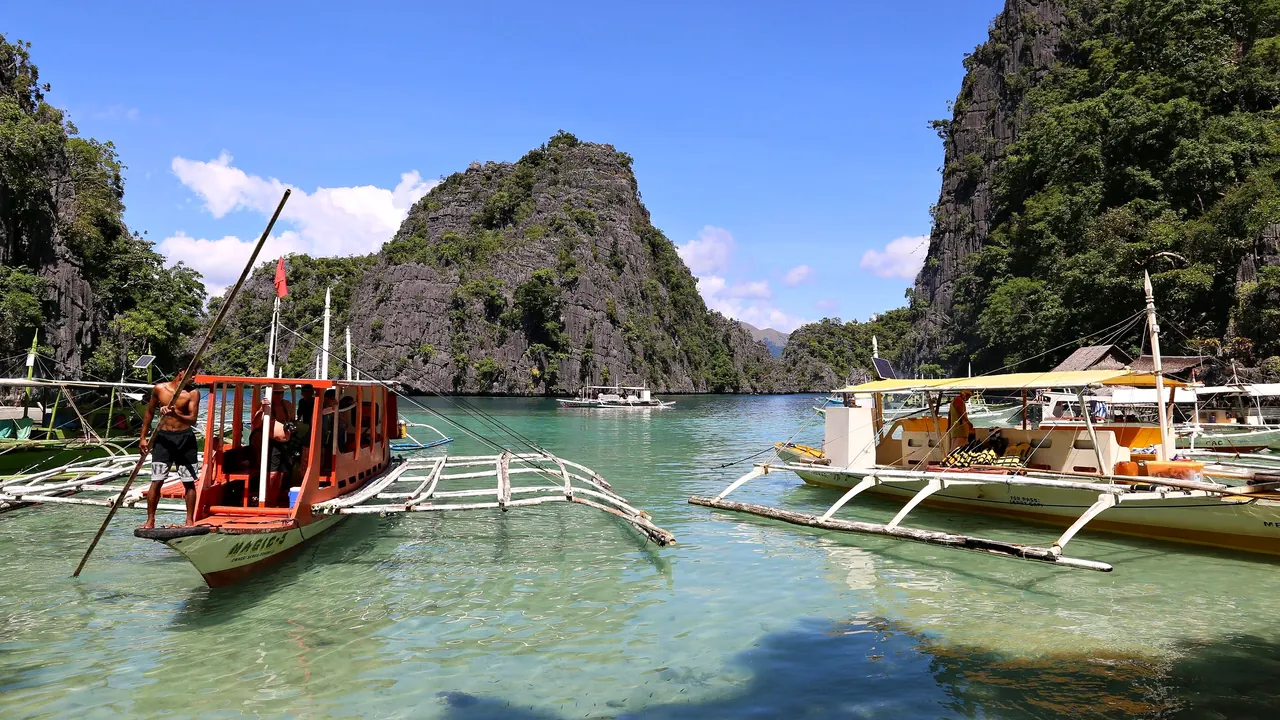
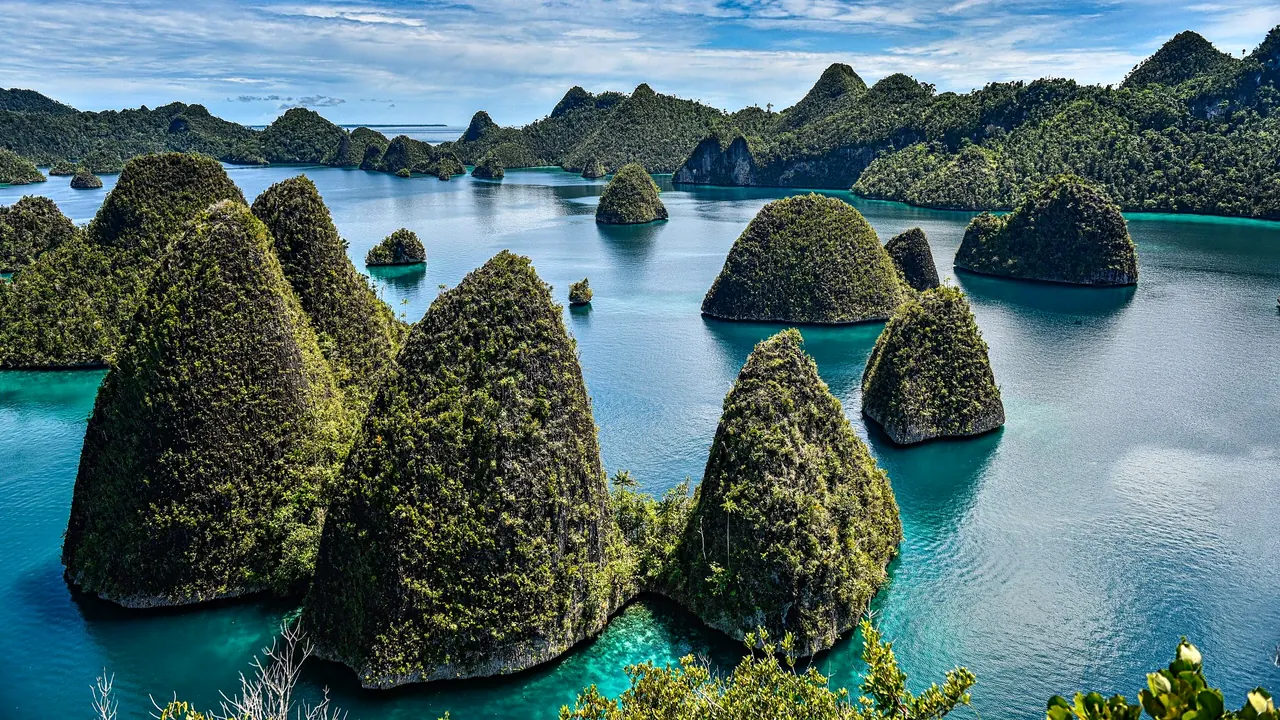
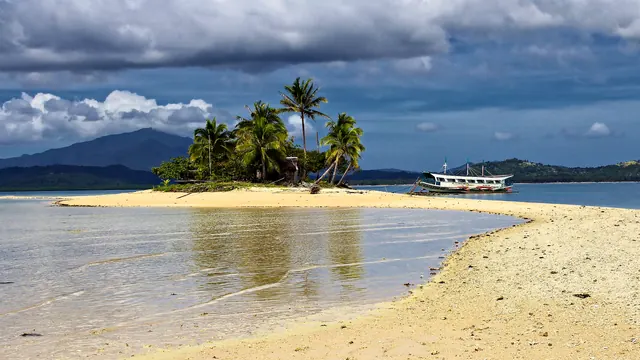
Photos: Palawan by Sailko, CC BY 3.0, cropped; Raja Ampat by Rolandandika, CC BY-SA 4.0, cropped.
Palawan or Raja Ampat?
Our verdict in twelve categories, each scored against the same fixed benchmark cities, and the climate month by month, so you can choose for your trip.
Choose Palawan for
- nightlife
- prices
- families
Palawan is the easier and more rounded island trip. It has better beaches, from the open sand of Nacpan to the hidden coves of Bacuit Bay, and a real social life in El Nido. Food has more variety, there are proper spas and a hot spring, and the costs are kinder. It suits couples, friends and families with older children who want limestone scenery and boat days without giving up comfort.
Choose Raja Ampat for
- nature and the outdoors
Raja Ampat asks more of you and gives back something rarer: some of the richest reefs on earth, mantas and birds of paradise, and a deep quiet with no bars, no traffic and often no signal. It is the choice for divers, keen snorkellers and travellers who are happy with simple homestays, set meals and long boat transfers in return for wild water.
Scoreboard
Twelve categories on one fixed scale from 0 to 100. The shaded stretch is the gap between the two.
Your match
Pick a travel style or drag the sliders, and both match scores follow your weighting.
Wins on nightlife and prices with your weighting.
Wins on nature and the outdoors with your weighting.
What matters to you?
Category by category
What the scores mean for a trip.
Beaches & swimming
Both have the same warm, clear water, but Palawan has more and better sand to lie on. There are long, open beaches at Nacpan and Duli, white coves tucked between the islands of Bacuit Bay and the quiet sweep of San Vicente, though most of it is reached by banca rather than on foot.
Raja Ampat's beaches are short strips of coral sand in front of the homestays on Kri, Gam and Arborek, with sandbars between the karst islands. The shallows are often live reef, so you spend the day snorkelling straight off the beach rather than walking or lounging on it.
Food & drink
Neither is a trip for food, but Palawan gives you choices. You can eat grilled fish and squid on island-hopping days, chao long and the dare of raw tamilok in Puerto Princesa, and pizza or adobo in El Nido and Coron.
In Raja Ampat you eat what the homestay serves, usually rice, fish caught that morning, greens, sambal and sometimes papeda, three times a day. It is fresh and filling but barely changes, alcohol is hard to find, and it pays to bring your own snacks and coffee.
Culture & sights
Both are thin on sights, and the difference is in kind. Palawan's heritage is history: the Tabon Caves, Plaza Cuartel's wartime memory in Puerto Princesa, Culion's leper-colony museum and modest Spanish forts at Taytay and Cuyo. Raja Ampat's is living Papuan village life on stilt villages like Arborek and Sawinggrai, plus ochre hand paintings on the cliffs of Misool, seen from a boat.
Nightlife
Palawan has a modest night out, almost all of it in El Nido: reggae and acoustic bars, cheap rum and dry-season beach parties for a backpacker crowd, with a few quieter spots in Coron.
Raja Ampat has nothing of the kind. Evenings mean talking over the day's dives on a homestay deck under a dark sky, and many villages discourage alcohol altogether.
Nature & outdoors
Both are among the great island landscapes of Asia, and the difference lies in what you go for. Palawan is about limestone above the water and history below it: Bacuit Bay's lagoons by kayak, the cliff-ringed lakes and Japanese wrecks at Coron, and the Underground River near Puerto Princesa.
Raja Ampat is about life in the water. Its reefs sit at the heart of the Coral Triangle, with mantas at Blue Magic and reef sharks in the Dampier Strait, and even the homestay jetty is good for snorkelling. On land there are the viewpoints over Wayag and Piaynemo and birds of paradise displaying in the forests of Waigeo.
Day trips
In both, an outing nearly always means a boat to a reef or lagoon rather than a trip to another town. Palawan has slightly more on land, with the old fort at Taytay a couple of hours' drive from El Nido, though most people move between bases instead. Raja Ampat's options are the stilt villages of Arborek and Sawinggrai, a stop in Waisai or the rock paintings if you are staying near Misool.
Good for families
Palawan is the more manageable choice with children. Resorts near El Nido and on the islands of Bacuit Bay are easy places to stay, Honda Bay and the crocodile centre near Puerto Princesa add a little variety, and there is a hospital within reach in Puerto Princesa.
Raja Ampat is for confident older swimmers only. It means basic huts with shared bathrooms, a malaria area and serious medical care a boat ride and a flight away. The reward is turtles and reef fish right off the jetty.
Getting around
Both are slow, but Palawan at least has a road. Vans run for five to six hours from Puerto Princesa to El Nido, a ferry or a flight reaches Coron, and tricycles and scooters cover short hops. The small airport near El Nido cuts the journey.
Raja Ampat has no roads that matter. It is a flight to Sorong, a ferry to Waisai and then a speedboat arranged by your homestay for every outing. Wayag is hours away and Misool is a separate journey, which is why many divers choose a liveaboard instead.
Shopping & style
Shopping plays almost no part in either, though Palawan has a little more. Puerto Princesa has markets for cashews, woven baskets and South Sea pearls. In Raja Ampat it comes down to the pandanus hats and bags woven on Arborek and Papuan noken string bags, bought straight from the family that made them.
Affordability
Palawan is noticeably cheaper to travel in. Shared vans, group boat tours and simple guesthouses keep daily costs low, and only El Nido in the dry season, the private-island resorts and the lagoon fees push them up.
In Raja Ampat a homestay with meals is reasonable, but the remoteness adds cost on every side: the marine park permit, flights to Sorong, speedboat charters to Wayag or Piaynemo, and diving priced above the rest of Indonesia.
Live music & performing arts
Neither has theatres or concerts, but the music you might meet differs. Palawan offers cover bands in El Nido bars and folk dance at Puerto Princesa's festivals. In Raja Ampat it is unplanned and more affecting: tifa drums and dancers welcoming a boat to a village, and Sunday hymns drifting across the water from the wooden churches.
Wellness & relaxation
Palawan has more ways to unwind. There is the warm, mangrove-edged pool at Maquinit near Coron, cheap hilot massage in every town, and full spas at the private-island resorts. For slow days, go to Port Barton rather than noisy El Nido.
Raja Ampat offers little pampering beyond the odd massage at an upmarket resort. Its rest comes from the stillness: no traffic, often no phone signal, and days run by the tides from a hammock over the water.
When should you go?
Pick your month. The climate figures are measured averages, not a forecast.
Palawan in July
Raja Ampat in July
Daytime high, °C
Rainfall in the month, mm
Where the figures come from
Palawan has no weather station within reach, so its figures come from a gridded climate model rather than a measured record, and read a broad area rather than one spot.
Raja Ampat's temperatures are measured 65 km from the centre, at Sorong / Jefman.
Raja Ampat has no rain gauge within 25 km of the centre, so its rainfall comes from a gridded climate dataset read at the destination rather than from a gauge further away.
Temperature and rainfall are climate normals, averaged over the years shown. Palawan: 2001-2020 normals, NASA POWER reanalysis grid, no weather station within 90 km. Raja Ampat: 1996-2020 (rainfall 1991-2020) normals, Sorong / Jefman (65 km from centre).
Palawan has a clear dry season. February to April is the driest stretch, with as little as 34mm of rain in February, calm, glassy water and the most reliable boat days, and January is nearly as good. Rain builds from May, and from June to October each month brings around 200mm, with choppy seas that can cancel crossings. It eases only gradually through November and December. Days stay warm and humid all year, but never as hot as in Raja Ampat.
Raja Ampat is hotter, with highs around 32°C, so midday climbs to the viewpoints are hard work. It is also wet in every month, with no true dry season to plan around. October and November are the least rainy, down to 161mm in November, and the seas are calmest from October to April. The wettest spell runs from May to July and peaks at 338mm. From June to September the southeast wind roughens the crossings too, especially around Misool. The sea is warm enough to swim all year in both, but for dry days, Palawan from February to April is far more dependable than any month in Raja Ampat.
Which traveller are you?
For a food and nightlife trip, Palawan is the only real option. El Nido has a strip of bars, sunset drinks at Las Cabanas and the odd beach party, and Puerto Princesa has chao long. Raja Ampat offers set homestay meals and early nights.
On a trip on a tight budget, Palawan stretches the money further. Shared vans, group island-hopping tours and cheap guesthouses keep costs low. In Raja Ampat, park permits, flights to Sorong and speedboat charters push up the cost of even a simple homestay stay.
On an outdoors trip built around reefs and wildlife, Raja Ampat has the edge. The Dampier Strait's coral, manta cleaning stations and birds of paradise at dawn are rare anywhere. Palawan's draws are different: wreck dives at Coron, karst lagoons and the Underground River.
Before you go
| Measure | Palawan | Raja Ampat |
|---|---|---|
| Official language | English, Filipino, Taglish | Indonesian |
| Currency | Philippine Peso (PHP) | Rupiah (IDR) |
| Sockets | ABC220 V, 60 Hz | CF50 Hz |
| Driving side | Right | Left |
| Time zone | UTC+8 | UTC+9 |
| Emergency number | 911 | 112 |
| Main airport | Puerto Princesa International Airport / PAF Antonio Bautista Air Base (PPS)5 non-stop destinations | Domine Eduard Osok Airport (SOQ)10 non-stop destinations |
| Public holidays this year | 18 days | - |
By the numbers
| Measure | Palawan | Raja Ampat |
|---|---|---|
| Population | 968,795 | - |
| People per km² | 66 | - |
| Swim season, months above 21 °C | 12 months | 12 months |
Where else could you go?
Every comparison below shares a destination with this one, so you can follow Palawan or Raja Ampat somewhere new.
- Boracayvs Palawan
- Sabahvs Palawan
- Boholvs Palawan
- Cebu Islandvs Palawan
- Siargaovs Palawan
- Floresvs Raja Ampat