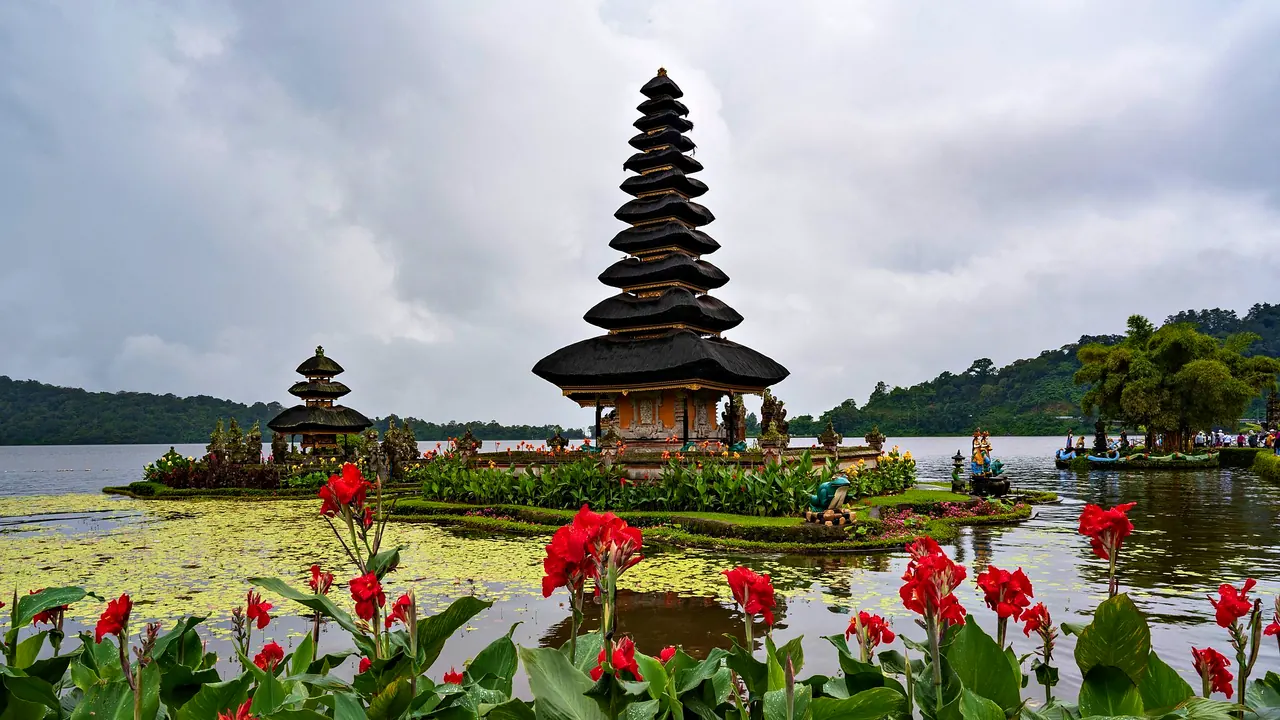
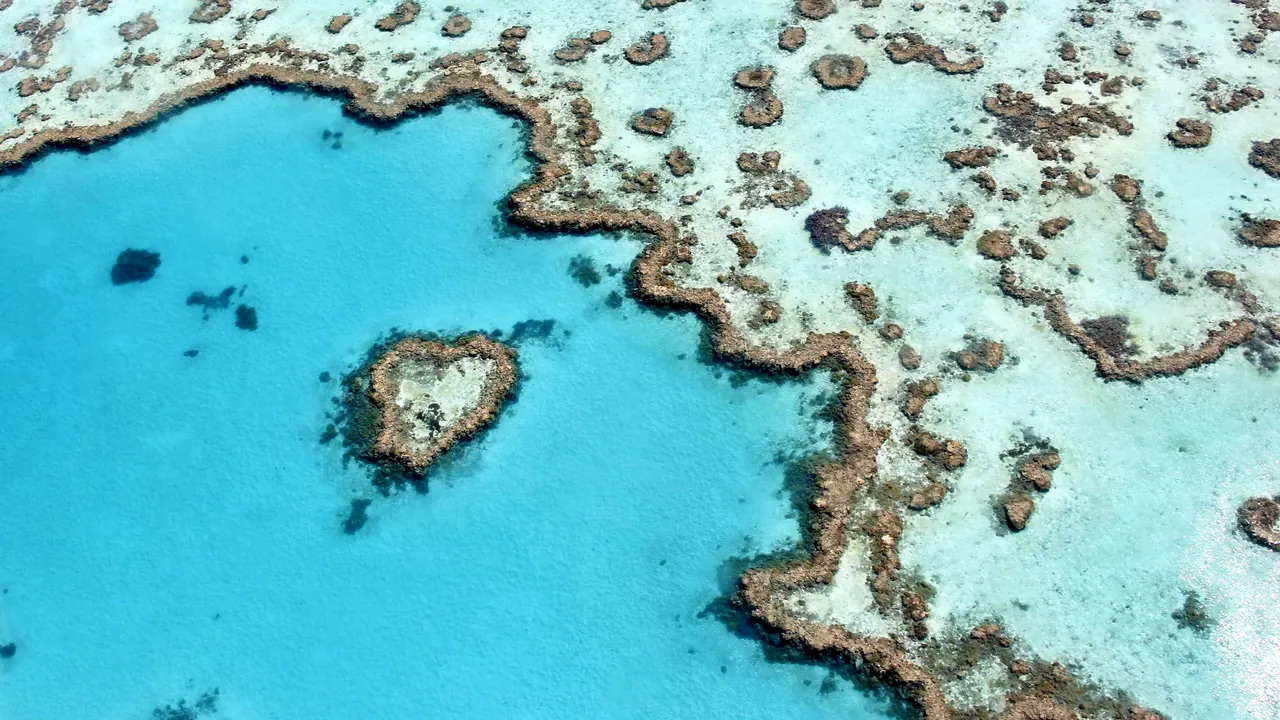
Photos: Bali by Evelin Magnus, Pexels License; Great Barrier Reef by Ayanadak123, CC BY-SA 4.0, cropped.
Bali or Great Barrier Reef?
Our verdict in twelve categories, each scored against the same fixed benchmark cities, and the climate month by month, so you can choose for your trip.
Choose Bali for
- culture and sights
- prices
- wellness
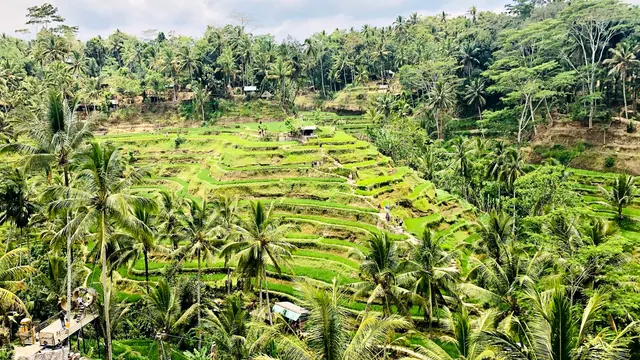
Bali suits a trip that mixes several things at once: temple visits and dance evenings around Ubud, surf and beach clubs on the south-west coast, and slow days of yoga, massage and rice-field views. It costs far less, the food runs from babi guling at village warungs to ambitious tasting menus, and there is plenty to do after dark. The catch is the traffic, which makes every journey slow and works best if you settle in one or two bases.
Choose Great Barrier Reef for
- getting around
- nature and the outdoors
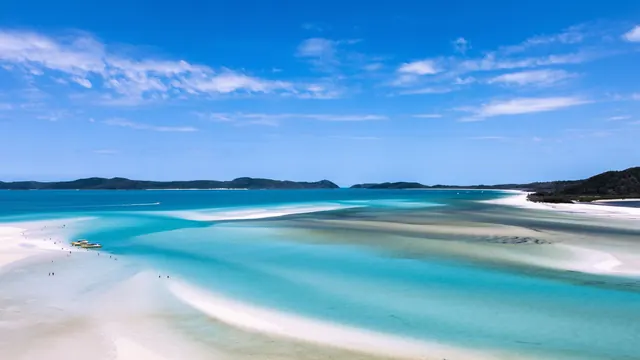
Choose the Great Barrier Reef when the natural world is the whole point. The coral of the outer reef, the white sand of the Whitsundays and the Daintree rainforest running down to the sea outclass even Bali's fine dive sites. A stay built around one base and daily boat trips is also simple to organise. Expect to pay much more, eat more plainly and find little to fill the evenings or the days away from the water.
Scoreboard
Twelve categories on one fixed scale from 0 to 100. The shaded stretch is the gap between the two.
Your match
Pick a travel style or drag the sliders, and both match scores follow your weighting.
Wins on culture and sights and prices with your weighting.
Wins on getting around and nature and the outdoors with your weighting.
What matters to you?
Category by category
What the scores mean for a trip.
Beaches & swimming
These two are broadly level for beaches, but the beaches differ. Bali has variety on one island: surf and sunsets on the long west-facing sands from Kuta to Canggu, calm reef-sheltered lagoons at Sanur and Nusa Dua, and pale coves below the Bukit cliffs at Padang Padang and Bingin.
The reef's best beaches are on islands, so you either stay on one or go by boat. In return you get Whitehaven's silica sand, the swirling shallows of Hill Inlet and coral a few strokes from shore. On the mainland the picture is weaker: Cairns faces mudflats, and stingers in summer and crocodiles in the estuaries limit where and when you swim.
Food & drink
Bali is much the better place to eat. Its Hindu kitchen, with spit-roast babi guling, bebek betutu cooked in banana leaves and sate lilit, gives meals a character of their own, and on top of that come the coffee roasters of Canggu and the tasting menus of Ubud and Seminyak.
The reef coast offers good ingredients rather than a cuisine: coral trout, barramundi, mud crab and tropical fruit. Port Douglas and the Cairns Esplanade have pleasant places to eat, but beyond them it is mostly pub meals and resort buffets.
Culture & sights
Bali is far richer in culture. Religion is part of daily life here, from the morning offerings on the pavements to sea temples like Tanah Lot and Uluwatu, the mother temple of Besakih and the springs of Tirta Empul, with Ubud's palace and museums close at hand.
Queensland's reef towns are young and practical. The most rewarding cultural experience there is a walk with Aboriginal Traditional Owners around Mossman Gorge or the Daintree, and a museum visit in Townsville or Cairns makes a decent rainy-day stop rather than a reason to go.
Nightlife
Bali has far more nightlife, and it comes in several kinds within a short ride of one another: the pool-and-DJ beach clubs of Seminyak, Canggu and the Uluwatu cliffs, Seminyak's cocktail lounges, and the late, cheap clubs of Kuta and Legian.
On the reef coast, a night out mostly means backpacker bars on Airlie Beach's main street or the pubs near the Cairns Esplanade. Early boat departures send the island resorts to bed by ten.
Nature & outdoors
Both are outstanding, but the reef is in a league of its own. The coral walls of Agincourt and the Ribbon Reefs, turtles and reef sharks, and islands like Lady Elliot where you walk straight off the sand onto coral are what the region is for. The Daintree adds cassowaries and ancient forest meeting the sea.
Bali's strengths lie more on land and in the surf: a sunrise climb on Mount Batur, the crater lakes and waterfalls of Munduk, and the world-famous breaks of the Bukit. Its diving at Tulamben, Menjangan and among the mantas of Nusa Penida is very good, but it is one attraction among many rather than the main event.
Day trips
Bali has a little more to offer beyond the main sights. Its old Bali Aga villages, walled Tenganan with its double-ikat weaving and the neat gateways of Penglipuran, show a way of life you cannot see from the beach, and Nusa Lembongan is a short boat ride from Sanur. Traffic means most people manage only one or two of these.
From Cairns, the scenic railway or cableway up to Kuranda, the drive north to Port Douglas and the farms and distilleries of the Tablelands make good outings. Beyond them, most days out lead back to the reef or rainforest rather than to new places.
Good for families
Both work for families, but for children of different ages. Bali is the easier choice with small children, as long as you stay at Sanur or Nusa Dua: calm lagoons, kids' clubs, villas with pools, a big water park and a culture that makes a fuss of babies. Heat, stomach upsets and pavement-less roads are the trade-offs.
The reef is at its best with children over about six who can snorkel. Pontoons with roped swimming areas and viewing chambers, the Cairns lagoon pool and wallabies on Magnetic Island make lasting memories, but long boat days, seasickness and summer stinger suits make it harder with toddlers.
Getting around
Neither is easy, but the reef is simpler to manage. Boats and ferries leave daily from central marinas in Cairns, Port Douglas and Airlie Beach, often with hotel pick-up, and good if winding roads suit a hire car. The weak point is distance: Cairns and the Whitsundays are a full day's drive apart, so most people fly between them.
In Bali there is no public transport a visitor can rely on, the southern roads are jammed for much of the day, and scooters are only for experienced riders. A car with a driver for the day is the usual answer, and even short distances take a long time.
Shopping & style
Bali sells things made on the island: silver and gold jewellery from Celuk, woodcarving from Mas, stone carving from Batubulan, and ikat and endek cloth woven in East Bali villages such as Sidemen. Add the designer-run boutiques of Seminyak and Canggu, with linen, swimwear, ceramics and furniture, and the island has far more to take home. Expect to bargain, though, and expect the Ubud art market to repeat itself from stall to stall.
On the reef coast, the thing most worth seeking out is Aboriginal and Torres Strait Islander art, best bought from community-owned galleries and art centres. Beyond that there are Kuranda's craft and honey stalls, the Cairns night market and a short run of resort-wear shops in Port Douglas, which fill an hour rather than a day.
Affordability
Bali costs far less. Pool villas, warung meals, massages and drivers are cheap by Western standards, and prices drop further around Ubud, Sidemen and the north coast. The beach clubs and cliff-top resorts of the south-west are the exception, priced close to home.
On the reef the sea is the expense: every reef day means a boat, and diving, liveaboards and island resorts add up quickly. Hostels and apartments in Cairns and Airlie Beach soften the costs, but meals are at full Australian prices, and the dry season is the most expensive time.
Live music & performing arts
Bali has a living performance tradition that a visitor can see almost any night. Gamelan orchestras accompany Legong and Barong dances in Ubud's palace courtyards, the Kecak is chanted at sunset above Uluwatu, and temple festivals bring dances performed for the gods.
On the reef coast, live performance is scarce: Townsville's winter chamber music festival, touring shows in Cairns and pub cover bands. The Indigenous dance festivals of Cape York and the Torres Strait are rare and remote.
Wellness & relaxation
Bali is one of the world's great places to unwind, and here the gap between the two is wide. Around Ubud there are yoga and meditation retreats and spas set among rice fields and river gorges. Cheap Balinese massage is everywhere, there are hot springs at Banjar and Lake Batur, and you can take part in the purification ritual at Tirta Empul.
The reef has no such tradition. Rest there means a small island resort run to the rhythm of the tides, a spa in Port Douglas or a lodge in the Daintree, all restful but limited in choice.
When should you go?
Pick your month. The climate figures are measured averages, not a forecast.
Bali in July
Great Barrier Reef in July
Daytime high, °C
Rainfall in the month, mm
Where the figures come from
Great Barrier Reef has no rain gauge within 25 km of the centre, so its rainfall comes from a gridded climate dataset read at the destination rather than from a gauge further away.
Temperature and rainfall are climate normals, averaged over the years shown. Bali: 1991-2020 normals, Denpasar / Ngurah-Rai (3.5 km from centre). Great Barrier Reef: 1993-2010 (rainfall 1991-2020) normals, Green Island Aws (1.1 km from centre).
Both are at their best in the same stretch of the year, roughly June to October, but for different reasons. Bali is hot in every month, with highs around 30°C all year, so the rain decides when to go. December to March is very wet, with close to 400mm in January, while August is almost dry and the sunniest month. The sea stays warm enough for a long swim all year round.
On the reef coast where most visitors stay, the year has more of a shape. The wet season peaks in February and March at around 500mm, and from about November to May stingers mean wearing a suit or swimming in a netted enclosure. June to August is a mild winter, with highs near 24°C and the sea at about 24°C. That is comfortable for rainforest walks and island hopping but noticeably cooler in the water than Bali, while December brings the full heat back.
Which traveller are you?
For a culture and arts trip, Bali is the clear choice. Its living temples, the subak terraces of Jatiluwih, the painting museums of Ubud and nightly Legong and Kecak performances have no real counterpart on the reef coast, where culture means mostly a few guided Indigenous walks.
On an outdoors trip, the Great Barrier Reef wins. Snorkelling and diving on the outer reef, sailing the Whitsundays and walking the Daintree or Hinchinbrook make a richer wild trip than Bali's volcano climbs and surf breaks, good as those are.
On a tight budget, Bali goes much further. Warung meals, guesthouses, villas with pools and day drivers all cost little, whereas on the reef every reef day needs a paid boat, and meals and rooms are at full Australian prices.
Before you go
| Measure | Bali | Great Barrier Reef |
|---|---|---|
| Official language | Indonesian | English |
| Currency | Rupiah (IDR) | Australian Dollar (AUD) |
| Sockets | CF50 Hz | I230 V, 50 Hz |
| Driving side | Left | Left |
| Time zone | UTC+8 | UTC+10 |
| Emergency number | 112 | 000 |
| Main airport | Denpasar I Gusti Ngurah Rai International Airport (DPS)64 non-stop destinations | Cairns International Airport (CNS)32 non-stop destinations |
| Public holidays this year | - | 11 days |
By the numbers
| Measure | Bali | Great Barrier Reef |
|---|---|---|
| Population | 4,404,300 | - |
| People per km² | 782 | - |
| Swim season, months above 21 °C | 12 months | 12 months |
Where else could you go?
Every comparison below shares a destination with this one, so you can follow Bali or Great Barrier Reef somewhere new.