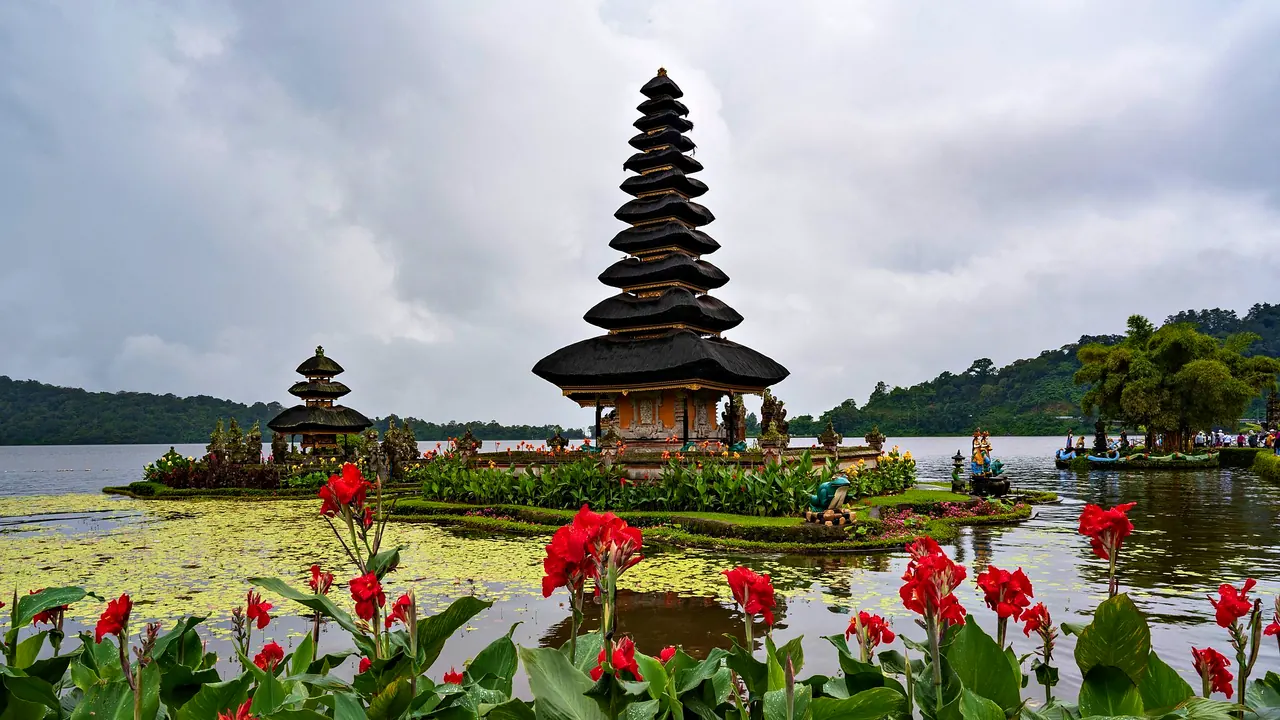
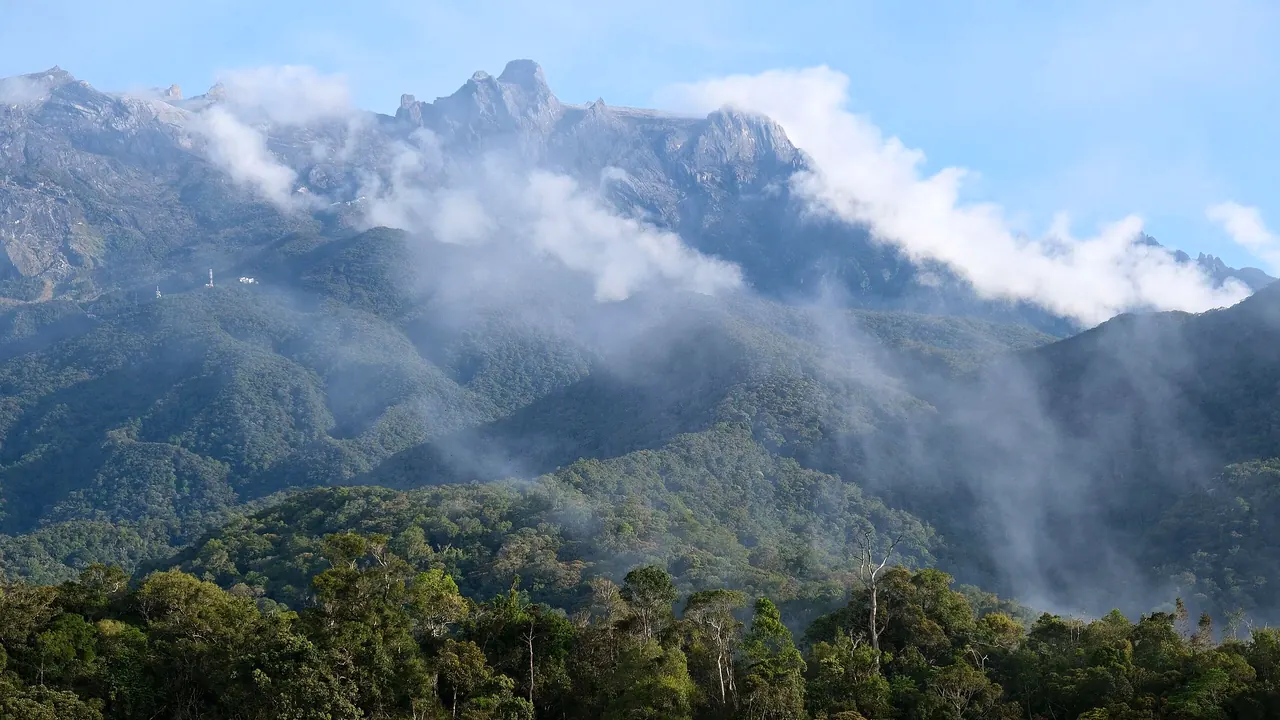
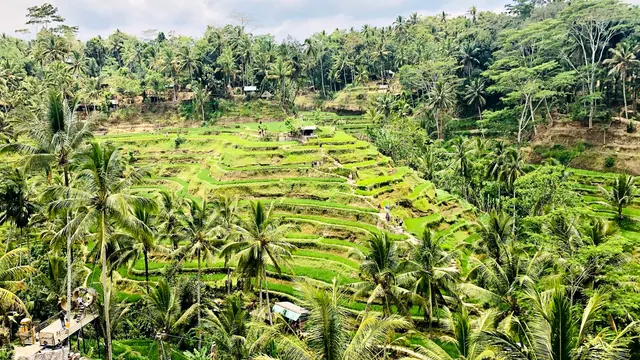
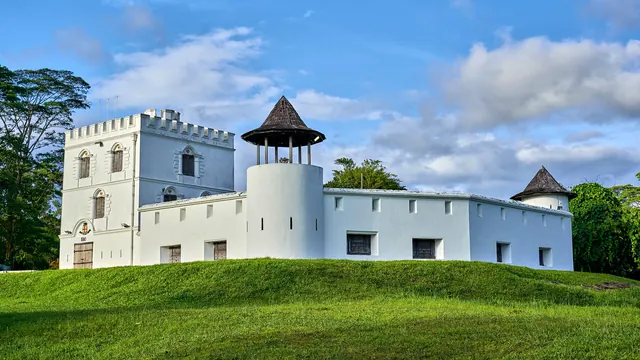
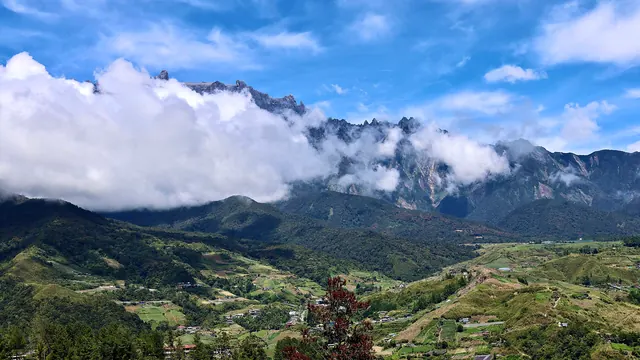
Photos: Bali by Evelin Magnus, Pexels License; Borneo by kallerna, CC BY-SA 4.0, cropped.
Bali or Borneo?
Our verdict in twelve categories, each scored against the same fixed benchmark cities, and the climate month by month, so you can choose for your trip.
Choose Bali for
- wellness
- nightlife
- live music and the arts
Bali is the easier and more rounded choice for a trip that mixes beach, temples and rest. Ubud's yoga retreats and rice-field spas, the dance in its palace courtyards, the surf and calm lagoons of the south and the beach clubs of Seminyak and Canggu can all be reached from one or two well-chosen bases. The island also gives a great deal of comfort for the money.
Choose Borneo for
- nature and the outdoors
- getting around
Borneo asks more of you and pays you back in the wild. If you would happily give up nightlife, shopping and spa days for dawn boat rides on the Kinabatangan, orangutans at Sepilok, the caves of Mulu and sunrise on Mount Kinabalu, Bali has nothing to match it. Plan around two or three bases, expect flights and transfers, and let Kuching's hawker stalls and riverfront be the town part of the trip.
Scoreboard
Twelve categories on one fixed scale from 0 to 100. The shaded stretch is the gap between the two.
Your match
Pick a travel style or drag the sliders, and both match scores follow your weighting.
Wins on wellness and nightlife with your weighting.
Wins on nature and the outdoors and getting around with your weighting.
What matters to you?
Category by category
What the scores mean for a trip.
Beaches & swimming
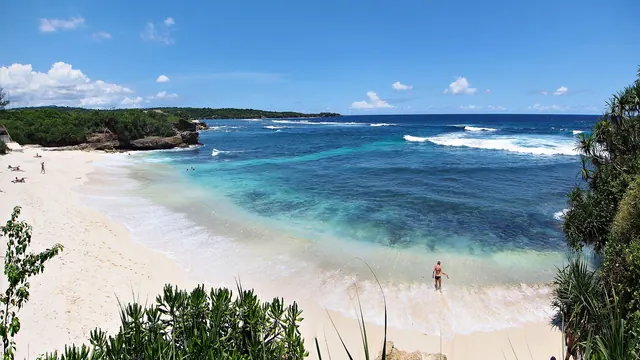
Bali has the stronger and more varied coast. Its south offers three different beach experiences close to where most people stay. There are surf and sunsets on the long sands from Kuta to Canggu, sheltered lagoons at Sanur and Nusa Dua, and pale coves under the Bukit cliffs at Padang Padang and Bingin.
In Borneo the good swimming is mostly offshore. The Tunku Abdul Rahman islands are a short hop from Kota Kinabalu, with clear water but small beaches. The Semporna islands are for diving rather than lying on the sand, and the mainland beaches near Kuching have murkier water. Beaches here go alongside a wildlife trip rather than being the main event.
Food & drink
Bali eats better overall, partly because it offers two quite different kinds of meal. Its Hindu cooking puts pork at the centre, with babi guling and bebek betutu at warungs and morning markets. On top of that, Canggu, Seminyak and Ubud have a large scene of cafés and tasting menus.
Borneo's food is narrower but full of character, and nearly all of it is in Kuching and Kota Kinabalu. Expect Sarawak laksa and kolo mee at kopitiams, charcoal-grilled seafood at the Kota Kinabalu night market and Kadazan-Dusun hinava. Outside those two cities, meals turn plain.
Culture & sights
Bali's culture is part of everyday life in a way a visitor rarely sees in Borneo. Morning offerings, village shrines, the sea temples of Tanah Lot and Uluwatu, Besakih on the slopes of Mount Agung and the Jatiluwih rice terraces give a steady run of sights. Ubud is the natural base, even if its museums are modest.
Borneo's heritage is about its peoples more than its buildings. Kuching's Brooke-era riverfront, the Borneo Cultures Museum, the Niah Caves and a night in an Iban longhouse are all worth the effort, but two or three days covers the core.
Nightlife
The gap here is wide. Bali's southwest covers every kind of night out. There are cocktail lounges in Seminyak, beach clubs on the Uluwatu cliffs, bar-hopping along Canggu's rice-field lanes and the loud clubs of Kuta that stay open into the early hours.
Borneo's evenings are a sundowner on the Kota Kinabalu waterfront, a pub or karaoke lounge, or drinks in Kuching's shophouse streets. At the jungle lodges and dive islands the night ends at dinner, which suits people who are up before dawn anyway.
Nature & outdoors
Both are superb outdoors, but Borneo is the deeper wilderness. It has orangutans at Sepilok and Semenggoh, proboscis monkeys and pygmy elephants on the Kinabatangan, Danum Valley's old-growth forest, the caves of Mulu and the two-day climb of Mount Kinabalu. That is wildlife and terrain on a scale Bali lacks, and Sipadan is a world-class dive site.
Bali's strengths are its volcanoes and its water. There is the sunrise climb of Batur, the crater lakes around Munduk, walks through Sidemen's terraces, famous surf at Uluwatu and manta rays off Nusa Penida. Most of it fits into a day, whereas each of Borneo's areas needs several.
Day trips
Neither is built for day trips, but Bali has more to fill a spare day. The Bali Aga villages of Tenganan and Penglipuran, the Sidemen valley and the boat from Sanur to Nusa Lembongan are all manageable, though traffic in the south makes every outing slower.
From Kuching and Kota Kinabalu the choices are thinner: the Bidayuh longhouses at Annah Rais, the Santubong peninsula and the Sunday market at Kota Belud. Borneo's big sights each need several days, not an excursion.
Good for families
Bali is easier with children, as long as you stay in Sanur or Nusa Dua. There, reef-sheltered water, kids' clubs and villa pools keep the days simple, and a water park and a safari park are within reach. The main things to watch are the missing pavements and the strong rips on the west-coast beaches.
Borneo suits families with school-age children who love animals. Watching orangutans feed at Sepilok and snorkelling off Kota Kinabalu are unforgettable. But the lodges are basic, leeches and long transfers are part of the trip, and little is laid on for children beyond the wildlife.
Getting around
Both are hard work, in different ways, and Borneo is the slightly easier of the two to manage. Its distances are huge, but domestic flights link the main towns, organised transfers handle the wildlife areas, and the centres of Kuching and Kota Kinabalu are compact enough to walk.
Bali looks small on the map but is slow on the ground. There is no public transport a visitor can really use, pavements are broken or missing, and traffic is heavy across the south. Most visitors rely on a driver by the day or ride-hailing apps, and a trip to the north or east takes a full day.
Shopping & style
Bali is far better for shopping. The craft villages on the road to Ubud each have a speciality, such as silver at Celuk and woodcarving at Mas. Seminyak and Canggu add designer boutiques for linen, swimwear and ceramics, though there are few big brands.
In Borneo, shopping fills a pleasant hour or two but is no reason to come. Look for pua kumbu textiles and pepper in Kuching's Main Bazaar, and Rungus beadwork and pearls at the handicraft market in Kota Kinabalu.
Affordability
Bali makes a budget go further. Villas with private pools, warung meals, massages and drivers by the day are all cheap. Only the beach clubs, smart cafés and clifftop resorts of the southwest come close to Western prices.
Borneo's everyday costs are just as low, but its main experiences are sold as packages. Climbing Kinabalu needs permits and a guide, the Kinabatangan and Danum Valley lodges are all-inclusive, and Sipadan dive permits are limited. A stay based in the cities is inexpensive, but a wildlife itinerary is not.
Live music & performing arts
Bali has the far richer stage. Legong, Barong and shadow-puppet shows play almost nightly in Ubud's palace courtyards with gamelan orchestras. The Kecak is chanted at sunset above Uluwatu, and village temple festivals add dances performed for the gods.
In Borneo, the one big event is the Rainforest World Music Festival near Kuching each midsummer. Beyond that there are dance shows with the sape lute at the cultural village and in resorts, and the Gawai and Kaamatan harvest festivals around the end of May.
Wellness & relaxation
Bali is built for rest in a way Borneo is not, and the gap is wide. Around Ubud, spas look out over river gorges and range from simple village rooms to jungle pavilions, and the boreh spice scrub is on almost every menu. You can join the purification rite at the spring of Tirta Empul if you do it respectfully, soak in the warm pools on the shore of Lake Batur, or stay somewhere quiet on the coast at Amed. Just don't plan to unwind in the crowded south-west around Kuta and Canggu.
Borneo has no bathing or spa tradition of its own. The good spas belong to the beach resorts on the islands off Kota Kinabalu and at Santubong. A Malay or Chinese massage is easy to find in either city, and Poring's plain sulphur baths are a relief for sore legs after Kinabalu. Kuching's unhurried pace helps, but in Borneo rest is something you fit in between journeys, not the reason for the trip.
When should you go?
Pick your month. The climate figures are measured averages, not a forecast.
Bali in July
Borneo in July
Daytime high, °C
Rainfall in the month, mm
Temperature and rainfall are climate normals, averaged over the years shown. Bali: 1991-2020 normals, Denpasar / Ngurah-Rai (3.5 km from centre). Borneo: 1991-2020 (sunshine 1981-2010) normals, Kuching (8.3 km from centre).
Bali has a clear dry season from about April to October. The rain falls away almost completely, to just 12mm in August, and the sunniest weeks of the year come with it, so this is the time for the volcano climbs and the clearest water. From November to March the rain builds steadily and is heaviest in January, at almost 400mm. The heat hardly changes through the year, with highs around 30°C, and the sea is warm enough to swim in every month.
Borneo has no real dry season. At the point where its figures are measured, heavy rain falls in every month. It eases to its lowest around July and peaks in January at roughly 670mm, and there are far fewer sunny hours than in Bali all year. Middays are a touch hotter in mid-year and the sea stays near 30°C. Both are wettest around the turn of the year, but Bali's dry spell is much more marked, so June to September is the surest time for either. That applies especially to the Sabah coast, where the sea gets rougher from November.
Which traveller are you?
On an outdoors trip, Borneo wins clearly. You can climb Mount Kinabalu, take river safaris for proboscis monkeys and pygmy elephants, walk Danum Valley's canopy walkways and dive at Sipadan. That is rainforest wildlife Bali's volcano hikes and surf breaks cannot match.
For a relaxing and wellness trip, Bali is the obvious choice. It has Ubud's yoga and meditation retreats, cheap Balinese massage, the hot springs at Banjar and the calm of Sidemen or the Bukit cliffs. Borneo's early starts and humid treks wear you out instead.
For a food and nightlife trip, Bali offers far more. Babi guling at village warungs, Canggu's brunch cafés and Seminyak's tasting menus lead on to sunset beach clubs and late bars. In Borneo, evenings wind down early once you leave Kota Kinabalu's waterfront and Kuching's hawker stalls.
Before you go
| Measure | Bali | Borneo |
|---|---|---|
| Official language | Indonesian | Malay |
| Currency | Rupiah (IDR) | Malaysian Ringgit (MYR) |
| Sockets | CF50 Hz | G240 V, 50 Hz |
| Driving side | Left | Left |
| Time zone | UTC+8 | UTC+8 |
| Emergency number | 112 | 999 |
| Main airport | Denpasar I Gusti Ngurah Rai International Airport (DPS)64 non-stop destinations | Kuching International Airport (KCH)23 non-stop destinations |
By the numbers
| Measure | Bali | Borneo |
|---|---|---|
| Population | 4,404,300 | 18,590,000 |
| People per km² | 782 | - |
| Swim season, months above 21 °C | 12 months | 12 months |
Where else could you go?
Every comparison below shares a destination with this one, so you can follow Bali or Borneo somewhere new.
- Lombokvs Bali
- Gili Islandsvs Bali
- Floresvs Bali
- Tiomanvs Borneo
- Jakartavs Bali
- Perhentian Islandsvs Borneo