Malaysia
Kuching
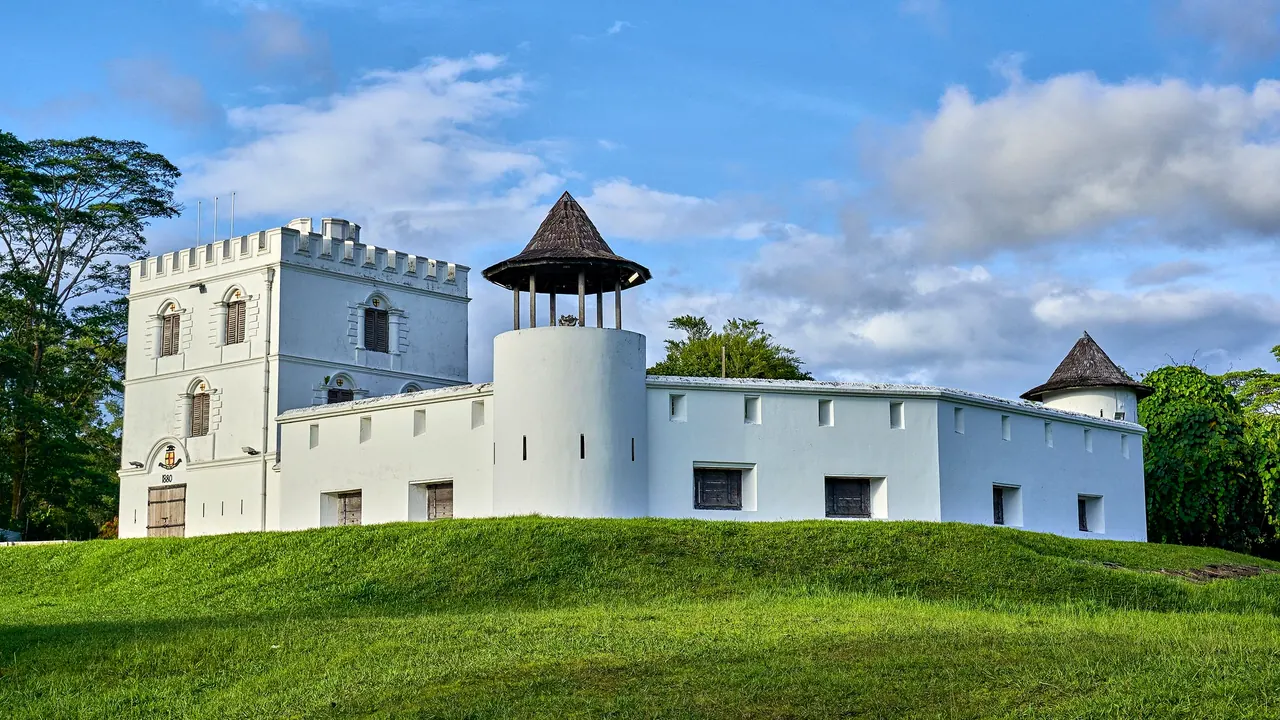
Fort Margherita on the Sarawak River
- Nature & outdoors86
- Affordable cities78
- Food & drink68
Photo: Damian Pankowiec, CC BY-SA 4.0, cropped
Match
48
Every category weighted equally
- Beach & sun50
- Culture & arts44
- Food & nightlife44
- Family trip53
- Outdoors54
- Relax & unwind50
- Shopping & style45
- On a budget51
Kuching in twelve categories
Our verdict on each, scored 0 to 100 against the same fixed benchmark cities, so a score means the same thing on every page.
Beaches & swimming. Scores 38 out of 100.
Food & drink. Scores 68 out of 100.
Culture & sights. Scores 45 out of 100.
Nightlife. Scores 25 out of 100.
Nature & outdoors. Scores 86 out of 100.
Day trips. Scores 36 out of 100.
Good for families. Scores 55 out of 100.
Getting around. Scores 40 out of 100.
Shopping & style. Scores 38 out of 100.
Affordability. Scores 78 out of 100.
Live music & performing arts. Scores 22 out of 100.
Wellness & relaxation. Scores 40 out of 100.
Kuching category by category
Beaches & swimming
38Kuching sits on a river rather than the sea, and the nearest beaches are at Damai and Santubong, about forty minutes' drive north. The water is warm, around 29°C for most of the year, but the South China Sea here is often cloudy with silt, and jellyfish can be a nuisance in some months. The sand is pleasant and backed by jungle and the peak of Mount Santubong, which gives the coast a striking look.
Most visitors swim at their hotel pool and treat the beach as a half day out, usually combined with something else nearby. The northeast monsoon from roughly November to February brings rougher seas and frequent rain. Nobody comes to Kuching for a beach vacation, but a warm swim is within easy reach.
Food & drink
68Eating is one of the real pleasures of Kuching, and much of it is food you cannot easily find elsewhere. Sarawak laksa, a spiced coconut and sambal broth with prawns and omelette strips, is the breakfast everyone talks about, and kolo mee, springy noodles tossed in lard and shallot oil, comes a close second. Chinese kopitiams, Malay stalls and open-air hawker centres serve them from early morning.
Indigenous Dayak cooking adds jungle fern called midin, chicken cooked in bamboo and sago grubs for the curious, while riverside seafood courts grill fish and prawns by weight. Layered kek lapis cakes in wild colours and Sarawak pepper make good things to take home. The range thins at the top end, with little serious fine dining.
Culture & sights
45Kuching's heritage comes from an unusual history: for a century Sarawak was ruled by the Brooke family, the so-called White Rajahs. Their legacy lines the river, with the Astana palace and the white-walled Fort Margherita on the north bank facing the Old Court House, the Square Tower and the shophouses of Main Bazaar on the south. The Sarawak Museum campus, with the large Borneo Cultures Museum, gives the best introduction to the island's peoples, crafts and natural history.
Around these sit Chinese clan temples such as Tua Pek Kong, the Chinese History Museum and the shophouse lanes of Carpenter Street. Two mosques are worth a look: the Kuching City Mosque with its gilded domes, and the much older Masjid India, tucked away behind the shops of India Street. It is a pleasant, compact set seen comfortably in two days, rather than a city of major landmarks.
Nightlife
25Evenings in Kuching are mostly about eating and a stroll along the lit waterfront. A small cluster of pubs, rooftop bars and live-band lounges around Jalan Padungan and the Ban Hock area serves locals and expatriates, and there are a few karaoke spots and clubs for weekend nights. It is friendly and relaxed rather than late or lively, and a visitor who wants a big night out will find little here.
Nature & outdoors
86This is Kuching's great strength. Semenggoh Nature Reserve, about thirty minutes away, is where semi-wild orangutans come in from the forest at feeding times. Bako National Park, reached by a short drive and a boat across the estuary, has sandstone cliffs, mangroves, pitcher plants and some of the most reliable sightings of proboscis monkeys anywhere, along with bearded pigs and silvered langurs on its trails.
Kubah National Park offers rainforest walks and frog-filled night hikes, Mount Santubong a steep, rope-assisted climb, and the Santubong estuary boat trips to look for Irrawaddy dolphins and fireflies. Further out, Gunung Gading is known for rafflesia flowers and Bau for limestone caves. Heat and heavy rain shape every day outdoors; mornings are best.
Day trips
36Most excursions from Kuching head into forest and national parks rather than to other towns. The main cultural outing is the Sarawak Cultural Village at the foot of Mount Santubong, an open-air museum of traditional longhouses and dwellings from the state's different peoples. Annah Rais, a Bidayuh longhouse community about an hour inland, shows how longhouse life continues today.
Smaller outings include the wooden shophouse street of Siniawan, the old gold-mining town of Bau and the border market at Serikin. These are pleasant half days, but there is no larger historic city or wine country within reach.
Good for families
55Kuching is safe, unhurried and welcoming to children, and its wildlife is the big draw: watching orangutans swing in at Semenggoh or spotting monkeys at Bako stays with children long after the trip. The waterfront promenade is easy for evening walks, the Sarawak Cultural Village has dance performances and houses to explore, and the city's cat statues and cat museum are a playful touch.
There is little built specifically for children, though, no theme park or large aquarium, and the humid heat and afternoon downpours make long outings tiring for small ones. Trails at Bako involve a boat ride and rough paths, better suited to older children.
Getting around
40The historic centre is small: the waterfront, Main Bazaar, Carpenter Street and the museums are all within a short walk of one another, and wooden sampans ferry people across the river to the north bank for a few moments' ride. Beyond that, walking gets harder, with heat, gaps in pavements and wide roads.
Public buses exist but are infrequent and hard for a visitor to work out, so most people rely on ride-hailing apps, which are cheap and plentiful, or hire a driver for the parks. Reaching Bako, Semenggoh or the beaches realistically means a car, a taxi or a tour.
Shopping & style
38Shopping in Kuching is about Borneo crafts and local produce. The old shophouses of Main Bazaar sell rattan baskets, beadwork, woodcarvings, pottery and pua kumbu, the handwoven Iban textiles, alongside plenty of souvenirs, so quality varies and it pays to look closely. Sarawak pepper and boxes of kek lapis are the classic edible gifts.
The weekend market at Satok is a lively place for jungle produce, fruit and snacks, and India Street has cloth and everyday goods. Malls cover the basics, but there is no luxury or designer shopping to speak of.
Affordability
78Kuching is an easy place to travel comfortably on a modest budget. Hawker breakfasts and noodle dinners cost very little, good mid-range hotels with pools are priced below those of larger cities in the region, and ride-hailing across town is cheap. Park entry fees are low.
The costs come from elsewhere. Getting to the parks means boats to Bako, private drivers or guided tours, and these add up quickly, especially for someone travelling alone. Alcohol is heavily taxed and costs far more than food, so evenings with beer or wine can cost more than the day's meals.
Live music & performing arts
22Kuching's one big moment is the Rainforest World Music Festival, held each year at the Sarawak Cultural Village, which brings traditional and world musicians from across the globe to the foot of Mount Santubong. Outside that, there is little to attend: traditional dance shows at the cultural village, the occasional sape performance, the lute-like instrument of Sarawak's peoples, and live cover bands in a few bars. There is no regular theatre, opera or classical season.
Wellness & relaxation
40Kuching has no bathing culture of its own, but it is one of the calmer cities in the region, with a slow riverside pace that suits unwinding. Reflexology and massage shops are easy to find around the centre and inexpensive, and resort spas at Damai and Santubong offer fuller treatments in a jungle-and-sea setting. An evening walk on the waterfront as the heat breaks is as restorative as it gets in town.
When should you go?
Pick a month to see what it is like. The climate figures are measured averages, not a forecast.
Kuching in July
Daytime high, °C
Rainfall in the month, mm
The whole year
Shaded against this city’s own year: the deepest cell is its best month for that figure and the palest its weakest.
Temperature and rainfall are climate normals, averaged over the years shown. Kuching: 1991-2020 (sunshine 1981-2010) normals, Kuching (8.3 km from centre).
Before you go
| Measure | Kuching |
|---|---|
| Official language | Malay |
| Currency | Malaysian Ringgit (MYR) |
| Sockets | G240 V, 50 Hz |
| Driving side | Left |
| Time zone | UTC+8 |
| Emergency number | 999 |
| Elevation | 8 m |
| Main airport | Kuching International Airport (KCH)8 km from centre23 non-stop destinations |
By the numbers
| Measure | Kuching |
|---|---|
| City population | 325,132 |
| People per km² | 754 |
| Museums within 10 km | 6 |
| UNESCO World Heritage sites within 50 km | 0 |
| Swim season, months above 21 °C | 12 months |
Compare Kuching with
Every comparison with a written verdict behind it.