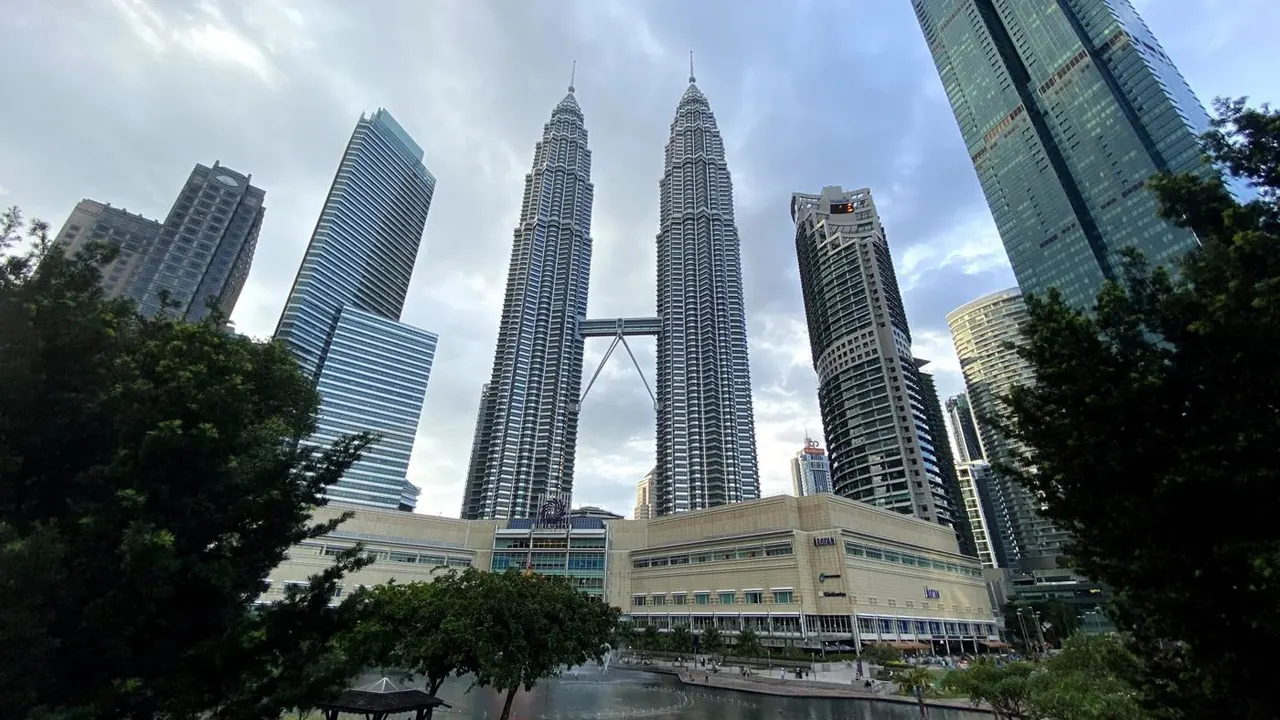
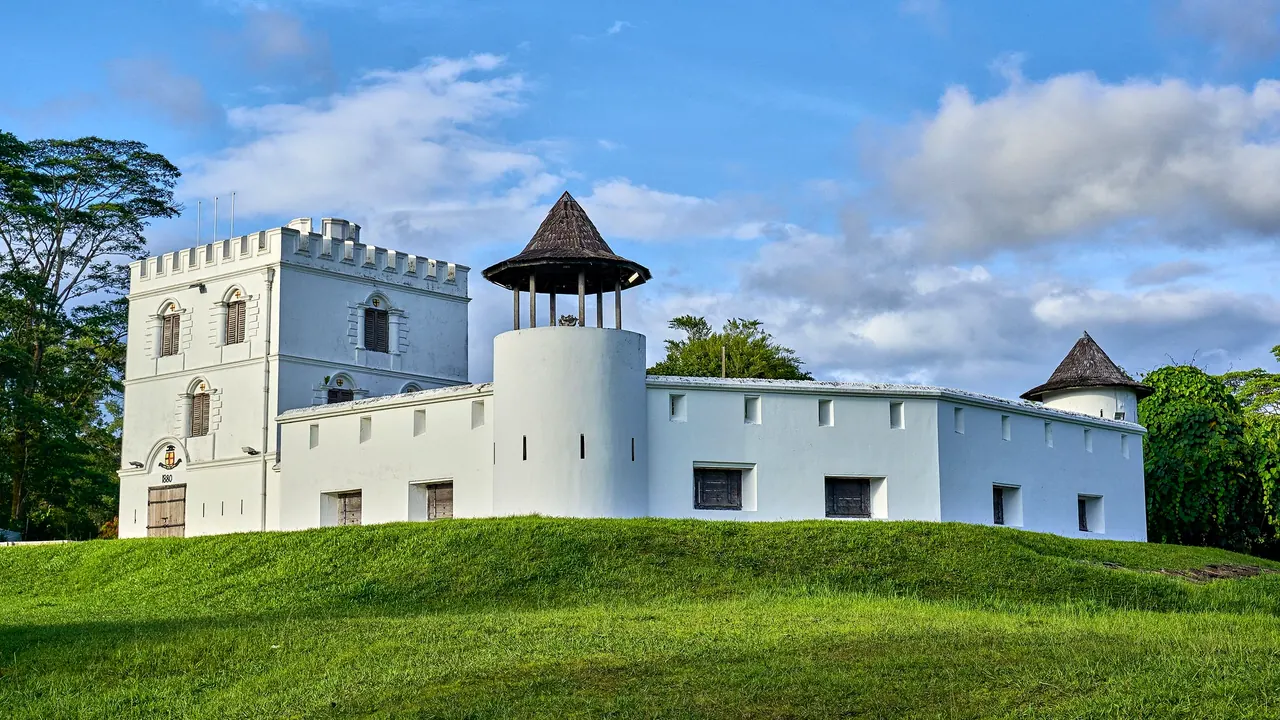
Photos: Kuala Lumpur by Brownc, CC BY-SA 4.0, cropped; Kuching by Damian Pankowiec, CC BY-SA 4.0, cropped.
Kuala Lumpur or Kuching?
Our verdict in twelve categories, each scored against the same fixed benchmark cities, and the climate month by month, so you can choose for your trip.
Choose Kuala Lumpur for
- nightlife
- shopping
- live music and the arts
Kuala Lumpur is the better choice for a traveller who wants a big city working at full stretch. It has three cuisines and the mamak canteens to eat through, the Petronas Towers and the Islamic Arts Museum to see, giant malls and a proper bar street, and trains that link most of it. It also suits families who want aquariums and theme parks, and anyone planning a day in Malacca.
Choose Kuching for
- nature and the outdoors
- beaches
- prices
Choose Kuching when the point of the trip is Borneo itself. Orangutans at Semenggoh and proboscis monkeys at Bako are a short drive from a small, quiet riverside town where you can walk to most of the heritage and the breakfast laksa is worth getting up for. Evenings are quiet and shopping is mostly crafts, but for wildlife and rainforest Kuala Lumpur has nothing to match it.
Scoreboard
Twelve categories on one fixed scale from 0 to 100. The shaded stretch is the gap between the two.
Your match
Pick a travel style or drag the sliders, and both match scores follow your weighting.
Wins on nightlife and shopping with your weighting.
Wins on nature and the outdoors and beaches with your weighting.
What matters to you?
Category by category
What the scores mean for a trip.
Beaches & swimming
Neither city is a beach destination, but Kuching gets you to sand more easily. Damai and Santubong are about forty minutes away, and the beaches there are pleasant, backed by jungle and the peak of Mount Santubong. The sea is often cloudy, though, and rough in the monsoon.
Kuala Lumpur's nearest real beach is Port Dickson, about an hour and a half away, with ordinary sand. Anyone wanting proper beaches from there usually flies on to Langkawi or Penang, so the rooftop hotel pool does most of the work.
Food & drink
Kuala Lumpur has the wider table. Malay, Cantonese and Hokkien, and South Indian cooking all run at full strength, alongside mamak canteens that stay open all night. Jalan Alor, Brickfields and Kampung Baru each feel different, and there is a polished restaurant tier when you want one.
Kuching's case is that you won't find its food elsewhere. Sarawak laksa and kolo mee for breakfast, Dayak midin fern and chicken cooked in bamboo, and riverside seafood sold by weight are well worth the trip. The range is narrower, though, and serious fine dining is scarce.
Culture & sights
Kuala Lumpur has more to fill the days and bigger landmarks to see. The Petronas Towers skybridge, the British-era buildings around Merdeka Square, the Islamic Arts Museum in the Lake Gardens and the climb to Batu Caves add up to a solid two or three days.
Kuching's heritage is smaller and more unusual: the riverbanks the Brooke Rajahs left behind, with Fort Margherita and the Astana facing the Old Court House, plus the Borneo Cultures Museum for the island's peoples. It is a charming two-day loop on foot, but it has no landmarks on Kuala Lumpur's scale.
Nightlife
Kuala Lumpur is the place for a night out. Changkat Bukit Bintang stays busy late at weekends, the rooftop bars look onto the Petronas Towers, and there are proper clubs for dancing into the small hours.
In Kuching, evenings usually mean dinner, a walk along the lit waterfront and perhaps a live-band lounge on Jalan Padungan. It is friendly but finishes early, so anyone after a big night will be disappointed.
Nature & outdoors
Kuching is one of the easiest places in Asia to see Borneo's wildlife from a city base. Semenggoh's orangutans are half an hour away. Bako, across the estuary by boat, has proboscis monkeys, bearded pigs and sandstone cliffs, while Kubah, Gunung Gading's rafflesia flowers and the Bau caves add more.
Kuala Lumpur does better than most capitals, with the canopy walkway near the KL Tower, the Forest Research Institute trails and birdwatching at Fraser's Hill. Even so, its wilder parks need an overnight trip, and nothing nearby compares with Bako.
Day trips
Kuala Lumpur has the stronger day trips because of Malacca, a UNESCO-listed old port two hours south with Dutch and Portuguese buildings and Peranakan cooking. Putrajaya, royal Klang and Kuala Selangor make shorter outings.
Kuching's excursions are mostly to its national parks. Its cultural outings are smaller: the longhouses of the Sarawak Cultural Village, the Bidayuh community at Annah Rais and the old mining town of Bau. These make good half days, but there is no historic city within reach.
Good for families
With children, the gap is between a city full of attractions and a town built around wild animals. In Kuala Lumpur you can spend a morning in the shark tunnel of the aquarium below the Petronas Towers, cool off in the free splash area next door, then try the walk-in bird park in the Lake Gardens or the water park at Sunway. The food bends easily to young tastes, though heat and broken pavements mean most families take taxis.
Kuching offers fewer things to do, but some of them children remember for years. Orangutans swing in at Semenggoh, the Sarawak Cultural Village has dancing and longhouses to climb into, and the cat museum is a playful extra. There is no aquarium or theme park, and Bako's boat ride and rough trails suit older children best.
Getting around
Trains make the difference. In Kuala Lumpur the LRT, MRT, the Bukit Bintang monorail and the airport express link most districts you will want, though the lines were built separately and changes can mean long, confusing walks between them. The covered walkway from the Petronas Towers to Bukit Bintang helps in the heat.
Kuching has no rail at all, but it barely needs it in the centre, where the waterfront, Main Bazaar and the museums are a short walk apart and a sampan crosses the river in moments. Further out, the buses are hard to work out, and Bako, Semenggoh and the beaches mean a driver, a taxi or a tour.
Shopping & style
Kuala Lumpur is a serious shopping city. Bukit Bintang's huge malls run from luxury flagships to electronics floors, Mid Valley and Bangsar add more, and Central Market's Art Deco hall sells batik, songket and pewter.
Kuching has no designer shopping, but it does have Borneo crafts you won't easily find elsewhere. Main Bazaar sells pua kumbu weaving, rattan and beadwork, which are worth inspecting closely, and the Satok weekend market is the place for jungle produce. Pepper and kek lapis make easy gifts.
Affordability
Both are cheap places to travel, and in both alcohol is the cost that catches people out. The difference is where the money goes. Kuala Lumpur gives unusual hotel quality for the price, with international chains and rooftop pools, and its trains make getting around almost free.
In Kuching, daily life costs even less, but the boats to Bako, private drivers and guided tours add up, especially for someone travelling alone.
Live music & performing arts
Kuala Lumpur has something on through the year, and Kuching mostly has one big weekend. The Malaysian Philharmonic plays a regular season in its intimate shoebox hall inside the twin towers, which makes the best evening out. Istana Budaya puts on large musicals and traditional productions, Sentul West has smaller theatre and dance, and there is jazz in a few bars in Bangsar and Changkat.
Kuching's draw is the Rainforest World Music Festival, which brings musicians from around the world to the foot of Mount Santubong each year and is worth planning a visit around. The rest of the year there are dance shows at the cultural village, an occasional sape recital and cover bands, but no theatre or classical season.
Wellness & relaxation
Both cities rely on massage rather than any bathing tradition, so the difference lies in the setting. Kuala Lumpur has more choice, with the reflexology parlours of Bukit Bintang, Malay herbal treatments in hotel spas and a few hammams, but you return from them to traffic and heat.
Kuching has fewer options, but the town itself is slower. Its resort spas at Damai sit between jungle and sea, and an evening walk along the river is restful in a way Kuala Lumpur rarely is.
When should you go?
Pick your month. The climate figures are measured averages, not a forecast.
Kuala Lumpur in July
Kuching in July
Daytime high, °C
Rainfall in the month, mm
Where the figures come from
Kuala Lumpur's temperatures are measured 46 km from the centre, at Sepang/KL International Airport.
Kuala Lumpur has no rain gauge within 25 km of the centre, so its rainfall comes from a gridded climate dataset read at the city rather than from a gauge further away.
Temperature and rainfall are climate normals, averaged over the years shown. Kuala Lumpur: 1991-2020 (sunshine 1981-2010) normals, Sepang/KL International Airport (46.1 km from centre). Kuching: 1991-2020 (sunshine 1981-2010) normals, Kuching (8.3 km from centre).
Neither city has a cool season. Daytime highs stay around 33°C all year in Kuala Lumpur and only a little lower in Kuching, so in both you walk in the morning and evening and keep the middle of the day for museums, malls or a pool. What changes through the year is the rain, and here the two differ sharply. Kuala Lumpur is wettest in October and November, with up to 385mm, and calmest in June and July, which is also when it gets its most reliable sunshine. It has a short drier spell in February as well.
Kuching is much wetter overall. The northeast monsoon peaks in January at 671mm, and December and February are nearly as heavy, with grey skies and rough seas at the beaches. May to August is the best window for the parks and the coast, with July the driest at 200mm and the sunniest. The sea stays warm enough for swimming all year off both coasts, but Kuching's beaches are much the easier to reach.
Which traveller are you?
On an outdoors trip, Kuching is the clear pick. Orangutans at Semenggoh, proboscis monkeys and pitcher plants at Bako, night walks at Kubah and dolphin boats on the Santubong estuary are all within a short trip. From Kuala Lumpur the big parks need an overnight stay.
For a food and nightlife trip, Kuala Lumpur gives far more. You can eat Malay, Chinese and Indian food in one evening, finish at a mamak stall and pick between Changkat's bar street, rooftop bars and clubs. Kuching eats well but is quiet after dinner.
On a shopping trip, Kuala Lumpur's Bukit Bintang malls, Mid Valley and Central Market cover everything from luxury labels to batik. Kuching is worth it mainly for Iban weaving, rattan and Sarawak pepper along Main Bazaar, and it has no designer shopping.
Before you go
| Measure | Kuala Lumpur | Kuching |
|---|---|---|
| Official language | Malay | Malay |
| Currency | Malaysian Ringgit (MYR) | Malaysian Ringgit (MYR) |
| Sockets | G240 V, 50 Hz | G240 V, 50 Hz |
| Driving side | Left | Left |
| Time zone | UTC+8 | UTC+8 |
| Emergency number | 999 | 999 |
| Elevation | 50 m | 8 m |
| Main airport | Kuala Lumpur International Airport (KUL)45 km from centre145 non-stop destinations | Kuching International Airport (KCH)8 km from centre23 non-stop destinations |
By the numbers
| Measure | Kuala Lumpur | Kuching |
|---|---|---|
| City population | 9,000,280 | 325,132 |
| People per km² | 36,932 | 754 |
| Museums within 10 km | 25 | 6 |
| UNESCO World Heritage sites within 50 km | 1 | 0 |
| Swim season, months above 21 °C | 12 months | 12 months |
Where else could you go?
Every comparison below shares a destination with this one, so you can follow Kuala Lumpur or Kuching somewhere new.
- Malaccavs Kuala Lumpur
- Penangvs Kuala Lumpur
- Singaporevs Kuala Lumpur
- Singaporevs Kuching
- Kota Kinabaluvs Kuching
- Malaccavs Kuching