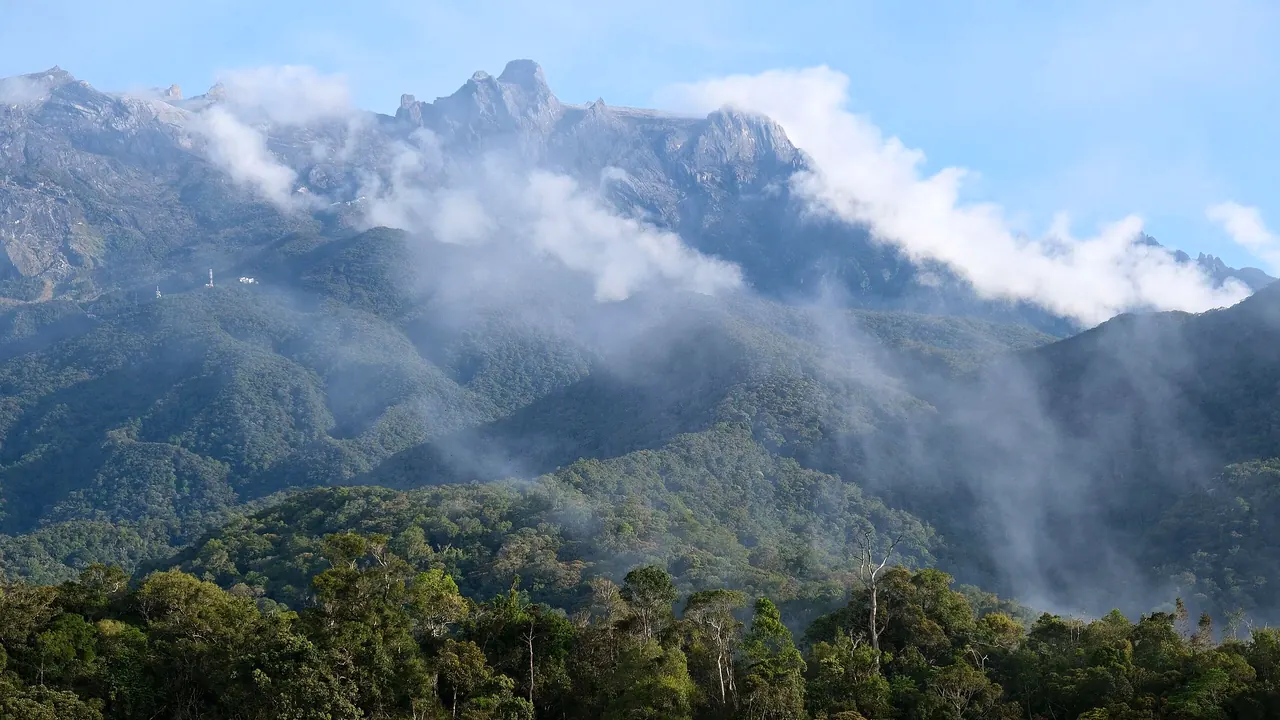
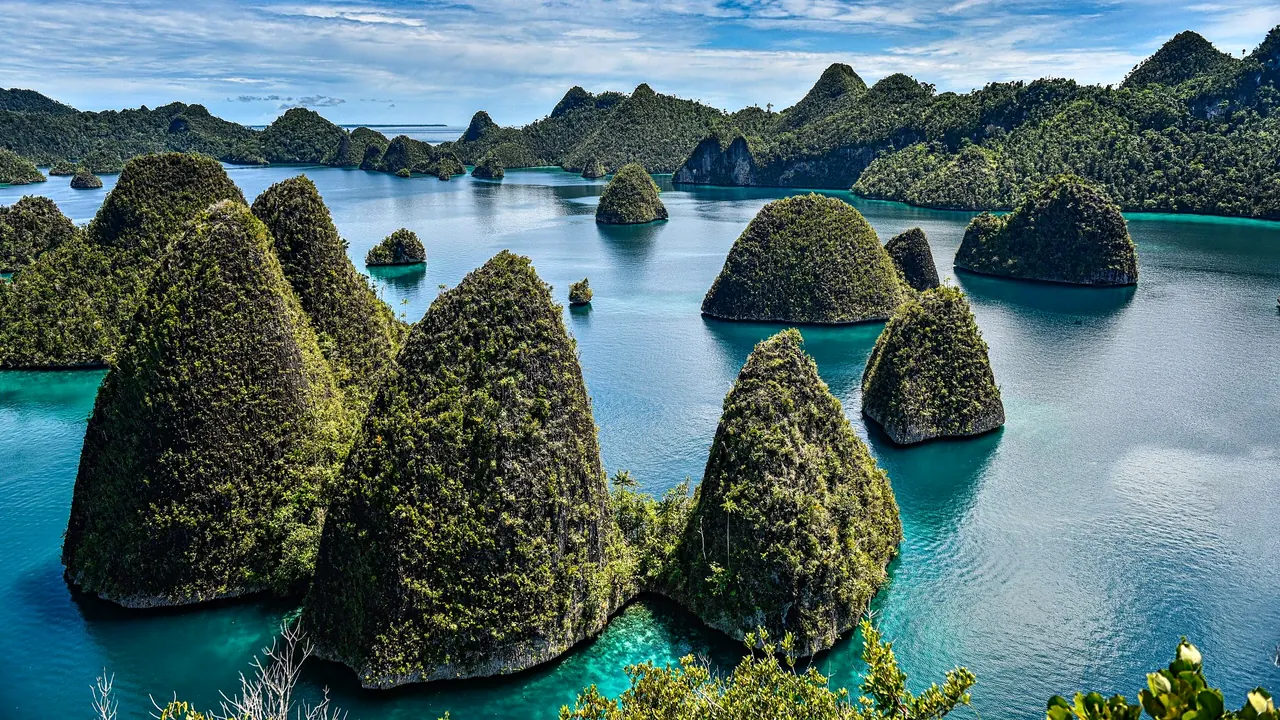
Photos: Borneo by kallerna, CC BY-SA 4.0, cropped; Raja Ampat by Rolandandika, CC BY-SA 4.0, cropped.
Borneo or Raja Ampat?
Our verdict in twelve categories, each scored against the same fixed benchmark cities, and the climate month by month, so you can choose for your trip.
Choose Borneo for
- food and drink
- families
- shopping
Borneo suits travellers who want rainforest wildlife on land and a few towns to come back to. You can watch orangutans at Sepilok, take a dawn boat on the Kinabatangan and climb Mount Kinabalu, then return to Kuching or Kota Kinabalu for hawker food, a riverfront museum and a drink by the water. It is cheaper day to day and much easier with children, and the islands off Kota Kinabalu add some beach time.
Choose Raja Ampat for
- beaches
- nature and the outdoors
- wellness
Raja Ampat is for people who travel to be in the water. Its reefs and karst lagoons are the whole reason to go: you snorkel off the jetty, dive the Dampier Strait and sleep a few steps from the sea. In return you give up almost everything else, with no food scene, no towns to speak of and expensive boat logistics. It suits divers, strong snorkellers and couples who want real remoteness.
Scoreboard
Twelve categories on one fixed scale from 0 to 100. The shaded stretch is the gap between the two.
Your match
Pick a travel style or drag the sliders, and both match scores follow your weighting.
Wins on food and drink and families with your weighting.
Wins on beaches and nature and the outdoors with your weighting.
What matters to you?
Category by category
What the scores mean for a trip.
Beaches & swimming
Raja Ampat is the clear choice for time by the sea. The water is extremely clear and usually right outside your door, and empty sandbars and coves sit between the karst islands. The beaches are narrow and full of coral, so you spend the day snorkelling rather than lying on a towel.
In Borneo, swimming means a fifteen-minute boat ride from Kota Kinabalu to Manukan or Sapi, or a trip north to the quiet beaches around Kudat. The water off Kuching's resort beaches at Damai is murky. The rough seasons also differ: Sabah's coast gets choppy from about November to February, and Raja Ampat's crossings get rough from June to September.
Food & drink
Borneo is far ahead on food, and Kuching is the main reason. You can start the day with Sarawak laksa, eat Foochow noodles and midin fern later, and take home a box of striped kek lapis. In Kota Kinabalu you choose seafood from live tanks or the waterfront grills, and Kadazan-Dusun dishes such as hinava are easy to find.
In Raja Ampat you eat what the homestay cooks: rice, that morning's fish, greens and sometimes papeda. It is fresh but it barely changes from day to day. Waisai's few warungs are the only other option, and in many villages a beer is hard to find.
Culture & sights
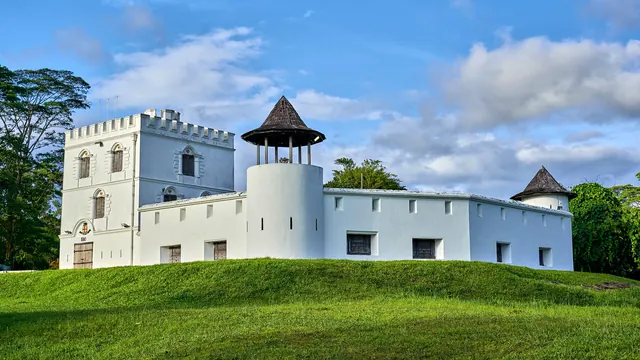
In both places the culture is about people more than monuments, but Borneo has far more to see. Kuching's white Brooke-era riverfront, Fort Margherita and the Borneo Cultures Museum explain the Iban, Bidayuh and Orang Ulu peoples. The Niah Caves and a night in an upriver longhouse add depth.
Raja Ampat has no museums. Its culture is Papuan village life on stilts at Arborek and Sawinggrai, and the ochre hand paintings on the cliffs around Misool, which you see from a boat.
Nightlife
Neither place is for going out, but Borneo at least has evenings. Kota Kinabalu has a strip of waterfront bars facing the sunset and a club or two that fills at weekends, and Kuching has pubs in its old shophouse lanes. In Raja Ampat the evening ends on the homestay deck under a dark sky, and everyone is in bed early for the morning boats.
Nature & outdoors
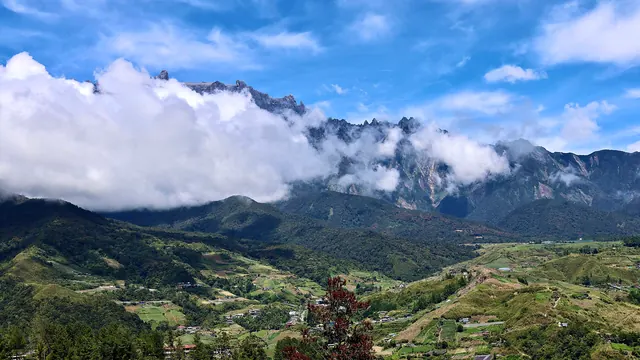
Both are world-class, but in opposite elements. Borneo's strength is on land. You can climb Mount Kinabalu through cloud forest, watch bats stream out of the caves at Mulu and see wild orangutans and pygmy elephants from a boat on the Kinabatangan. Its one great marine site is Sipadan, far off in the south-east.
Raja Ampat's strength is underwater. In the Coral Triangle reefs, mantas gather at cleaning stations around the Dampier Strait, and snorkellers can see plenty from the jetty. Above the surface, it has the karst lagoons of Wayag and Piaynemo and birds of paradise displaying at dawn on Waigeo.
Day trips
From Kuching or Kota Kinabalu you can reach longhouses, markets and old towns by road and be back for dinner. Raja Ampat has nothing like that. Around Kuching, the choices are the Santubong peninsula, the Bidayuh longhouses at Annah Rais and the old gold-mining town of Bau. From Kota Kinabalu, the Sunday market at Kota Belud brings in Bajau horsemen and hill farmers.
In Raja Ampat, a day out to see people rather than reefs means a stop at a stilt village or a visit to Waisai, which has little to hold you.
Good for families
Borneo is a much easier choice with children. Orangutans at Sepilok or Semenggoh and proboscis monkeys seen from a river boat delight school-age children, and Lok Kawi is gentle enough for small ones. A beach resort near Kota Kinabalu makes a comfortable base. The heat, leeches and long transfers still take effort.
Raja Ampat asks a lot more. It has shared-bathroom huts, malaria, and medical help a boat ride and a flight away. It works only for older children who swim confidently and are happy snorkelling with turtles instead of using a pool.
Getting around
Domestic flights hold Borneo together, linking Kuching, Miri, Kota Kinabalu, Sandakan and Tawau, so you can move between two or three bases without long overland journeys. Both main cities are compact enough to walk, and ride-hailing works in each.
In Raja Ampat, you fly to Sorong, take the ferry to Waisai and wait for your homestay's boat. After that every outing is by speedboat. Wayag is hours away, Misool is a separate trip, and rough mid-year seas can cancel crossings, which is why many divers book a liveaboard instead.
Shopping & style
Kuching's Main Bazaar, a riverside row of old shophouses, is the best place in either destination to buy something to take home: pua kumbu weaving, beadwork, Orang Ulu carvings and Sarawak pepper. Kota Kinabalu adds its Sunday Gaya Street market and the waterfront handicraft stalls. In Raja Ampat, shopping means pandanus hats bought on the Arborek jetty and the odd noken bag, so bring sunscreen and cash from Sorong.
Affordability
Borneo is the cheaper trip, particularly if you stay in the cities and take day excursions, living on hawker food and cheap flights. Its costs rise with the big experiences: Kinabalu permits and huts, all-inclusive jungle lodges and Sipadan diving.
In Raja Ampat, almost everything outside the homestay costs a lot. The park permit, flights to Sorong and speedboat charters to Wayag all add up, and diving is priced for an international market. Snorkelling from the jetty is the only way to keep costs low.
Live music & performing arts
Borneo has one event you can plan a trip around: the Rainforest World Music Festival, held at the foot of Mount Santubong each midsummer. The rest of the year, the Sarawak Cultural Village stages sape music and hornbill dances, and around the end of May the Gawai and Kaamatan harvest festivals bring dancing to the villages.
In Raja Ampat, music is down to chance, such as a tifa-drum welcome on a village jetty or Sunday hymns drifting across the water from a wooden church. These moments belong to village life rather than being put on for visitors, so you cannot plan around them.
Wellness & relaxation
Neither is a spa destination, and the kind of rest each offers is different. Borneo has proper spas at the island and Santubong resorts, easy massages in town and the sulphur baths at Poring after the Kinabalu climb, though early wildlife starts make most itineraries tiring. Raja Ampat offers silence instead: no traffic, often no phone signal, a hammock over the water and days set by the tides.
When should you go?
Pick your month. The climate figures are measured averages, not a forecast.
Borneo in July
Raja Ampat in July
Daytime high, °C
Rainfall in the month, mm
Where the figures come from
Raja Ampat's temperatures are measured 65 km from the centre, at Sorong / Jefman.
Raja Ampat has no rain gauge within 25 km of the centre, so its rainfall comes from a gridded climate dataset read at the destination rather than from a gauge further away.
Temperature and rainfall are climate normals, averaged over the years shown. Borneo: 1991-2020 (sunshine 1981-2010) normals, Kuching (8.3 km from centre). Raja Ampat: 1996-2020 (rainfall 1991-2020) normals, Sorong / Jefman (65 km from centre).
Both are hot all year, with daytime highs of about 30°C to 33°C and seas warm enough to swim in every month, so the real question is rain. Their wet seasons fall at opposite ends of the year. Where Borneo's figures are measured, the heavy rain comes from December to February and peaks at about 671mm in January. From June to August it is much drier and sunnier, which makes that the best time for forest treks and island days. Even then, city walks work best early in the morning, before the humidity builds.
Raja Ampat's rain is spread more evenly but peaks in June and July at about 338mm. October to December is the driest stretch, falling to about 161mm in November, and these are the months when its seas are calm. So a mid-year trip favours Borneo, and the months from late autumn through spring favour Raja Ampat.
Which traveller are you?
For a beach and sun trip, choose Raja Ampat. Homestays on Kri, Gam and Arborek sit on white coral sand with clear reef in the shallows. Borneo's best beaches are short island strips off Kota Kinabalu that fill with day-trippers at weekends.
For a food and nightlife trip, Borneo wins easily. Kuching's laksa and kolo mee and Kota Kinabalu's charcoal-grilled seafood give you real eating, and the waterfront bars give you somewhere to go afterwards. Raja Ampat offers set homestay meals, little alcohol and early nights.
On a family trip with children, choose Borneo. English is widely spoken, Malaysians are warm towards children, and you can build the trip from short outings out of a comfortable city base. Just getting to Raja Ampat, by plane, ferry and small boat, is a lot to ask of young children.
Before you go
| Measure | Borneo | Raja Ampat |
|---|---|---|
| Official language | Malay | Indonesian |
| Currency | Malaysian Ringgit (MYR) | Rupiah (IDR) |
| Sockets | G240 V, 50 Hz | CF50 Hz |
| Driving side | Left | Left |
| Time zone | UTC+8 | UTC+9 |
| Emergency number | 999 | 112 |
| Main airport | Kuching International Airport (KCH)23 non-stop destinations | Domine Eduard Osok Airport (SOQ)10 non-stop destinations |
By the numbers
| Measure | Borneo | Raja Ampat |
|---|---|---|
| Population | 18,590,000 | - |
| Swim season, months above 21 °C | 12 months | 12 months |
Where else could you go?
Every comparison below shares a destination with this one, so you can follow Borneo or Raja Ampat somewhere new.
- Tiomanvs Borneo
- Perhentian Islandsvs Borneo
- Penangvs Borneo
- Balivs Borneo
- Langkawivs Borneo
- Palawanvs Borneo