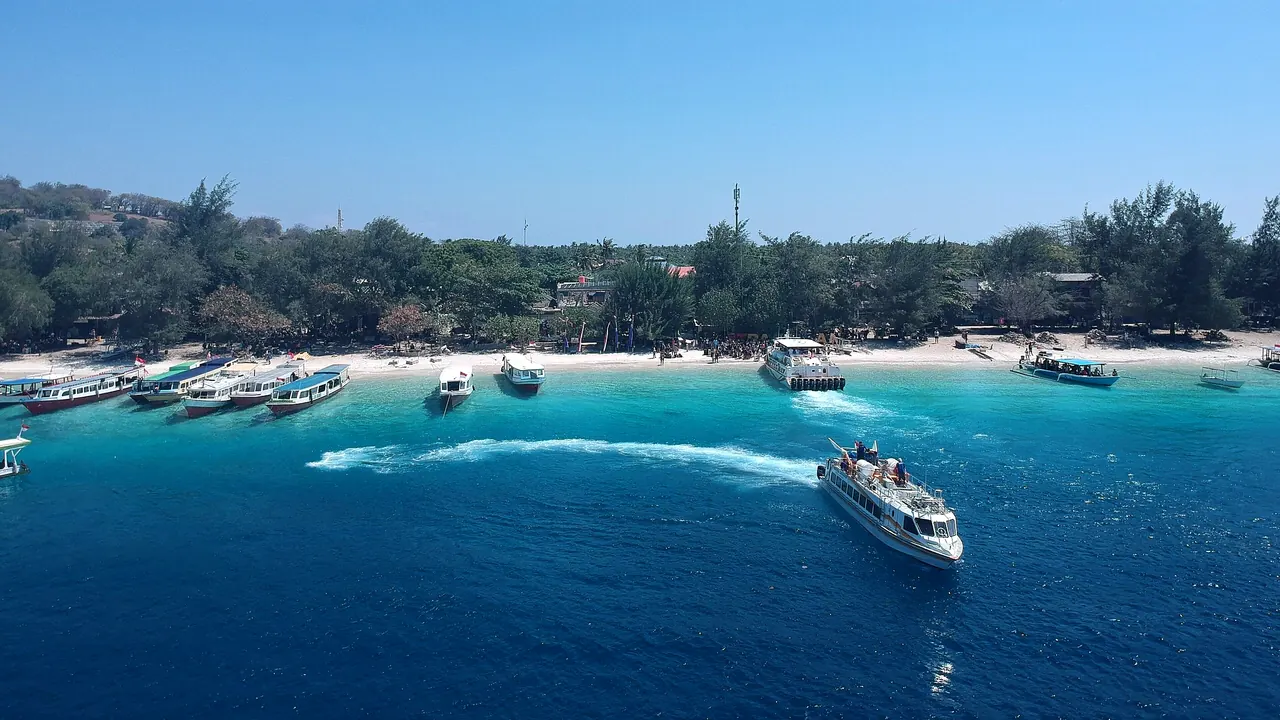
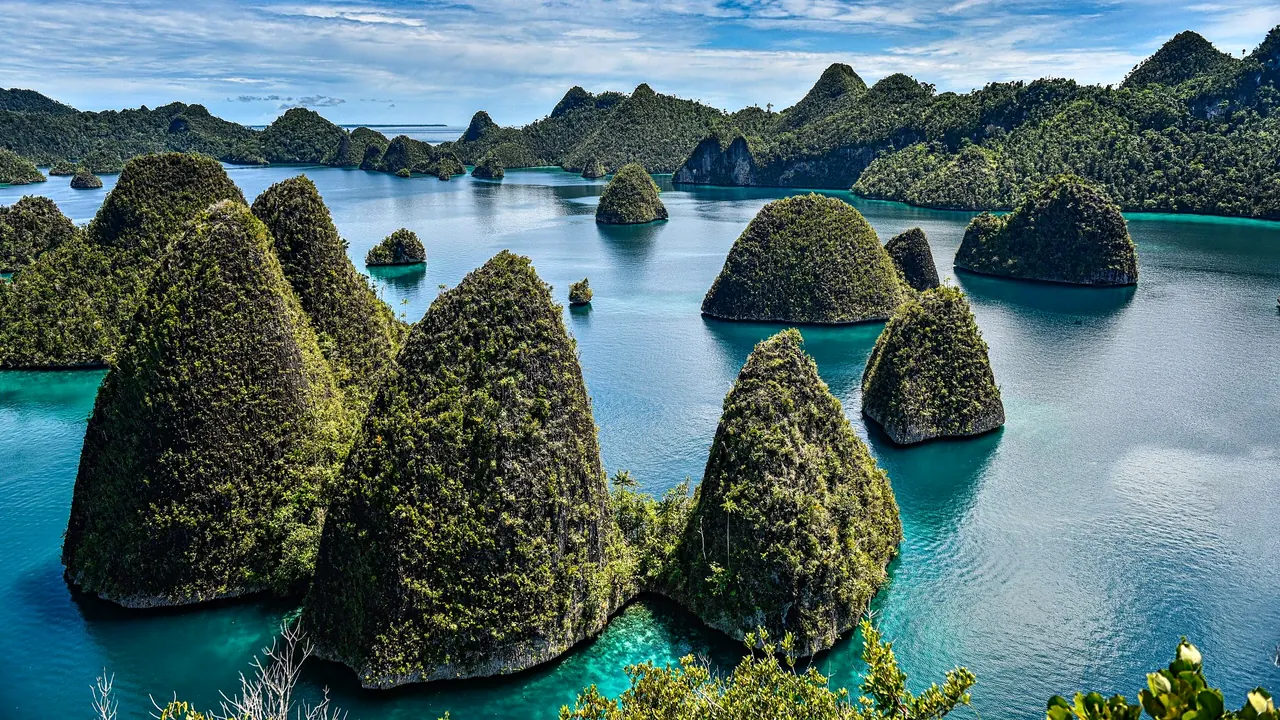
Photos: Gili Islands by Magul, CC BY-SA 4.0, cropped; Raja Ampat by Rolandandika, CC BY-SA 4.0, cropped.
Gili Islands or Raja Ampat?
Our verdict in twelve categories, each scored against the same fixed benchmark cities, and the climate month by month, so you can choose for your trip.
Choose Gili Islands for
- nightlife
- getting around
- prices
The Gili Islands suit a beach vacation that comes with ease and company. They are a fast-boat ride from Bali, the islands are car-free and you get around on foot or by bicycle, and warung meals, massages and yoga classes are close at hand. You can also choose the mood: Gili Trawangan's party strip, Gili Air's calm cafés or the near-silence of Gili Meno. Beginner divers can see turtles close to shore without signing up for an expedition.
Choose Raja Ampat for
- nature and the outdoors
- culture and sights
Raja Ampat is for travellers who care about the reef more than anything else and will put up with the cost and effort to reach it. The coral, the manta cleaning stations and the karst lagoons of Wayag and Piaynemo are on another level from anything around the Gilis. The price is flights to Sorong, chartered speedboats, the same homestay meals every day and evenings that end early under a dark sky.
Scoreboard
Twelve categories on one fixed scale from 0 to 100. The shaded stretch is the gap between the two.
Your match
Pick a travel style or drag the sliders, and both match scores follow your weighting.
Wins on nightlife and getting around with your weighting.
Wins on nature and the outdoors and culture and sights with your weighting.
What matters to you?
Category by category
What the scores mean for a trip.
Beaches & swimming
Both have beaches at the water's edge and warm, clear sea, but they are different kinds of beach. On the Gilis, sand rings each island, so you can walk for a long time, settle in the shade on Gili Air or find a wide, empty stretch on Gili Meno. You still need to choose your swimming spot, because coral and seagrass make wading awkward at low tide.
Raja Ampat's beaches are short strips of coral sand in front of homestays on Kri or Gam, plus sandbars and coves you can only reach by boat. You spend the day in the water over the reef rather than lying on the sand, and there is no beach bar to walk back to.
Food & drink
The Gilis give you choice, even if few meals are memorable. There is Trawangan's harbour night market with fish on ice and satay stalls, small warung set back from the sand serving nasi campur and plecing kangkung, and Gili Air's relaxed cafés. Drinks are easy to find on Trawangan and Air.
In Raja Ampat you eat three set meals a day at your homestay or resort, usually rice, fish caught that morning, greens and sometimes papeda. It is fresh but rarely changes, alcohol is scarce in the villages, and bringing your own coffee and snacks is sensible.
Culture & sights
Neither place has museums or landmarks, but Raja Ampat gives you a little more to see. The ochre hand paintings on the cliffs around Misool, viewed from a boat, and the stilt villages of Arborek and Sawinggrai with their wooden churches are a real glimpse of Papuan life.
On the Gilis, culture is the Sasak and Bugis village lanes behind the beaches and the call to prayer from small mosques. Beyond that there is the Second World War lookout on Trawangan's southern hill, and anything more means crossing to Lombok.
Nightlife
This is the sharpest contrast between the two. Gili Trawangan's east-coast strip has a party night that moves from venue to venue through the week, with DJs, bucket drinks and a young backpacker crowd. Gili Air offers bonfires and beach bars for a gentler evening.
Raja Ampat has no nightlife at all. After dinner people talk on the homestay deck or the liveaboard and go to bed early, because the boats leave in the morning.
Nature & outdoors
Raja Ampat is one of the great marine environments of the world, far beyond the Gilis. Cape Kri, the Dampier Strait and Blue Magic hold more coral and fish species than almost anywhere, and mantas gather at cleaning stations. Above the water there are the karst lagoons of Wayag and Piaynemo, birds of paradise in the forests of Waigeo and Gam, and excellent kayaking.
The Gilis are an easy, friendly place to learn to dive, with turtles off Gili Meno and the north of Gili Air. On land, though, the islands are small and flat, and the best you can do is cycle a loop and watch the sunset behind Mount Agung.
Day trips
From the Gilis you can hop to the other two islands, or cross to Lombok and drive the clifftop road to Senggigi, visit Mataram's markets or go to Sasak weaving villages. Sade, in the south, makes a long but rewarding day.
Raja Ampat's outings are boat trips for scenery and reefs. As places to visit, there are only the stilt villages, the small administrative town of Waisai and, near Misool, the rock paintings.
Good for families
With children, the Gilis are much easier. Gili Meno and Gili Air have no cars or motorbikes, so children can walk and cycle freely, Meno has a small turtle hatchery, and snorkelling from the beach regularly turns up turtles. Medical care is limited to small clinics. The shallows can be sharp with coral rubble, so watch where children wade, and Trawangan's party strip is noisy late into the night, which makes it a poor base for a family.
Raja Ampat asks a lot of a family: flights, a ferry and boat transfers, basic huts with shared bathrooms, malaria, and serious medical care a long way off. Only older children who swim confidently really benefit.
Getting around
Once you are on the Gilis, everything is within walking, cycling or cidomo distance. Getting there means a fast boat of about two hours from Bali or a drive across Lombok to Bangsal, though the sand lanes and the few boats a day between islands take some patience.
Raja Ampat is far harder going. You fly to Sorong, take a two-hour ferry to Waisai, and from then on every outing is a chartered or shared speedboat. Wayag is hours away, and Misool is a separate trip altogether, which is why many divers choose a liveaboard instead.
Shopping & style
Neither is a place to shop, but the Gilis at least have a few stalls and boutiques. Trawangan's main strip and the harbours sell sarongs, swimwear and Lombok pearls, which vary a lot in quality.
In Raja Ampat, shopping means pandanus hats and bags woven on Arborek, often with a manta ray design, and noken string bags sold from village jetties. These are lovely keepsakes, but you should bring all your essentials from Sorong.
Affordability
The Gilis are much cheaper. Simple bungalows, warung meals, massages and bicycles cost little, and the fast boat from Bali and dive courses are the main costs that add up. July and August are when rooms are most expensive.
In Raja Ampat a homestay on Kri or Gam with meals included is modest, but almost everything else costs more because the islands are so remote. You pay for the marine park permit and the flights to Sorong, diving is pricier than elsewhere in Indonesia, and speedboat charters to Wayag or Piaynemo are expensive unless you share them.
Live music & performing arts
Neither has theatres or concerts, but on the Gilis you can at least go out and find live music. Some beach bars on Trawangan and Air put on bands and acoustic sets, mostly reggae and covers. It is easy listening over a drink rather than a reason to choose the islands, and for traditional Sasak music and dance you have to cross to Lombok.
Raja Ampat has no stage or venue of any kind. If your boat reaches the right village on the right day, you may be met on the jetty by tifa drums and dancers in feathers and woven skirts. On Sunday mornings the hymns from the wooden churches carry across the water. These are moments of village life you may come across by chance, and you cannot plan an evening around them.
Wellness & relaxation
The Gilis make it easy to relax properly. Massage is everywhere, from beach shelters to day spas, open-air yoga runs daily on Gili Air and Trawangan, and some retreats combine yoga with freediving. Gili Meno and Gili Air are quiet enough that a few days often turn into a week.
Raja Ampat gives you deep quiet rather than pampering. There is little phone signal, you rest in a hammock over the water and sleep early, and massages are limited to a handful of upmarket resorts.
When should you go?
Pick your month. The climate figures are measured averages, not a forecast.
Gili Islands in July
Raja Ampat in July
Daytime high, °C
Rainfall in the month, mm
Where the figures come from
Raja Ampat's temperatures are measured 65 km from the centre, at Sorong / Jefman.
Raja Ampat has no rain gauge within 25 km of the centre, so its rainfall comes from a gridded climate dataset read at the destination rather than from a gauge further away.
Temperature and rainfall are climate normals, averaged over the years shown. Gili Islands: 1991-2020 normals, Ampenan / Selaparang (20.5 km from centre). Raja Ampat: 1996-2020 (rainfall 1991-2020) normals, Sorong / Jefman (65 km from centre).
The Gilis have a clear dry season from June to September. Rain falls to about 14mm in August, the sunshine is longest and the water is at its calmest, so these are the months to go. From November to March the heavy rain returns at around 240mm a month. It stays hot at about 32°C all year, and the sea never drops much below 28°C.
Raja Ampat has no real dry season. It rains every month, most of all from May to August, when June brings about 338mm and the southeast wind can make boat crossings rough. October and November are the gentlest months, with less rain and the calmest seas. The two regions are at their best at almost opposite times of year: the Gilis in the middle of the year, Raja Ampat from autumn through to the early months.
Which traveller are you?
For an outdoors trip, Raja Ampat is the clear choice. Its reefs at the heart of the Coral Triangle bring mantas, wobbegongs and schooling fish. Add kayaking between karst islets and birds of paradise at dawn, and the Gilis' flat islands and learner dive sites cannot compete.
On a food and nightlife trip, the Gili Islands win easily. Trawangan's evening market grills fish to order, the warung serve fiery ayam taliwang, and there is a loud party somewhere every night. Raja Ampat offers the same homestay meals every day and nothing after dark.
On a trip with a tight budget, choose the Gili Islands. Bungalows, warung meals, bicycle hire and massages all cost little. In Raja Ampat, even a cheap homestay comes with a marine park permit, flights to Sorong and speedboat charters that add up quickly.
Before you go
| Measure | Gili Islands | Raja Ampat |
|---|---|---|
| Official language | Indonesian | Indonesian |
| Currency | Rupiah (IDR) | Rupiah (IDR) |
| Sockets | CF50 Hz | CF50 Hz |
| Driving side | Left | Left |
| Time zone | UTC+8 | UTC+9 |
| Emergency number | 112 | 112 |
| Main airport | Lombok International Airport (LOP)10 non-stop destinations | Domine Eduard Osok Airport (SOQ)10 non-stop destinations |
By the numbers
| Measure | Gili Islands | Raja Ampat |
|---|---|---|
| Swim season, months above 21 °C | 12 months | 12 months |
Where else could you go?
Every comparison below shares a destination with this one, so you can follow Gili Islands or Raja Ampat somewhere new.
- Lombokvs Gili Islands
- Nusa Penidavs Gili Islands
- Nusa Lembonganvs Gili Islands
- Balivs Gili Islands
- Floresvs Gili Islands
- Floresvs Raja Ampat