Photos: Caye Caulker by dronepicr, CC BY 2.0, cropped; Lake Atitlan by Murray Foubister, CC BY-SA 2.0, cropped.
Caye Caulker or Lake Atitlan?
Our verdict in twelve categories, each scored against the same fixed benchmark cities, and the climate month by month, so you can choose for your trip.
Choose Caye Caulker for
- beaches
- getting around
- families
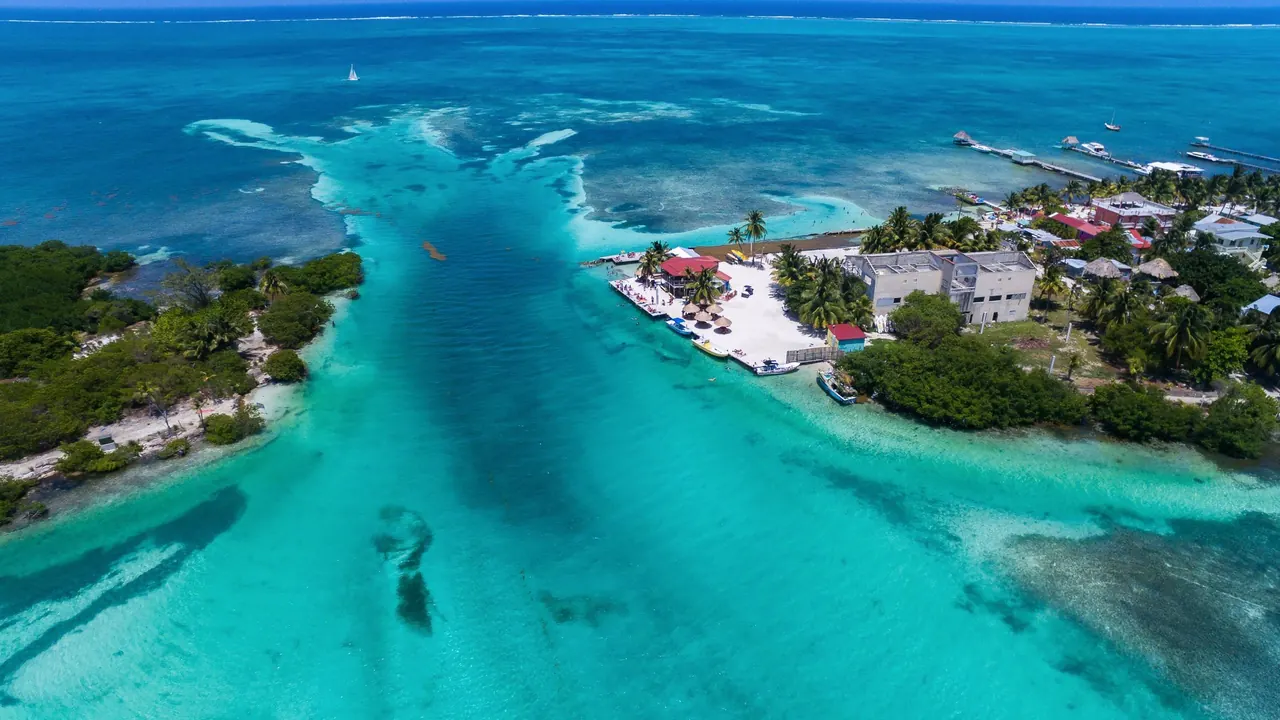
Caye Caulker is the choice for a vacation built around the sea. The reef lies just offshore, the water is warm enough to stay in all day, and the village is small and car-free, so the days pass between a dock, a snorkel boat and a hammock. It suits travellers who want sun and marine life and don't mind having little to see on land.
Choose Lake Atitlan for
- prices
- shopping
- culture and sights
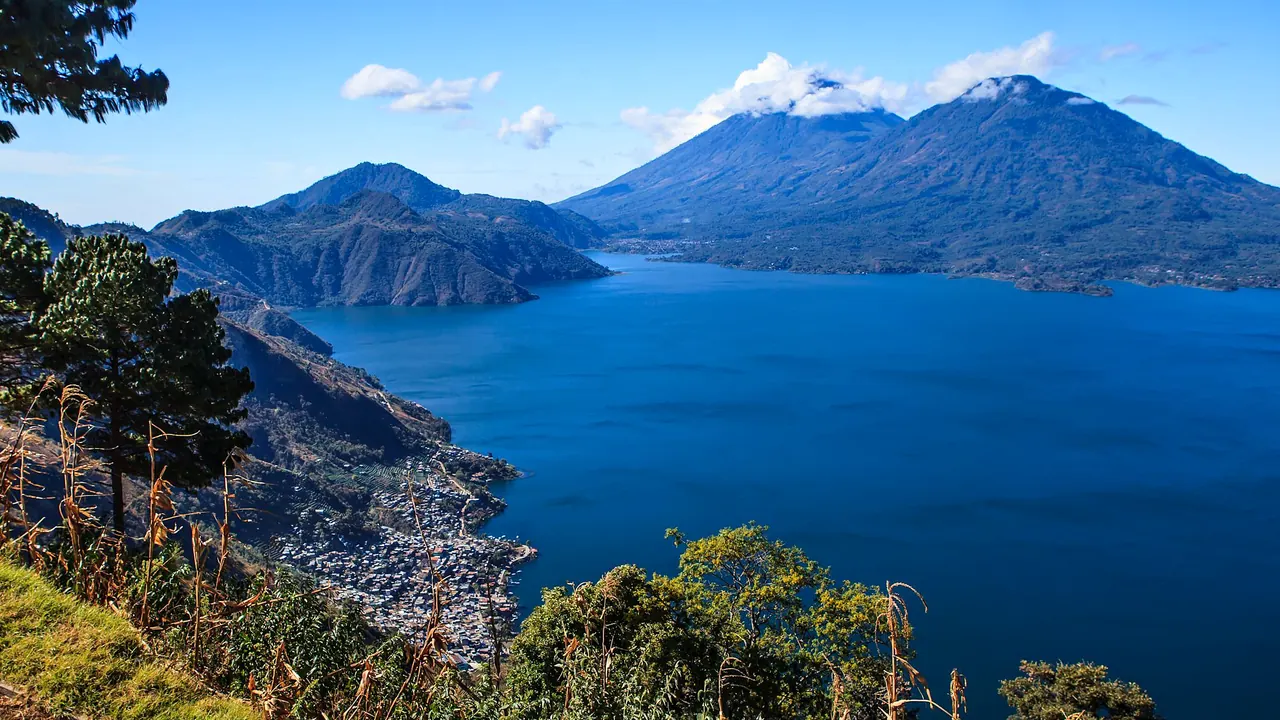
Lake Atitlan suits those who would rather walk, climb and look around. Volcanoes rise straight from the shore, the Maya towns keep their own dress and markets, and San Marcos draws people for yoga and retreats. It also costs far less. In return the water is cool for swimming, and getting between villages depends on boats and steep steps.
Scoreboard
Twelve categories on one fixed scale from 0 to 100. The shaded stretch is the gap between the two.
Your match
Pick a travel style or drag the sliders, and both match scores follow your weighting.
Wins on beaches and getting around with your weighting.
Wins on prices and shopping with your weighting.
What matters to you?
Category by category
What the scores mean for a trip.
Beaches & swimming
Neither has a classic beach, but Caye Caulker has the warm sea that Lake Atitlan lacks. Its water is clear, shallow and close to 28°C, so you can stay in for hours. People swim off docks or at the Split, and the uninhabited cayes the snorkel boats visit have more sand.
At Lake Atitlan the shore is steep and rocky. The lake sits high in the mountains, so the water stays around 20°C. A jump from the cliff platform at San Marcos or a jetty near Jaibalito is refreshing, but it is a break in the day rather than a reason to come.
Food & drink
Lake Atitlan gives you more to explore at the table. Its Maya towns serve pepián, tamales and lake fish in comedors and markets. The traveller lanes of San Pedro and San Marcos add vegetarian and international cafés, and coffee cooperatives around San Juan take you from the farm to the roaster.
Caye Caulker's appeal is narrower: lobster, snapper and conch grilled along Front Street on the day they are landed, with Creole rice and beans and fry jacks alongside. It is excellent in lobster season but gets repetitive after a few days.
Culture & sights
Here the lake is far ahead. Its shore is lined with Tz'utujil and Kaqchikel towns where many people still wear traditional dress. Santiago Atitlán's sixteenth-century church and Maximón's shrine, San Juan's murals and Sololá's market make a few full days of visits.
On Caye Caulker the culture is the village itself: painted stilt houses on sand streets and a Creole and Mestizo fishing community. For Maya ruins or colonial buildings you have to take a boat to the mainland.
Nightlife
Both are low-key, and both are aimed at backpackers rather than clubbers. On Caye Caulker the evening runs along one barefoot strip. It starts with sunset drinks at the Split and moves on to the reggae bars of Front Street, with the same crowd each night.
At Lake Atitlan the going out is concentrated in San Pedro La Laguna, with happy hours and dance parties at weekends, plus a smaller row of bars in Panajachel. Elsewhere the last boats decide when the night ends, so where you stay decides whether you go out at all.
Nature & outdoors
Both are outstanding outdoors, but in opposite ways. Caye Caulker's nature is under the water: snorkelling with nurse sharks and rays at Hol Chan and Shark Ray Alley, manatees in the seagrass, dive trips to the Great Blue Hole and kitesurfing on the trade wind. On land it is flat scrub with no hiking.
Lake Atitlan is about height and views. San Pedro, Tolimán and Atitlán each rise above 3,000m from the shore. You can hike Indian Nose for sunrise, walk the trails between villages or go paragliding. Paddling is limited to the calm mornings before the Xocomil wind gets up.
Day trips
Lake Atitlan has much more within reach. Public boats make it easy to see two or three villages in a day. By road, the twice-weekly market at Chichicastenango and the ruins of Iximché are easy outings.
From Caye Caulker, the options beyond the reef are the busier town of San Pedro on Ambergris Caye, or Belize City and Altun Ha. Lamanai and the caves take a long day, so most visitors stay on the water.
Good for families
Neither is easy with toddlers, but Caye Caulker is the gentler of the two. It has no cars and a flat village to wander, and confident older swimmers love snorkelling with rays. The current at the Split and the lack of sand limit what small children can do.
At Lake Atitlan many hotels sit at the top of steep steps from a dock, afternoon crossings get choppy, and you need to be careful with food and water. Panajachel, with road access and the zip lines and hanging bridges of the nearby reserve, is the base that works best for families.
Getting around
Caye Caulker is the simpler place to stay. You walk or cycle its few flat sand streets, there are no cars, and the boats leave from docks along the front. The only real effort is the water taxi or small plane from Belize City.
Lake Atitlan takes more planning. There is no road all the way round the shore, so public launches link the villages. Crossings are best before the afternoon wind, and the boats stop early in the evening. The shuttle from Guatemala City or Antigua takes about three hours on mountain roads, and many lodges can only be reached by boat and steps.
Shopping & style
Lake Atitlan is the place to bring an empty bag. San Juan La Laguna's weaving cooperatives show their backstrap looms and natural dyes. Santiago and San Antonio Palopó have their own textile and pottery styles, and Panajachel's Calle Santander is a long run of stalls where you are expected to bargain.
Caye Caulker has a few gift shops, galleries and stalls on Front Street selling sarongs and carvings, and little beyond groceries.
Affordability
Money goes much further at Lake Atitlan. Comedor meals, public boats, tuk-tuks and San Pedro's guesthouses cost very little. Even with boutique lodges and guided climbs, a stay is modest by most standards.
Caye Caulker is the cheaper of Belize's two main islands, but it is expensive for Central America because nearly everything arrives by boat. Hostels and the street grills help, but snorkel tours, dives and Blue Hole flights take a large share of any budget.
Live music & performing arts
Neither is a place for theatre or concerts. Lake Atitlan has slightly more to come across: acoustic and open-mic nights in San Pedro and San Marcos, plus marimba, dances and processions on saint's days and in Holy Week, which is especially moving in Santiago Atitlán.
On Caye Caulker it comes down to a reggae band in a beach bar or drumming at the Split.
Wellness & relaxation
Lake Atitlan is the stronger choice if you want to rest with a purpose. San Marcos La Laguna is given over to yoga shalas, meditation, silent retreats and courses lasting weeks. Tzununa has retreat lodges in gardens above the water, and some villages offer the temazcal, a Maya steam hut.
Caye Caulker relaxes you more simply, with hammocks, docks and car-free quiet, plus a few massage rooms and waterfront yoga classes. Neither has a spa of any size.
When should you go?
Pick your month. The climate figures are measured averages, not a forecast.
Caye Caulker in July
Lake Atitlan in July
Daytime high, °C
Rainfall in the month, mm
Where the figures come from
Caye Caulker's temperatures are measured 38 km from the centre, at Belize / Phillip Goldston Intl. Airport.
Caye Caulker has no rain gauge within 25 km of the centre, so its rainfall comes from a gridded climate dataset read at the destination rather than from a gauge further away.
Lake Atitlan's temperatures are measured 71 km from the centre, at Guatemala Aeropuertola Aurora.
Lake Atitlan has no rain gauge within 25 km of the centre, so its rainfall comes from a gridded climate dataset read at the destination rather than from a gauge further away.
Temperature and rainfall are climate normals, averaged over the years shown. Caye Caulker: 1991-2020 normals, Belize / Phillip Goldston Intl. Airport (37.8 km from centre). Lake Atitlan: 1998-2020 (rainfall 1991-2020) normals, Guatemala Aeropuertola Aurora (71.4 km from centre).
Caye Caulker is hot all year. Daytime highs are around 28°C in winter and reach 32°C from May to October, and the sea is warm enough to swim in every month. The best stretch is February to April, which is dry and the sunniest time of year. Rain builds from May and peaks in October at about 257mm, though even the wet months have plenty of sunshine between showers. The summer heat makes the middle of the day tiring, but the island asks for little walking.
On the lakeshore, Lake Atitlan is never hot. Highs stay in the mid-20s all year, which is comfortable for hiking and village walks in any month. Rain is what matters there. November to April is dry, and January is almost rainless. May to October is a true wet season, with June and September each bringing about 470mm and cloud often hiding the volcanoes. The two are both at their best from February to April, when both are dry.
Which traveller are you?
For a beach and sun trip, Caye Caulker is the one to pick. Expect to spend your days in the water rather than on a towel: snorkel from the dock, doze in a hammock, and take a boat out when you want proper sand. At the lake, a swim is a quick cold plunge between walks.
On a culture and arts trip, Lake Atitlan is the better base. Here culture means everyday life rather than museums. You can spend a week moving from town to town by launch, timing your days around market days and learning a little about weaving and Maya belief. On Caye Caulker, the village streets are all there is.
On a tight budget, Lake Atitlan lets you stay much longer for the same money. Its best days cost almost nothing: walking between villages, climbing to a viewpoint at dawn, sitting by the water. On Caye Caulker the island itself is pleasant, but nearly everything worth doing there means paying for a boat.
Before you go
| Measure | Caye Caulker | Lake Atitlan |
|---|---|---|
| Official language | English | Spanish |
| Currency | Belize Dollar (BZD) | Quetzal (GTQ) |
| Sockets | ABG60 Hz | AB120 V, 60 Hz |
| Driving side | Right | Right |
| Time zone | UTC-6 | UTC-6 |
| Emergency number | 911 | Police 110/120, ambulance 128, fire 123 |
| Main airport | Philip S. W. Goldson International Airport (BZE)29 non-stop destinations | La Aurora International Airport (GUA)19 non-stop destinations |
| Public holidays this year | 14 days | 13 days |
By the numbers
| Measure | Caye Caulker | Lake Atitlan |
|---|---|---|
| Population | 2,729 | - |
| People per km² | 700 | - |
| Swim season, months above 21 °C | 12 months | - |
Where else could you go?
Every comparison below shares a destination with this one, so you can follow Caye Caulker or Lake Atitlan somewhere new.
- Ambergris Cayevs Caye Caulker
- Roatánvs Caye Caulker
- Cozumelvs Caye Caulker
- Riviera Mayavs Caye Caulker
- Isla Mujeresvs Caye Caulker
- Holboxvs Caye Caulker