Guatemala
Lake Atitlan
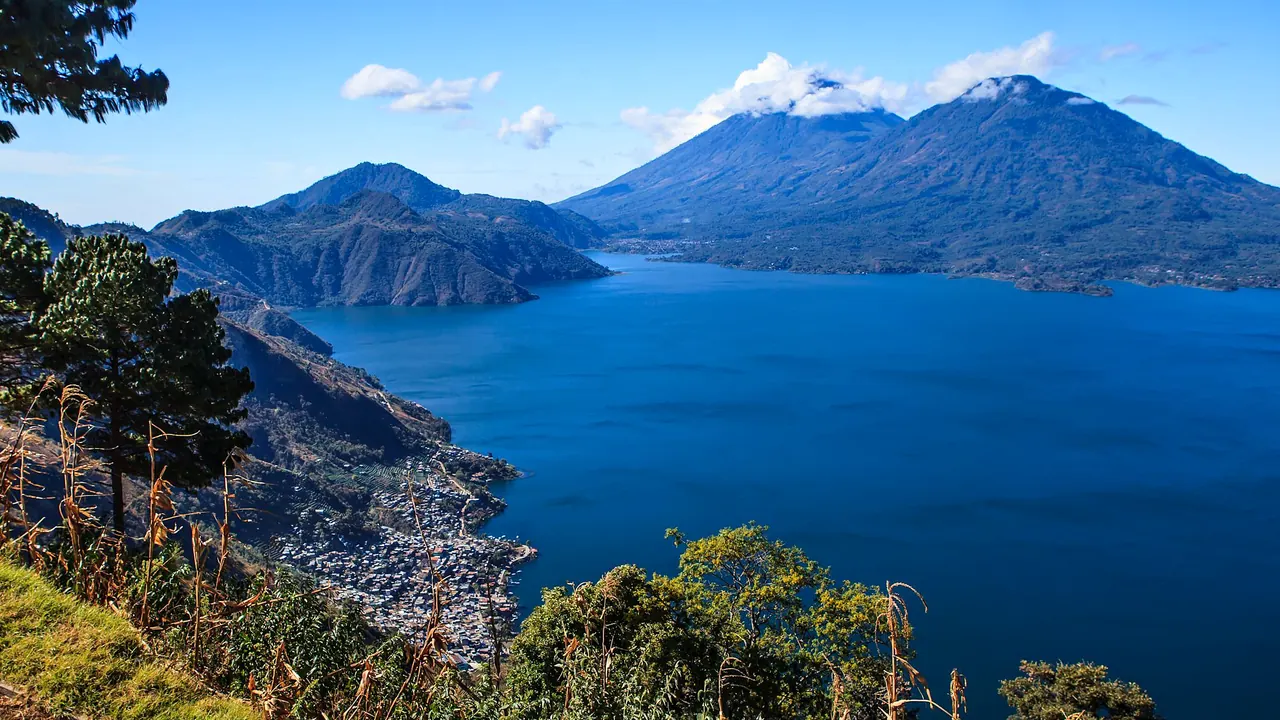
Lake Atitlan and its volcanoes from San Antonio Palopo
- Nature & outdoors83
- Affordability80
- Wellness & relaxation68
Photo: Murray Foubister, CC BY-SA 2.0, cropped
Match
45
Every category weighted equally
- Beach & sun48
- Culture & arts42
- Food & nightlife40
- Family trip48
- Outdoors54
- Relax & unwind50
- Shopping & style42
- On a budget49
Lake Atitlan in twelve categories
Our verdict on each, scored 0 to 100 against the same fixed benchmark cities, so a score means the same thing on every page.
Beaches & swimming. Scores 28 out of 100.
Food & drink. Scores 38 out of 100.
Culture & sights. Scores 42 out of 100.
Nightlife. Scores 28 out of 100.
Nature & outdoors. Scores 83 out of 100.
Day trips. Scores 58 out of 100.
Good for families. Scores 28 out of 100.
Getting around. Scores 35 out of 100.
Shopping & style. Scores 45 out of 100.
Affordability. Scores 80 out of 100.
Live music & performing arts. Scores 12 out of 100.
Wellness & relaxation. Scores 68 out of 100.
Lake Atitlan category by category
Beaches & swimming
28Lake Atitlan has no beaches to speak of. The shore is steep and rocky, and swimming means jumping off a wooden dock or from the rocks. The usual spot is the cliff platform in the small reserve at San Marcos La Laguna, with quieter jetties around Jaibalito, Tzununa and Santa Cruz. At about 1,560m the lake is cool and refreshing rather than warm, around 20°C at the surface for much of the year.
The water is clearest away from the larger towns. Near Panajachel and San Pedro it is less inviting, because waste runs into the lake. A swim is a nice break in the day, but beach life is not part of a stay here.
Food & drink
38Eating here splits into two worlds. In the Maya towns, food means the comedor and the market: black beans, handmade tortillas, pepián and other thick stews, tamales wrapped in leaves, and fish from the lake in Santiago Atitlán and San Pedro. Panajachel's Calle Santander and the lanes of San Pedro and San Marcos are lined with traveller cafés serving vegetarian bowls, bakery goods, curries and falafel to a long-staying crowd.
The best thing to drink is the coffee. Atitlán is a recognised Guatemalan coffee region, and cooperatives around San Juan and San Pedro run farm and roasting visits. Beyond that the scene is pleasant, but it is narrow and informal.
Culture & sights
42What draws people here is a living culture rather than monuments. The villages around the shore are Tz'utujil and Kaqchikel Maya towns, and many people still wear traditional dress, each town with its own weaving patterns. Santiago Atitlán is the richest stop. It has a sixteenth-century church, a busy market and Maximón, a folk saint who is housed with a different religious brotherhood each year and whom visitors can go and see.
San Juan La Laguna has painted murals and natural-dye weaving cooperatives that explain their craft. Sololá, above Panajachel, has a large indigenous market. Formal museums are few and small, though, and a couple of days of village visits covers the main sights.
Nightlife
28Most of the going out happens in San Pedro La Laguna. Its lakeside lanes have backpacker bars, happy hours, the odd dance party and some late nights at weekends. Panajachel has a smaller row of bars on and around Calle Santander.
Elsewhere the lake goes to bed early. San Marcos is a yoga village, and the Maya towns are quiet once the last boats have stopped. The nights suit travellers who want a few drinks with other travellers, not anyone looking for clubs.
Nature & outdoors
83The setting is the reason to come. The lake fills a huge volcanic caldera, and the cones of San Pedro, Tolimán and Atitlán rise straight from its southern shore, each above 3,000m. Steep green slopes of coffee, maize and cloud forest climb behind the villages.
The classic hike is the dawn climb of Indian Nose above San Juan for sunrise over the volcanoes. San Pedro volcano is a hard but manageable half-day ascent through forest. Paths between Santa Cruz, Jaibalito and Tzununa link the villages, and there are paragliding flights over the water near Santa Catarina Palopó. Kayaking and paddleboarding are best in the early morning, because a strong afternoon wind, the Xocomil, roughens the lake. The dry season, from November to April, brings the clearest views.
Day trips
58The first outings are across the water. Public boats link Panajachel, Santiago Atitlán, San Juan, San Pedro, San Marcos and Santa Catarina Palopó, so you can see two or three different villages in a day. Santa Catarina is known for its painted blue-and-turquoise houses.
By road, Chichicastenango's huge market, held twice a week, is about an hour and a half away. It is the outing most visitors make, along with the hilltop church where Maya and Catholic rites mix. Iximché, the ruined Kaqchikel capital, makes a quieter stop on the way to the highlands. Antigua Guatemala and Quetzaltenango are long days, and most people visit them as stops on the way in or out.
Good for families
28Families with older, adventurous children manage well. Boat rides between villages are fun, and the small nature reserve outside Panajachel has hanging bridges, a butterfly garden and zip lines. Swimming off the docks and kayaking in the calm mornings round out the days.
With younger children it is harder work. Many lakeside hotels are reached by steep, uneven steps from a dock. Afternoon crossings can be choppy. Pavements are rare, and you need to be careful with food and water. Panajachel, with its road access and flatter streets, is the easiest base for a family.
Getting around
35On the lake the boat does the work. Small public launches shuttle between Panajachel, Santiago, San Pedro, San Juan, San Marcos and the smaller landings, and you wave them down from the docks. Within each village, tuk-tuks climb the hills and the centres can be covered on foot.
There is no road all the way round the lake. Crossings are best made in the morning, before the afternoon wind raises the waves, and boats stop early in the evening. Reaching the lake from Guatemala City or Antigua takes about three hours by tourist shuttle or bus on winding mountain roads. Many hotels are reachable only by water and a flight of steps.
Shopping & style
45Shopping here means textiles and crafts. San Juan La Laguna is the place to buy with care. Its women's cooperatives weave on backstrap looms with natural dyes and show how each piece is made. Santiago Atitlán is known for embroidered birds and its own huipil style, and San Antonio Palopó for its blue weaving and pottery.
Panajachel's Calle Santander is a long run of stalls selling bags, blankets, jade and beadwork. The choice is wide, but the stock is often the same from stall to stall, and you are expected to bargain. Sololá's market sells everyday goods to locals. There is no fashion or design shopping of any kind.
Affordability
80The lake is cheap for most visitors. Local meals in comedors and markets, public boats, tuk-tuks and village guesthouses all cost very little. San Pedro in particular has plenty of good budget rooms for long-staying travellers.
Costs rise on the traveller trail. Cafés in San Marcos and Panajachel, private boat hires, guided volcano climbs, shuttles to and from the lake and the boutique lodges on the quieter shores are priced for foreigners. Even so, a comfortable stay costs far less than in most travel destinations.
Live music & performing arts
12There is little to attend. Some bars and cafés in San Pedro and San Marcos host acoustic sets or open-mic nights. Marimba bands, dances and religious processions come out for village saint's days and Holy Week, which is especially moving in Santiago Atitlán. There are no theatres, concert halls or regular performances.
Wellness & relaxation
68Slowing down is a big part of the lake's appeal, and San Marcos La Laguna is where it happens. Its leafy footpaths are lined with yoga shalas and meditation spaces, and the village offers silent retreats, sound healing, massage and cacao ceremonies. Several schools run teacher trainings and courses that last for weeks. Tzununa and the quieter stretches of the north shore have retreat lodges in gardens above the water, suited to a stay of a week or more.
Bathing culture is modest. The local tradition is the temazcal, a Maya steam hut heated with hot stones and herbs, which some villages and lodges offer, but there are no thermal baths, and anyone wanting a polished spa will find only a few hotel treatment rooms. The healing scene leans spiritual and alternative, so it suits travellers looking for practice and quiet more than pampering.
Where to stay in Lake Atitlan
Panajachel is the practical first base. Shuttles from Guatemala City and Antigua arrive here, the streets are flatter and reachable by road, and boats leave its docks for most of the shore. That makes it the easiest choice for families and for anyone planning the drive to Chichicastenango or Sololá. The town is less pretty than the villages, though, and the water nearby is not good for swimming.
San Pedro La Laguna suits budget travellers and anyone who wants company in the evenings. It has cheap rooms, traveller cafés, most of the lake's bars, and the volcano climb starts right above it. Next door, San Marcos La Laguna is greener and quieter. It is built around yoga, meditation and swimming off the rocks, and suits a longer stay spent on practice and rest.
For a quiet stay, Santa Cruz, Jaibalito and Tzununa on the north shore have lodges above clearer water, with footpaths between them. Many are reached only by boat and a steep flight of steps, so they suit couples and walkers better than small children. Boats link the whole lake but stop early in the evening, so one base is enough for most trips. A few nights on a second shore simply cuts down on crossings.
When should you go?
Pick a month to see what it is like. The climate figures are measured averages, not a forecast.
Lake Atitlan in July
Daytime high, °C
Rainfall in the month, mm
The whole year
Shaded against this destination’s own year: the deepest cell is its best month for that figure and the palest its weakest.
Where the figures come from
Lake Atitlan's temperatures are measured 71 km from the centre, at Guatemala Aeropuertola Aurora.
Lake Atitlan has no rain gauge within 25 km of the centre, so its rainfall comes from a gridded climate dataset read at the destination rather than from a gauge further away.
Temperature and rainfall are climate normals, averaged over the years shown. Lake Atitlan: 1998-2020 (rainfall 1991-2020) normals, Guatemala Aeropuertola Aurora (71.4 km from centre).
Before you go
| Measure | Lake Atitlan |
|---|---|
| Official language | Spanish |
| Currency | Quetzal (GTQ) |
| Sockets | AB120 V, 60 Hz |
| Driving side | Right |
| Time zone | UTC-6 |
| Emergency number | Police 110/120, ambulance 128, fire 123 |
| Main airport | La Aurora International Airport (GUA)19 non-stop destinations |
| Public holidays this year | 13 days |
Compare Lake Atitlan with
Every comparison with a written verdict behind it.