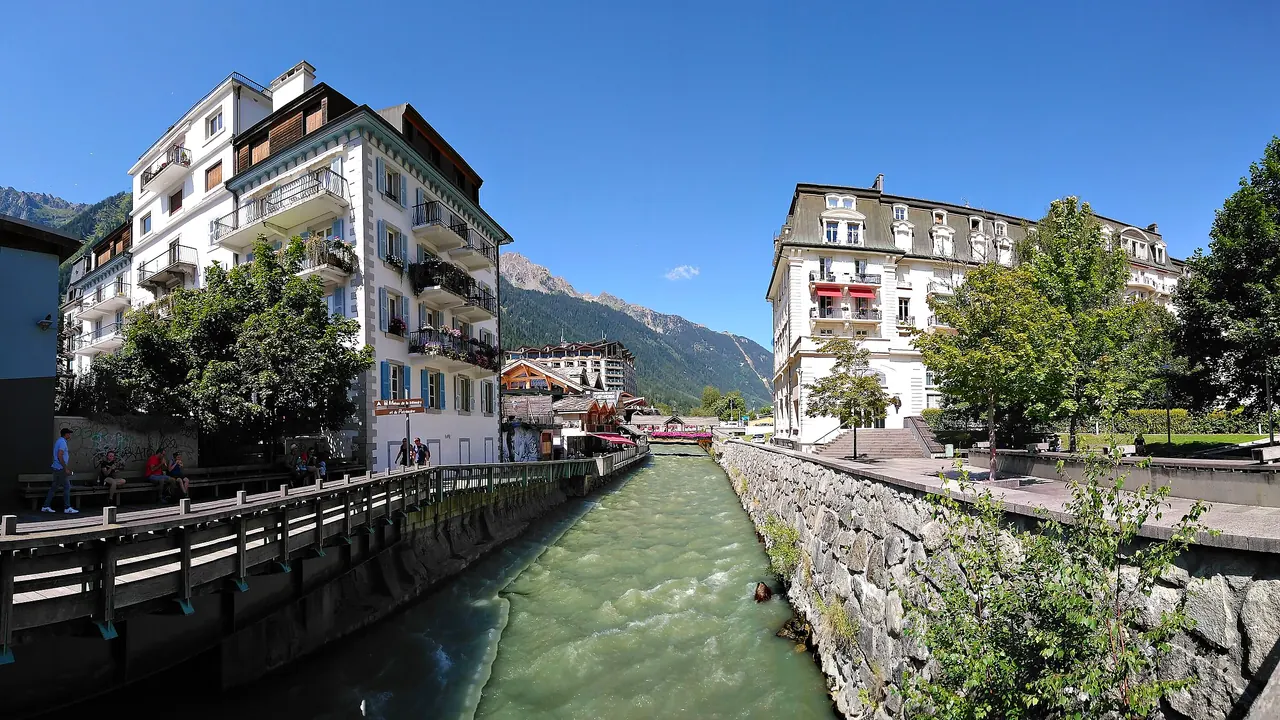
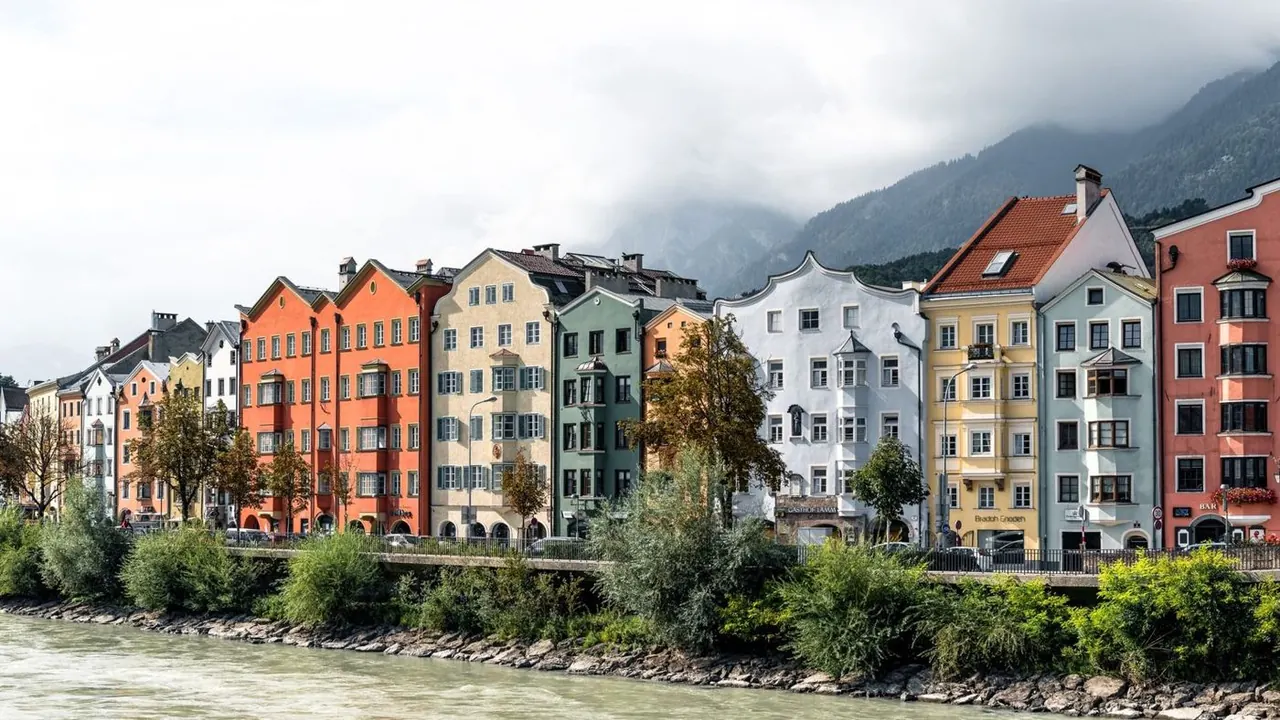
Photos: Chamonix by Tiia Monto, CC BY-SA 3.0, cropped; Innsbruck by Wolfgang Weiser, Pexels License.
Chamonix or Innsbruck?
Our verdict in twelve categories, each scored against the same fixed benchmark cities, and the climate month by month, so you can choose for your trip.
Choose Chamonix for
- wellness
- nature and the outdoors
Chamonix is for a trip where the mountain is the whole point. It sits right under Mont Blanc, its cable cars run up to glaciers and granite spires, and it is where alpinism began, so climbers, serious skiers and anyone who wants to stand among ice fields will find the high mountains closer here than almost anywhere. It costs more, the town has little to see indoors, and evenings mean après-ski or a long soak in a spa facing the glaciers.
Choose Innsbruck for
- culture and sights
- live music and the arts
- prices
Travellers who want a city as well as the Alps will be happier in Innsbruck. A Habsburg old town, an imperial church and a Renaissance castle fill the days the weather closes in, and there is opera and an orchestra in the evenings. Trains run to Munich, Salzburg and South Tyrol. The Nordkette ridge is still only a funicular ride from the centre, and the stay costs noticeably less than one under Mont Blanc.
Scoreboard
Twelve categories on one fixed scale from 0 to 100. The shaded stretch is the gap between the two.
Your match
Pick a travel style or drag the sliders, and both match scores follow your weighting.
Wins on wellness and nature and the outdoors with your weighting.
Wins on culture and sights and live music and the arts with your weighting.
What matters to you?
Category by category
What the scores mean for a trip.
Beaches & swimming
Neither is a place to swim, but Innsbruck does a little better on a hot day. Locals go up to the small, shallow Lanser See and Natterer See on the plateaus just above the city, where the water gets warm enough for a comfortable dip in high summer.
From Chamonix, the nearest proper bathing spot is Lac de Passy, further down the Arve valley with Mont Blanc straight ahead. Otherwise it is the town pool, or Lake Annecy, which is more than an hour's drive away.
Food & drink
The two eat equally well, but the cooking is different. Chamonix is about Savoyard cheese: fondue, raclette and tartiflette made with Reblochon and Beaufort, with Savoie white wine on the side. In Innsbruck it is Tyrolean Gröstl, Kaspressknödel and Kaiserschmarrn, plus Viennese-style coffee houses with strudel that Chamonix has no equivalent for.
In both places, the best meals tend to be at mountain huts. Chamonix's resort kitchens can feel repetitive, and many close between seasons. Innsbruck's student districts add cheaper, more varied places, although the inns by the Golden Roof are mostly aimed at tour groups.
Culture & sights
Innsbruck is far stronger here. Its arcaded old town by the Inn holds the Golden Roof, the Hofburg and the Hofkirche, where the tomb of Maximilian I is guarded by giant bronze figures. Ambras Castle, with its cabinet of curiosities and Habsburg portraits, could fill a morning on its own, so it takes two or three days to see the city properly.
Chamonix's heritage is the story of climbing: the Musée Alpin in an old palace hotel, the statues of the first Mont Blanc climbers and the climbers' cemetery. It is worth a few hours, but Chamonix is a place for looking at peaks, not buildings.
Nightlife
The two are about level for nights out, but the crowds differ. Chamonix's evenings follow the ski calendar: après-ski at the foot of the slopes, then a narrow lane of pubs packed with guides, seasonal workers and a young, mostly English-speaking crowd, and a couple of small clubs on busy nights.
Innsbruck's nightlife runs on its university. Bars and small clubs fill the brick arches under the railway viaduct, and there are wine bars near the campus. Many winter visitors do their partying at après-ski in the surrounding resorts rather than in town.
Nature & outdoors
Both are among the best mountain bases in Europe, but they suit different trips. Chamonix is higher and wilder, with Mont Blanc towering almost 4km above the valley floor. Its cable cars reach glacier terrain at the Aiguille du Midi, and from town you can set out on the Vallée Blanche or the Tour du Mont Blanc.
Innsbruck's strength is how close the mountains are to the city. You can go from a café in the old town to the Nordkette ridge in under half an hour, with the Karwendel nature park behind it and the Stubai Glacier for skiing almost all year. There is more gentle hiking and rafting here, but less high-altitude ice.
Day trips
Innsbruck has the wider choice, mainly because it is on the main railway lines through the Alps. Medieval Hall in Tirol is ten minutes away, and Munich, Salzburg, Bolzano with Ötzi the Iceman, and Merano can all be reached by train. Neuschwanstein is about two hours by car.
Chamonix's best outings cross a border: Courmayeur and Roman Aosta through the Mont Blanc Tunnel, Martigny on the Mont Blanc Express, and Annecy and Geneva by road. Beyond those, mountain roads are slow and most of what is within reach is other resorts.
Good for families
Families do equally well in either, and in both the animals are the highlight. Chamonix has the Merlet park, where ibex and marmots roam a slope facing Mont Blanc, plus the red train to the Mer de Glace and a summer luge, although its highest cable cars go too high too fast for small children.
Innsbruck's Alpenzoo is on the same funicular line as the Nordkette, the warm plateau lakes are good for family swims, and the Swarovski Crystal Worlds have a play tower. In both towns, rainy days with small children take some planning.
Getting around
Innsbruck is easier to get around, because it is a real city with trams. Trams and buses cover the city and run out to Igls and the Stubai valley, the main station is in the centre, and the Hungerburg funicular leaves from the edge of the old town.
Chamonix's centre is just as easy on foot, and with the guest card the buses and the valley train are free. Its ski areas are spread out along the valley, though, so winter days mean crowded ski buses, and evening services are thin.
Shopping & style
Innsbruck offers a bit more shopping in general: high-street chains along Maria-Theresien-Strasse, and loden jackets, dirndls and woodcarvings in the old-town arcades. Chamonix's pedestrian streets specialise in technical climbing and ski gear, in shops that go back generations, plus génépi and rock crystals. Anyone who wants fashion beyond that will end up in Geneva or Annecy.
Affordability
Neither is a bargain, but Innsbruck is clearly the cheaper stay. It has ordinary Western European city prices with a resort premium on top, the trams are fairly priced, and its city cards bundle lifts and sights together.
Chamonix charges the prices of a famous resort, and the big cable cars, mountain guides and paragliding flights add up fast. Free valley transport, picnics and trails that start from the valley floor help. In both towns, spring and autumn are cheaper than the peak weeks.
Live music & performing arts
Innsbruck has a proper season. The Tiroler Landestheater stages opera, operetta and dance, a symphony orchestra plays in the congress hall, and every summer the Festival of Early Music fills historic rooms such as the Spanish Hall at Ambras Castle.
Chamonix has only its summer jazz festival, with some sets played high in the mountains, and the odd church concert or mountain film evening. For anything more, you have to go to Geneva.
Wellness & relaxation
Chamonix is the better place to unwind after a hard day outdoors. Its big day spa, built on the Italian thermal model, has hot outdoor pools that look straight up at the glaciers, and the warm springs of Saint-Gervais-les-Bains are about 25 minutes down the valley. The town itself, though, is busy, with early starts and climbers everywhere.
Innsbruck has no springs of its own, so wellness there means hotel spas in Igls and on the plateaus, or the large thermal complexes in the Ötztal and Zillertal, about an hour away. Its unhurried streets are calmer to come back to.
When should you go?
Pick your month. The climate figures are measured averages, not a forecast.
Chamonix in July
Innsbruck in July
Daytime high, °C
Rainfall in the month, mm
Where the figures come from
Chamonix's temperatures are measured 35 km from the centre, at Bourg-St-Maurice.
Chamonix has no rain gauge within 25 km of the centre, so its rainfall comes from a gridded climate dataset read at the city rather than from a gauge further away.
Temperature and rainfall are climate normals, averaged over the years shown. Chamonix: 1999-2020 (rainfall 1991-2020) normals, Bourg-St-Maurice (34.9 km from centre). Innsbruck: 1991-2020 normals, Innsbruck-Flughafen (3.3 km from centre).
Both valleys follow the same temperature curve, mild in high summer and cold from November to March, so June to September suits hiking and walking the streets, and winter belongs to skiers. Chamonix is a touch warmer at its peak, with highs of about 27°C in July. The real difference is rain. Chamonix is wet all year and never drops much below about 105mm in any month. Its heaviest spells come in late autumn, early winter and May.
Innsbruck runs the other way. Its winters are dry, with only about 40mm in February, which suits crisp ski days and walks around the old town. Summer is its wettest season, peaking around 144mm in August, but it is also the sunniest, with about 229 hours of sunshine in July. For a dry winter break Innsbruck has the edge, while in summer both need a flexible plan for the high ground.
Which traveller are you?
For a culture and arts trip, Innsbruck is the clear choice. The Hofkirche with Maximilian's bronze figures, the Hofburg, Ambras Castle and a theatre staging opera and dance give it days of content, while Chamonix's mountaineering museums take only an afternoon.
On a trip on a tight budget, Innsbruck stretches the money further. Neither is cheap, but Chamonix's rooms, lifts and resort restaurants cost more. In Innsbruck, fairly priced trams, student cafés and city cards that bundle in lifts and sights keep costs down.
For mountaineers and alpine climbers, Chamonix has no real rival. The guiding company here is the oldest in the world, the Aiguille du Midi lifts you straight onto glacier terrain, and the Vallée Blanche and the routes on Mont Blanc start from the town itself.
Before you go
| Measure | Chamonix | Innsbruck |
|---|---|---|
| Official language | French | German, Austrian Sign Language |
| Currency | Euro (EUR) | Euro (EUR) |
| Sockets | CE230 V, 50 Hz | CF230 V, 50 Hz |
| Driving side | Right | Right |
| Time zone | UTC+1, UTC+2 in summer | UTC+1, UTC+2 in summer |
| Emergency number | 112 | 112 |
| Elevation | 995 m | 574 m |
| Main airport | Geneva International Airport (GVA)68 km from centre150 non-stop destinations | Innsbruck Airport (INN)4 km from centre40 non-stop destinations |
| Public holidays this year | 11 days | 16 days |
By the numbers
| Measure | Chamonix | Innsbruck |
|---|---|---|
| City population | 8,705 | 132,499 |
| People per km² | 75 | 1,263 |
| Museums within 10 km | 3 | 28 |
| UNESCO World Heritage sites within 50 km | 0 | 1 |
Where else could you go?
Every comparison below shares a destination with this one, so you can follow Chamonix or Innsbruck somewhere new.
- Annecyvs Chamonix
- Genevavs Chamonix
- Lausannevs Chamonix
- Munichvs Innsbruck
- Cortina d'Ampezzovs Innsbruck
- Turinvs Chamonix