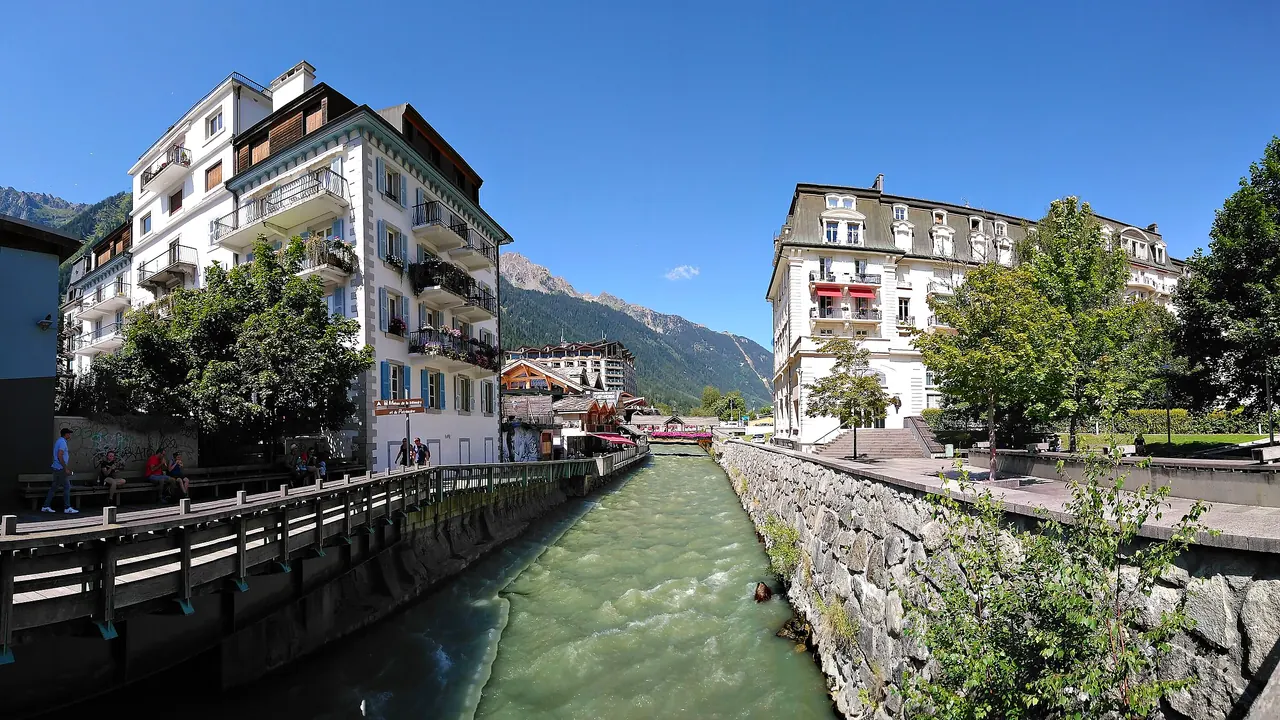
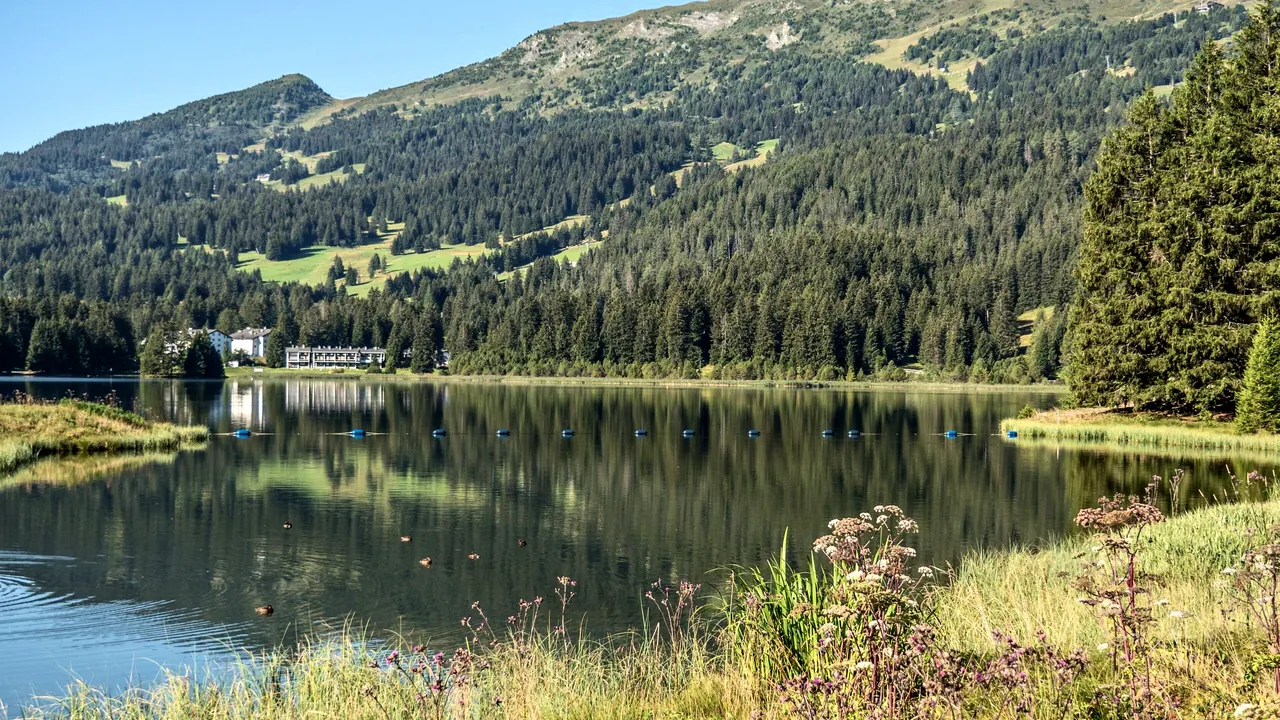
Photos: Chamonix by Tiia Monto, CC BY-SA 3.0, cropped; Lenzerheide by Jag9889, CC BY-SA 4.0, cropped.
Chamonix or Lenzerheide?
Our verdict in twelve categories, each scored against the same fixed benchmark cities, and the climate month by month, so you can choose for your trip.
Choose Chamonix for
- nightlife
- shopping
- food and drink
Chamonix suits travellers who want the mountains at their most dramatic and a proper town around them. The cable cars lift you straight from the centre into glacier country, the guiding and climbing tradition is the deepest in the Alps, and after dark there are more restaurants, bars and late nights than a mountain valley usually offers. It also has a little more history to look at, and it is the less punishing of the two on the wallet.
Choose Lenzerheide for
- beaches
- families
Lenzerheide is the quieter pick. Its wide bowl of forest, meadow and lake suits mixed-ability skiers, mountain bikers and families who want gentle terrain and calm evenings more than high-altitude thrills. Expect a spread-out resort village rather than a town, with Swiss prices and little going on after dinner, but with the Albula railway and the old streets of Chur close by for days off the hill.
Scoreboard
Twelve categories on one fixed scale from 0 to 100. The shaded stretch is the gap between the two.
Your match
Pick a travel style or drag the sliders, and both match scores follow your weighting.
Wins on nightlife and shopping with your weighting.
Wins on beaches and families with your weighting.
What matters to you?
Category by category
What the scores mean for a trip.
Beaches & swimming
Neither place is for swimmers, and the difference is about where the water is. Lenzerheide has its lake on the doorstep: the Heidsee lido is a short walk from the village, though at its altitude the water stays bracing even in high summer.
Chamonix has no lake in town, only the municipal pool with its summer outdoor basin. For a proper swim you drive down to Lac de Passy, or make a day of it at the warmer, clearer water of Lake Annecy, a little over an hour away.
Food & drink
Chamonix eats better, mainly through range. Beyond the fondue, tartiflette and Reblochon of the Savoyard table, its international crowd supports bistros and several serious kitchens, and the town's cheese shops and charcuteries make picnic-building a pleasure.
Lenzerheide's cooking is Graubünden fare, with capuns, pizokel and air-dried beef, served mostly in hotel dining rooms and slope huts. It is satisfying after a day outside, and the Bündner Herrschaft wines are a nice local touch, but the choice is narrow and many doors shut between seasons.
Culture & sights
Neither is a culture destination, but Chamonix has a story to tell. As the birthplace of alpinism and host of the first Winter Olympics, it gives you the Musée Alpin, the pioneers' statues, the old guides' quarter and the climbers' cemetery, enough for a rewarding half day.
Lenzerheide has almost nothing of the kind: a few small churches and Romansh place names, with no museums. Anyone curious about history goes down to Chur.
Nightlife
Chamonix goes out a good deal harder. Après-ski moves on to a lane of pubs in the old town where guides, seasonal workers and visitors mix until late, and a couple of small clubs run into the early hours, with a young, largely English-speaking crowd.
Lenzerheide's evenings follow the same pattern on a smaller scale. Slope-side bars are loud at the end of the ski day, and a single small club opens on peak weekends, but most summer nights end on a terrace after dinner.
Nature & outdoors
Both are first-rate mountain bases, but Chamonix has the bigger mountains. The Mont Blanc massif rises almost 4km above town, the Aiguille du Midi puts you among glaciers at 3,842m, and the Vallée Blanche, the Tour du Mont Blanc and the world's oldest guiding company make it the place for serious alpinism.
Lenzerheide is gentler and broader: forest and meadow beneath the Rothorn, skiing linked to Arosa, cross-country loops and a biathlon arena. Its summer strength is mountain biking, with a bike park that hosts international races, and its walks suit people who want views without glacier terrain.
Day trips
Both have a good handful of outings, but they point in different directions. From Chamonix you cross borders: Courmayeur and the Roman town of Aosta through the tunnel, Martigny in Switzerland by the Mont Blanc Express, and Annecy or Geneva by car.
Lenzerheide's trips are a tour of Graubünden: Chur's cathedral and painted lanes half an hour away, the UNESCO-listed Albula railway towards St Moritz, the Heidi village of Maienfeld and the wine villages, with Liechtenstein about an hour off.
Good for families
Both work well for children who like being outdoors. Lenzerheide's edge is gentleness: broad sunny beginner slopes, a lakeside lido with pedalos and a quiet, orderly village.
Chamonix offers more to see, with the Merlet animal park, the red train to the Mer de Glace and treetop courses, though its highest lifts and steep terrain suit teenagers better than toddlers. In either place a wet day leaves you short of options.
Getting around
Chamonix is easier to get about. Its centre is compact and flat, the Aiguille du Midi and Montenvers stations are in town, and a train plus buses run the length of the valley, free with the guest card, though ski buses get packed in winter.
Lenzerheide has no railway. The PostBus links it to Chur station in about half an hour, and local buses join the villages and lifts, but the resort stretches along several kilometres of road, so walking covers only the centre and the lake shore.
Shopping & style
Chamonix has a real reason to shop: generations-old climbing and ski shops with technical gear and expert advice that many climbers save their big purchases for, along with rock crystals, génépi and Savoyard cheeses.
Lenzerheide covers only the basics, mainly rental shops, outdoor clothing and a few delis with Graubünden sausage and nut tart. For anything more, both send you elsewhere, to Geneva or Annecy and to Chur or Zurich.
Affordability
Chamonix costs less overall, though it is still a famous resort with prices to match. Its expense comes in peaks, around the February school vacations, Christmas and July and August, and the biggest outlays are the ones you choose: the high cable cars, a day with a mountain guide or a paragliding flight. In late spring, early summer or autumn rooms ease off noticeably, at the cost of some lifts and businesses being shut.
Lenzerheide is expensive more evenly, because Swiss prices reach the everyday things as well as the treats: the hotel room, the ski or bike hire, a plate of pizokel in a slope hut. Winter and Christmas are the dearest, summer is only a little kinder, and the guest card's bus rides and extras take just a small edge off the bill.
Live music & performing arts
Neither offers a theatre or concert season, so serious music means Geneva from Chamonix or Chur from Lenzerheide. Chamonix at least has a long-running summer jazz festival, with some sets played up in the mountains, and mountain film evenings. In Lenzerheide live music is mostly a band at an après-ski bar or an open-air concert around a sporting event.
Wellness & relaxation
Chamonix has the stronger offer for recovery. A large Italian-style day spa with hot outdoor pools looks up at the glaciers, and the thermal springs of Saint-Gervais are about 25 minutes down the valley. The town itself, though, is busy and starts early.
Lenzerheide relaxes you differently, through quiet evenings and fresh air rather than public baths. Its spas are in the larger hotels, and for thermal water you drive about an hour to Bad Ragaz.
When should you go?
Pick your month. The climate figures are measured averages, not a forecast.
Chamonix in July
Lenzerheide in July
Daytime high, °C
Rainfall in the month, mm
Where the figures come from
Chamonix's temperatures are measured 35 km from the centre, at Bourg-St-Maurice.
Chamonix has no rain gauge within 25 km of the centre, so its rainfall comes from a gridded climate dataset read at the destination rather than from a gauge further away.
Lenzerheide's temperatures are measured 33 km from the centre, at Samedan.
Lenzerheide's station stands 234 m above the city centre, so the centre is likely a little warmer than the figures say.
Lenzerheide has no rain gauge within 25 km of the centre, so its rainfall comes from a gridded climate dataset read at the destination rather than from a gauge further away.
Temperature and rainfall are climate normals, averaged over the years shown. Chamonix: 1999-2020 (rainfall 1991-2020) normals, Bourg-St-Maurice (34.9 km from centre). Lenzerheide: 2015-2025 (rainfall 1991-2020) normals, Samedan (32.9 km from centre).
Chamonix sits much lower and is clearly the warmer of the two. From June to August it reaches about 26°C, warm enough for lake swimming and long days walking in town, while Lenzerheide's summer stays fresh at around 20°C, good for hiking and biking but cool for a swim. In winter Lenzerheide is properly cold, with daytime highs below freezing in January, whereas Chamonix stays a few degrees above zero in the valley.
The rain falls differently. Chamonix is damp all year, wettest in late autumn and early winter at around 169mm in December, with its driest weeks in July and August. Lenzerheide is the opposite: its winters are fairly dry, and its rainfall peaks in summer, so June to September bring the most showers, at about 164mm in August. For summer walking Chamonix in July and August is the drier and warmer choice. For crisp, settled ski weather, Lenzerheide's late winter is the stronger bet.
Which traveller are you?
For a food and nightlife trip, Chamonix is the clear choice. Savoyard cheese dishes, a wider run of bistros and a handful of ambitious kitchens give more to eat, and a lane of late pubs and small clubs carries the evening well past dinner.
On a family trip with young children, Lenzerheide fits more easily. The broad, sunny slopes suit beginners, the Heidsee lido and pedalos sit right in the village, and nothing pushes small children up to the extreme altitudes of Chamonix's highest cable cars.
On a tight budget, Chamonix hurts less, though neither is cheap. Free valley trains and buses with the guest card, easy self-catering, and trails that start from the valley floor without a lift go further there than amid Lenzerheide's Swiss prices.
Before you go
| Measure | Chamonix | Lenzerheide |
|---|---|---|
| Official language | French | French, German, Italian, Romansh |
| Currency | Euro (EUR) | Swiss Franc (CHF) |
| Sockets | CE230 V, 50 Hz | CJ230 V, 50 Hz |
| Driving side | Right | Right |
| Time zone | UTC+1, UTC+2 in summer | UTC+1, UTC+2 in summer |
| Emergency number | 112 | 112 |
| Elevation | 995 m | 1,473 m |
| Main airport | Geneva International Airport (GVA)68 km from centre150 non-stop destinations | Zürich Airport (ZRH)112 km from centre226 non-stop destinations |
| Public holidays this year | 11 days | 9 days |
By the numbers
| Measure | Chamonix | Lenzerheide |
|---|---|---|
| Population | 8,705 | 2,641 |
| People per km² | 75 | - |
| Museums within 10 km | 3 | 1 |
| UNESCO World Heritage sites within 50 km | 0 | 1 |
Where else could you go?
Every comparison below shares a destination with this one, so you can follow Chamonix or Lenzerheide somewhere new.
- Arosavs Lenzerheide
- Saint-Gervais-les-Bainsvs Chamonix
- Flainevs Chamonix
- Megèvevs Chamonix
- Samoënsvs Chamonix
- Davosvs Lenzerheide