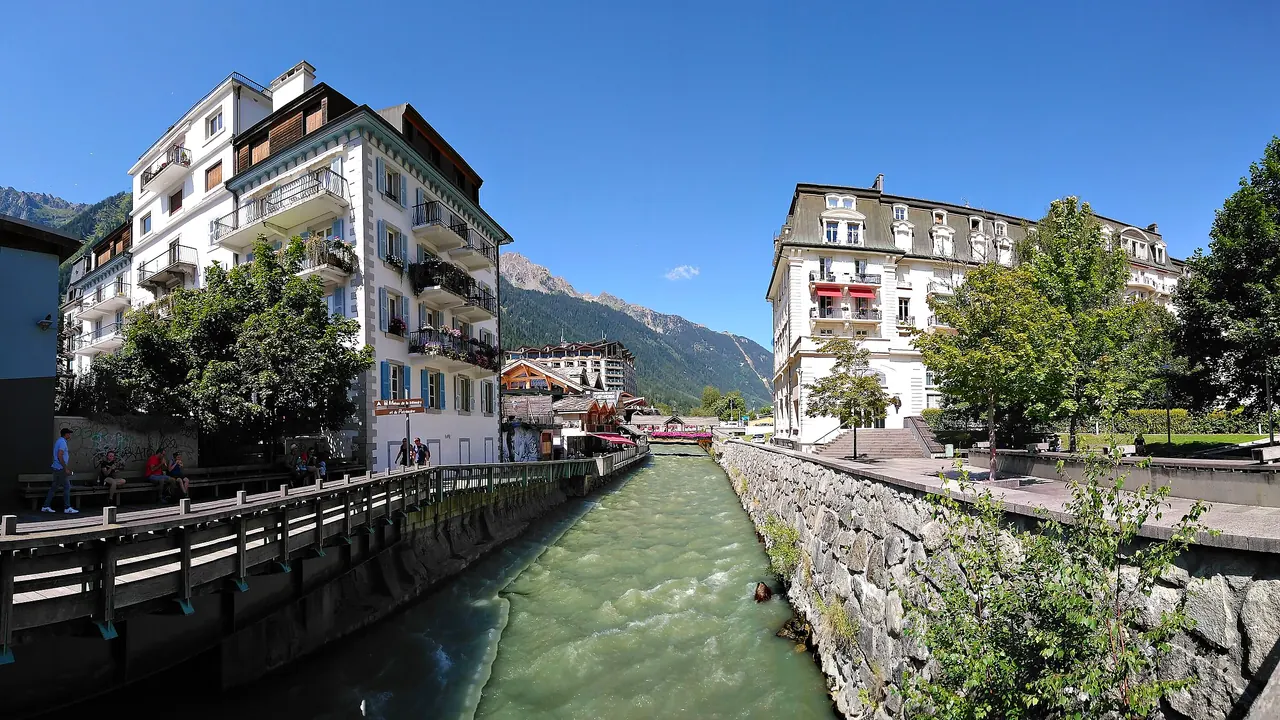
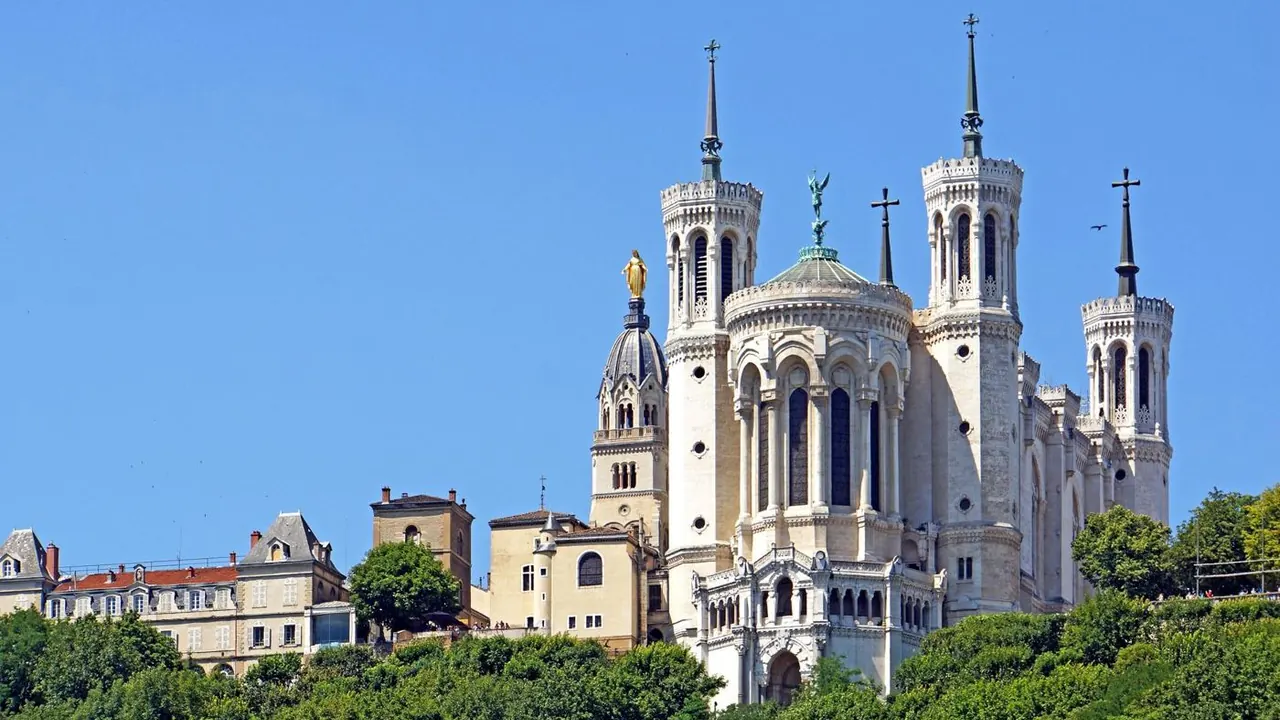
Photos: Chamonix by Tiia Monto, CC BY-SA 3.0, cropped; Lyon by Dennis G. Jarvis, CC BY-SA 2.0, cropped.
Chamonix or Lyon?
Our verdict in twelve categories, each scored against the same fixed benchmark cities, and the climate month by month, so you can choose for your trip.
Choose Chamonix for
- nature and the outdoors
- wellness
- beaches
Chamonix is the choice when the mountains are the whole point. Cable cars lift you from the town centre straight onto glaciers, and the trails, climbing routes and steep ski runs start at the edge of town. Evenings are for après-ski, a thermal pool facing the ice and a plate of fondue. Come for the scenery and the effort. It costs more, and there is little indoors when the weather closes in.
Choose Lyon for
- culture and sights
- live music and the arts
- food and drink
Lyon suits travellers who want a real city, with its bouchons, markets, Roman theatres, Renaissance lanes and a full programme of opera and dance. It is better for eating well, for wet-weather days and for wine-country excursions, and it is cheaper. The Alps stay a day trip away rather than outside your window.
Scoreboard
Twelve categories on one fixed scale from 0 to 100. The shaded stretch is the gap between the two.
Your match
Pick a travel style or drag the sliders, and both match scores follow your weighting.
Wins on nature and the outdoors and wellness with your weighting.
Wins on culture and sights and live music and the arts with your weighting.
What matters to you?
Category by category
What the scores mean for a trip.
Beaches & swimming
Neither city is a swimming destination, and the difference is in the setting. Chamonix's nearest bathing is Lac de Passy down the valley, a small lake with a sandy strip that looks straight at Mont Blanc. Lyon has a supervised bathing lake in the Grand Parc de Miribel-Jonage on its own outskirts, which is easier to reach but is a city park rather than a view.
For clear Alpine water, both cities point to Lake Annecy. It is a little over an hour from Chamonix and closer to two from Lyon.
Food & drink
Lyon is one of the great eating cities of France, and Chamonix is a resort. In Chamonix you eat fondue, raclette and tartiflette made with Reblochon and Beaufort from the surrounding pastures, ideally on a mountain terrace facing the glaciers. Away from those terraces, menus repeat themselves and many kitchens close outside the main seasons.
Lyon has the bouchon, with quenelles, andouillette and praline tart, and generous set lunches that make serious cooking easy to afford. It also has Les Halles Paul Bocuse, Sunday markets along the Saône, and Beaujolais and northern Rhône wines on its doorstep.
Culture & sights
Chamonix tells one story well, the birth of alpinism, through the Musée Alpin, the guides' quarter and the climbers' cemetery. That fills half a day.
Lyon needs several full days. There are the Roman theatres and Gallo-Roman museum on Fourvière, Saint-Jean cathedral and the Renaissance traboules of Vieux Lyon, the silk-weavers' workshops of Croix-Rousse, the Musée des Beaux-Arts and the Institut Lumière, where cinema began. If sightseeing matters to your trip, the city is far ahead.
Nightlife
Chamonix's nights are loud and sociable but short on choice. Après-ski starts at the foot of the slopes and moves to a single lane of pubs, then to two or three small clubs. The crowd is mostly young and English-speaking, and it thins out in summer and in the shoulder seasons.
Lyon offers more variety. There are wine and cocktail bars between Hôtel de Ville and the Terreaux, pubs in Vieux Lyon and barges on the Rhône that turn into clubs. It also has a serious electronic scene, with warehouse venues and the Nuits Sonores festival.
Nature & outdoors
Here Chamonix is in a different league. The Mont Blanc massif rises nearly 4km above the valley floor. Cable cars reach the Aiguille du Midi at 3,842m, and the town is the starting point for the Vallée Blanche, the Tour du Mont Blanc and climbing with the oldest guiding company in the world.
Lyon's outdoors are gentler and closer to home. You can run or cycle along the Rhône quays, boat on the lake in the Parc de la Tête d'Or and walk in the Monts d'Or. For real mountains, the Vercors and Chartreuse are an hour or more away by car.
Day trips
Chamonix's outings cross borders. The tunnel takes you to Courmayeur and the Roman town of Aosta in Italy, and the Mont Blanc Express climbs to Martigny in Switzerland. Annecy and Geneva are a little over an hour away. After those, mountain roads and other ski resorts make up most of what is left.
Lyon has more variety on every side. Vienne's Roman temple is twenty minutes away by train, and medieval Pérouges is under an hour. To the north lie the Beaujolais villages, Cluny and the Burgundy towns around Beaune, and Annecy and Chambéry are also within reach.
Good for families
Both cities work for children, in different ways. Chamonix is an outdoor playground, with nursery ski slopes, a summer luge, treetop courses, the marmots and ibex of the Merlet park and the little red train to the Mer de Glace. However, the highest cable cars are unsuitable for small children, and rainy days are hard to fill.
Lyon keeps families busy whatever the weather. There are the free zoo and pedalos in the Parc de la Tête d'Or, dinosaur skeletons at the Musée des Confluences, Guignol puppet shows and the funiculars up Fourvière. The stepped lanes on the hills are its weak point for pushchairs.
Getting around
Lyon is somewhat easier to get around. Its metro, trams, funiculars and bike-share scheme all reach the flat Presqu'île, and the Rhônexpress tram runs from the airport. The hills sometimes mean a climb or a change.
Chamonix's centre is small and walkable, and the guest card makes the valley buses and the Mont Blanc Express free. In winter, though, the ski buses are packed, and evening services are thin.
Shopping & style
Chamonix's shops are for one purpose. The technical climbing and ski shops, some run by the same families for generations, are worth saving a big gear purchase for. Apart from those, there are cheese, génépi and rock crystals.
Lyon offers ordinary city shopping and some local character. There are chains on the rue de la République, luxury labels around Place des Jacobins and the large Part-Dieu mall. The more distinctive finds are silk from the weaving heritage, designers' workshops on Croix-Rousse and antique dealers on the rue Auguste Comte.
Affordability
Lyon is clearly the cheaper stay. Hotels are reasonable for most of the year, the zoo is free, and bouchon set lunches are some of the best value in French eating. Only the trade fairs and the Fête des Lumières push rooms up.
In Chamonix, lift passes, the big cable cars, guides and paragliding flights add up quickly on top of resort-priced rooms. Free valley transport, picnics and trails that need no lift help a little, as do the quieter shoulder months.
Live music & performing arts
Lyon has a real stage life. It has the glass-vaulted Opéra with its ballet, the Orchestre National at the Auditorium and the grand Théâtre des Célestins. The Maison de la Danse makes dance the city's speciality, and in summer the Nuits de Fourvière festival puts on shows in the Roman theatres.
Chamonix has no season at all. Apart from a summer jazz festival with some sets played high in the mountains, it offers church concerts and mountain film evenings.
Wellness & relaxation
Chamonix offers the better soak. Its large day spa, built on the Italian thermal model, has hot outdoor pools looking up at the glaciers, and the warm springs of Saint-Gervais are about 25 minutes down the valley. The town itself is busy and starts early, so for calm, stay in a hamlet further up the valley.
Lyon has no bathing tradition, only hammams, hotel spas and the open-air pool on the Rhône quays. Its relaxation comes from long lunches and slow Sundays by the Saône, and for thermal baths you take a day trip to Aix-les-Bains.
When should you go?
Pick your month. The climate figures are measured averages, not a forecast.
Chamonix in July
Lyon in July
Daytime high, °C
Rainfall in the month, mm
Where the figures come from
Chamonix's temperatures are measured 35 km from the centre, at Bourg-St-Maurice.
Chamonix has no rain gauge within 25 km of the centre, so its rainfall comes from a gridded climate dataset read at the city rather than from a gauge further away.
Temperature and rainfall are climate normals, averaged over the years shown. Chamonix: 1999-2020 (rainfall 1991-2020) normals, Bourg-St-Maurice (34.9 km from centre). Lyon: 1991-2020 (sunshine 1981-2010) normals, Lyon / Bron (10.6 km from centre).
Chamonix has two seasons. Winter is for skiing, with highs in single figures from December to February. Summer is for hiking and climbing, and July reaches about 27°C in the valley, so June to September is the time for trails and cable cars. It is wet all year, and the rain is heaviest in late autumn and early winter, at over 150mm a month. That makes November a dull month to visit, and in the shoulder seasons many lifts close anyway.
Lyon's climate is a little warmer and much drier. July and August reach about 28°C, which is warm for long afternoons on the hills but pleasant along the river quays in the evening. July has around 287 hours of sunshine. May, June and September are the most comfortable months for walking the city. October is the wettest month, at about 101mm, and winters are grey and short of sun but rarely harsh.
Which traveller are you?
For an outdoors trip, Chamonix is the clear pick. The Aiguille du Midi, the Mer de Glace, Lac Blanc and the Tour du Mont Blanc all start from town, and there are glacier skiing, guided mountaineering and paragliding too. Lyon's parks and gentle hills cannot compete.
On a culture and arts trip, Lyon wins easily. There are Roman theatres on Fourvière, the traboules of Vieux Lyon, the Musée des Beaux-Arts, and opera, ballet and dance at the Maison de la Danse. Chamonix's mountaineering museums take only half a day.
For a food and nightlife trip, choose Lyon. You get bouchon lunches, Les Halles Paul Bocuse and Beaujolais close at hand, and then wine bars on the Presqu'île and clubs on the barges moored along the Rhône. Chamonix has hearty Savoyard cheese dishes and a small, seasonal après-ski scene.
Before you go
| Measure | Chamonix | Lyon |
|---|---|---|
| Official language | French | French |
| Currency | Euro (EUR) | Euro (EUR) |
| Sockets | CE230 V, 50 Hz | CE230 V, 50 Hz |
| Driving side | Right | Right |
| Time zone | UTC+1, UTC+2 in summer | UTC+1, UTC+2 in summer |
| Emergency number | 112 | 112 |
| Elevation | 995 m | 160 m |
| Main airport | Geneva International Airport (GVA)68 km from centre150 non-stop destinations | Lyon Saint-Exupéry Airport (LYS)20 km from centre141 non-stop destinations |
| Public holidays this year | 11 days | 11 days |
By the numbers
| Measure | Chamonix | Lyon |
|---|---|---|
| City population | 8,705 | 519,127 |
| People per km² | 75 | 10,838 |
| Museums within 10 km | 3 | 43 |
| UNESCO World Heritage sites within 50 km | 0 | 2 |
Where else could you go?
Every comparison below shares a destination with this one, so you can follow Chamonix or Lyon somewhere new.