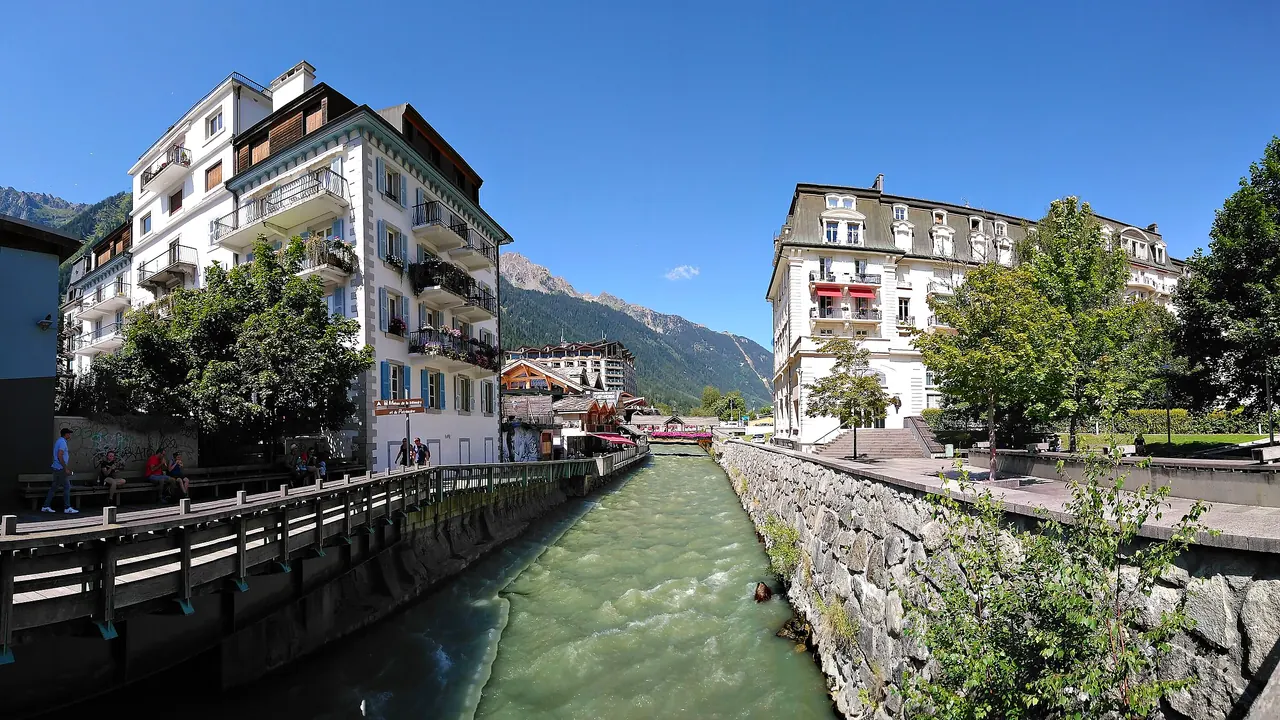
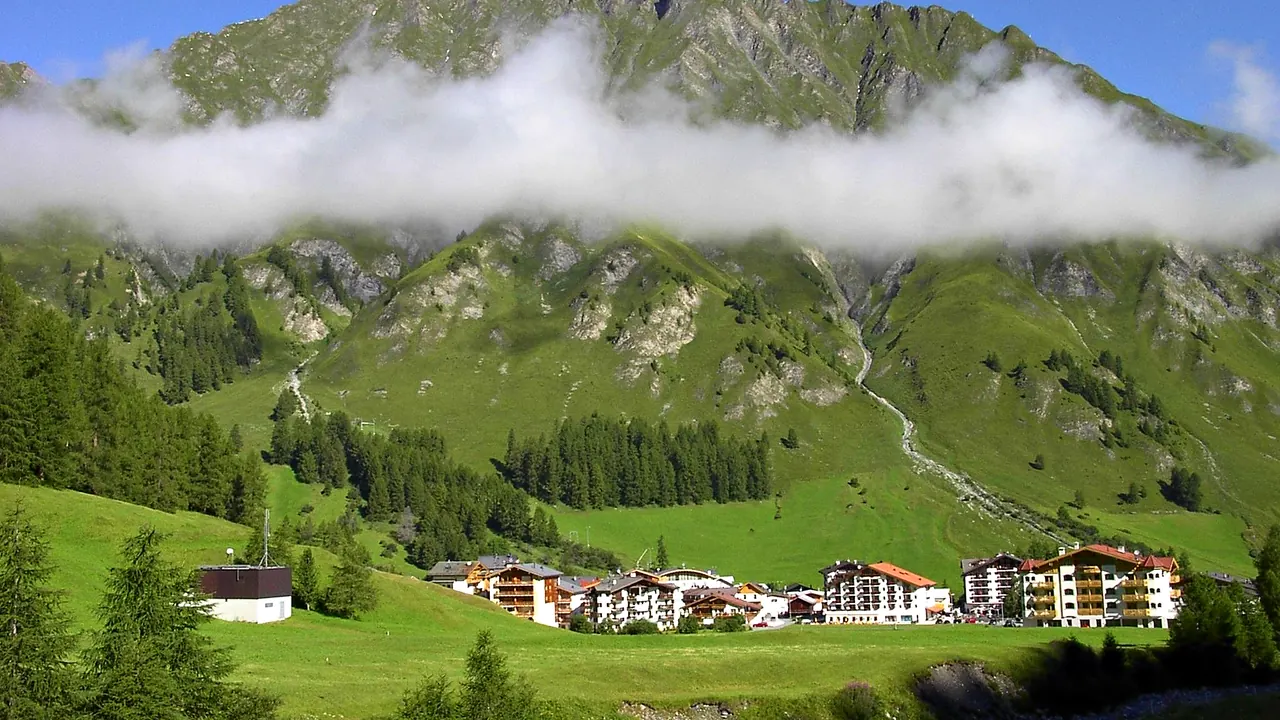
Photos: Chamonix by Tiia Monto, CC BY-SA 3.0, cropped; Samnaun by Rene Nueesch, CC BY 3.0, cropped.
Chamonix or Samnaun?
Our verdict in twelve categories, each scored against the same fixed benchmark cities, and the climate month by month, so you can choose for your trip.
Choose Chamonix for
- nightlife
- getting around
- families
Chamonix is the better choice for most mountain trips. The Mont Blanc massif rises straight above the town, and cable cars carry you into glacier terrain without any climbing. The valley also has much of what Samnaun lacks: lively evenings, the history of alpinism, easy outings into Italy, Switzerland and to Annecy, and more for children in summer. Go there for mountaineering, steep skiing or a summer of trails and lifts.
Choose Samnaun for
- shopping
Samnaun suits a quieter ski week. The village sits higher, opens onto a huge cross-border ski area and goes quiet once the lifts close, which appeals to skiers who want calm evenings rather than an après-ski crowd. Its duty-free main street is the other draw, for watches, perfume and spirits. Come knowing that the valley is remote and there is little to do off the slopes.
Scoreboard
Twelve categories on one fixed scale from 0 to 100. The shaded stretch is the gap between the two.
Your match
Pick a travel style or drag the sliders, and both match scores follow your weighting.
Wins on nightlife and getting around with your weighting.
Wins on shopping with your weighting.
What matters to you?
Category by category
What the scores mean for a trip.
Beaches & swimming
Neither is a place to swim, but Chamonix at least has a summer lake nearby. Lac de Passy, with its grassy shore and view of Mont Blanc, is warm enough in July and August, and Lake Annecy is a day out by car. In Samnaun, swimming means the indoor leisure pool or a hotel pool, since its streams and tarns are too cold for more than a brave dip.
Food & drink
Chamonix eats better and with more choice. Savoyard cheese dishes made with Reblochon and Beaufort from the nearby pastures fill the menus, refuges serve lunch on terraces facing the glaciers, and the town has bistros and a few ambitious kitchens in the old grand hotels.
Samnaun's meals are mostly half board in hotel dining rooms, with capuns, pizokel and rösti in the mountain huts. Its strong point is drink rather than food: the duty-free shops carry a very wide range of wines and spirits to take home.
Culture & sights
Chamonix is where mountaineering began, and that heritage gives it a half day of sightseeing that Samnaun cannot match. The Musée Alpin, in a former Belle Époque palace hotel, follows the story from the first ascent of Mont Blanc in 1786 to the first Winter Olympics, which the town hosted, while the Espace Tairraz explains the glaciers and crystals of the massif. The old guides' quarter, the church of Saint-Michel and the climbers' cemetery complete the walk.
Samnaun has modest parish churches and a few old timber farmhouses among its hotels. Its most interesting story is its isolation, which left the valley outside Swiss customs in the late nineteenth century and made it the duty-free enclave it is. For real sightseeing, plan to leave the valley on a day trip.
Nightlife
Chamonix keeps going well into the night. Après-ski moves on to a narrow lane of pubs in the old town where guides, seasonal workers and visitors mix, and a couple of small clubs stay open into the early hours.
Samnaun winds down early, with a few hotel bars and a club or two on peak weekends. Ischgl, the famous party resort, is on the far side of the shared ski area, but once the lifts stop it is a long drive away.
Nature & outdoors
Both are serious mountain destinations, but Chamonix is in a class of its own. Nearly 4km of relief separates the valley floor from the summit of Mont Blanc, and the Aiguille du Midi lift, the Vallée Blanche and the oldest guiding company in the world put mountaineering and glacier terrain within reach of ordinary visitors.
Samnaun offers something different: a higher base, a huge ski area linked with Austria's Paznaun valley, and reliable snow above the treeline. In summer its border trails and the nearby Swiss National Park feel wide open and uncrowded, which a busy Chamonix August cannot match.
Day trips
Chamonix's position near three countries gives it more to choose from. Courmayeur and Roman Aosta are through the tunnel, Annecy and Geneva are about an hour away by car, and the Mont Blanc Express climbs over the border to Martigny.
Samnaun's outings are to small places: the sgraffito villages of the Lower Engadine, Tarasp Castle, walled Glurns and the UNESCO convent at Müstair. They are charming, but you will need a car, and most cities are at the outer limit of a day.
Good for families
Chamonix suits families for longer and in more seasons. Beyond ski schools and sledging, summer brings treetop courses, the luge, the Merlet park with its marmots and ibex, and the rack railway children love, all from a small, walkable town. The highest cable cars are best left to older children.
Samnaun is a good base for a ski week with children, with nursery slopes near the village and hotels used to families. Off the slopes, though, the leisure pool with its slides is about all there is, and the winding road into the valley is hard on children who get carsick.
Getting around
Chamonix is far easier to reach and to get around. A shuttle runs from Geneva airport, and buses and the valley railway, free with the guest card, link every hamlet from Les Houches to Vallorcine, though ski buses get packed in winter.
Samnaun is simple once you arrive, with one road, local buses and ski-in access in winter. Getting there is the hard part: the valley is a dead end with no railway, and the postbus from Scuol takes over an hour, so most visitors are better off with a car.
Shopping & style
Samnaun comes out ahead because of its duty-free status. Its main street is lined with shops selling watches, perfume, jewellery, spirits and ski clothing, which brings coachloads of day shoppers from the Tyrol, though it is all international brands.
Chamonix's strength is narrower but deeper: old outdoor shops with technical gear and expert staff that climbers and skiers plan purchases around. Beyond that it offers Savoyard cheeses, rock crystals and souvenirs.
Affordability
Both cost Alpine resort prices, and neither will suit a tight budget. Chamonix offers more ways to save: free valley transport with the guest card, trails that start without a lift, and cheaper shoulder seasons. The catch is that guides, paragliding and the big cable cars add up quickly.
Samnaun's savings come from half-board deals, room rates gentler than in Switzerland's fashionable resorts, and duty-free fuel and drink. Those help, but they do not make the ski pass or the hotel cheap.
Live music & performing arts
Neither has a theatre or a concert season. Chamonix has a little more, thanks to its long-running summer jazz festival, with some sets played high in the mountains, and occasional concerts in its churches. Samnaun's highlights are the big open-air concerts on the slopes that open and close the winter season, so time your visit to them if live music matters.
Wellness & relaxation
Both are places to rest after exercise, but in different ways. Chamonix has the better facilities: a large day spa with hot outdoor pools under the glaciers and the old thermal springs of Saint-Gervais down the valley. The town itself is busy, though, especially in high season.
Samnaun's spas are smaller, mostly hotel saunas and the pool's sauna area, with Scuol's mineral baths under an hour away. What it offers instead is quiet: clear air, slow days and evenings with nothing to do.
When should you go?
Pick your month. The climate figures are measured averages, not a forecast.
Chamonix in July
Samnaun in July
Daytime high, °C
Rainfall in the month, mm
Where the figures come from
Chamonix's temperatures are measured 35 km from the centre, at Bourg-St-Maurice.
Chamonix has no rain gauge within 25 km of the centre, so its rainfall comes from a gridded climate dataset read at the destination rather than from a gauge further away.
Samnaun has no rain gauge within 25 km of the centre, so its rainfall comes from a gridded climate dataset read at the destination rather than from a gauge further away.
Temperature and rainfall are climate normals, averaged over the years shown. Chamonix: 1999-2020 (rainfall 1991-2020) normals, Bourg-St-Maurice (34.9 km from centre). Samnaun: 1991-2020 normals, Passo Resia / Resia Pass (16.3 km from centre).
Chamonix is the warmer of the two. From June to September the valley reaches the mid-twenties, with highs around 27°C in July, warm enough for long days on the trails and a swim in Lac de Passy in July and August. Rain falls all year, but most heavily in late autumn and early winter, peaking at 169mm in December, which brings the snow to the slopes.
Samnaun is colder at its greater height, with winter highs of around 1°C in January and a summer peak near 21°C, comfortable for hiking but never really hot. Its pattern runs the other way: winters are fairly dry, while June to August is the wettest stretch, reaching 118mm in July. So expect crisp, settled skiing weather in Samnaun and showery summer afternoons.
Which traveller are you?
On a family trip with children, Chamonix gives you more to fill the days: the Merlet animal park, the little red train to the Mer de Glace, a summer luge and easy lake walks. Samnaun works for a ski week but has little else for children.
For a shopping trip, Samnaun is the clear pick. Its duty-free main street sells watches, perfume, spirits and outdoor clothing, often below normal prices. Chamonix's shops are mainly for technical climbing and ski gear, and real fashion means a trip to Geneva.
On a relaxing and wellness trip, Samnaun's calm, uncrowded valley and quiet evenings make rest easier. Chamonix has the better spa, with hot outdoor pools facing the glaciers, but its streets are busy with climbers and guides and days start early.
Before you go
| Measure | Chamonix | Samnaun |
|---|---|---|
| Official language | French | French, German, Italian, Romansh |
| Currency | Euro (EUR) | Swiss Franc (CHF) |
| Sockets | CE230 V, 50 Hz | CJ230 V, 50 Hz |
| Driving side | Right | Right |
| Time zone | UTC+1, UTC+2 in summer | UTC+1, UTC+2 in summer |
| Emergency number | 112 | 112 |
| Elevation | 995 m | 1,846 m |
| Main airport | Geneva International Airport (GVA)68 km from centre150 non-stop destinations | Innsbruck Airport (INN)82 km from centre40 non-stop destinations |
| Public holidays this year | 11 days | 9 days |
By the numbers
| Measure | Chamonix | Samnaun |
|---|---|---|
| Population | 8,705 | 773 |
| People per km² | 75 | 14 |
| Museums within 10 km | 3 | 1 |
| UNESCO World Heritage sites within 50 km | 0 | 1 |
Where else could you go?
Every comparison below shares a destination with this one, so you can follow Chamonix or Samnaun somewhere new.
- Saint-Gervais-les-Bainsvs Chamonix
- Flainevs Chamonix
- Megèvevs Chamonix
- Samoënsvs Chamonix
- Les Getsvs Chamonix
- Avoriazvs Chamonix