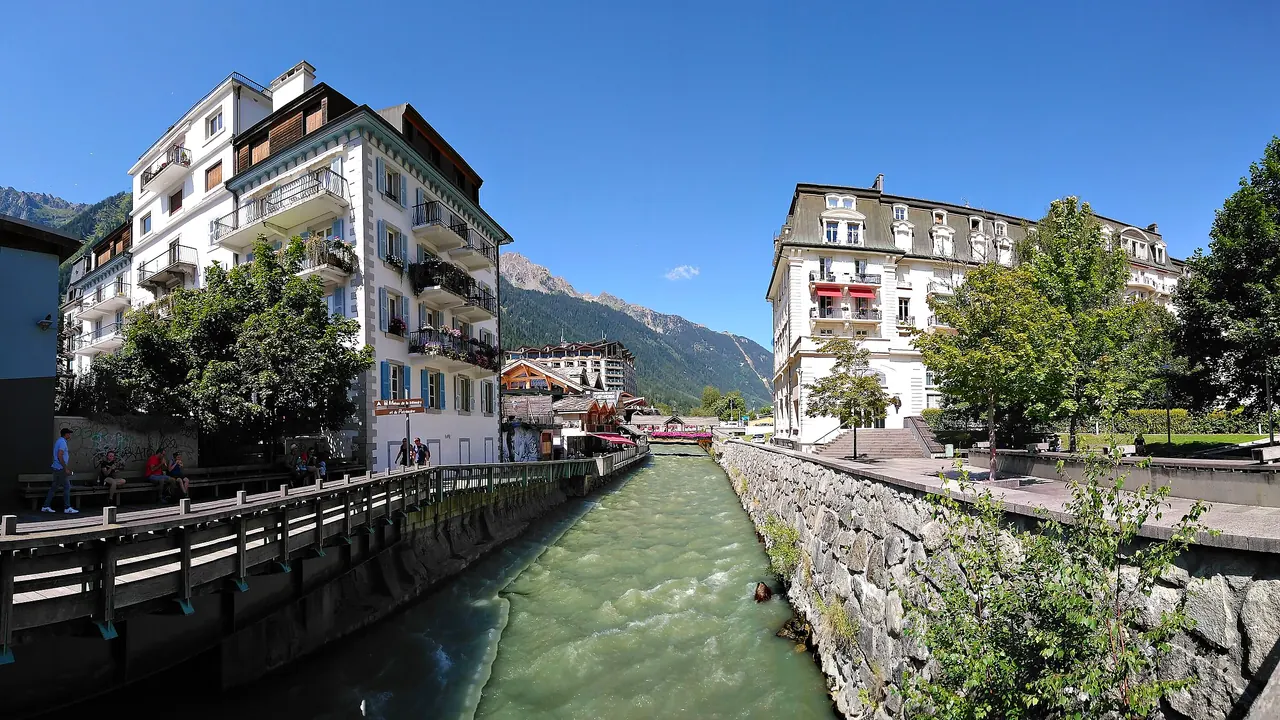
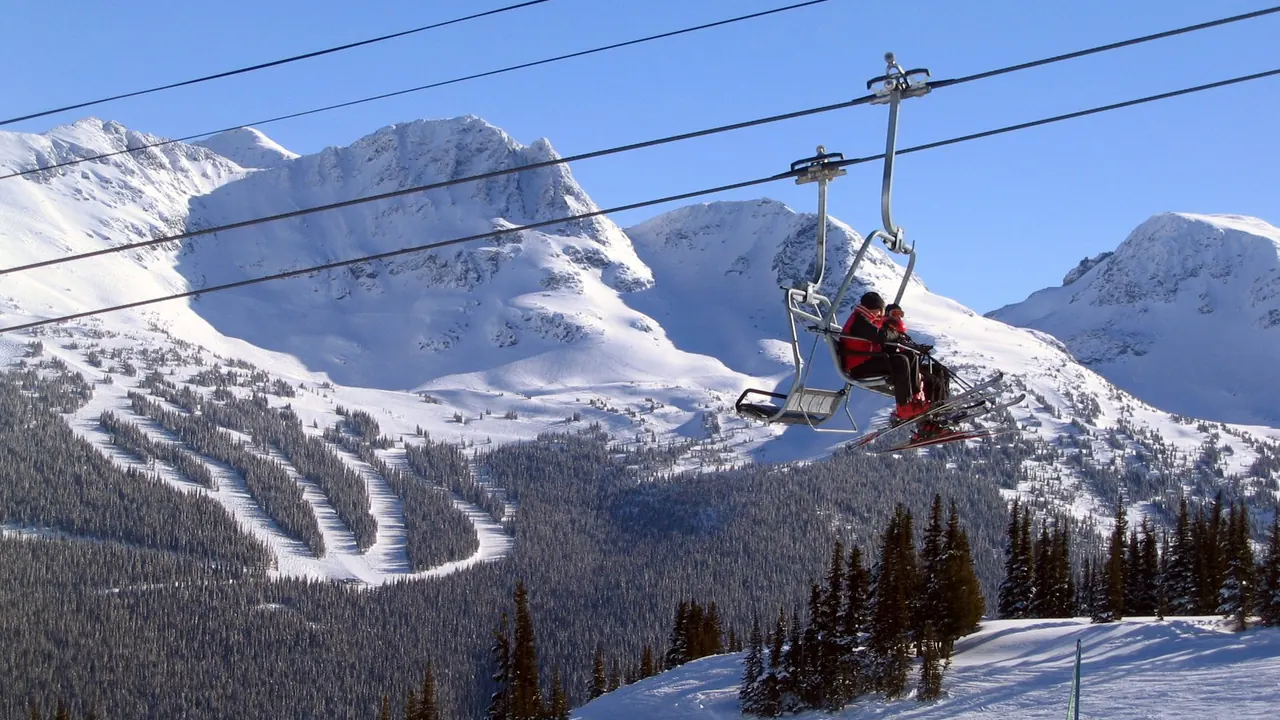
Photos: Chamonix by Tiia Monto, CC BY-SA 3.0, cropped; Whistler by Ruth Hartnup, CC BY 2.0, cropped.
Chamonix or Whistler?
Our verdict in twelve categories, each scored against the same fixed benchmark cities, and the climate month by month, so you can choose for your trip.
Choose Chamonix for
- day trips
- prices
- getting around
Chamonix suits travellers who come for the high mountains themselves: glaciers, granite needles, cable cars that lift you straight into the ice, and the culture of alpinism that began here. It also suits anyone who wants variety off the hill. Italy, Switzerland, Annecy and Geneva are all within a day out, and a railway runs up the valley.
Choose Whistler for
- beaches
- families
- wellness
For families and for an easy resort week, Whistler is the better pick. Its car-free village, big ski schools, summer lake swimming and forest spa make it a comfortable base. Its two huge mountains and downhill bike park reward skiers and riders, though beyond the valley there is little but wilderness and the long road to Vancouver.
Scoreboard
Twelve categories on one fixed scale from 0 to 100. The shaded stretch is the gap between the two.
Your match
Pick a travel style or drag the sliders, and both match scores follow your weighting.
Too close to call, 1 point apart
Wins on day trips and prices with your weighting.
Wins on beaches and families with your weighting.
What matters to you?
Category by category
What the scores mean for a trip.
Beaches & swimming
Neither is a swimming destination, but Whistler makes more of its summer water. Lost Lake is a walk from the village and has a sandy shore and a dock, and Alta and Alpha lakes have grassy parks and rafts, so a swim fits easily into a July or August afternoon.
In Chamonix the water is further away. You have the town pool's outdoor basin, or a drive down the Arve valley to little Lac de Passy. Lake Annecy is the better outing, but it is more than an hour away.
Food & drink
The two eat at much the same level, and both are held back by resort menus, but the flavours could hardly be more different. Chamonix is cheese country: fondue, raclette and tartiflette made with Reblochon and Beaufort, eaten on refuge terraces facing the glaciers, with cheese shops and charcuteries for a picnic on the hill.
Whistler cooks Pacific Northwest produce, such as BC salmon and spot prawns, with serious British Columbia wine lists, and its daily ritual is nachos and craft beer on the patios at the foot of the gondolas. In Chamonix, watch for places closing in the off-seasons. In Whistler the limit is a narrow choice spread over the same few streets.
Culture & sights
A few hours covers the sights in either town. Chamonix's heritage is mountaineering itself. The Musée Alpin fills a Belle Époque palace hotel, statues of the men who first climbed Mont Blanc stand in the centre, and the climbers' cemetery completes the story.
Whistler was built as a resort and has no old town, so it offers art and Indigenous culture instead. The Audain Art Museum holds Emily Carr paintings and Northwest Coast masks, and the Squamish Lil'wat Cultural Centre tells the story of the two nations whose land this is. Both towns have Olympic history: Chamonix hosted the very first Winter Games in 1924, and Whistler shared the 2010 Games.
Nightlife
Both run on après-ski and a young, seasonal crowd, and both go quiet outside winter. In Chamonix the evening ends up in a narrow old-town lane of pubs where guides, seasonal workers and visitors mix, with only two or three small clubs after that. Whistler leans more towards clubbing, with late venues in the pedestrian village that stay loud on winter weekends and fill up again for the summer bike festivals.
Nature & outdoors
These are two of the world's great mountain bases, and the difference lies in what you do there. Chamonix is about height and ice. Cable cars climb to 3,842m on the Aiguille du Midi, the Vallée Blanche runs down a glacier, and mountaineering, via ferrata and the Tour du Mont Blanc all start from town.
Whistler is about size and riding. Two huge mountains are linked by the Peak 2 Peak Gondola and get deep Coast Mountains snow. In summer it has a famous downhill bike park and the turquoise lakes of Garibaldi, and black bears are often seen on the slopes.
Day trips
Chamonix wins easily here, because three countries meet around it. Courmayeur and Roman Aosta are through the Mont Blanc Tunnel, Annecy and Geneva are a little over an hour by car, and the Mont Blanc Express crosses into Switzerland to Martigny.
From Whistler the road mostly leads into wilderness. Squamish and Pemberton are small, and the Britannia mine museum makes a stop on the way. The only city is Vancouver, two hours down the Sea to Sky Highway, and it works better with a night's stay.
Good for families
Whistler is the easier choice with children. The village is car-free, the ski schools are large, the gentle gondola runs suit beginners and condos with kitchens are common. Summer adds lake beaches, mini-golf and an adventure park at the base of Blackcomb.
Chamonix works for outdoor families too, with nursery slopes, the summer luge, the Merlet animal park and the little red train to the Mer de Glace. But its highest cable cars climb too high and too fast for small children, and on a rainy day there is little to fall back on.
Getting around
You can manage without a car in either. Chamonix has the advantage of a railway: the Mont Blanc Express and the buses link the hamlets from Les Houches to Vallorcine, free with the guest card. Because its ski areas are spread out, though, winter means packed ski buses.
Whistler has no train, but its pedestrian village puts both gondolas on your doorstep, and the paved Valley Trail makes it a pleasure to walk or cycle between the lakes.
Shopping & style
Both are gear towns first, full of skis, climbing kit and technical clothing, with little fashion beyond that. Chamonix's old outdoor shops are where climbers save up their big purchases, and its food shops sell Savoyard cheese, cured meats and génépi.
Whistler has galleries of Indigenous prints and carvings and a summer farmers' market in the Upper Village instead. For wider shopping, Chamonix has Geneva and Annecy within easy reach, which Whistler cannot match.
Affordability
Neither is cheap, but Chamonix is a little easier on the wallet. Valley transport is free with the guest card, apartments make self-catering simple, and many trails start from the valley floor without paying for a lift.
Whistler's lift passes are among the world's costliest, eating out in the village is priced for visitors, and lessons and rentals add up quickly for families. Staying further down the valley and cooking for yourself helps, but only so far.
Live music & performing arts
Chamonix's long-running summer jazz festival, with some sets played high in the mountains, is the one event with real character. Whistler's summer brings free concerts in Olympic Plaza and buskers in the village streets.
Through the rest of the year Whistler does slightly more, with a small community arts centre for local theatre and touring shows, and bands in the pubs through the ski season. In Chamonix there are just church concerts and mountain film evenings. Both are thin, though: for opera, a symphony or a proper play, you head to Geneva from Chamonix or down to Vancouver from Whistler.
Wellness & relaxation
Whistler is the better place to slow down. Its Nordic-style spa in the cedar forest, with silent hot pools and cold plunges beside the river, is a highlight in itself. Most big hotels have full spas, and a quiet week of walks and soaks is easy in late spring or early autumn.
Chamonix has a large spa on the Italian thermal model, facing the glaciers, and the old springs of Saint-Gervais down the valley. The town itself, though, is busier and built around early starts and hard effort.
When should you go?
Pick your month. The climate figures are measured averages, not a forecast.
Chamonix in July
Whistler in July
Daytime high, °C
Rainfall in the month, mm
Where the figures come from
Chamonix's temperatures are measured 35 km from the centre, at Bourg-St-Maurice.
Chamonix has no rain gauge within 25 km of the centre, so its rainfall comes from a gridded climate dataset read at the city rather than from a gauge further away.
Whistler has no rain gauge within 25 km of the centre, so its rainfall comes from a gridded climate dataset read at the city rather than from a gauge further away.
Temperature and rainfall are climate normals, averaged over the years shown. Chamonix: 1999-2020 (rainfall 1991-2020) normals, Bourg-St-Maurice (34.9 km from centre). Whistler: 1991-2020 normals, Whistler - Nesters (1.1 km from centre).
Both are mountain towns with snowy winters and short, warm summers, but the timing differs. Chamonix stays milder into autumn, still about 22°C in September, so June to September makes a long season for walking and climbing. It has no dry spell, though. Rain is spread through every month and is heaviest in November and December, and its lakes only get warm enough for a swim in July and August.
Whistler's summer is shorter but much drier. July and August reach about 25°C with only around 50mm of rain, which makes them the best weeks for lake swimming, biking and hiking. From October the rain comes back hard and peaks near 196mm in November, and midwinter days sit around 0°C, which suits the ski season far better than walking around the village.
Which traveller are you?
On a family trip with young children, Whistler is the easier base. The whole resort is built for exactly this kind of week, in winter or summer. Chamonix comes into its own once the children are teenagers and can handle steep trails and glacier terrain.
For a relaxing and wellness trip, pick Whistler. Rest is part of how a stay there works, with massage studios on every corner, and the village slows right down outside the peak weeks. Chamonix suits people who want a hard mountain day before they unwind.
For a mountaineering trip, Chamonix is the place, because alpinism was born there. Cable cars run from town straight up to glacier terrain, and the world's oldest guiding company works from the valley. Whistler's mountains are made for skiing and biking rather than roped glacier climbs.
Before you go
| Measure | Chamonix | Whistler |
|---|---|---|
| Official language | French | French, English |
| Currency | Euro (EUR) | Canadian Dollar (CAD) |
| Sockets | CE230 V, 50 Hz | AB120 V, 60 Hz |
| Driving side | Right | Right |
| Time zone | UTC+1, UTC+2 in summer | UTC-8, UTC-7 in summer |
| Emergency number | 112 | 911 |
| Elevation | 995 m | 670 m |
| Main airport | Geneva International Airport (GVA)68 km from centre150 non-stop destinations | Vancouver International Airport (YVR)104 km from centre109 non-stop destinations |
| Public holidays this year | 11 days | 11 days |
By the numbers
| Measure | Chamonix | Whistler |
|---|---|---|
| City population | 8,705 | 13,982 |
| People per km² | 75 | 58 |
| Museums within 10 km | 3 | 1 |
| UNESCO World Heritage sites within 50 km | 0 | 0 |
Where else could you go?
Every comparison below shares a destination with this one, so you can follow Chamonix or Whistler somewhere new.
- Annecyvs Chamonix
- Genevavs Chamonix
- Lausannevs Chamonix
- Vancouvervs Whistler
- Turinvs Chamonix
- Interlakenvs Chamonix