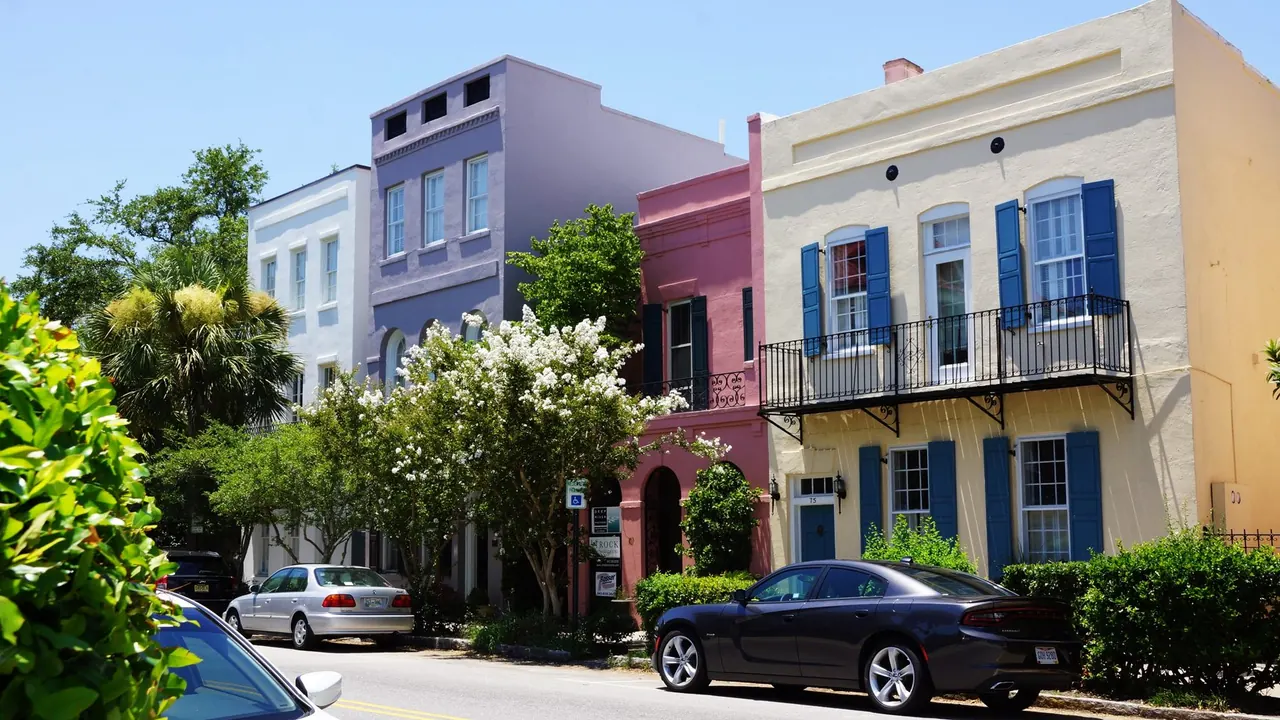
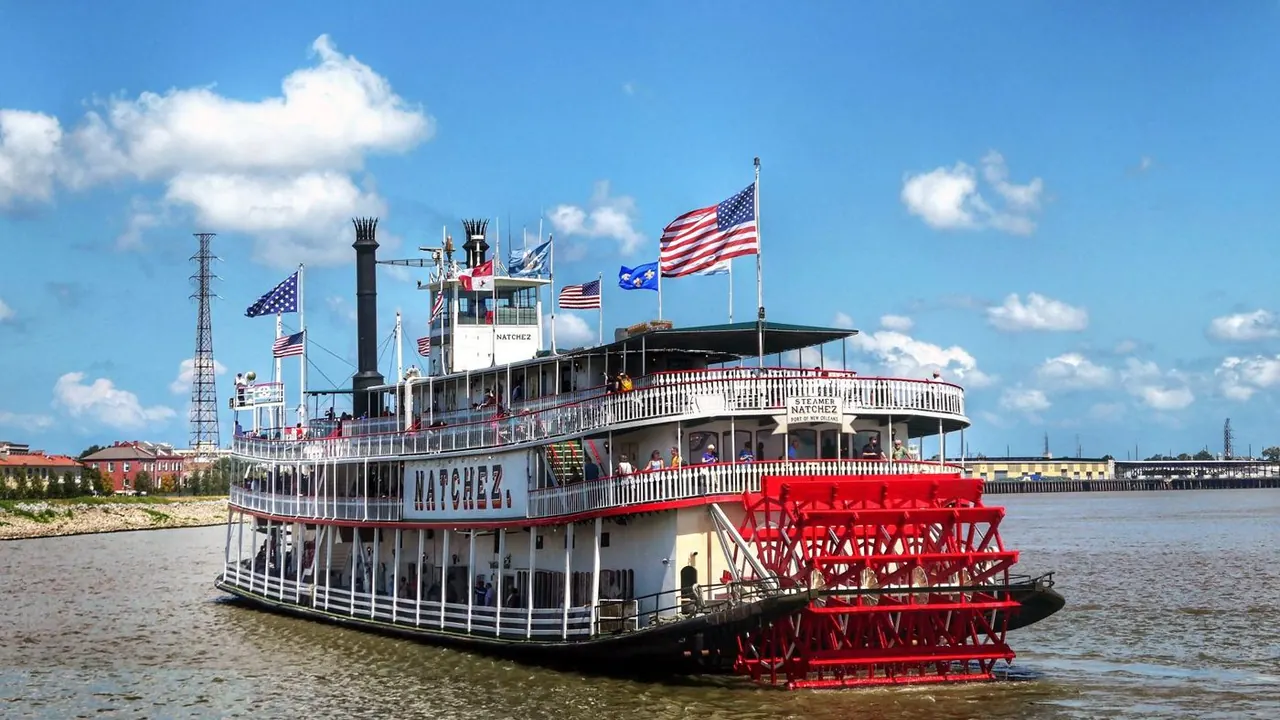
Photos: Charleston by NealVickers, CC BY-SA 4.0, cropped; New Orleans by Bernard Spragg, CC0.
Charleston or New Orleans?
Our verdict in twelve categories, each scored against the same fixed benchmark cities, and the climate month by month, so you can choose for your trip.
Choose Charleston for
- beaches
- wellness
- nature and the outdoors
Charleston suits a slower, prettier trip: mornings walking the old peninsula of piazza houses, steeples and walled gardens, afternoons on the sand at Folly Beach or Sullivan's Island. It is also the better choice for kayaking through the marshes, visiting nearby plantation gardens and enjoying quiet evenings. Couples and families who want history and a real beach on the same trip will be happier here, as long as they budget for expensive rooms.
Choose New Orleans for
- nightlife
- live music and the arts
- prices
Pick New Orleans if the evenings are the point. Bands play in the clubs on Frenchmen Street every night of the year, the bars never have to close, and the Creole and Cajun kitchen is the deeper and more distinctive of the two. There is no beach worth the drive, but the city is a little cheaper, easier to manage without a car thanks to the streetcars, and far livelier after dark.
Scoreboard
Twelve categories on one fixed scale from 0 to 100. The shaded stretch is the gap between the two.
Your match
Pick a travel style or drag the sliders, and both match scores follow your weighting.
Too close to call, 1 point apart
Wins on beaches and wellness with your weighting.
Wins on nightlife and live music and the arts with your weighting.
What matters to you?
Category by category
What the scores mean for a trip.
Beaches & swimming
Charleston is a real beach destination as well as a historic town. Folly Beach has the surf and the pier, Sullivan's Island has dunes and old forts, and Isle of Palms has wider, resort-style sand. The Atlantic stays warm enough for swimming from late spring into October, though the water is tidal and greenish rather than clear, and you need a car to get there.
New Orleans has nothing like it. Nobody swims in Lake Pontchartrain or the Mississippi, and the nearest sand, around Bay St. Louis on the Mississippi coast, is well over an hour away and has shallow, brownish water.
Food & drink
Both cities have a cooking tradition of their own with West African roots, and both serve shrimp and grits. Charleston's Lowcountry food, with she-crab soup, Carolina Gold rice and oysters roasted by the bushel, is excellent and centred on upper King Street and the French Quarter. The range is narrow, though, and the good tables need booking well ahead.
New Orleans goes deeper. Between Creole and Cajun cooking it has gumbo, étouffée, jambalaya and po'boys, French Quarter dining rooms that have served the same dishes for over a century, crawfish in spring and Vietnamese cooking in the eastern suburbs. It is also the home of the Sazerac, so drinking is part of the meal.
Culture & sights
These two are close, and both are best seen on foot. Charleston's main sight is its Georgian and antebellum peninsula, with Rainbow Row and the Battery. Its history comes across most powerfully at Fort Sumter, the Old Slave Mart Museum and the International African American Museum.
New Orleans instead offers a Creole and Spanish colonial town, with iron balconies around Jackson Square and the Cabildo, plus the Garden District mansions and the above-ground tombs. It has the larger single museum in the National WWII Museum, though neither city has many major collections.
Nightlife
A night out in Charleston means a few drinks: rooftop and cocktail bars on upper King Street, wine bars in the French Quarter, beach bars at Folly. Most places close by about 2am.
New Orleans is built for going out. There is no legal closing time and you can carry drinks in the street, so nights move from bar to bar on foot, from the neon of Bourbon Street to Frenchmen Street and the corner bars of the Marigny and Bywater. Carnival turns the whole city into one party. Watch for pickpockets on Bourbon Street late at night.
Nature & outdoors
Both sit in flat, wet country of live oaks and Spanish moss, and in both the best way in is by water. Charleston gives more to do: kayak trips through the spartina marsh creeks often meet dolphins, and the Francis Marion National Forest, the ACE Basin and the wild shores and cycling of Kiawah and Edisto are all within reach.
New Orleans offers swamp rather than salt marsh, with boat tours past alligators and cypresses and boardwalk trails in the Barataria Preserve. In town, City Park and the levee along the Mississippi are good for walking or cycling, but the choice beyond them is smaller.
Day trips
Both offer plantation visits that confront the history of slavery, but Charleston's are closer and there are more of them. Middleton Place, Magnolia, Drayton Hall and Boone Hall are about half an hour away, with McLeod Plantation on James Island. Savannah, two hours away, and Beaufort, with its Gullah sea islands, each make a strong full day.
From New Orleans, the River Road leads about an hour upstream to Oak Alley and the Whitney. Baton Rouge, the small Gulf towns and the Cajun prairie around Lafayette complete the list, and beyond those the choice is thin. In both cities you need a car for nearly all of these.
Good for families
There is a similar amount for children in each, but of different kinds. Charleston has the South Carolina Aquarium and the Children's Museum, the aircraft carrier at Patriots Point and, above all, beaches with gentle surf. The town is calm both day and night.
New Orleans has the Audubon Zoo with its Louisiana swamp area, the Aquarium of the Americas, the amusement park and carousel in City Park, streetcar rides and Mardi Gras parades along St. Charles Avenue. Parents need to take more care there after dark, especially near Bourbon Street.
Getting around
Charleston is the harder of the two to manage without a car. Its flat peninsula fits within about 3km, and the free shuttle and pedicabs fill the gaps, but the beaches and plantations mean driving or ride-hailing, and parking downtown is tight.
New Orleans lets you cover more ground on foot and by rail. The French Quarter, the Marigny and the Warehouse District can all be walked, and the slow, historic green streetcars run up St. Charles Avenue to the Garden District and out to City Park. You will still need ride-hailing for the airport and the swamps. In both cities the summer heat cuts walks short, and in New Orleans some stretches between neighbourhoods are best not walked at night.
Shopping & style
Shopping is on a similar scale in both, and it is about antiques and independent shops rather than luxury. Charleston has almost everything on King Street, from antiques at the lower end to boutiques at the upper end. Its signature buy is a sweetgrass basket made by Gullah weavers at City Market.
New Orleans is more spread out, with chandeliers and estate jewellery on Royal Street and miles of vintage and design shops along Magazine Street. Its own souvenirs are Carnival masks, hot sauces and pralines.
Affordability
Neither is cheap, but New Orleans is easier on the budget. Rooms near the French Quarter cost as much as in a big city and climb sharply at Mardi Gras and Jazz Fest. Even so, po'boys, neighbourhood bars, the streetcar and free street music keep day-to-day spending modest.
Charleston costs more across the board, as inns in the historic district, the well-known restaurants, parking, taxis and paid house tours all add up. The Battery, the old streets and the beaches are free. Staying in Mount Pleasant saves money but means driving in every day.
Live music & performing arts
New Orleans is far ahead here. Jazz was born in the city, and every night there are brass bands, blues, funk, Cajun and zydeco on Frenchmen Street, in the French Quarter's traditional jazz hall and in bars across Tremé and the Bywater. On top of that come the Sunday second-line parades and Jazz Fest in spring.
Charleston's big event is Spoleto Festival USA, which fills late spring with opera, dance, theatre and jazz. For the rest of the year there are plays at the Dock Street Theatre, the symphony at the Gaillard Center and occasional Gullah song and storytelling. These are pleasant, but not something to plan a trip around.
Wellness & relaxation
Neither city has a spa or bathing culture, so rest comes from the pace. Charleston is the more restful of the two, with resort spas on Kiawah Island, shaded walled gardens and church courtyards, and quiet evenings by the water at White Point Garden.
New Orleans can be slow too, in courtyard guesthouses, on the St. Charles streetcar and in City Park. Its choice of spas is smaller, though, and the French Quarter at night is anything but restful.
When should you go?
Pick your month. The climate figures are measured averages, not a forecast.
Charleston in July
New Orleans in July
Daytime high, °C
Rainfall in the month, mm
Temperature and rainfall are climate normals, averaged over the years shown. Charleston: 1991-2020 normals, Charleston Airport (16.1 km from centre). New Orleans: 1991-2020 normals, New Orleans Airport (2.7 km from centre).
Both cities have the same humid Southern year: mild winters, very hot summers, and spring and autumn as the best seasons for walking. From June to August, daytime highs in both reach about 32°C to 33°C and afternoon storms push the rainfall up sharply. April, May and October are the comfortable months for long days on foot.
The differences are in the sea and the rain. Charleston's Atlantic is warm enough for swimming from late May through September and into October, reaching about 28°C at its warmest. Outside summer, Charleston is noticeably drier. New Orleans is wet all year, with even January bringing around 132mm. The Gulf reaches 30°C in summer, but its beaches are well over an hour's drive away.
Which traveller are you?
On a beach and sun trip, Charleston is the clear choice. Folly Beach, Sullivan's Island and Isle of Palms are all within about half an hour of town, with warm Atlantic water in summer. In New Orleans most visitors swim in a hotel pool.
For a food and nightlife trip, New Orleans wins easily. Gumbo, po'boys and crawfish boils lead into nights with no closing time, moving between Frenchmen Street and the dive bars of the Bywater. Charleston's bars on upper King Street close by about 2am.
On a culture and arts trip, New Orleans pulls ahead because of its music: jazz, brass bands and zydeco every night, plus the Sunday second-line parades. Charleston's historic streets and slavery museums are just as rewarding, but its stages are only really full during Spoleto in late spring.
Before you go
| Measure | Charleston | New Orleans |
|---|---|---|
| Currency | US Dollar (USD) | US Dollar (USD) |
| Sockets | AB120 V, 60 Hz | AB120 V, 60 Hz |
| Driving side | Right | Right |
| Time zone | UTC-5, UTC-4 in summer | UTC-6, UTC-5 in summer |
| Emergency number | 911 | 911 |
| Elevation | 6 m | -2 m |
| Main airport | Charleston International Airport (CHS)16 km from centre56 non-stop destinations | Louis Armstrong New Orleans International Airport (MSY)18 km from centre51 non-stop destinations |
| Public holidays this year | 12 days | 14 days |
By the numbers
| Measure | Charleston | New Orleans |
|---|---|---|
| City population | 150,227 | 383,997 |
| People per km² | 532 | 423 |
| Museums within 10 km | 19 | 16 |
| UNESCO World Heritage sites within 50 km | 0 | 0 |
| Swim season, months above 21 °C | 6 months | 7 months |
Where else could you go?
Every comparison below shares a destination with this one, so you can follow Charleston or New Orleans somewhere new.