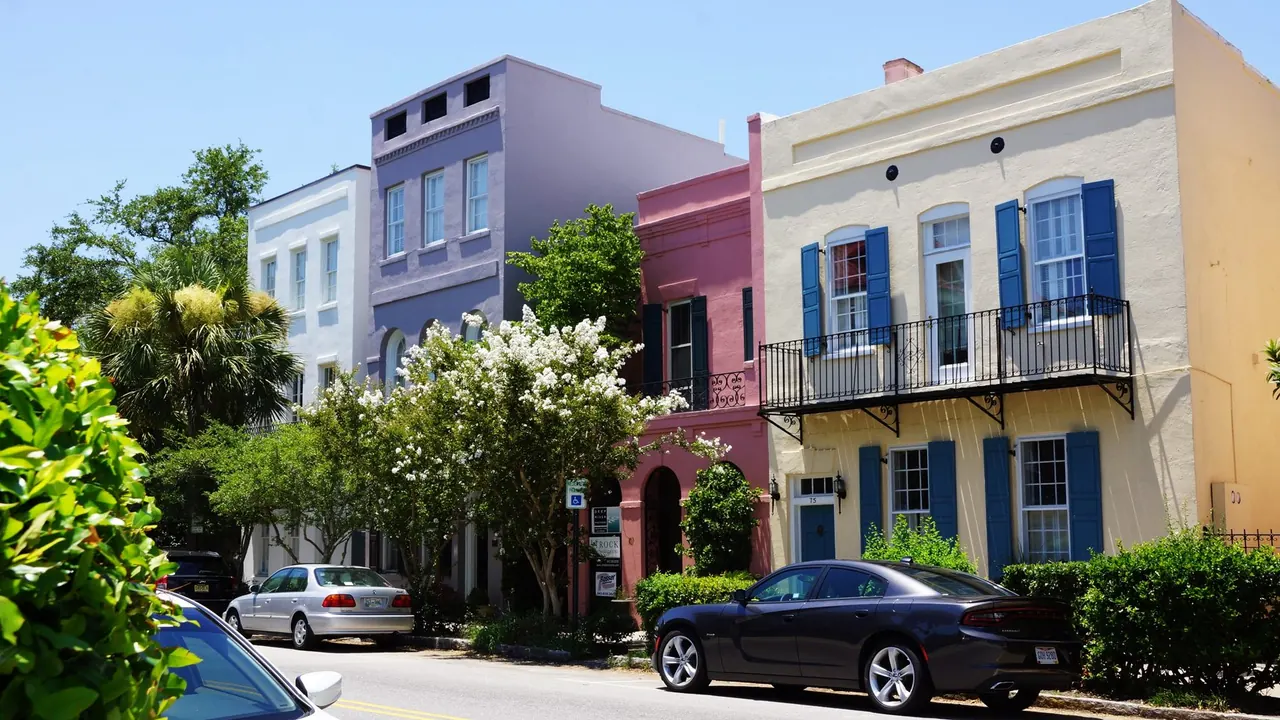
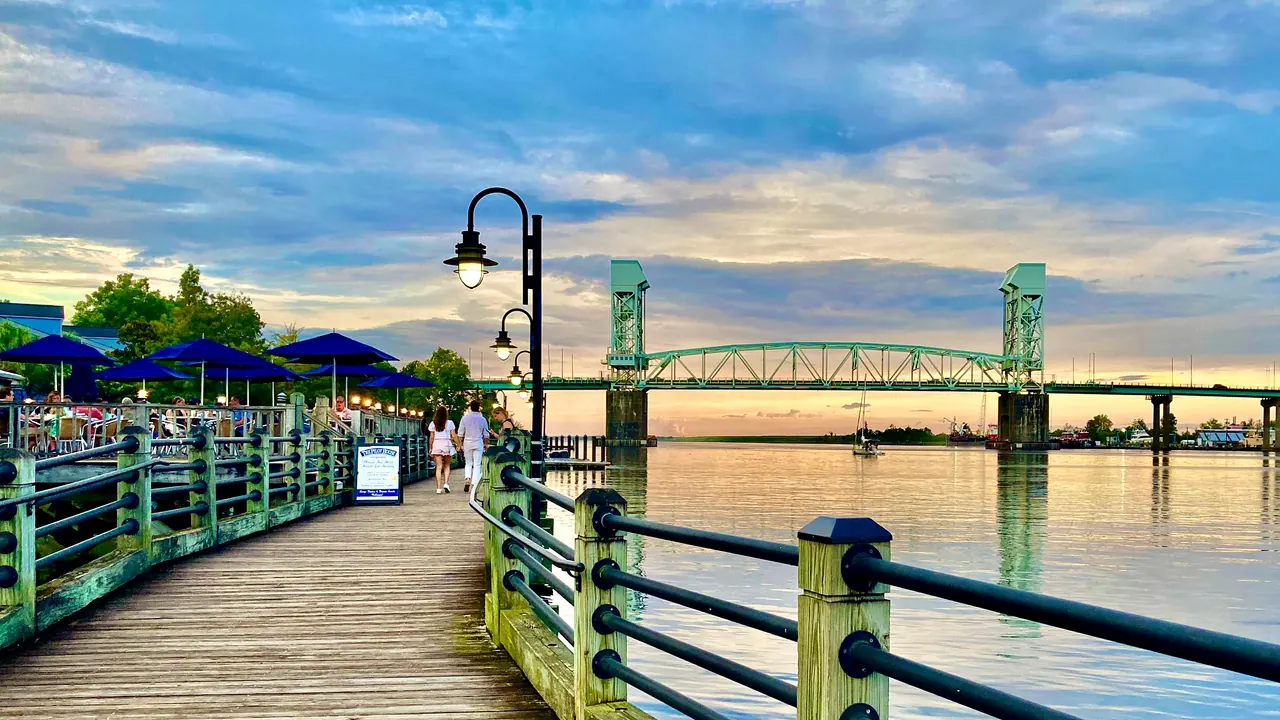
Photos: Charleston by NealVickers, CC BY-SA 4.0, cropped; Wilmington by Unexpected Snacks, CC BY-SA 4.0, cropped.
Charleston or Wilmington?
Our verdict in twelve categories, each scored against the same fixed benchmark cities, and the climate month by month, so you can choose for your trip.
Choose Charleston for
- food and drink
- culture and sights
- shopping
Charleston is the stronger choice when the town itself is the reason to go. You get the historic peninsula south of Broad Street, Lowcountry cooking that people travel for, plantation and Fort Sumter history, and a long browse along King Street. It costs more, but the old town is easy to walk and there is more to fill each day.
Choose Wilmington for
- prices
- nature and the outdoors
- families
Pick Wilmington if the beach is the point and you would rather spend less. Wrightsville, Carolina and Kure beaches are as good as Charleston's islands. Masonboro Island and the wild Venus flytraps give it a slight edge outdoors, and the riverfront historic district makes a pleasant base. The food and sights are thinner, though, and you will drive almost everywhere.
Scoreboard
Twelve categories on one fixed scale from 0 to 100. The shaded stretch is the gap between the two.
Your match
Pick a travel style or drag the sliders, and both match scores follow your weighting.
Wins on food and drink and culture and sights with your weighting.
Wins on prices and nature and the outdoors with your weighting.
What matters to you?
Category by category
What the scores mean for a trip.
Beaches & swimming
The beaches are equally good in both cities, and in both they are about half an hour from town by car. Charleston's islands vary more in character. Folly Beach is surfy, Sullivan's Island is residential with old forts behind the dunes, Isle of Palms is resort-like, and Kiawah and Seabrook have long empty stretches. The water there is greenish and stirred up by the tides.
Wilmington's best is Wrightsville Beach, with wide pale sand and clearer water than Charleston's. Carolina Beach adds a boardwalk, and Kure Beach is quieter. On some days rip currents are a hazard at both.
Food & drink
Food is the widest gap between the two. Charleston cooks Lowcountry dishes with real ambition: shrimp and grits, she-crab soup, Carolina Gold rice and winter oyster roasts, all rooted in Gullah Geechee tradition. You can eat them in restored townhouse dining rooms around upper King Street or at whole-hog barbecue joints.
Wilmington eats well but simply, with local shrimp and flounder, waterfront raw bars, vinegar-sauced eastern Carolina barbecue and plenty of craft beer. It has only a few fine-dining tables, and the beach towns serve a lot of fried seafood. Neither city offers much international cooking.
Culture & sights
Both have a large antebellum historic district and house museums that show the slavery behind the old wealth, but Charleston goes much deeper. Rainbow Row, the Battery and the single houses south of Broad form an old streetscape of rare completeness. Fort Sumter, the Old Slave Mart Museum and the International African American Museum give the history real weight.
Wilmington's riverfront district, with the Bellamy Mansion and the Cotton Exchange, makes a pleasant walk rather than the main event. Its best-known sight is the Battleship North Carolina across the river, and its museums are a modest list.
Nightlife
Nights out are much alike: bars, rooftops and student crowds at weekends, little club life, and closing time at 2am. Charleston's upper King Street is a little more polished, with cocktail rooms and oyster bars, and the French Quarter has quieter wine bars. Wilmington's Front Street is more casual, and the beach bars at Wrightsville and Carolina Beach come into their own in summer.
Nature & outdoors
Both sit in flat, watery country with no hills, humid summers and biting insects. Charleston's strength is paddling the spartina marsh creeks among dolphins and live oaks hung with Spanish moss, with alligators and birdlife inland in the ACE Basin and Francis Marion National Forest.
Wilmington has a slight edge in what you can see only there. Masonboro Island is an undeveloped barrier island reached only by boat, and the Venus flytrap grows wild in Carolina Beach State Park. Surfing, sailing and pier fishing are also more a part of everyday life.
Day trips
Charleston has more to see within driving distance. Middleton Place, Magnolia and Drayton Hall on the Ashley River are about half an hour away, and McLeod Plantation is closer still. Savannah, and Beaufort in South Carolina with its Gullah sea islands, each make a strong full day.
Wilmington's outings are smaller in scale: Southport and the ferry to car-free Bald Head Island, Fort Fisher and Brunswick Town. New Bern and North Carolina's own Beaufort are each about two hours north. You need a car for both lists.
Good for families
Both work about equally well with children, with beaches and an aquarium at the heart of the trip. In Charleston the attractions are grouped on the downtown waterfront: the South Carolina Aquarium and the Children's Museum, with the aircraft carrier at Patriots Point across the harbour and the boat out to Fort Sumter.
Wilmington is more of a summer beach base. It has old-fashioned rides on the Carolina Beach boardwalk, rental houses near the sand, and the battleship's decks for wet days, but every outing means getting in the car.
Getting around
Beyond the old town neither city is easy without a car, but Charleston manages better. Most of what a visitor wants on the peninsula is within about 3km on foot, and pedicabs and a free shuttle fill the gaps, so you need wheels only for the beaches and plantations.
Wilmington's walkable riverfront covers less ground. The beaches are 15km or more away and the buses are of little use to visitors, so most people keep a hire car for the whole stay.
Shopping & style
Charleston is the better place to shop. King Street changes along its length, from antiques on lower King through national fashion brands to independent boutiques uptown. The sweetgrass baskets woven by Gullah artisans at City Market are a real local craft to take home.
Wilmington offers a pleasant browse along Front Street and in the Cotton Exchange, plus surf wear in the beach towns, but nothing you would plan a day around.
Affordability
Wilmington is the cheaper of the two, though neither is a bargain. Charleston's hotels on the peninsula charge big-city rates, its well-known restaurants do the same, and paid house and plantation tours add up. Staying in Mount Pleasant saves money but means driving in every day.
In Wilmington, rooms outside summer are reasonable and casual seafood and barbecue are fair value. Beachfront rentals cost more in summer, and a hire car is an expense few visitors avoid.
Live music & performing arts
For most of the year the two are evenly matched, each with a historic theatre at its heart: the Dock Street Theatre in Charleston and Thalian Hall, a 19th-century opera house, in Wilmington.
The difference is in what is on and when. Charleston has Spoleto Festival USA, over two weeks of opera, dance and jazz each late spring, and Gullah storytelling and song all year. Wilmington's strengths are its outdoor stages by Greenfield Lake and the river and its jazz and blues festivals in the warmer months.
Wellness & relaxation
Neither city has a bathing tradition, so in both, wellness means hotel and resort spas. Charleston is a little better for unwinding: its shaded walled gardens, quiet church courtyards and evenings at White Point Garden make the old town itself restful, and the resort spas on Kiawah are close by. Wilmington has yoga studios, day spas and calm riverfront evenings, and is easiest to relax in away from busy summer weekends.
When should you go?
Pick your month. The climate figures are measured averages, not a forecast.
Charleston in July
Wilmington in July
Daytime high, °C
Rainfall in the month, mm
Temperature and rainfall are climate normals, averaged over the years shown. Charleston: 1991-2020 normals, Charleston Airport (16.1 km from centre). Wilmington: 1991-2020 normals, Wilmington / The Palms Mobile Home Park (5.3 km from centre).
The two share a coastline and much the same calendar. In both, the sea is warm enough to swim from late May into October and peaks at around 28°C in July and August. Both are hot and sticky from June to September, with Charleston a degree or so hotter at about 33°C in July. April, May and October are the best months for walking the old streets: warm, but without the heavy summer humidity.
Rain is where they part. Both get their heaviest downpours in summer, but Wilmington's come later and harder, reaching 221mm in September, well above Charleston's total for the same month. Wilmington is also the damper of the two in spring, though April to July is its sunniest stretch. Winters in both are mild and too cool for the sea, and slightly cooler in Wilmington, with January highs of 14°C against 16°C in Charleston.
Which traveller are you?
On a culture and arts trip, Charleston is the better pick. It has the Georgian and antebellum peninsula, the Nathaniel Russell and Aiken-Rhett houses, Fort Sumter and the International African American Museum, and in late spring Spoleto fills the city with opera and dance.
For a food and nightlife trip, Charleston wins clearly at the table. Its Lowcountry cooking runs from she-crab soup to whole-hog barbecue, with far more serious restaurants to choose from. Evenings out are much the same in both cities, mostly bars rather than clubs, so the food decides it.
On a trip on a tight budget, Wilmington makes your money go further. Rooms are reasonable outside summer, casual seafood and barbecue are fair value, and its beaches are every bit as good as Charleston's, although a hire car is hard to avoid.
Before you go
| Measure | Charleston | Wilmington |
|---|---|---|
| Currency | US Dollar (USD) | US Dollar (USD) |
| Sockets | AB120 V, 60 Hz | AB120 V, 60 Hz |
| Driving side | Right | Right |
| Time zone | UTC-5, UTC-4 in summer | UTC-5, UTC-4 in summer |
| Emergency number | 911 | 911 |
| Elevation | 6 m | 9 m |
| Main airport | Charleston International Airport (CHS)16 km from centre56 non-stop destinations | Wilmington International Airport (ILM)5 km from centre25 non-stop destinations |
| Public holidays this year | 12 days | 14 days |
By the numbers
| Measure | Charleston | Wilmington |
|---|---|---|
| City population | 150,227 | 115,451 |
| People per km² | 532 | 839 |
| Museums within 10 km | 19 | 2 |
| UNESCO World Heritage sites within 50 km | 0 | 0 |
| Swim season, months above 21 °C | 6 months | 6 months |
Where else could you go?
Every comparison below shares a destination with this one, so you can follow Charleston or Wilmington somewhere new.