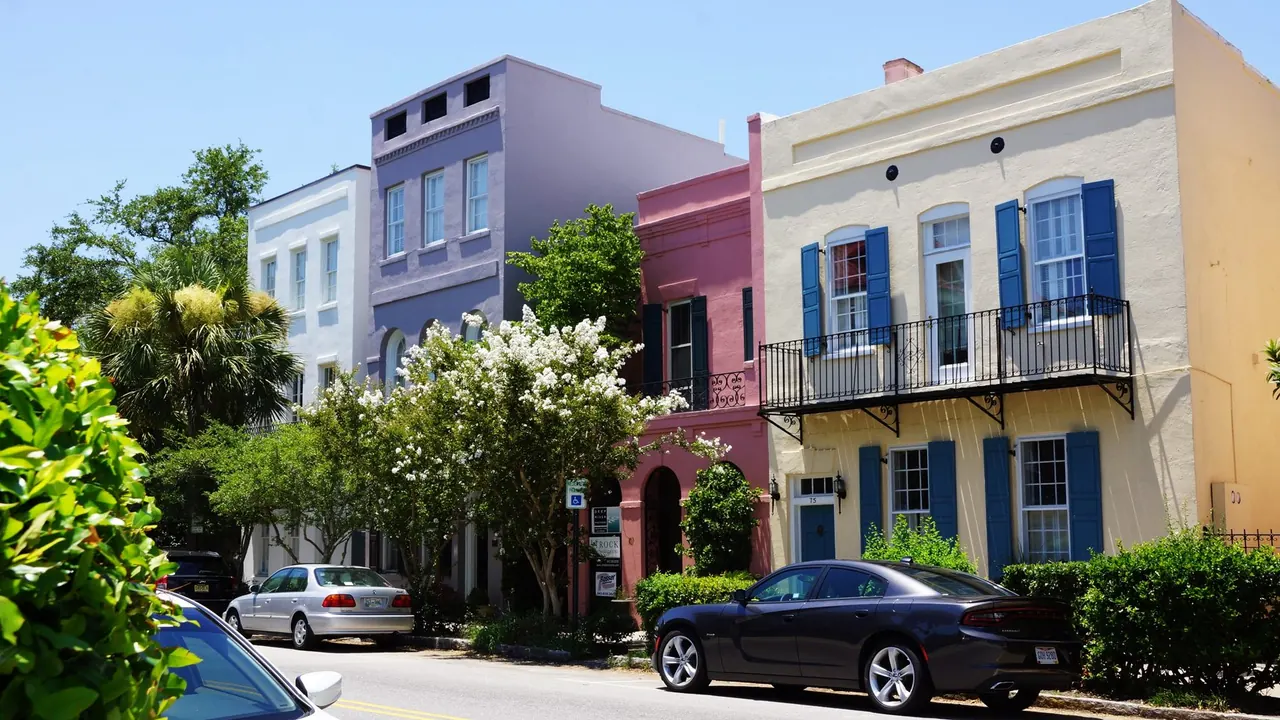
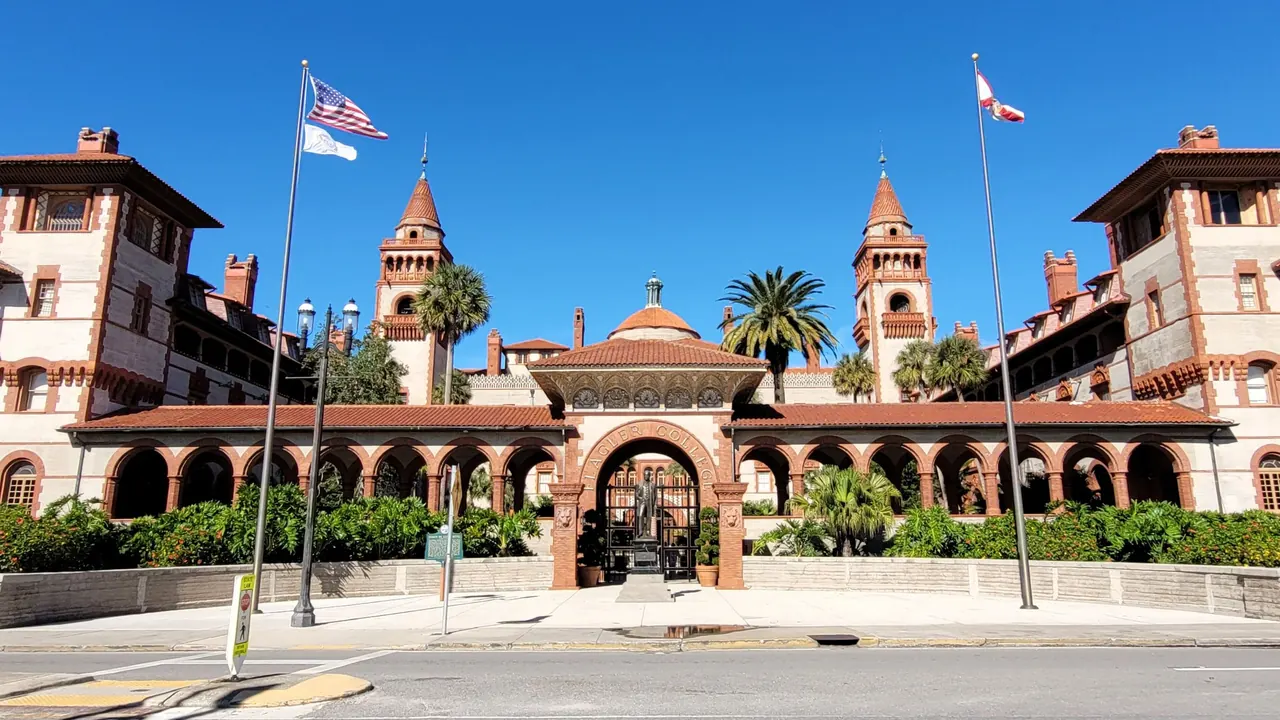
Photos: Charleston by NealVickers, CC BY-SA 4.0, cropped; St. Augustine by Farragutful, CC BY-SA 4.0, cropped.
Charleston or St. Augustine?
Our verdict in twelve categories, each scored against the same fixed benchmark cities, and the climate month by month, so you can choose for your trip.
Choose Charleston for
- food and drink
- shopping
- nightlife
Charleston is the stronger choice for travellers who plan their days around eating and drinking well. Lowcountry cooking, a livelier bar street, better shopping on King Street and the Spoleto festival give it more depth for an adult trip, and the plantations and Savannah fill out a longer stay if you have a car. It costs more, and the beaches are half an hour out.
Choose St. Augustine for
- prices
- families
For a slower vacation built around the beach and older history, St. Augustine fits better. The Spanish fort and lanes are minutes from wide, gently shelving sand, children are well looked after, and it is somewhat easier on the budget. The trade-off is quiet evenings and simpler food.
Scoreboard
Twelve categories on one fixed scale from 0 to 100. The shaded stretch is the gap between the two.
Your match
Pick a travel style or drag the sliders, and both match scores follow your weighting.
Wins on food and drink and shopping with your weighting.
Wins on prices and families with your weighting.
What matters to you?
Category by category
What the scores mean for a trip.
Beaches & swimming
On sand alone there is little to choose between them. The difference is variety against convenience. Charleston has three barrier islands, each with its own character: surfy Folly Beach with its pier, residential Sullivan's Island with old forts behind the dunes and broader, resort-style Isle of Palms. Further south, Kiawah and Seabrook have long, empty stretches. All of them are about half an hour from town.
St. Augustine's beaches form one long, pale strip on Anastasia Island, from the state park dunes down to Crescent Beach, and they are only ten to fifteen minutes from the old town. The water shelves gently and the surf is easy. In both places the Atlantic is greenish rather than clear.
Food & drink
This is where the two differ most. Charleston is a real food destination. Its Lowcountry cooking has roots in Gullah Geechee and West African traditions: shrimp and grits, she-crab soup, oysters roasted in winter and whole-hog barbecue. There are serious dining rooms around upper King Street and the French Quarter, and the best tables book up, so plan your meals ahead.
St. Augustine eats well but simply, mostly seafood in casual places on the river and the creeks. Its one distinctive note comes from its Minorcan settlers: the fiery datil pepper in hot sauce, chowder and pilau. A few chef-led restaurants add some interest, but St. George Street mostly serves passing tourists.
Culture & sights
Both reward two or three days of slow walking, but they tell very different histories. Charleston is English colonial and antebellum, with Georgian houses with side piazzas south of Broad Street, Rainbow Row and the Battery. Inside, the Nathaniel Russell and Aiken-Rhett houses show the enslaved people's quarters alongside the grand rooms, and Fort Sumter, where the Civil War began, is out in the harbour.
St. Augustine goes back further, to its Spanish founding in 1565. The coquina-stone Castillo de San Marcos and the balconied lanes of the Spanish quarter, some of them careful reconstructions, form the first layer. The second, and the more extravagant, is Henry Flagler's Gilded Age hotels, which now house Flagler College and the Lightner Museum.
Nightlife
Neither is a clubbing town, but Charleston has noticeably more going on. Upper King Street packs in rooftop bars, cocktail rooms, oyster bars and sports pubs, which fill with students and weekend groups. For a quieter night, there are wine bars and old taverns in the French Quarter.
Evenings in St. Augustine are smaller and end earlier. There are courtyard pubs and patios around St. George Street, Hypolita Street and the bayfront, and a few beach bars on Anastasia Island. It suits a drink after dinner rather than a long night out.
Nature & outdoors
The two landscapes are close cousins: flat, tidal, marshy coast with no hills, best seen by kayak, often with dolphins alongside. Both are steamy in midsummer. Charleston has larger wild areas within reach, with alligators and birdlife in the Francis Marion National Forest and the ACE Basin and cycling on Kiawah and Edisto.
St. Augustine's outdoors is smaller and closer to the beach. Anastasia State Park has dune trails and calm lagoon water for paddleboarding, the Guana Tolomato Matanzas reserve has long marsh walks and birding, and the coastal road south is easy cycling.
Day trips
Charleston's best outings are close and carry on the story the old town tells. Middleton Place, Magnolia and Drayton Hall on the Ashley River, and Boone Hall in Mount Pleasant, are about half an hour away, and they set formal gardens beside the lives of the enslaved people who worked them. McLeod Plantation on James Island tells that history in full. Savannah's squares fill a full day two hours south, and Beaufort is a quieter river town and a way into Gullah culture on the sea islands.
St. Augustine's popular days out are long drives to something completely different: Kennedy Space Center and the Orlando theme parks, each about two hours, or the speedway and boardwalk at Daytona. Jacksonville's museums and Victorian Fernandina Beach are nearer but less compelling. In both places you need a car.
Good for families
Charleston's attractions for children cluster on the downtown waterfront and lean towards learning: the South Carolina Aquarium, the Children's Museum of the Lowcountry and the aircraft carrier at Patriots Point across the harbour. The boat to Fort Sumter suits school-age children, though the house tours will lose the youngest.
St. Augustine sells history with more noise and fewer facts. Alligators and a zipline at the Alligator Farm, cannon fire on the ramparts of the Castillo, the lighthouse climb and pirate museums fill the days, and gentle surf is minutes from the compact old town. Crowded weekend pavements and summer heat are the main strain in both places.
Getting around
Both have a walkable old centre surrounded by places you need a car to reach. Charleston's peninsula has more to offer on foot and more help getting around it. About 3km of flat walking covers most sights, and pedicabs and a free downtown shuttle fill the gaps. The beaches and plantations still mean driving.
St. Augustine's historic district is smaller: the fort, St. George Street and Flagler College are minutes apart, and sightseeing trolleys loop past them. Beyond it the local buses are of little use, so even the nearby beaches and the lighthouse need a car, a bike or a taxi.
Shopping & style
Charleston is the better place for an afternoon of shopping. King Street changes as you walk it, from antiques and galleries at the lower end, through national brands, to independent boutiques and design shops further up. The City Market sells Gullah sweetgrass baskets, a craft with deep local roots.
St. Augustine's St. George Street is mostly fudge, T-shirts and pirate souvenirs. The galleries and antique shops of Aviles Street and the local datil hot sauces are the better finds, and an outlet mall by the interstate covers the mainstream brands.
Affordability
Neither town is cheap to stay in, and in both a bed within walking distance of the old streets costs a premium. Charleston adds to that at the table and in the extras. Its best-known kitchens charge like a major city's, many of the house and plantation visits that fill a stay charge for entry, and reaching the beaches and the Ashley River estates means paying for a car or rides as well as downtown parking.
St. Augustine is somewhat cheaper, not a bargain. The saving shows least in the historic inns and B&Bs near the fort, which fill up and climb at busy times much as Charleston's do. It shows most in daily spending: meals are simpler seafood and family places rather than reservation-only dining rooms, and the short hops between the old town, the island and the lighthouse keep driving costs down.
Live music & performing arts
Charleston has the stronger arts scene, mostly thanks to Spoleto Festival USA, which fills late spring with opera, chamber music, dance, theatre and jazz. The rest of the year there are plays at the Dock Street Theatre, the Charleston Symphony at the Gaillard Center, and Gullah storytelling and song.
St. Augustine's strength is popular music. The open-air Amphitheatre in the woods on Anastasia Island books touring rock, country and folk acts, and bar patios have acoustic sets every night. For opera or serious theatre, you would have to go to Jacksonville.
Wellness & relaxation
Neither has a bathing tradition, so this comes down to spas and pace. Charleston has the wider choice of spas, with good hotel spas in town and resort spas out on Kiawah Island. Its shaded gardens, church courtyards and evenings at White Point Garden slow a visitor down.
St. Augustine has hotel treatment rooms, a few day spas, B&B verandas and an easy walk along the bayfront seawall. It is gentle enough, but less restful on busy long weekends.
When should you go?
Pick your month. The climate figures are measured averages, not a forecast.
Charleston in July
St. Augustine in July
Daytime high, °C
Rainfall in the month, mm
Where the figures come from
St. Augustine has no rain gauge within 25 km of the centre, so its rainfall comes from a gridded climate dataset read at the city rather than from a gauge further away.
St. Augustine's sunshine is measured 73 km from the centre, at Jacksonville International.
Temperature and rainfall are climate normals, averaged over the years shown. Charleston: 1991-2020 (sunshine 1981-2010) normals, Charleston Airport (16.1 km from centre). St. Augustine: 2006-2020 (sunshine 1991-2020, rainfall 1991-2020) normals, St Augustine / Kingsley Mobile Home Park (7.6 km from centre).
Both are at their most comfortable in spring and again in October, when the old streets are pleasant for walking all day. From June to September both turn hot and humid, with Charleston's afternoons reaching 33°C, and summer storms roughly double the monthly rain to around 170mm. That summer is also the beach season: in both places the sea reaches 28°C in July and August and stays swimmable into October, a little longer in St. Augustine.
Winter is where they differ. St. Augustine is milder, with January highs around 18°C and warmer water, and its spring is especially sunny, peaking in May. Charleston is cooler and its sea drops to 16°C, far too cold for swimming, but its crisp, sunny winter days still suit walking the peninsula.
Which traveller are you?
For a food and nightlife trip, Charleston wins clearly. Lowcountry dishes such as shrimp and grits and she-crab soup, serious kitchens and the rooftop and cocktail bars of upper King Street make the evenings a highlight, while St. Augustine offers simple seafood and early nights.
On a shopping trip, Charleston is the obvious pick. King Street runs from antiques and galleries to independent boutiques, and the City Market sells sweetgrass baskets. St. Augustine's St. George Street is mostly souvenirs, and only the galleries on Aviles Street are worth a detour.
On a trip on a tight budget, St. Augustine makes the money go further. Highway and island motels, midweek rates and ordinary tourist-town prices help, and the free beach is minutes from the old town. In Charleston, hotels, restaurants and the drive to the beach add up quickly.
Before you go
| Measure | Charleston | St. Augustine |
|---|---|---|
| Currency | US Dollar (USD) | US Dollar (USD) |
| Sockets | AB120 V, 60 Hz | AB120 V, 60 Hz |
| Driving side | Right | Right |
| Time zone | UTC-5, UTC-4 in summer | UTC-5, UTC-4 in summer |
| Emergency number | 911 | 911 |
| Elevation | 6 m | 152 m |
| Main airport | Charleston International Airport (CHS)16 km from centre56 non-stop destinations | Jacksonville International Airport (JAX)76 km from centre48 non-stop destinations |
| Public holidays this year | 12 days | 11 days |
By the numbers
| Measure | Charleston | St. Augustine |
|---|---|---|
| City population | 150,227 | 14,329 |
| People per km² | 532 | 433 |
| Museums within 10 km | 19 | 12 |
| UNESCO World Heritage sites within 50 km | 0 | 0 |
| Swim season, months above 21 °C | 6 months | 8 months |
Where else could you go?
Every comparison below shares a destination with this one, so you can follow Charleston or St. Augustine somewhere new.
- Daytona Beachvs St. Augustine
- Savannahvs Charleston
- Myrtle Beachvs Charleston
- Orlandovs St. Augustine
- Cocoa Beachvs St. Augustine
- Savannahvs St. Augustine