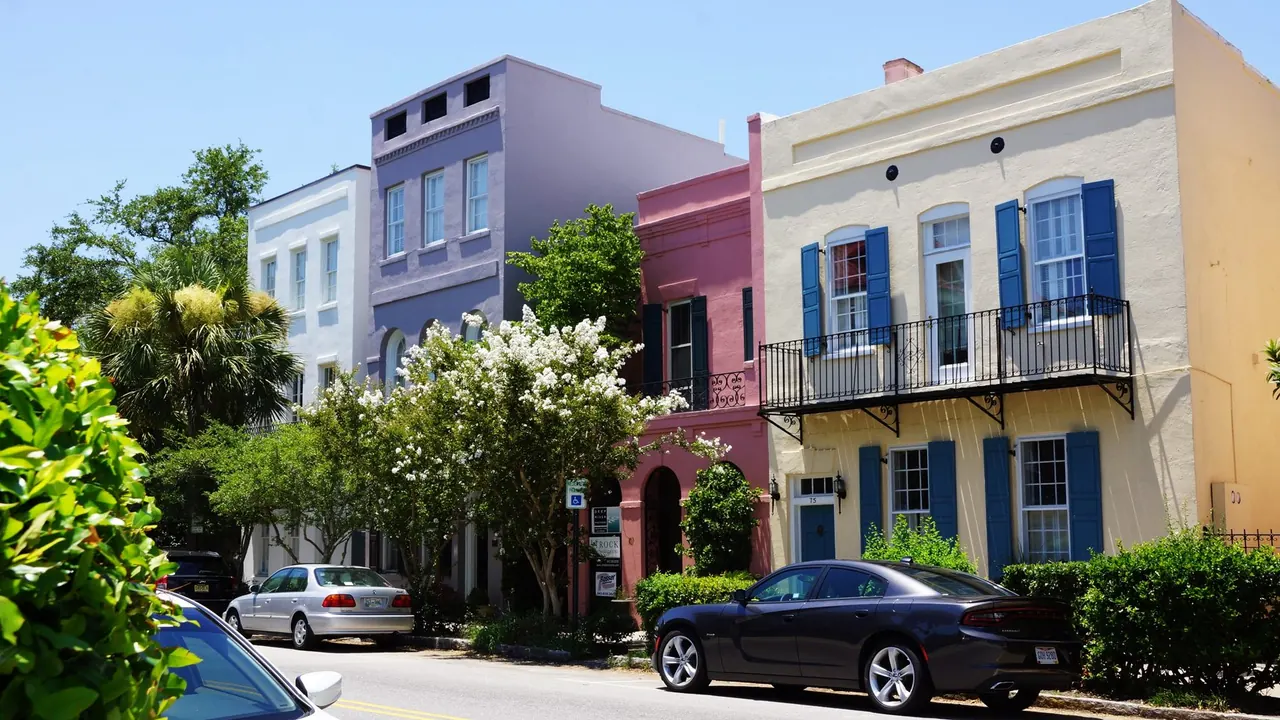
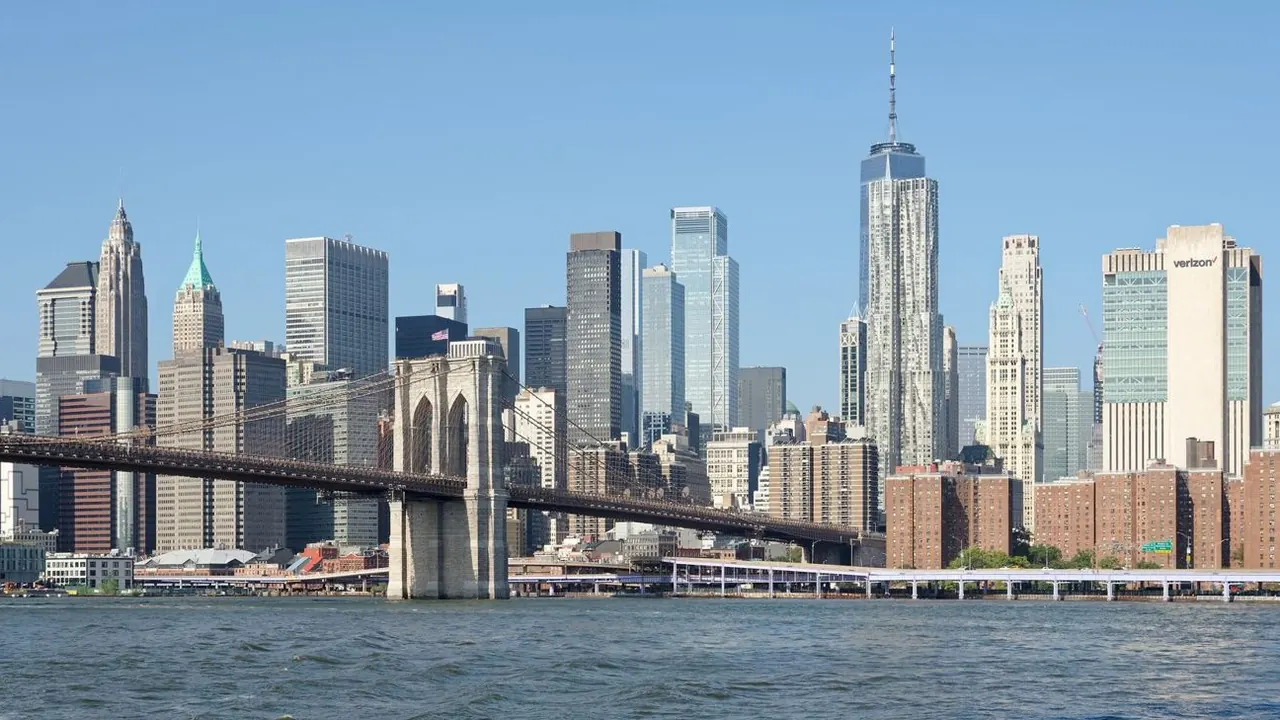
Photos: Charleston by NealVickers, CC BY-SA 4.0, cropped; New York by Jakub Hałun, CC BY 4.0, cropped.
Charleston or New York?
Our verdict in twelve categories, each scored against the same fixed benchmark cities, and the climate month by month, so you can choose for your trip.
Choose Charleston for
- beaches
- prices
Charleston suits a slower trip built around one handsome old town and the sea. Its peninsula of antebellum houses, walled gardens and church steeples is best taken on foot over two or three days, then swapped for the barrier-island beaches and long Lowcountry dinners. It costs a little less than New York and asks far less energy of you.
Choose New York for
- live music and the arts
- nightlife
- shopping
Choose New York when you want range and intensity rather than charm. Its museums, Broadway and Lincoln Center, all-night bars and clubs, and shopping from Fifth Avenue to Brooklyn vintage stores are on another level. The subway puts all of it within reach without a car. Come for the city itself, not the beach.
Scoreboard
Twelve categories on one fixed scale from 0 to 100. The shaded stretch is the gap between the two.
Your match
Pick a travel style or drag the sliders, and both match scores follow your weighting.
Wins on beaches and prices with your weighting.
Wins on live music and the arts and nightlife with your weighting.
What matters to you?
Category by category
What the scores mean for a trip.
Beaches & swimming
Charleston is much the better beach destination. Its barrier islands each have their own feel: Folly Beach is surfy, Sullivan's Island is quiet with old forts behind the dunes, and Isle of Palms is more of a resort. The sea is warm from late spring into October, though the water is tidal and murky rather than clear.
New York's beaches come as a real surprise to many visitors, but they are a summer side trip. Coney Island and the Rockaways have the advantage of being on the subway, while Charleston's beaches need a car. Still, New York's water is cooler, the season lasts barely ten weeks and summer weekends are packed.
Food & drink
Charleston does one kind of cooking exceptionally well. Its Lowcountry food draws on Gullah Geechee and West African roots, from shrimp and grits and she-crab soup to winter oyster roasts and whole-hog barbecue. You can eat it in restored townhouse dining rooms or at the fried seafood shacks on Shem Creek. What it lacks is range. There is little street food or cheap international cooking, and the best tables need booking well ahead.
New York is strongest exactly where Charleston is thin: range and cheap eating. Fujianese cooking in Flushing, Tibetan in Jackson Heights, Polish in Greenpoint and Italian on Arthur Avenue sit alongside one of the world's deepest fine-dining scenes. Pizza by the slice, bagels and halal carts mean you can eat well without spending much, which is where it pulls far ahead.
Culture & sights
Charleston's culture is one compact subject, presented with care. There are the Georgian and antebellum streets south of Broad, and house museums such as the Aiken-Rhett, which show the enslaved people's quarters alongside the grand rooms. Add Fort Sumter and the International African American Museum, and two or three days covers it all.
New York works on a different scale. The Met, MoMA, the Natural History museum and the Cloisters could each be the main reason for a trip, and landmarks from Ellis Island to Grand Central are part of any walk. Its history is younger and more industrial, seen in brownstones and tenements rather than in the piazza houses of Charleston.
Nightlife
In Charleston, going out mostly means drinks rather than dancing. Upper King Street has rooftop and cocktail bars that fill with students and weekend groups, and the French Quarter has quieter taverns. There is little club life, and most places close by about 2am.
New York is in another class entirely. It runs from East Village dive bars and West Village wine bars to warehouse parties in Bushwick that last past dawn. Whatever kind of night you want, there is somewhere for it, and the trains keep running to get you home.
Nature & outdoors
The two are evenly matched outdoors, but the landscapes could hardly be more different. Charleston's nature is wet and flat: tidal creeks, spartina marsh and live oaks. It is best seen from a kayak with dolphins alongside, or on the ACE Basin trails among alligators.
New York's nature is city parkland with hills not far away. Central Park, the High Line and Jamaica Bay are all inside the city, and a train up the Hudson reaches the steep, rocky climbs of Breakneck Ridge. That kind of hiking is something the flat Lowcountry cannot offer.
Day trips
New York has a slight edge, mostly because you can do its day trips by train. Philadelphia, Princeton, the Hudson Valley estates and Dia Beacon are all reachable without a car. There is also more variety, from art museums to Long Island wine country.
Charleston has fewer outings, but each has a strong theme. The Ashley River plantations, with McLeod and Drayton Hall telling the history of slavery, are close by. Savannah's squares are about two hours away, and there is Gullah culture around Beaufort. You need a car for every one of them.
Good for families
Children can climb through an aircraft carrier in both cities, but New York has far more besides. There are the dinosaur halls and planetarium, the Bronx Zoo, the free Staten Island Ferry, and the carousel and boating in Central Park. The downsides are subway stations with only stairs, small hotel rooms and tiring crowds.
Charleston is easier going, with the aquarium on the waterfront, the boat out to Fort Sumter and gentle beaches. However, there is no zoo or theme park, house tours bore younger children, and summer afternoons are hard going in the heat.
Getting around
New York is much easier to get around. The subway runs all night across four of the five boroughs, Manhattan's grid is simple to walk, and ferries and Citi Bike fill the gaps. You never need a car, even if the express lines are confusing and the stations get stuffy in summer.
Charleston's historic peninsula is flat and walkable within about 3km, with pedicabs and a free shuttle to help. Beyond it, though, you need a car or ride-hailing to reach the beaches and plantations, and parking downtown is tight.
Shopping & style
Charleston is a place for a slow browse rather than a serious shopping trip. A walk up King Street takes you past antiques, galleries and small independent boutiques in a handsome old setting. The one thing you can only buy here is a sweetgrass basket, woven by Gullah artisans at the City Market. If you want high-end luxury labels, you will find very little.
New York goes well beyond Charleston on every count. Madison Avenue and grand department stores such as Bergdorf Goodman cover the top end that King Street lacks. SoHo and the vintage and record shops of Brooklyn spread across whole districts, where Charleston has one street. Charleston's speciality is a single local craft, but New York has dedicated shops for almost anything, from rare books to sneakers and cameras.
Affordability
Neither city is cheap, but Charleston is easier on the wallet. Inns on the peninsula and the best-known restaurants charge big-city prices, and paid house tours and taxis add up. Still, the old streets, the Battery and the beaches cost nothing.
New York is more expensive again, with small, costly hotel rooms, tax and a tip on every meal, and steep tickets for theatres and observation decks. It does have better ways to save, though: cheap pizza slices, the restaurants of Queens, a flat subway fare, and cheaper rooms in Brooklyn or Queens. Unlike Charleston's cheaper suburbs, you can reach those without a car.
Live music & performing arts
Nowhere matches New York for performance. Broadway, Off-Broadway, the Metropolitan Opera, the Philharmonic and Carnegie Hall run all season. There is jazz in Village basements and Harlem, gospel on Sundays, and free Shakespeare in the parks in summer.
Charleston comes alive each late spring for Spoleto Festival USA, when opera, dance and jazz fill the town for more than two weeks. For the rest of the year there is the Dock Street Theatre, the symphony at the Gaillard Center and Gullah storytelling. It is pleasant, but on a modest scale.
Wellness & relaxation
Neither city is a wellness destination, and they fall short in different ways. Charleston offers calm rather than treatments: shaded gardens, quiet church courtyards and evenings at White Point Garden. Its spas are limited to hotels and the Kiawah resorts.
New York is the reverse. Its streets are anything but restful, but it has a real bathing culture. There is the East Village bathhouse dating from the late 1800s, with its ice-cold plunge pool, as well as the banyas of Brighton Beach and Korean-style spas in Queens.
When should you go?
Pick your month. The climate figures are measured averages, not a forecast.
Charleston in July
New York in July
Daytime high, °C
Rainfall in the month, mm
Temperature and rainfall are climate normals, averaged over the years shown. Charleston: 1991-2020 normals, Charleston Airport (16.1 km from centre). New York: 1991-2020 normals, LaGuardia Airport (12.9 km from centre).
Charleston is warm for most of the year. Winters are mild enough to walk the old streets in a light jacket, and spring and October are the most comfortable months for sightseeing. From June to August daytime highs reach 33°C with heavy humidity. This is also the wettest part of the year, with around 170mm a month falling in afternoon storms. The sea is at its best then, near 28°C in July and August, and swimming stays pleasant from late May into October.
New York's seasons are much more extreme. January highs sit around 5°C, so winter suits museums and theatres more than long walks, and July and August are hot and sticky in the streets. Rain is spread evenly through the year. The sea only reaches about 23°C in August, so the beach season is short, from late June to early September. Late spring and September to October are the best months for exploring on foot.
Which traveller are you?
On a beach and sun trip, Charleston is the clear choice. Folly Beach, Sullivan's Island and Isle of Palms are all within half an hour, and the Atlantic there is much warmer, with a swimming season months longer than at Coney Island or the Rockaways.
For a culture and arts trip, New York wins easily. The Met, MoMA and Museum Mile could fill a week, and in the evenings there is Broadway, the Metropolitan Opera, Carnegie Hall and Village jazz. Outside the Spoleto season, Charleston has only a handful of stages.
On a food and nightlife trip, New York leads again. Its cooking covers almost every cuisine on earth across the five boroughs, and its bars and Brooklyn clubs stay open past dawn. Charleston has excellent Lowcountry restaurants, but its bars mostly close by about 2am.
Before you go
| Measure | Charleston | New York |
|---|---|---|
| Currency | US Dollar (USD) | US Dollar (USD) |
| Sockets | AB120 V, 60 Hz | AB120 V, 60 Hz |
| Driving side | Right | Right |
| Time zone | UTC-5, UTC-4 in summer | UTC-5, UTC-4 in summer |
| Emergency number | 911 | 911 |
| Elevation | 6 m | 25 m |
| Main airport | Charleston International Airport (CHS)16 km from centre56 non-stop destinations | John F. Kennedy International Airport (JFK)21 km from centre189 non-stop destinations |
| Public holidays this year | 12 days | 13 days |
By the numbers
| Measure | Charleston | New York |
|---|---|---|
| City population | 150,227 | 8,804,190 |
| People per km² | 532 | 7,256 |
| Museums within 10 km | 19 | 157 |
| UNESCO World Heritage sites within 50 km | 0 | 2 |
| Swim season, months above 21 °C | 6 months | 3 months |
Where else could you go?
Every comparison below shares a destination with this one, so you can follow Charleston or New York somewhere new.