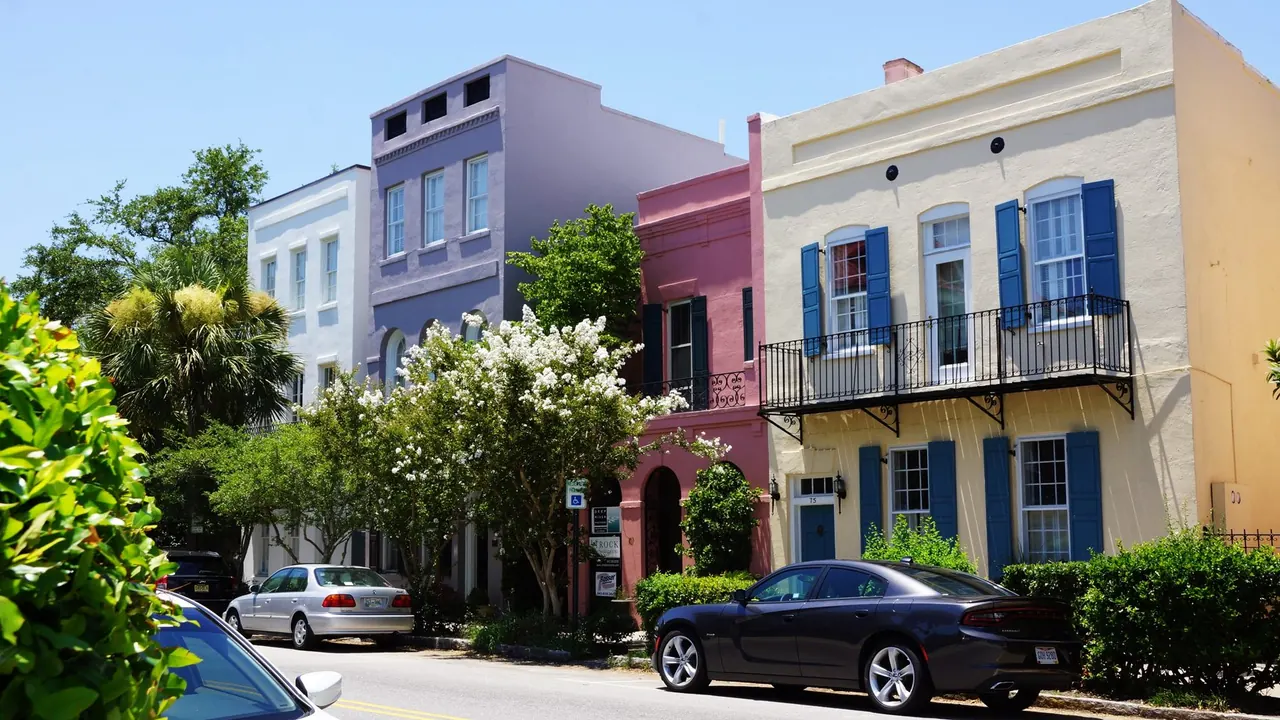
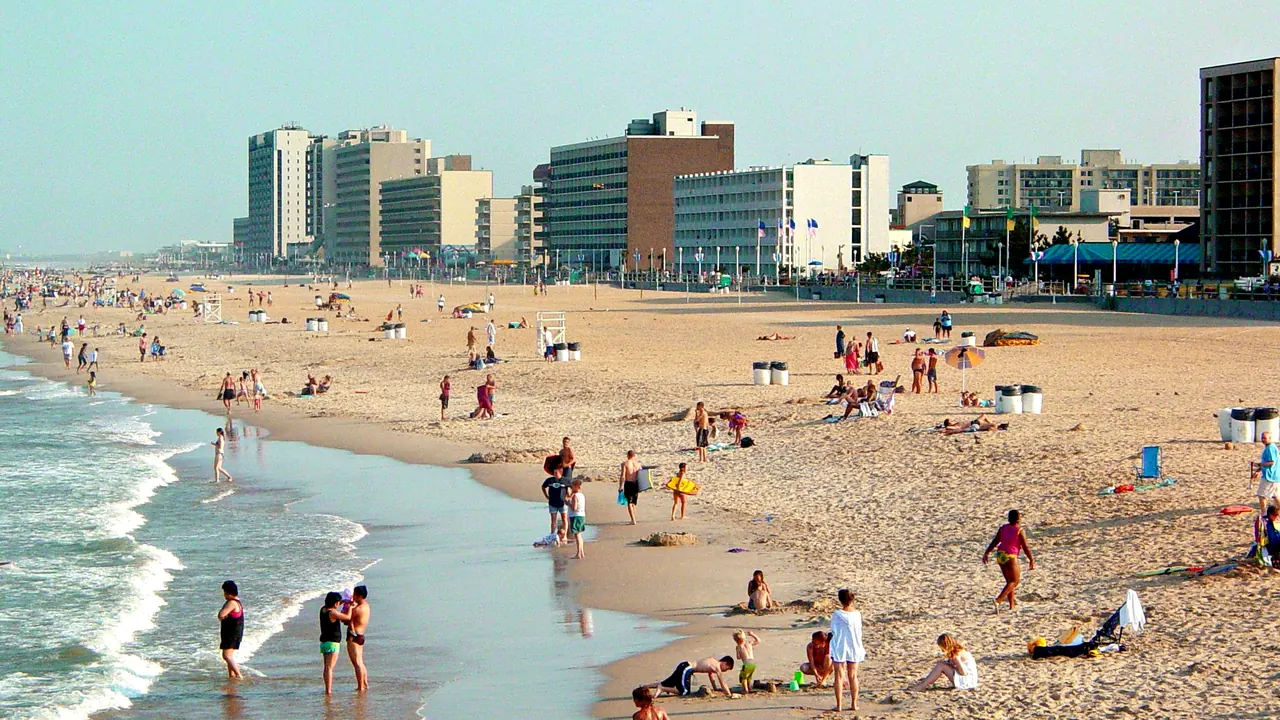
Photos: Charleston by NealVickers, CC BY-SA 4.0, cropped; Virginia Beach by SchuminWeb, CC BY-SA 3.0, cropped.
Charleston or Virginia Beach?
Our verdict in twelve categories, each scored against the same fixed benchmark cities, and the climate month by month, so you can choose for your trip.
Choose Charleston for
- culture and sights
- food and drink
- shopping
Charleston suits travellers who want the town itself to be the vacation. The old peninsula is walkable, full of house museums and steeples, and it has one of the best regional kitchens in the South. The beaches are a short drive away for the afternoons. It costs more, but for a couple or a group of friends spending days on history, long dinners and King Street, it gives far more to do.
Choose Virginia Beach for
- families
- prices
- beaches
Virginia Beach is the better pick when the sand is the point and the children are coming too. Hotels sit right on the boardwalk, the bay beaches are gentle enough for toddlers, and water parks and the aquarium fill the days between swims. Stays are cheaper, especially outside high summer, and Williamsburg and Jamestown are within reach for a day of history.
Scoreboard
Twelve categories on one fixed scale from 0 to 100. The shaded stretch is the gap between the two.
Your match
Pick a travel style or drag the sliders, and both match scores follow your weighting.
Wins on culture and sights and food and drink with your weighting.
Wins on families and prices with your weighting.
What matters to you?
Category by category
What the scores mean for a trip.
Beaches & swimming
On the beach the two are close, and the difference is in how the sand fits into the stay. Virginia Beach is built around it: a wide pale strip with lifeguards, a boardwalk running for about 5km in front of the hotels, surfing by the pier, and calmer Chesapeake Bay beaches at the north end for small children.
Charleston's beaches are something you go out to, around half an hour away on Folly, Sullivan's Island and Isle of Palms, each with its own character from surf town to quiet dunes to resort. The water there is warmer and stays swimmable for longer, but it is greenish and tidal, and you need a car or a ride every time.
Food & drink
Charleston is much the better place to eat. Lowcountry cooking with Gullah Geechee and West African roots, such as shrimp and grits, Frogmore stew and Carolina Gold rice, is served everywhere from townhouse dining rooms to whole-hog barbecue pits, mostly along upper King Street and in the French Quarter. The catch is that the best tables need booking well ahead.
Virginia Beach's strength is narrower: Lynnhaven oysters and Chesapeake blue crab, best eaten dockside around the inlet rather than on the resort strip, where chains and seafood buffets dominate. Both cities serve she-crab soup, but only Charleston has a food scene worth planning a trip around.
Culture & sights
Charleston's historic peninsula is a sight in its own right, with Rainbow Row, the Battery and the single houses south of Broad Street. Its house museums, the Old Slave Mart and the harbour crossing to Fort Sumter deal directly with slavery and the Civil War, and they fill two or three full days.
Virginia Beach has only a few places to see. Cape Henry, with its memorial cross and 18th-century lighthouse, marks the 1607 landing, and the Adam Thoroughgood House is a rare early brick home. A morning covers both, and the King Neptune statue on the boardwalk is what most visitors photograph.
Nightlife
Neither city is a club town, and in both a night out means bars. Charleston has more going on and more variety: upper King Street's rooftops, cocktail rooms and oyster bars fill with students and weekend groups, while the French Quarter has quieter wine bars and old taverns, and it all runs year-round.
Virginia Beach's evenings are seasonal and centred on Atlantic Avenue, where beach bars and sports bars are loud and casual, with sailors from the navy bases in the mix. The strip goes quiet out of season, and locals looking for character drive to Norfolk.
Nature & outdoors
Both cities sit on flat Atlantic coast with no hills, and both run kayak trips where dolphins often turn up, so outdoors they are broadly level. Charleston's landscape is the tidal Lowcountry, best seen from the water: creeks winding through spartina marsh, live oaks hung with Spanish moss, and alligators and birdlife along the quiet trails of the ACE Basin and the Francis Marion National Forest. Its summers bring mosquitoes, so spring and autumn suit it best.
Virginia Beach is more about dunes, swamp and open shoreline. First Landing State Park has trails through cypress swamp and maritime forest at the mouth of the Chesapeake Bay, and the long, empty spit of Back Bay National Wildlife Refuge and False Cape is reached on foot or by bike. Winter has its own draw here, when migrating waterfowl gather on the refuge marshes.
Day trips
The day trips are equally strong but tell different stories, and both need a car. From Charleston the outings deal with the plantation South: Middleton Place, Magnolia, Drayton Hall and McLeod Plantation are about half an hour away, Savannah's squares are about two hours away, and Beaufort is a gateway to Gullah sea-island culture.
From Virginia Beach the big day is about an hour away at Colonial Williamsburg, Jamestown and Yorktown, covering the colonial and Revolutionary story. Norfolk's battleship and waterfront are close by, and Kitty Hawk, where the Wright brothers first flew, makes an easy run down the Outer Banks.
Good for families
Virginia Beach is the easier family base. Hotels and rental houses are geared to children, the bay beaches suit toddlers, and the Virginia Aquarium, a water park, mini-golf and the boardwalk fill the days. Within about an hour there is a large amusement park and Colonial Williamsburg, where children can join the costumed tradespeople.
Charleston is calm and friendly with children, with its aquarium, the Children's Museum and the aircraft carrier at Patriots Point. But it has no theme park, and much of its appeal lies in house tours that young children tire of quickly.
Getting around
Charleston is the easier place to be without a car, at least in town. The flat historic peninsula puts most sights within walking distance, and pedicabs and a free shuttle bus cover the rest, though the beaches and plantations still need a car or ride-hailing.
Virginia Beach works on foot only along the Oceanfront, with the boardwalk and a summer trolley on Atlantic Avenue. Everything else, from Sandbridge to Town Center, is spread across suburban highways with sparse buses and heavy summer traffic.
Shopping & style
Charleston has real browsing along King Street, which runs from antiques and galleries at the lower end through fashion brands to independent boutiques and design shops up top. The City Market is where Gullah artisans weave sweetgrass baskets, a craft you will not find in Virginia Beach.
Virginia Beach shopping means a regional mall, the chain stores of Town Center and strip centres along the main roads. Its one local strand is the surf shops on the Oceanfront, among the souvenir T-shirt stores.
Affordability
Neither is cheap, but Virginia Beach is easier on the wallet, especially from autumn to spring when oceanfront rooms drop sharply in price. Its beach, boardwalk and state parks cost almost nothing.
Charleston charges big-city prices for inns on the peninsula and for its well-known restaurants, and spring and autumn weekends are the dearest of all. Paid house and plantation tours add up. Staying in Mount Pleasant saves money but means driving in each day.
Live music & performing arts
The two are broadly level here, and the difference is in timing and location. Charleston's high point is Spoleto Festival USA in late spring, more than two weeks of opera, chamber music, dance and jazz. The rest of the year there are plays at the historic Dock Street Theatre, the symphony at the Gaillard Center and Gullah storytelling and song.
Virginia Beach is mostly a summer stage, with touring rock and country acts at its large amphitheatre and free concerts on the boardwalk. Its opera, symphony and spring arts festival are half an hour away in Norfolk.
Wellness & relaxation
Neither city has a bathing tradition, so the difference lies in pace. Charleston relaxes more easily, with shaded walled gardens, church courtyards and evenings at White Point Garden, plus resort spas out on Kiawah Island.
Virginia Beach is calm on early-morning boardwalk walks and in the quiet spring and autumn months, but in high summer the resort is crowded and noisy. Its spas are mostly inside the larger oceanfront hotels.
When should you go?
Pick your month. The climate figures are measured averages, not a forecast.
Charleston in July
Virginia Beach in July
Daytime high, °C
Rainfall in the month, mm
Temperature and rainfall are climate normals, averaged over the years shown. Charleston: 1991-2020 normals, Charleston Airport (16.1 km from centre). Virginia Beach: 1991-2020 normals, Virginia Beach / Gatewood Park (5.7 km from centre).
Charleston is the warmer of the two and has the longer swimming season. Its sea is pleasant from May into October and reaches 28°C in July and August, while Virginia Beach's water is comfortable only from June to September and peaks around 25°C. Charleston pays for that in summer: highs near 33°C, sticky humidity and the heaviest rain of either city from June to September, so walking around the old town at midday gets tiring. Virginia Beach is a little cooler and drier in high summer, which suits long days on the sand.
For sightseeing, Charleston is at its best in spring and again in October and November, when the days are warm and comfortable on foot. Its winters are mild, around 16°C in January, so a walking break still works then. Virginia Beach drops to about 10°C in January and has little to draw a visitor from November to March. May and October are its calm, mild months for the boardwalk and the state parks, but the sea is then too cool for most swimmers.
Which traveller are you?
For a culture and arts trip, Charleston is the clear choice. The historic peninsula, the Nathaniel Russell and Aiken-Rhett houses, Fort Sumter and the International African American Museum fill several days, and Spoleto adds opera and dance in late spring. Virginia Beach has only a handful of sights.
On a family trip with children, Virginia Beach works better. Hotels open onto the sand and boardwalk, the bay beaches are calm enough for toddlers, and there is a water park, the Virginia Aquarium and an amusement park near Williamsburg. Charleston's house tours soon bore young children.
On a tight budget, Virginia Beach stretches the money further, particularly outside summer when oceanfront rooms fall sharply, and the beach, boardwalk and state parks cost almost nothing. Charleston's peninsula inns and well-known restaurants charge big-city rates, and staying outside the centre means driving in every day.
Before you go
| Measure | Charleston | Virginia Beach |
|---|---|---|
| Currency | US Dollar (USD) | US Dollar (USD) |
| Sockets | AB120 V, 60 Hz | AB120 V, 60 Hz |
| Driving side | Right | Right |
| Time zone | UTC-5, UTC-4 in summer | UTC-5, UTC-4 in summer |
| Emergency number | 911 | 911 |
| Elevation | 6 m | 7 m |
| Main airport | Charleston International Airport (CHS)16 km from centre56 non-stop destinations | Norfolk International Airport (ORF)20 km from centre42 non-stop destinations |
| Public holidays this year | 12 days | 13 days |
By the numbers
| Measure | Charleston | Virginia Beach |
|---|---|---|
| City population | 150,227 | 459,470 |
| People per km² | 532 | - |
| Museums within 10 km | 19 | 2 |
| UNESCO World Heritage sites within 50 km | 0 | 0 |
| Swim season, months above 21 °C | 6 months | 4 months |
Where else could you go?
Every comparison below shares a destination with this one, so you can follow Charleston or Virginia Beach somewhere new.