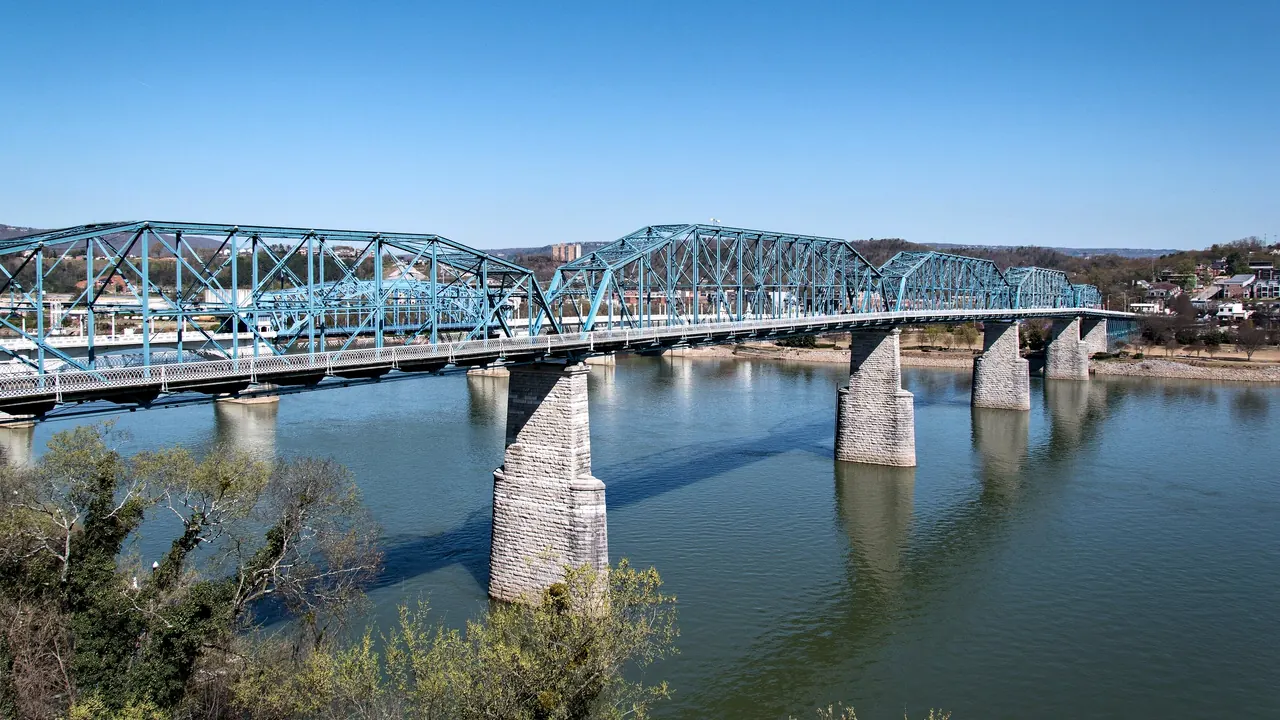
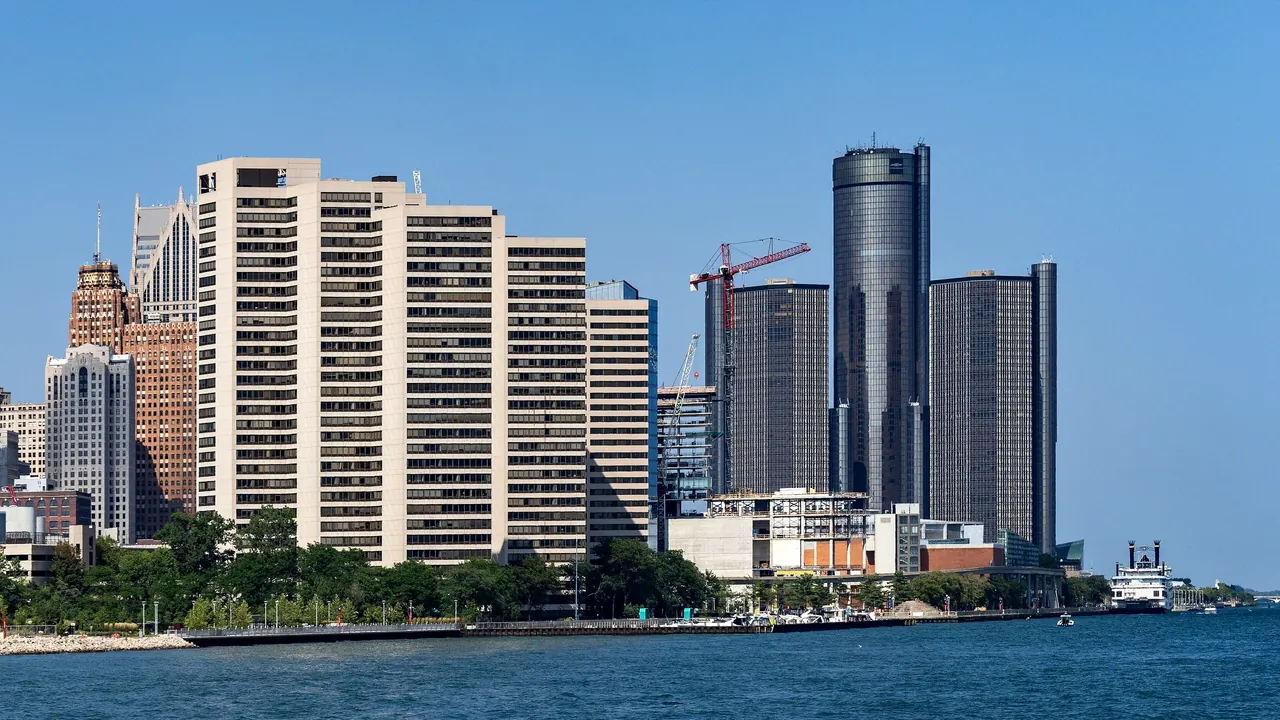
Photos: Chattanooga by Ɱ, CC BY-SA 4.0, cropped; Detroit by Chris Woodrich, CC BY-SA 4.0, cropped.
Chattanooga or Detroit?
Our verdict in twelve categories, each scored against the same fixed benchmark cities, and the climate month by month, so you can choose for your trip.
Choose Chattanooga for
- nature and the outdoors
- families
- wellness
Chattanooga is the pick for travellers who want to spend their days outside: climbing the sandstone bluffs, hiking the Tennessee River Gorge or rafting the Ocoee, then coming back to a small riverfront you can walk. It also suits families better, because the aquarium and the Lookout Mountain attractions sit close together. Evenings there are quiet, with beer and conversation on a patio.
Choose Detroit for
- live music and the arts
- nightlife
- culture and sights
Choose Detroit if your trip is more about what happens indoors and after dark. The Detroit Institute of Arts, the Henry Ford and Motown give it far more to see. Orchestra Hall, the jazz clubs and the techno scene give it far more to hear. Coney dogs, Dearborn's Lebanese and Yemeni cooking and Eastern Market make it the better place to eat. It is also easier on the budget, though the land is flat and the winters are hard.
Scoreboard
Twelve categories on one fixed scale from 0 to 100. The shaded stretch is the gap between the two.
Your match
Pick a travel style or drag the sliders, and both match scores follow your weighting.
Wins on nature and the outdoors and families with your weighting.
Wins on live music and the arts and nightlife with your weighting.
What matters to you?
Category by category
What the scores mean for a trip.
Beaches & swimming
Neither city is a beach destination, but Detroit has slightly better swimming. Belle Isle has its own patch of sand inside the city, and Lake St. Clair Metropark has a long beach with shallow, calm water, though only from about July to early September.
In Chattanooga, all the swimming is in fresh water and on a small scale: designated areas on Chickamauga Lake and at Harrison Bay, or a creek hole on the plateau on a hot afternoon. The water stays warm for longer there, from June to September, but in both cities this means a dip of an hour or two, not a day on the beach.
Food & drink
Detroit has the more distinctive and wider range of food. Its own dishes, the chilli-topped Coney dog and square Detroit-style pizza, are joined by Eastern Market on a Saturday and, above all, by the Arab American bakeries and grills of Dearborn, Mexicantown, and the Polish bakeries of Hamtramck.
Chattanooga eats well within a narrower Southern range: meat-and-three, barbecue, fried chicken, catfish and grits, with chef-led restaurants and breweries on the Southside. It has none of Detroit's immigrant cooking or market life, so a few days of meals will satisfy but rarely surprise.
Culture & sights
Detroit has far more to see. The Detroit Institute of Arts with Rivera's Detroit Industry murals, the Henry Ford Museum and Greenfield Village, the Motown Museum and the Charles H. Wright Museum could fill several days. The Art Deco Guardian Building and the gilded Fisher Building add architecture on top, although the sights are scattered across an uneven city.
Chattanooga's story is narrower and spends more time outdoors: Civil War battlefields at Point Park and Missionary Ridge, the old Terminal Station, the Hunter Museum on its bluff and the Walnut Street Bridge. That makes two or three pleasant days, where Detroit rewards a longer stay.
Nightlife
Detroit is the place for a proper night out. As the home of techno it has warehouse parties, small serious clubs and after-hours events, as well as dive and cocktail bars in Corktown and Midtown. These are spread out, though, so a night usually involves taxis between neighbourhoods.
Chattanooga's evenings are gentler and easier to manage: breweries and patios on the Southside and Main Street, with Station Street as the one lively block. Most places wind down well before the small hours.
Nature & outdoors
Here Chattanooga is in a different league. Lookout, Signal and Raccoon mountains rise straight above town, and the sandstone bluffs draw climbers from across the eastern United States. Within about an hour you can reach the Ocoee whitewater, the Tennessee River Gorge for paddling and the waterfalls of Cloudland Canyon.
Detroit's outdoors are flat and gentle. There is Olmsted's Belle Isle, the RiverWalk for cycling, kayaking and sailing on the river and Lake St. Clair, and birdwatching in the metroparks. These make good afternoons out, but with no hills and long grey winters they are not a reason to go.
Day trips
Chattanooga has the somewhat stronger list, mainly because two major cities are within reach: Nashville for music and Atlanta for museums, each about two hours away. Huntsville's Space and Rocket Center and Lynchburg, the small town of the Jack Daniel's distillery, make shorter outings.
Detroit's choices are closer but smaller: leafy Ann Arbor, the Bavarian-style town of Frankenmuth, Toledo's excellent art museum, and Windsor across the border if you have a passport. In both cities you need a car for nearly all of these.
Good for families
Chattanooga is the easier base for a family. The Tennessee Aquarium and the Creative Discovery Museum are a few blocks apart. Lookout Mountain puts the Incline Railway, Ruby Falls and Rock City into one day aimed at children, and Coolidge Park's carousel and splash fountains are good for downtime.
Detroit has some strong attractions of its own, especially the large Detroit Zoo with its polar bear tunnel and the steam trains of Greenfield Village. They are spread across the metro area, though, so you drive between them, and winter takes away most of the outdoor options.
Getting around
Both cities have a centre you can walk and then spread out, so most visitors to either one hire a car. The difference is in how the centre is linked. Chattanooga's is smaller, joined to the North Shore by the Walnut Street Bridge and served by a free electric shuttle. Detroit's centre is larger and has rail: the elevated People Mover loops downtown, and the QLine streetcar runs up Woodward Avenue to the museums of Midtown.
Shopping & style
Detroit has a little more to browse, mostly goods made in the city: watches, leather and prints from the makers of Midtown and Corktown, vintage shops, and Eastern Market's crafts on market days. Chattanooga has Warehouse Row and the boutiques of Frazier Avenue, and its real speciality is outdoor gear. Neither city has a shopping street that fills an afternoon.
Affordability
Detroit is the cheaper of the two by American standards. Hotel rooms cost well below big-city levels, and Coney dogs, pizza and Middle Eastern meals are good value. Downtown hotels on game and concert nights are the exception.
Chattanooga is moderate rather than cheap. Its trails and riverfront are free, but the aquarium and the Lookout Mountain attractions charge full admission, so a family doing all of them spends steadily. In both cities you also pay for tipping, sales tax and a hire car.
Live music & performing arts
Detroit is a serious music city, and Chattanooga is not. Detroit has its symphony in the much-admired Orchestra Hall, opera in a restored downtown opera house, touring Broadway shows at the Fisher Theatre, long-established jazz clubs and the free Detroit Jazz Festival over Labor Day weekend, plus soul, rock and gospel bands most nights.
Chattanooga's ornate Tivoli Theatre is a lovely setting for a touring show or for the small local symphony and opera company. The Southside bars lean towards bluegrass and Americana. Together they make an evening or two, not a reason to come.
Wellness & relaxation
Neither city is a place to unwind, and both offer only hotel spas and day spas. Chattanooga has the edge in pace: it is a small, quiet city where a porch in Bluff View or an afternoon on the riverfront feels unhurried. Detroit's rhythm is set by work, sport and music, and its calm comes down to a stroll on the RiverWalk or a few hours on Belle Isle.
When should you go?
Pick your month. The climate figures are measured averages, not a forecast.
Chattanooga in July
Detroit in July
Daytime high, °C
Rainfall in the month, mm
Temperature and rainfall are climate normals, averaged over the years shown. Chattanooga: 1991-2020 (sunshine 1981-2010) normals, Lovell Field (6.3 km from centre). Detroit: 1991-2020 (sunshine 1981-2010) normals, Detroit / Hamtramck (9.2 km from centre).
Chattanooga is warm for much more of the year. April and May, and then late September through October, are the best times, warm enough for trails and streets without being tiring. From June to August the heat reaches about 32°C and is humid, which makes those months better for creek swimming than for long hikes. Winter days are mild at around 11°C but are the wettest part of a year in which rain is spread fairly evenly.
Detroit has a shorter season with sharper edges. January highs sit around -1°C and the cold lasts into March, so the best months are June to September. Then it is warm without Chattanooga's heaviness, and July is the sunniest month. The lake water reaches about 23°C in August, warm enough for swimming only in high summer, and Detroit is generally the drier of the two cities.
Which traveller are you?
On an outdoors trip, Chattanooga wins easily. You can climb on the sandstone bluffs, hang-glide from Lookout Mountain, paddle the Tennessee River Gorge and raft the Ocoee whitewater, all close to town. Detroit has flat parkland, river kayaking and the metroparks.
For a culture and arts trip, Detroit has much more to offer. The Detroit Institute of Arts with Rivera's murals, the Henry Ford, the Motown Museum and an evening at Orchestra Hall or a jazz club fill several days. Chattanooga has Civil War sites and the Hunter Museum.
On a family trip with children, Chattanooga is the easier choice. The aquarium, the Creative Discovery Museum and Lookout Mountain's Incline Railway, Ruby Falls and Rock City are all close together. Detroit's zoo and Greenfield Village are good, but you have to drive across the metro area to reach them.
Before you go
| Measure | Chattanooga | Detroit |
|---|---|---|
| Currency | US Dollar (USD) | US Dollar (USD) |
| Sockets | AB120 V, 60 Hz | AB120 V, 60 Hz |
| Driving side | Right | Right |
| Time zone | UTC-5, UTC-4 in summer | UTC-5, UTC-4 in summer |
| Emergency number | 911 | 911 |
| Elevation | 206 m | 183 m |
| Main airport | Chattanooga Metropolitan Airport (Lovell Field) (CHA)6 km from centre15 non-stop destinations | Detroit Metropolitan Wayne County Airport (DTW)28 km from centre129 non-stop destinations |
| Public holidays this year | 13 days | 13 days |
By the numbers
| Measure | Chattanooga | Detroit |
|---|---|---|
| City population | 181,099 | 639,111 |
| People per km² | 484 | 1,727 |
| Museums within 10 km | 7 | 18 |
| UNESCO World Heritage sites within 50 km | 0 | 0 |
| Swim season, months above 21 °C | - | 2 months |
Where else could you go?
Every comparison below shares a destination with this one, so you can follow Chattanooga or Detroit somewhere new.
- Atlantavs Chattanooga
- Pigeon Forgevs Chattanooga
- Gatlinburgvs Chattanooga
- Nashvillevs Chattanooga
- Ashevillevs Chattanooga
- Pittsburghvs Detroit