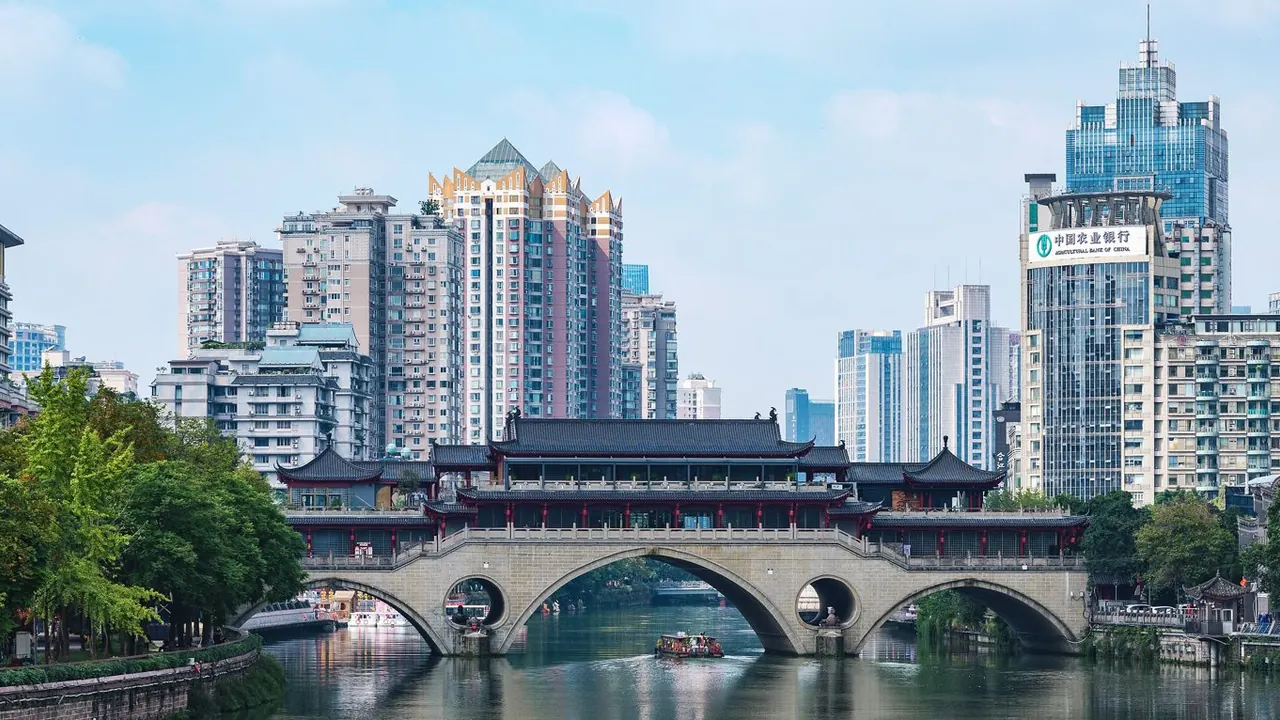
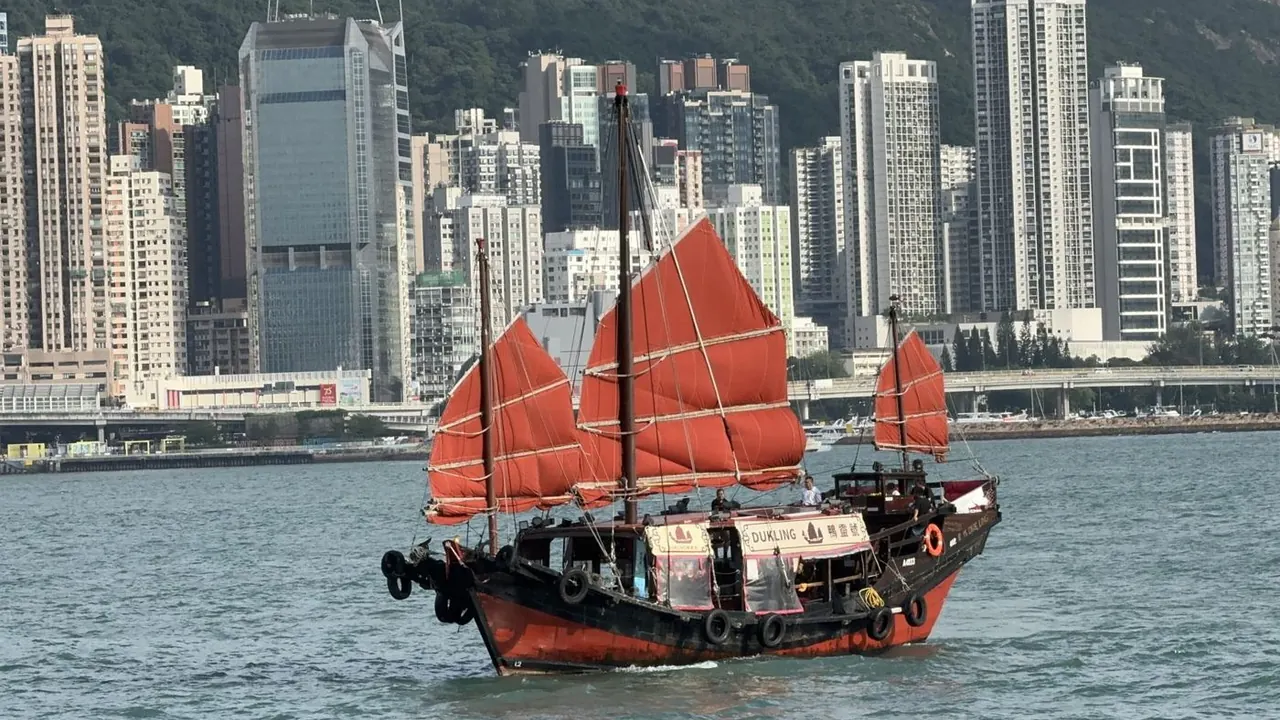
Photos: Chengdu by TurnOnTheNight, CC BY-SA 4.0, cropped; Hong Kong by LN9267, CC BY-SA 4.0, cropped.
Chengdu or Hong Kong?
Our verdict in twelve categories, each scored against the same fixed benchmark cities, and the climate month by month, so you can choose for your trip.
Choose Chengdu for
- prices
- wellness
- day trips
Chengdu suits the traveller who plans a trip around the table and wants their money to go a long way. Sichuan cooking is the point of coming, from late hotpot to cold dishes in red oil, and comfortable hotels and local meals cost little. The city also makes a strong base for days out to the Leshan Giant Buddha, Dujiangyan and the Sanxingdui bronzes. On top of that come the pandas and the slow teahouse afternoons in People's Park. Come prepared with translation and payment apps, and expect long rides across a huge city.
Choose Hong Kong for
- beaches
- shopping
- getting around
Hong Kong is the easier and more polished choice for a first trip to China's side of Asia, or for anyone short on time. The MTR, the Star Ferry and the trams make every outing simple. Wild hills and warm beaches sit within an hour of the towers, and the shopping runs from luxury flagships to the Mong Kok street markets. Families do well with Disneyland and Ocean Park. The price is a costly stay in small hotel rooms and a city that rarely slows down.
Scoreboard
Twelve categories on one fixed scale from 0 to 100. The shaded stretch is the gap between the two.
Your match
Pick a travel style or drag the sliders, and both match scores follow your weighting.
Wins on prices and wellness with your weighting.
Wins on beaches and shopping with your weighting.
What matters to you?
Category by category
What the scores mean for a trip.
Beaches & swimming
Chengdu lies deep in the Sichuan Basin, far from any sea, so swimming means a hotel pool or a water park on a sticky summer day. If you want sand, it has to be a separate leg of the trip.
Hong Kong has real beaches within easy reach. Repulse Bay is a short bus ride from Central, Shek O has a village feel, and there is longer, quieter sand at Cheung Sha on Lantau. The water stays warm from late spring into autumn, and lifeguards are on duty in season. It makes a fine afternoon off from the city, though summer storms can close the water.
Food & drink
Both are cities people travel to just to eat, and the difference is one of temperament. Chengdu cooks with fire and numbness: Sichuan pepper, chilli oil, mapo tofu, and beef-tallow hotpot that runs late into the night. Most of the joy is at small family counters in residential lanes, and the default heat is serious.
Hong Kong is all about Cantonese finesse: morning dim sum in noisy teahouses, roast goose in shop windows, seafood picked from tanks in Sai Kung, and the city's own cha chaan teng diners. It also reaches higher, with some of Asia's most acclaimed Chinese and French dining rooms, where Chengdu's international and fine dining is thinner.
Culture & sights
Neither city has a large historic core, so the choice is between kinds of sight. Chengdu's are shrines and memorials to figures of Chinese history: the Wuhou Shrine to Zhuge Liang, Du Fu's Thatched Cottage, working temples such as Wenshu, and the gold of the Jinsha Site Museum. Its old lanes at Kuanzhai Xiangzi are rebuilt rather than original.
In Hong Kong the main sight is the city itself: the harbour skyline from Tsim Sha Tsui or the Peak, the trams and the stacked Kowloon tenements. Its museums are more international in reach, with M+ for modern visual culture and the Hong Kong Palace Museum for imperial treasures.
Nightlife
Both cities stay out late, but a night out feels different in each. In Chengdu the evening is built around food: a long hotpot or skewer dinner, then the neon riverside bars around Jiuyanqiao or quieter cocktail spots in Yulin, with snack streets open past midnight and a relaxed, sociable mood.
Hong Kong is more about drinks and views. You might drink on the street in Lan Kwai Fong, sip serious cocktails in Soho and Sheung Wan, stay late in Wan Chai or go up to a rooftop bar over the harbour. It is far pricier, but it has more polish.
Nature & outdoors
Hong Kong has the stronger outdoors, because the wild country starts right behind the towers. The Dragon's Back ridge, the sunrise climb up Lantau Peak, and the volcanic columns and sea caves of Sai Kung are all reachable by public transport, often in under an hour.
Chengdu itself sits on a flat, often hazy plain, with riverside greenways for gentle cycling. Its scenery lies to the west: Qingcheng's forested Taoist trails about an hour away, and the cloud forest and monkeys of Emeishan. These are rewarding but take a full outing rather than an afternoon.
Day trips
Chengdu is the better base for days out, with major heritage within about an hour. The Leshan Giant Buddha is carved into a riverside cliff, Dujiangyan's ancient irrigation works sit beside Qingcheng Mountain, and the Sanxingdui Museum holds its startling bronze masks. Old market towns such as Huanglongxi and Pingle keep wooden shophouses along their streams.
Hong Kong's best outing is Macau, about an hour away, with Guangzhou close by high-speed train. Both mean crossing a border, though. Without leaving the territory, the outlying islands of Cheung Chau, Lamma and Tai O make easy, gentler trips.
Good for families
Hong Kong is the easier city with children. It has two big theme parks in Disneyland and Ocean Park, the Peak Tram and Star Ferry as rides in themselves, and science and space museums in Tsim Sha Tsui. Transport that makes every outing simple helps a lot. The drawbacks are weekend crowds and small hotel rooms.
Chengdu has one unbeatable highlight in the Giant Panda Breeding Research Base, best visited early in the morning, but the day-to-day is harder work. Food is spicy by default, signs and menus are often only in Chinese, and the distances across the city are long.
Getting around
Hong Kong is about as easy as cities get. The MTR is fast and links the airport to both sides of the harbour, and one stored-value card covers buses, trams and ferries. Sights sit close together, and covered walkways and the Mid-Levels escalator take the edge off steep, humid streets.
Chengdu's metro is clean, signed in English and reaches the panda base and the train stations, but the city sprawls, so days involve long rides. Daily life also depends on mobile payment and Chinese-language apps that need setting up before you arrive.
Shopping & style
Hong Kong is a proper shopping destination. It has dense rows of luxury flagships in Central and on Canton Road, giant malls in Causeway Bay and Admiralty, and no sales tax. Its street markets, from the Ladies' Market to Hollywood Road's curio shops, double as sightseeing, and there are tailors on the Kowloon side.
Chengdu's malls around Chunxi Road are busy and fashion-conscious but less varied. Its strength is in what you can carry home from the region: Shu brocade, Sichuan embroidery, chilli bean paste and mountain green teas from the tea markets.
Affordability
Chengdu stretches a budget much further. Comfortable and even upscale hotels cost a fraction of what they do in big coastal cities, everyday food and transport are cheap, and many sights are free or close to it. The main extras are train fares and tickets for the day trips.
Hong Kong's hotel rooms are among Asia's priciest and often tiny, and cocktails and Western dining in Central match major Western cities. You can soften it by eating at cha chaan teng diners and noodle shops, riding the nearly free Star Ferry and hiking, but the room alone keeps the overall cost high.
Live music & performing arts
Each city has its own opera tradition, and the two scenes are of about equal weight. Chengdu stages Sichuan opera's face-changing and fire-spitting in nightly variety shows, which are easy fun, and has a lively livehouse scene for indie bands and Sichuan-dialect hip-hop.
Hong Kong leans more formal. The Hong Kong Philharmonic plays on the Tsim Sha Tsui waterfront, Cantonese opera is staged at the Xiqu Centre and in village bamboo theatres, and the Hong Kong Arts Festival brings touring work, though most local theatre is in Cantonese.
Wellness & relaxation
Chengdu has slowness built into daily life. People spend whole afternoons in bamboo chairs at the teahouses of People's Park, roving ear cleaners do their rounds, massage parlours are cheap and everywhere, and hot springs lie towards Qingcheng.
Hong Kong moves fast and rarely lets up. It makes up for it with foot reflexology on every Kowloon block, herbal tea shops and some of Asia's most polished hotel spas. For real quiet, though, you head out to Chi Lin Nunnery or the car-free lanes of Lamma.
When should you go?
Pick your month. The climate figures are measured averages, not a forecast.
Chengdu in July
Hong Kong in July
Daytime high, °C
Rainfall in the month, mm
Temperature and rainfall are climate normals, averaged over the years shown. Chengdu: 1991-2020 normals, Chengdu (4.5 km from centre). Hong Kong: 1991-2020 normals, King's Park (4.4 km from centre).
Chengdu is at its best in spring and autumn, roughly April to May and late September to October, when the days are mild and dry enough for walking and for the mountain trails. Summer turns hot and muggy, around 31°C in July, and the rain peaks at about 211mm in August. Winter is cool, grey and short on sunshine, fine for museums and teahouses but dull outdoors.
Hong Kong runs warmer all year, and its winter is its easy season: dry, sunny and around 19°C in January, good for hiking and walking the streets. The rain arrives in spring and is heaviest in early summer, with close to 493mm in June, along with storms and heavy humidity. October and November are the sweet spot: still warm, much drier, and with the sea at about 28°C in early autumn, still good for an afternoon on the beach.
Which traveller are you?
On a trip on a tight budget, Chengdu is the clear pick. Hotels cost far less, a bowl of noodles from a neighbourhood counter costs very little, and many temples and museums charge little or nothing. Hong Kong's rooms are among Asia's most expensive.
For a shopping trip, Hong Kong wins easily. Luxury flagships in Central and on Canton Road, no sales tax, and street markets in Mong Kok and Sham Shui Po give it far more range. Chengdu's malls on Chunxi Road are busy but narrower in scope.
On a relaxing and wellness trip, Chengdu has the gentler rhythm. Long afternoons in bamboo chairs at park teahouses, cheap massage on every street and hot springs towards Qingcheng make rest part of the day. Hong Kong's calm mostly means leaving the city.
Before you go
| Measure | Chengdu | Hong Kong |
|---|---|---|
| Official language | Putonghua | Standard Chinese |
| Currency | Yuan Renminbi (CNY) | Hong Kong Dollar (HKD) |
| Sockets | ACI220 V, 50 Hz | G220 V, 50 Hz |
| Driving side | Right | Left |
| Time zone | UTC+8 | UTC+8 |
| Emergency number | Police 110, ambulance 120, fire 119 | 999 |
| Elevation | 500 m | 7 m |
| Main airport | Chengdu Shuangliu International Airport (CTU)16 km from centre77 non-stop destinations | Hong Kong International Airport (HKG)25 km from centre148 non-stop destinations |
| Public holidays this year | 6 days | 17 days |
By the numbers
| Measure | Chengdu | Hong Kong |
|---|---|---|
| City population | 20,937,757 | 7,413,070 |
| People per km² | 1,456 | - |
| Museums within 10 km | 10 | 39 |
| UNESCO World Heritage sites within 50 km | 0 | 0 |
| Swim season, months above 21 °C | - | 8 months |
Where else could you go?
Every comparison below shares a destination with this one, so you can follow Chengdu or Hong Kong somewhere new.