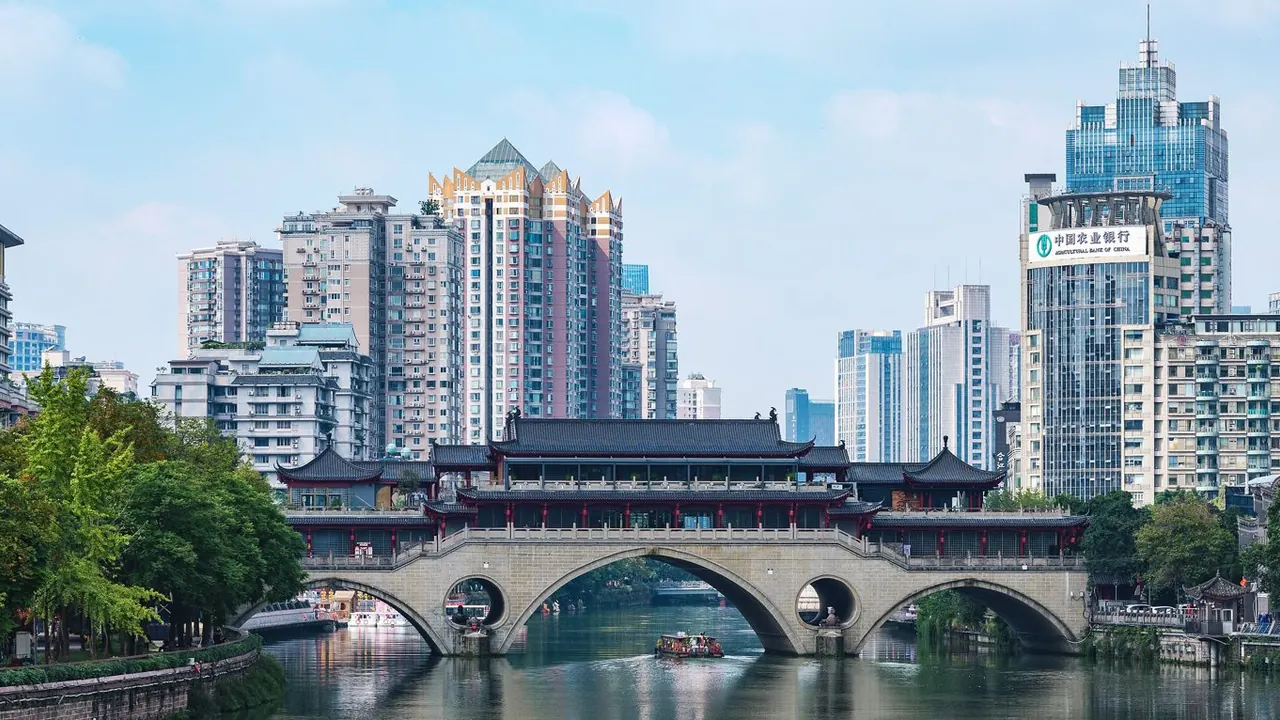
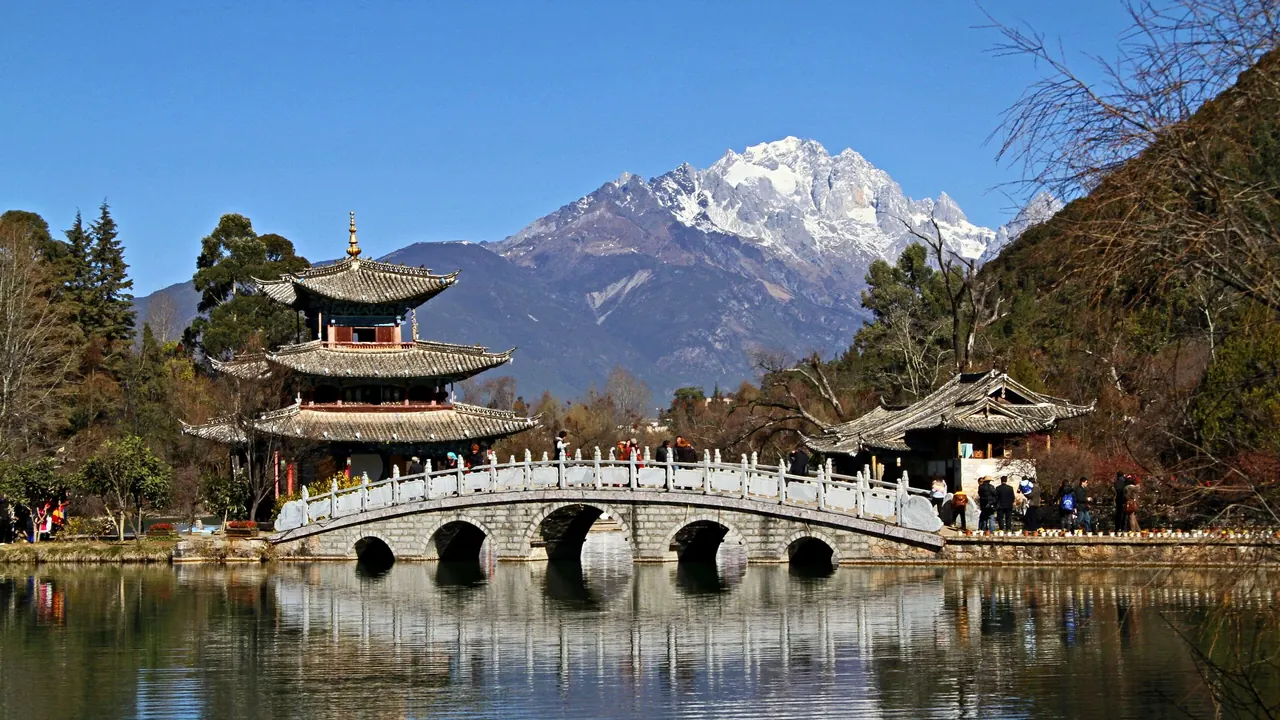
Photos: Chengdu by TurnOnTheNight, CC BY-SA 4.0, cropped; Lijiang by Miltos Gikas from Lutsa, Attiki, Greece, CC BY 2.0, cropped.
Chengdu or Lijiang?
Our verdict in twelve categories, each scored against the same fixed benchmark cities, and the climate month by month, so you can choose for your trip.
Choose Chengdu for
- food and drink
- getting around
- shopping
Chengdu suits travellers who want to eat well, stay out late and keep busy. It is the home of Sichuan cooking, the metro makes a huge city easy to get around, and pandas, teahouses, livehouses and fast trains to Leshan and Sanxingdui fill a week without effort. Families and first-timers in China will also find it the easier of the two.
Choose Lijiang for
- nature and the outdoors
Lijiang is the pick for scenery and slow days. The glaciated Jade Dragon Snow Mountain, the high trail along Tiger Leaping Gorge and the Naxi villages of Baisha and Shuhe make it a base for walking and looking rather than eating or shopping. It works best for adults who are happy to take taxis or hire a driver, don't mind the altitude and accept a touristy Old Town in return for that landscape.
Scoreboard
Twelve categories on one fixed scale from 0 to 100. The shaded stretch is the gap between the two.
Your match
Pick a travel style or drag the sliders, and both match scores follow your weighting.
Wins on food and drink and getting around with your weighting.
Wins on nature and the outdoors with your weighting.
What matters to you?
Category by category
What the scores mean for a trip.
Beaches & swimming
On beaches the two cities are level: neither has one. Chengdu lies deep in the Sichuan Basin and Lijiang high on the Yunnan plateau.
The only real difference is swimming. Chengdu's water parks and hotel pools help in its hot summer, while Lijiang's lakes are too cold to swim in and few hotels there have a pool.
Food & drink
Food is where the two differ most. Chengdu is a place people travel to just to eat: mapo tofu, dan dan noodles, beef-tallow hotpot and dishes dressed in red oil, along with plenty of milder sweet-and-sour and smoky dishes, served at family counters in every residential lane.
Lijiang's Naxi and Yunnan cooking is enjoyable but limited. Baba flatbread, black-goat hotpot, yak and wild mushrooms in the rainy season are the highlights, and the Old Town menus repeat from lane to lane. Its one strength is tea, with Pu'er easy to find and good.
Culture & sights
The two are close on culture but offer different kinds of sight. Chengdu has separate institutions spread across a modern city: the Wuhou Shrine, Du Fu Thatched Cottage, working temples at Wenshu and Qingyang, and serious collections at the Jinsha Site Museum and the Sichuan Museum.
Lijiang offers a single setting rather than a list of sights. The UNESCO-listed Old Town of Dayan, the Ming-era murals at Baisha and the living Dongba script give it a living minority culture that Chengdu lacks. In both cities the old streets were heavily rebuilt, so expect atmosphere more than authentic survival.
Nightlife
Chengdu offers the longer and more varied night out. Dinner runs late, then the evening moves on to neon-lit clubs near Jiuyanqiao or quieter craft-beer and cocktail bars in Yulin, and snack streets stay open well after midnight.
Lijiang's nightlife is mostly one canal-side strip of the Old Town, where bars with live singers and drums compete for tour groups. It is easy to find but every bar is much the same, and the alternative is a quiet courtyard drink in Shuhe.
Nature & outdoors
Lijiang wins clearly here, because the scenery begins at the edge of town. Glaciers on Jade Dragon Snow Mountain, the turquoise pools of Blue Moon Valley, the high trail above the Jinsha River at Tiger Leaping Gorge and the birdlife of Lashi Lake are all within a day.
Chengdu's own setting is a flat, often hazy plain with riverside greenways. Its strengths are Qingcheng's forested Taoist trails and the long climb up Emeishan through cloud forest, both reached by leaving the city behind.
Day trips
Chengdu gives more variety within easy reach, much of it by fast train. Within about an hour or so lie the Leshan Giant Buddha, the ancient irrigation works at Dujiangyan, the bronze masks at Sanxingdui and old market towns such as Huanglongxi, and Chongqing makes a striking contrast.
Lijiang's best trips go further afield. Dali and its Bai villages, and the Tibetan monastery at Shangri-La, are each a train ride away, while Baisha and Shuhe are close by taxi. Lugu Lake and Shaxi need an overnight stay.
Good for families
Chengdu is far easier with children. Watching the pandas at the breeding base in the early morning is a highlight for any age, and the zoo, the aquarium park and the weekend crowds in the big parks add more. The main challenges are summer heat and spicy food.
Lijiang has the car-free Old Town with its streams and the park at Black Dragon Pool, and little else for children. The altitude rules out the snow mountain for young children, and the stone lanes are hard going with a pushchair.
Getting around
In Chengdu, an extensive metro with English signs reaches the panda base, the airports and the rail stations, and cheap taxis and shared bikes cover the rest. The city is vast, so expect long rides between sights.
Lijiang is the reverse: the Old Town is easy to explore on foot, but almost everything beyond it means a taxi or a hired driver, because there is no rail transit and the buses are hard to use without Chinese. Visitors should set up Chinese payment apps for either city.
Shopping & style
Chengdu is a real shopping city, with the big fashion malls around Chunxi Road and the traditional-style quarter by the Daci Temple. Shu brocade, Sichuan embroidery and mountain green teas make souvenirs worth taking home.
In Lijiang's Old Town nearly every house is a shop, but the drums, scarves and trinkets repeat from lane to lane, and much of it was made elsewhere. Pu'er tea cakes and silver bought after comparing shops are the purchases worth making.
Affordability
Both are inexpensive by Western standards, with Chengdu slightly ahead. Comfortable hotels, metro rides and neighbourhood noodles all cost little, and many temples and museums are cheap or free.
Lijiang's guesthouses and breakfasts are just as good value, but the costs add up from the Old Town entry fee, the snow mountain's cable cars and the inflated restaurant prices on the main lanes.
Live music & performing arts
Chengdu has more going on in the evenings. Sichuan opera variety shows with face-changing play nightly, and the city's livehouses host indie bands and Sichuan-dialect hip-hop.
Lijiang has one remarkable tradition, the Naxi ancient music played by older musicians in an Old Town hall. Apart from that, it offers only large ethnic song-and-dance shows put on for tour groups.
Wellness & relaxation
Chengdu builds rest into everyday life. You can spend an afternoon in a bamboo chair in People's Park with tea and mahjong, have your ears cleaned there, find a cheap foot massage on almost any street, and reach hot-spring resorts in the hills towards Qingcheng.
Lijiang has no spa tradition, only hotel spas and basic massage shops. Its calm comes from mountain light, a courtyard inn in Shuhe and early-morning walks before the groups arrive.
When should you go?
Pick your month. The climate figures are measured averages, not a forecast.
Chengdu in July
Lijiang in July
Daytime high, °C
Rainfall in the month, mm
Temperature and rainfall are climate normals, averaged over the years shown. Chengdu: 1991-2020 normals, Chengdu (4.5 km from centre). Lijiang: 1991-2020 normals, Lijing (23.5 km from centre).
Chengdu has four distinct seasons. Summer is hot and muggy, with highs around 31°C in July and the heaviest rain in August, at about 211mm. Even then the skies are grey more often than not, and July and August are still its sunniest months. Winters are cool and dim. April, May and October are the best months for walking the city and hiking nearby. They are warm and fairly dry, but visitors should not expect much sun, especially in October, which is one of the greyest months of the year.
Lijiang stays mild all year because of its altitude. Daytime highs stay in the teens and low twenties, about 14°C in January and only a little above 20°C in midsummer, so it never gets too hot to walk. The difference lies in the rain. From November to April it is almost dry and the mountain views are clear, then the monsoon arrives and brings around 245mm in July along with low cloud. So Chengdu is at its best in spring and autumn, while Lijiang is best through its dry winter and spring.
Which traveller are you?
On a food and nightlife trip, choose Chengdu. Hotpot and skewer dinners that go on into the night, then bars along the Jin River and late snack streets, beat Lijiang's single loud bar strip and its repetitive Old Town menus.
For an outdoors trip, Lijiang is the better choice. Jade Dragon Snow Mountain stands about 30km from town and the two-day Tiger Leaping Gorge trail is within reach, while Chengdu's best walking, at Qingcheng and Emeishan, means leaving a flat, hazy city.
On a family trip with children, Chengdu is much easier. The panda base, zoo, aquarium park and big parks give children plenty to do, and the metro handles the distances. Lijiang offers little made for children, and its high altitude and uneven paving make it hard work with small children.
Before you go
| Measure | Chengdu | Lijiang |
|---|---|---|
| Official language | Putonghua | Putonghua |
| Currency | Yuan Renminbi (CNY) | Yuan Renminbi (CNY) |
| Sockets | ACI220 V, 50 Hz | ACI220 V, 50 Hz |
| Driving side | Right | Right |
| Time zone | UTC+8 | UTC+8 |
| Emergency number | Police 110, ambulance 120, fire 119 | Police 110, ambulance 120, fire 119 |
| Elevation | 500 m | 2,400 m |
| Main airport | Chengdu Shuangliu International Airport (CTU)16 km from centre77 non-stop destinations | Lijiang Sanyi International Airport (LJG)22 km from centre60 non-stop destinations |
| Public holidays this year | 6 days | 6 days |
By the numbers
| Measure | Chengdu | Lijiang |
|---|---|---|
| City population | 20,937,757 | 1,253,878 |
| People per km² | 1,456 | - |
| Museums within 10 km | 10 | 2 |
| UNESCO World Heritage sites within 50 km | 0 | 1 |
Where else could you go?
Every comparison below shares a destination with this one, so you can follow Chengdu or Lijiang somewhere new.
- Chongqingvs Chengdu
- Xi'anvs Chengdu
- Zhangjiajievs Chengdu
- Chongqingvs Lijiang
- Luang Prabangvs Lijiang
- Guilinvs Chengdu