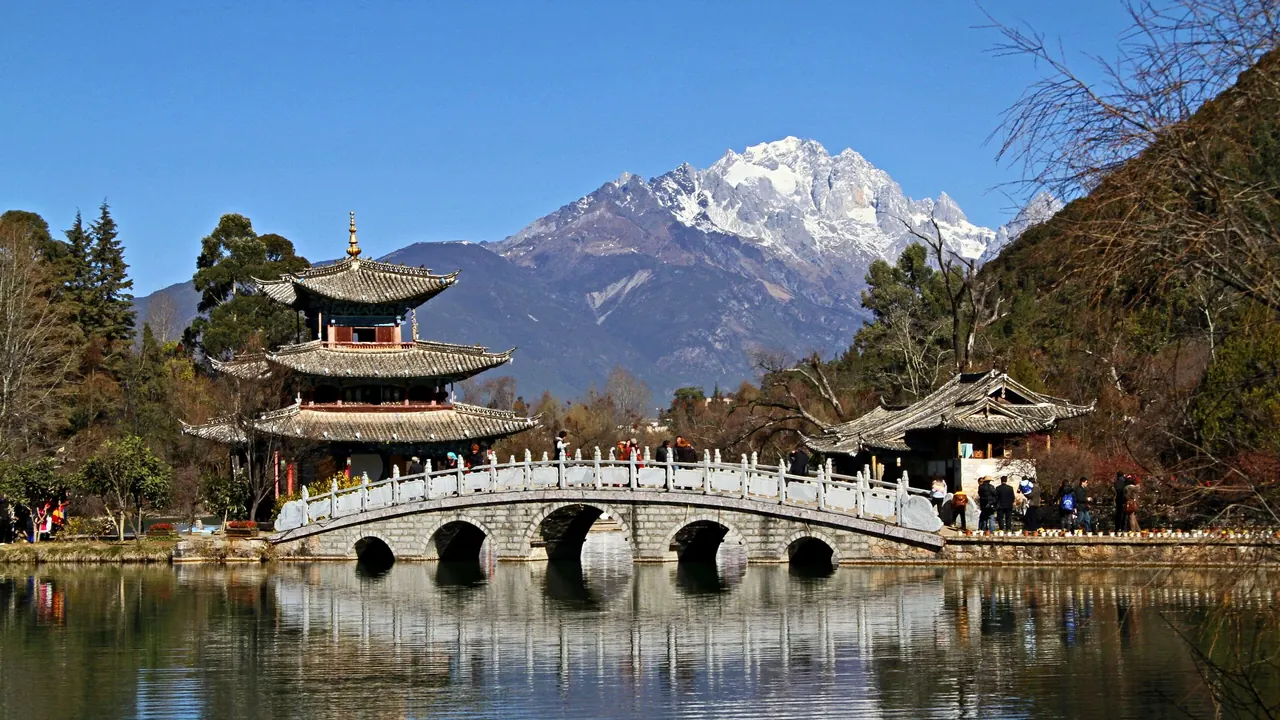
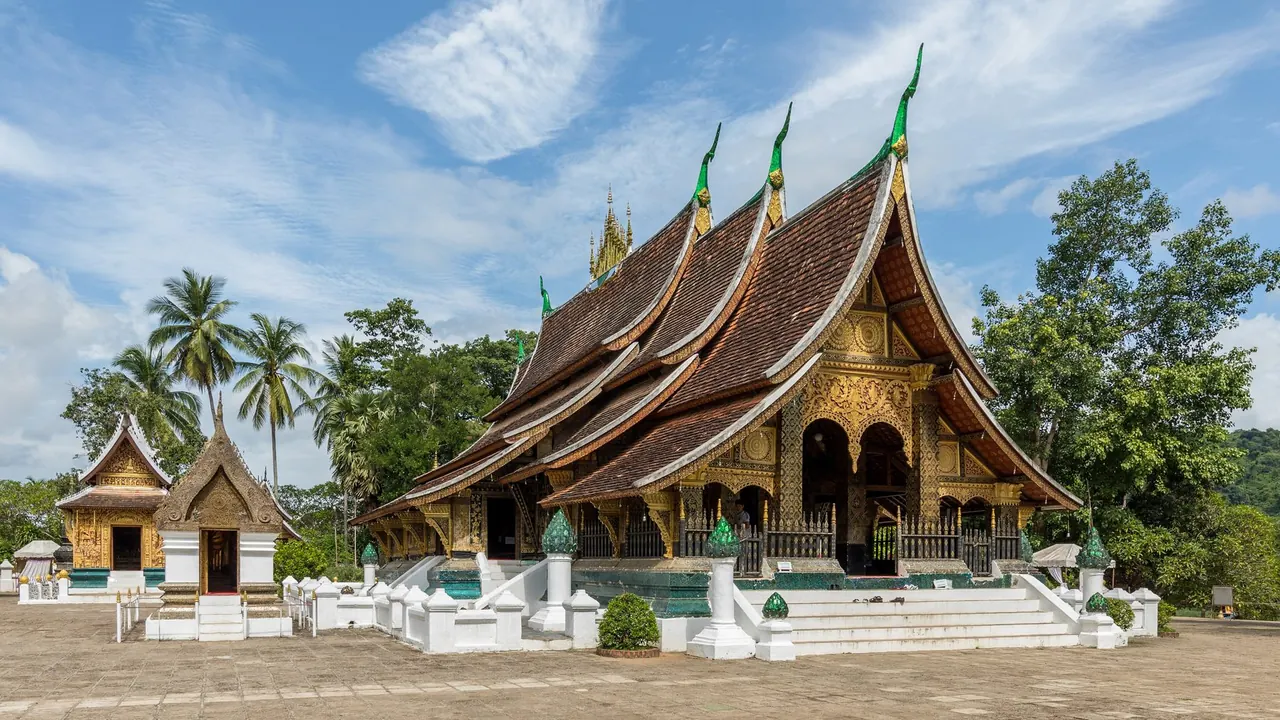
Photos: Lijiang by Miltos Gikas from Lutsa, Attiki, Greece, CC BY 2.0, cropped; Luang Prabang by Basile Morin, CC BY-SA 4.0, cropped.
Lijiang or Luang Prabang?
Our verdict in twelve categories, each scored against the same fixed benchmark cities, and the climate month by month, so you can choose for your trip.
Choose Lijiang for
- nightlife
- day trips
- nature and the outdoors
Lijiang suits travellers who want big mountains close by and a busy itinerary. Jade Dragon Snow Mountain rises over the town, Tiger Leaping Gorge is within reach for a two-day trek, and trains run to Dali and Shangri-La. In the evening the canal-side lanes are loud and crowded. It makes the better base for a week of excursions, as long as you can handle the altitude and an Old Town given over almost entirely to visitors.
Choose Luang Prabang for
- wellness
- getting around
- beaches
Anyone after a slower and gentler stay should pick Luang Prabang. Its peninsula of monasteries and colonial shophouses still feels like a working religious town rather than a set, you can see it all on foot or by bicycle, and the days take their shape from the monks' alms round, a Lao massage and the sun going down over the Mekong. There is almost nothing to do late at night, but the town is very good at calm.
Scoreboard
Twelve categories on one fixed scale from 0 to 100. The shaded stretch is the gap between the two.
Your match
Pick a travel style or drag the sliders, and both match scores follow your weighting.
Too close to call, 1 point apart
Wins on nightlife and day trips with your weighting.
Wins on wellness and getting around with your weighting.
What matters to you?
Category by category
What the scores mean for a trip.
Beaches & swimming
Neither is a beach destination. Both sit deep inland, so a beach vacation is out of the question in either.
Luang Prabang does at least offer a proper swim. The turquoise limestone pools below Kuang Si, and the smaller ones at Tad Sae, make a good half-day dip on a hot afternoon. In Lijiang the lakes are mountain water at altitude, fine for boating or watching birds but too cold to get into, and even hotel pools are rare.
Food & drink
The food is about equally good in both towns. What differs is the style. Lijiang serves hearty highland cooking: baba flatbread, black-goat hotpot, yak and cured ham, wild mushrooms in the rainy season, and plenty of good Pu'er tea in courtyard cafés.
Luang Prabang's cooking is lighter and full of herbs, with or lam stew, smoky jeow bong and crisp river-weed kaipen. The colonial years added baguettes and strong coffee. In both towns the choice gets repetitive after a few days, and in Lijiang you should eat outside the Old Town walls to avoid tourist menus.
Culture & sights
Both centres are on the UNESCO list, but Luang Prabang gives the more convincing experience. Its peninsula still works as a religious town. Novices walk between Wat Xieng Thong, Wat Mai and the former Royal Palace, and the alms procession at dawn is a real daily ritual, not something staged for visitors.
Lijiang has things you won't find in Laos: the living Dongba pictographic script at Black Dragon Pool, the Mu Family Mansion and the Ming-era murals at Baisha. However, much of Dayan was rebuilt after the 1996 earthquake and is now mostly shops and inns, so the lanes feel more like a stage set than a place where people live.
Nightlife
Lijiang is one of the best-known places to go out in China. A whole strip of open-fronted bars along the Old Town canals competes with live singers and drums, and the crowds stay out well past midnight. It is loud and every bar is much like the next, though Shuhe has quieter courtyard bars.
Luang Prabang hardly has a night out at all. A handful of garden bars and riverside terraces serve Beerlao and cocktails until the midnight curfew, and then the town goes dark.
Nature & outdoors
Lijiang has much the grander landscape. Cable cars carry you to about 4,500 m among the glaciers of Jade Dragon Snow Mountain, Blue Moon Valley has turquoise pools below, and the Tiger Leaping Gorge trail runs between two snow peaks. The catch is thin air and a mountain that is tightly managed and crowded.
Luang Prabang's countryside is green, low and tropical. There are forested hills, the tiered falls at Kuang Si with their bear sanctuary, slow boats past limestone cliffs, kayaking on the Nam Khan and treks to Hmong and Khmu villages. These are pleasant, easy outings, but nothing compares with Lijiang's high mountains.
Day trips
Lijiang has more within reach. Trains go to Dali, with its walled town, the Three Pagodas and Erhai Lake, and to Shangri-La, which has Songzanlin Monastery and gives you a first taste of Tibet. Closer in are Shuhe, Baisha and the first bend of the Yangtze at Shigu.
From Luang Prabang the best outing is the boat up the Mekong to the Pak Ou caves, full of Buddha images, along with the silk and paper villages nearby. The railway reaches Vang Vieng and Vientiane, but otherwise the area around the town is mostly rural.
Good for families
Neither town does much for children, and the drawbacks are different. In Lijiang it is the altitude. The town is already high, so the snow mountain trips are not suitable for small children, and pushchairs struggle on the crowded stone lanes. On the plus side there are streams to follow through the car-free Old Town, and the climate stays mild.
Luang Prabang offers swimming and bears at Kuang Si, rides in long-tail boats and quiet streets for cycling together. On the other hand, the hot season is fierce and medical care is limited, so it works better with older children than with toddlers.
Getting around
Luang Prabang is easier to get around. The old town sits on a small, flat peninsula with little traffic, so most visitors walk or hire a bicycle. For the waterfalls and villages you take a tuk-tuk or a boat, agreeing the fare before you set off.
Lijiang's Old Town is car-free too, but its lanes twist and are easy to get lost in. Most of what you come for, from the snow mountain to Lashi Lake and the gorge, is spread across the valley. Without Chinese, the buses are hard to use, and ride-hailing needs a Chinese payment setup, so most visitors end up taking taxis or hiring a driver.
Shopping & style
Neither town has fashion or design shops, and in both the choice is mostly crafts. Luang Prabang has the better quality. Its evening night market sells silk, Hmong embroidery and paper lanterns, and in the weaving studios and nearby villages you can watch natural dyeing and buy textiles of real quality.
In Lijiang almost every Old Town house is a shop, but the drums, scarves and trinkets repeat from lane to lane. Pu'er tea is the purchase most worth making, followed by silver once you have compared a few shops.
Affordability
Both are cheap places for day-to-day spending, and Luang Prabang is slightly cheaper. Massages, bicycle hire, temple entry and market meals all cost little there. The bill only climbs if you choose colonial boutique hotels or private drivers.
Lijiang's guesthouses, breakfasts and taxis are also inexpensive outside the national festival weeks. The bigger costs come from the Old Town entry fee and the snow mountain, where cable cars and shuttle buses make it one of the most expensive outings in the region.
Live music & performing arts
Lijiang offers more to watch in the evening. Older musicians play Naxi ancient music, a Taoist ritual repertoire, in concerts in an Old Town hall, and there are large song-and-dance productions, some staged outdoors with the snow mountain behind them.
Luang Prabang's main show is the masked Phralak Phralam, the Lao Ramayana, danced at the theatre in the Royal Palace grounds. A few folk evenings and the temple drums at dusk make up the rest.
Wellness & relaxation
Luang Prabang is much better for rest. It has a real bathing tradition in its lemongrass-scented herbal saunas, Lao massage is easy to find, and the whole town runs at a slow pace, with garden spas and riverside yoga in the boutique hotels.
Lijiang only has hotel spas and foot-massage shops. Its kind of rest is a quiet morning over tea in a courtyard in Shuhe or Baisha. To get it, you need to stay well away from the main Old Town lanes.
When should you go?
Pick your month. The climate figures are measured averages, not a forecast.
Lijiang in July
Luang Prabang in July
Daytime high, °C
Rainfall in the month, mm
Temperature and rainfall are climate normals, averaged over the years shown. Lijiang: 1991-2020 normals, Lijing (23.5 km from centre). Luang Prabang: 1991-2020 normals, Luang-Prabang (0.8 km from centre).
These two keep very different calendars. Lijiang is high up and mild all year. Summer highs only reach about 24°C, and winter days are cool and sunny but cold enough that you will want a warm layer once the sun goes down. From November to April it is almost completely dry. The monsoon arrives in May, peaks at about 245mm in July and lasts into September, bringing low cloud over the snow mountain. Spring and autumn give the clearest views and the best walking.
Luang Prabang is hot all year. From March to May highs reach about 36°C, which makes walking around in the middle of the day hard going. The rains then build to about 311mm in August, and the cloudier months have noticeably less sunshine. The best time is November to January, when it is dry and highs are nearer 28°C, and that is also when Lijiang is at its crispest. In summer both cities are wet.
Which traveller are you?
For an outdoors trip, Lijiang is the clear pick. You can ride the cable cars up among the glaciers, walk the high trail above Tiger Leaping Gorge and cycle the valley around Baisha. Luang Prabang's waterfalls, river trips and village treks are lovely but on a smaller scale.
On a relaxing and wellness trip, Luang Prabang is the better choice. It has herbal saunas, gentle Lao massage on every street, very little traffic and evenings that end early by the river. Lijiang has no tradition of bathing, and its Old Town is noisy late into the night.
For a food and nightlife trip, Lijiang comes out ahead because of what happens after dark. Its canal-side bars stay full past midnight, which Luang Prabang's curfew rules out. The food in the two cities is about equally good: Naxi flatbreads and hotpots in one, Lao herb dishes and French bakeries in the other.
Before you go
| Measure | Lijiang | Luang Prabang |
|---|---|---|
| Official language | Putonghua | Lao |
| Currency | Yuan Renminbi (CNY) | Lao Kip (LAK) |
| Sockets | ACI220 V, 50 Hz | ABCEF230 V, 50 Hz |
| Driving side | Right | Right |
| Time zone | UTC+8 | UTC+7 |
| Emergency number | Police 110, ambulance 120, fire 119 | Police 191, ambulance 195, fire 190 |
| Elevation | 2,400 m | 305 m |
| Main airport | Lijiang Sanyi International Airport (LJG)22 km from centre60 non-stop destinations | Luang Phabang International Airport (LPQ)4 km from centre7 non-stop destinations |
| Public holidays this year | 6 days | - |
By the numbers
| Measure | Lijiang | Luang Prabang |
|---|---|---|
| City population | 1,253,878 | 53,792 |
| Museums within 10 km | 2 | 0 |
| UNESCO World Heritage sites within 50 km | 1 | 1 |
Where else could you go?
Every comparison below shares a destination with this one, so you can follow Lijiang or Luang Prabang somewhere new.
- Vientianevs Luang Prabang
- Chiang Raivs Luang Prabang
- Sapavs Luang Prabang
- Chiang Maivs Luang Prabang
- Paivs Luang Prabang
- Hanoivs Luang Prabang