Chile
Easter Island
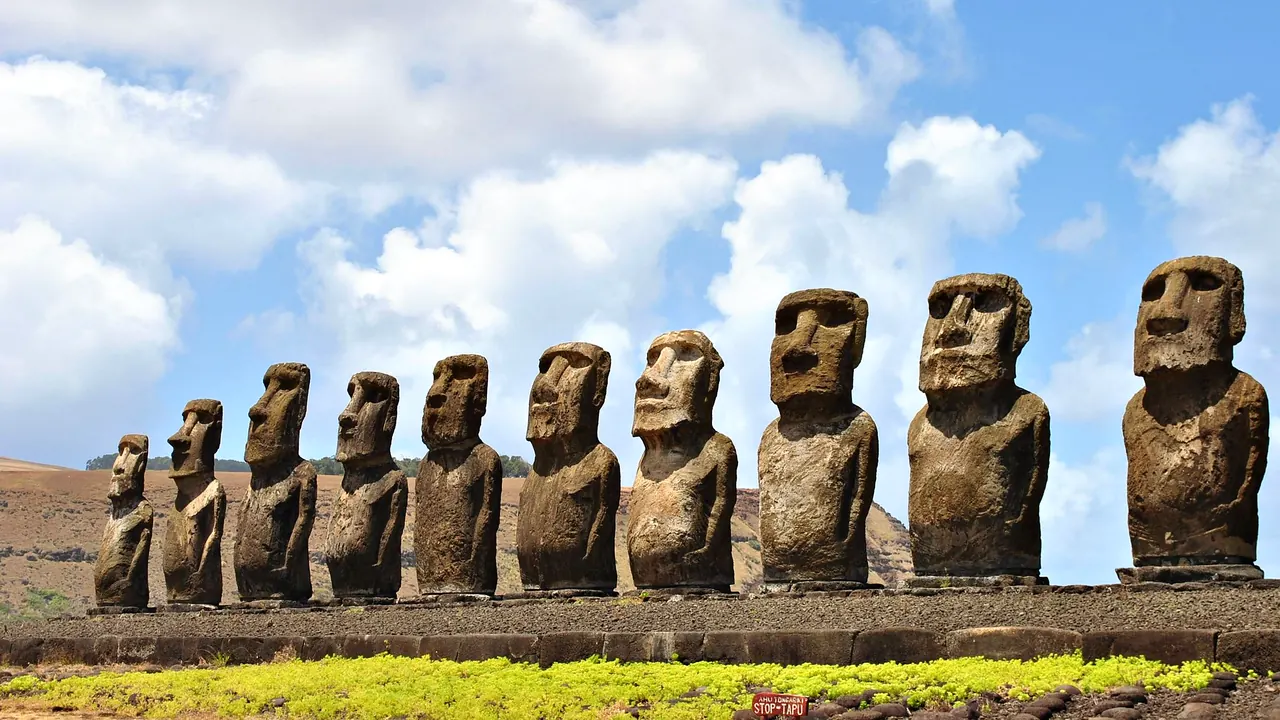
The fifteen moai of Ahu Tongariki
- Culture & sights80
- Nature & outdoors55
- Beaches50
Photo: Vanessa.blasco, CC BY-SA 3.0, cropped
Match
34
Every category weighted equally
- Beach & sun34
- Culture & arts37
- Food & nightlife31
- Family trip36
- Outdoors35
- Relax & unwind37
- Shopping & style33
- On a budget33
Easter Island in twelve categories
Our verdict on each, scored 0 to 100 against the same fixed benchmark cities, so a score means the same thing on every page.
Beaches & swimming. Scores 50 out of 100.
Food & drink. Scores 27 out of 100.
Culture & sights. Scores 80 out of 100.
Nightlife. Scores 10 out of 100.
Nature & outdoors. Scores 55 out of 100.
Day trips. Scores 3 out of 100.
Good for families. Scores 28 out of 100.
Getting around. Scores 50 out of 100.
Shopping & style. Scores 18 out of 100.
Affordability. Scores 18 out of 100.
Live music & performing arts. Scores 32 out of 100.
Wellness & relaxation. Scores 42 out of 100.
Easter Island category by category
Beaches & swimming
50The island has essentially two sandy beaches, both on the north coast about half an hour's drive from Hanga Roa. Anakena is the one people picture: pale coral sand, coconut palms and a row of restored moai standing behind the bathers. Ovahe, a short walk away, is smaller and wilder, under red volcanic cliffs. The rest of the shore is black lava rock pounded by open Pacific swell.
The water is clear and reaches around 24°C in late summer, falling to about 20°C in the winter months. In town, swimmers use a small rock pool by the harbour at Hanga Roa. Most visitors fit in an afternoon or two at Anakena between site visits; nobody comes here for a beach vacation.
Food & drink
27Eating out happens almost entirely along Hanga Roa's main street and harbour, in a modest number of restaurants and snack bars. The local strength is fish, above all tuna landed by the island's boats, served raw as ceviche, grilled or folded into empanadas. The traditional feast is the umu, meat, fish, sweet potato and taro cooked under hot stones in an earth oven, laid on for gatherings and festival days. Beyond that, most ingredients arrive by plane or supply ship, menus are short and repetitive, and a week is enough to have eaten round the town.
Culture & sights
80The whole island is an open-air archaeological landscape, almost all of it protected as Rapa Nui National Park. Close to a thousand moai stand, lie toppled or remain half-carved across it. Ahu Tongariki on the south-east coast lines up fifteen giants against the ocean, and nearby the quarry of Rano Raraku holds hundreds of figures still embedded in the volcano slope where they were cut. On the crater rim of Rano Kau, the stone village of Orongo recalls the birdman cult, with petroglyphs carved into the rocks.
In and around Hanga Roa, the Tahai complex is the classic place for sunset, and the anthropological museum gives the background. The offer is one culture told through its sites, and a curious visitor fills four or five days with it.
Nightlife
10Evenings in Hanga Roa are quiet. A handful of bars along the main street and the harbour serve beer and pisco sours, and there is usually somewhere to dance at weekends, mostly among islanders. Most visitors eat, watch the sunset at Tahai and are in bed early ahead of a dawn start at the moai.
Nature & outdoors
55This is a small, bare volcanic triangle of rolling grassland, with an extinct volcano at each corner. The best walk climbs Rano Kau to its vast reed-filled crater lake, with the ocean falling away below the rim; Terevaka, the island's highest point, gives a view of open Pacific in every direction and is often done on horseback. The coastline is black lava, sea caves and cliffs.
Under water, the island's isolation makes the sea unusually clear, and diving and snorkelling around the offshore islets are a real draw. The south and west coasts pick up good surf swells. Trees are scarce and there is little wildlife beyond seabirds, so the appeal is space and light rather than variety.
Day trips
3There is nowhere else to go. The island has one town, the nearest inhabited land is over 2,000km away, and every outing is to the island's own archaeological sites, which take up all the time a visitor has.
Good for families
28The island is safe, unhurried and friendly, and older children who are curious about the moai can find it unforgettable. Anakena is the place for younger ones to play in the sand and calm water. Beyond that there is nothing built for children: no attractions, little shade at the sites, much driving between ruins and some exposed walking on the volcanoes. The long journey across the Pacific is a large investment for families with small children.
Getting around
50Hanga Roa is small enough to walk from end to end, and the island itself is only about 24km across, so nothing is more than half an hour or so by road. There is no public transport, though. Visitors hire a car, jeep, scooter or bicycle, join guided tours, or use the town's taxis. The main roads to Anakena and along the south coast are paved and empty; smaller tracks to some sites are rough, and cycling the island means long, exposed stretches in sun and wind.
Shopping & style
18Shopping means woodcarvings, stone moai replicas, shell jewellery and pareos, sold at the artisans' market and a string of souvenir shops in Hanga Roa. The best carving, in toromiro and other woods, comes from a real island tradition and is worth seeking out. There is nothing else to shop for.
Affordability
18Easter Island is an expensive place to stay. Nearly everything is shipped or flown in from the mainland, so food, fuel and drinks cost far more than in the rest of Chile, and rooms range from simple guesthouses to costly all-inclusive lodges with little cheap accommodation in between. The national park fee, car hire and guided tours add to the bill. Simple guesthouses, self-catering and a hired car shared among several people keep the cost down.
Live music & performing arts
32Rapa Nui music and dance are a living tradition, and a visitor can see them on most evenings in Hanga Roa, where island troupes perform energetic Polynesian dance shows with drumming, chanting and body paint. On Sunday mornings the hymns at the Holy Cross church, sung in Rapa Nui, are a moving and unstaged experience.
The high point of the year is Tapati Rapa Nui, held in late January and February, a fortnight of song, dance, canoe races, body painting and contests between island clans. Beyond these there are no theatres or concert venues.
Wellness & relaxation
42There is no bathing or spa tradition here, and pampering is limited to the spas and massage rooms of a few upmarket lodges. What the island offers instead is distance and quiet: one small town, empty roads, sunsets over the ocean and long nights under dark skies far from any city. It suits travellers who want to switch off between site visits, as long as they do not expect treatments to fill the days.
Where to stay in Easter Island
Every stay on Easter Island is in or around Hanga Roa, the island's only town, so the real choice is which edge of town to stay on. Nothing on the island is more than about half an hour away by road, so one base covers the whole trip and there is no need to move.
The streets near the harbour and the main road put restaurants, the artisans' market and the evening dance shows within a short walk. They suit travellers without a car, first-timers joining guided tours and families who want food and the harbour rock pool close by. The northern end of town, towards Tahai, is quieter, and you can walk out to the moai for sunset and to the museum. Simple guesthouses with kitchens are spread through both areas and are the usual way to keep costs down.
On the outskirts, a few upmarket lodges stand in open grassland with views of the ocean, and offer spas and their own guided excursions. They suit couples who want quiet, dark skies and space between site visits, though town is then a drive or taxi ride away. Wherever you stay, a hired car or scooter makes the dawn starts at Ahu Tongariki and the afternoons at Anakena easy.
When should you go?
Pick a month to see what it is like. The climate figures are measured averages, not a forecast.
Easter Island in July
Daytime high, °C
Rainfall in the month, mm
The whole year
Shaded against this destination’s own year: the deepest cell is its best month for that figure and the palest its weakest.
Temperature and rainfall are climate normals, averaged over the years shown. Easter Island: 1991-2020 normals, Isla De Pascua (1.3 km from centre).
Before you go
| Measure | Easter Island |
|---|---|
| Official language | Spanish |
| Currency | Chilean Peso (CLP) |
| Sockets | CL220 V, 50 Hz |
| Driving side | Right |
| Time zone | UTC-6, UTC-5 in summer |
| Emergency number | Police 133/134, ambulance 131, fire 132 |
| Main airport | Mataveri International Airport (IPC)1 non-stop destination |
| Public holidays this year | 16 days |
By the numbers
| Measure | Easter Island |
|---|---|
| Population | 4,800 |
| People per km² | 29 |
| Swim season, months above 21 °C | 8 months |
Compare Easter Island with
Every comparison with a written verdict behind it.