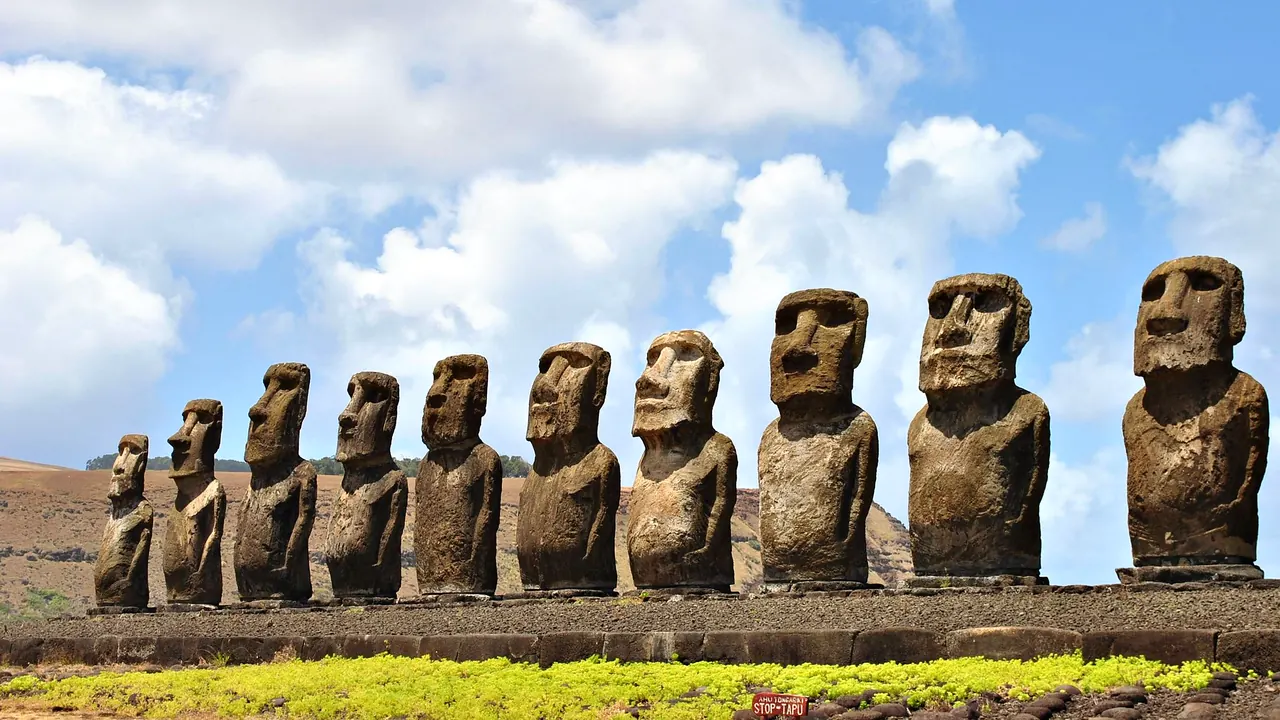
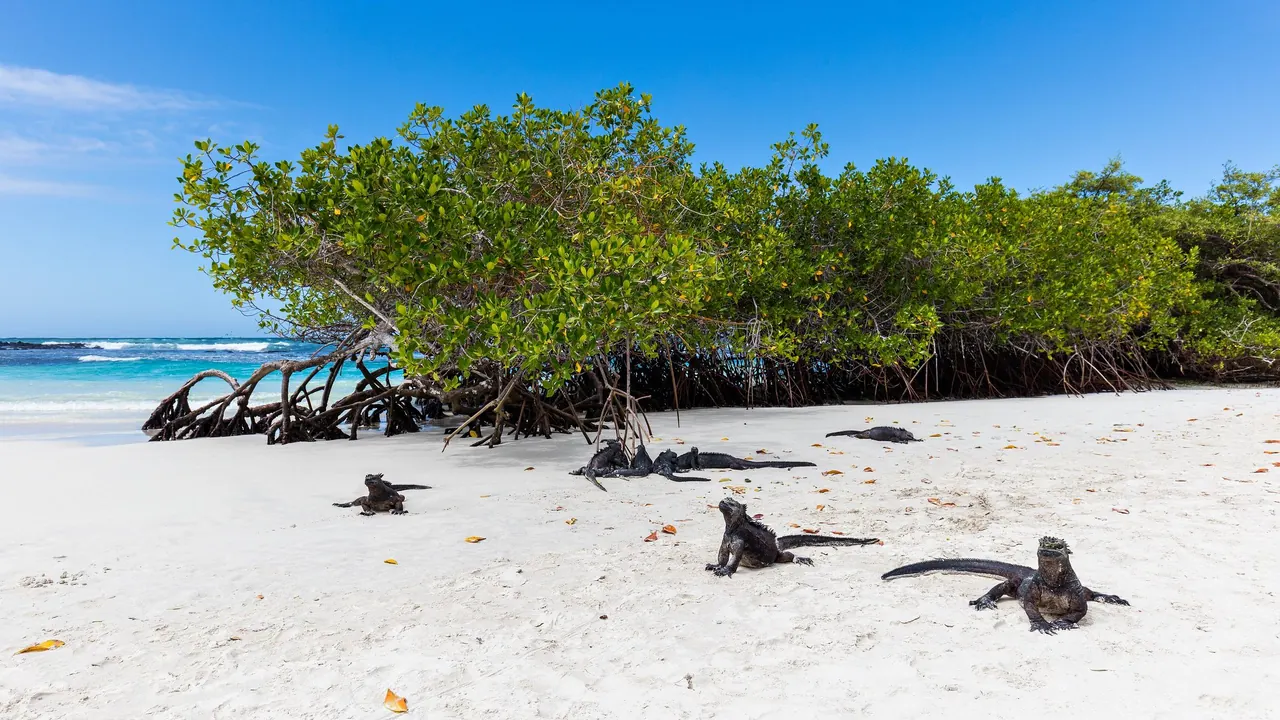
Photos: Easter Island by Vanessa.blasco, CC BY-SA 3.0, cropped; Galápagos by Diego Delso, CC BY-SA 4.0, cropped.
Easter Island or Galápagos?
Our verdict in twelve categories, each scored against the same fixed benchmark cities, and the climate month by month, so you can choose for your trip.
Choose Easter Island for
- culture and sights
- live music and the arts
- getting around
Easter Island is the choice for travellers drawn by archaeology. Its moai, the quarry at Rano Raraku and the birdman village at Orongo turn the whole island into one open-air site, and in the evenings Rapa Nui dance troupes perform in Hanga Roa. It is also the easier place to slow down: one small town, a hired car and empty roads, with no daily boat bookings shaping the days.
Choose Galápagos for
- nature and the outdoors
- families
- beaches
For wildlife, the Galápagos have no rival. You get sea lions, boobies, tortoises and hammerheads at close range, better beaches for snorkelling, and a much stronger case for families whose children are old enough to swim. That makes it the trip for people who travel to be outdoors, as long as they accept guided boat excursions, rough crossings and early starts.
Scoreboard
Twelve categories on one fixed scale from 0 to 100. The shaded stretch is the gap between the two.
Your match
Pick a travel style or drag the sliders, and both match scores follow your weighting.
Too close to call, 1 point apart
Wins on culture and sights and live music and the arts with your weighting.
Wins on nature and the outdoors and families with your weighting.
What matters to you?
Category by category
What the scores mean for a trip.
Beaches & swimming
The Galápagos are clearly better for swimming. Easter Island really has only Anakena and little Ovahe on the north coast. Anakena is lovely, with moai standing behind the sand, but the rest of the coast is lava rock, and in town there is only a rock pool by the harbour.
The Galápagos have beaches on several islands, from the calm cove of Playa Mansa at the end of Tortuga Bay to the long town beach at Puerto Villamil. Sea lions and marine iguanas share the sand, with turtles and rays just offshore. On both, the water drops to around 20°C in the cooler months, and neither is a place for a lazy beach vacation.
Food & drink
Neither is a place to travel for food, and both rely on the sea, because almost everything else comes in by ship or plane. Easter Island's specialities are tuna, served raw, grilled or in empanadas, and the umu earth-oven feast on festival days, all found in Hanga Roa. The Galápagos add spiny lobster in season and the evening street of grill kiosks with shared tables in Puerto Ayora, spread across several port towns.
Culture & sights
The gap here is wide. On Easter Island the island itself is the attraction: close to a thousand moai, the fifteen at Ahu Tongariki, the half-carved figures still in the slope of Rano Raraku and the petroglyphs at Orongo. That is enough for four or five full days.
The Galápagos offer science rather than monuments. The Charles Darwin Research Station and the interpretation centre on San Cristóbal explain evolution and conservation. The Wall of Tears and Floreana's barrel post office add small pieces of history, but the towns themselves are plain.
Nightlife
Both go to bed early. Hanga Roa has a few bars serving pisco sours and somewhere to dance at weekends, mostly among islanders, and sunset at Tahai is the main event of the evening. Puerto Ayora has a similar handful of waterfront bars, the other Galápagos ports have almost nothing, and cruise passengers stay anchored offshore.
Nature & outdoors
The Galápagos are in a different league. Animals that do not fear people, from the frigatebirds on North Seymour to the albatrosses on Española and penguins in the water, live among raw volcanic scenery at Bartolomé and the Sierra Negra caldera. Divers at Gordon Rocks meet hammerheads.
Easter Island's outdoors is about space and light: the walk up to Rano Kau's crater lake, Terevaka on horseback, clear water for diving and surf on the south and west coasts. There is little wildlife, but you can explore the island freely, while most of the Galápagos park can only be visited with a guide on fixed trails.
Day trips
Neither is a base for trips to other places. Easter Island has nothing beyond its own shores, and the nearest inhabited land is over 2,000km away, so every outing is to a site on the island. In the Galápagos, a land-based visitor can at least take a speedboat of about two hours from Santa Cruz to Isabela, San Cristóbal or tiny Floreana, though these are boat and wildlife days rather than visits to towns.
Good for families
The Galápagos are the better choice with children who can snorkel and walk for a few hours. Sea lion pups in the shallows, young tortoises in the breeding centres and gentle coves like Concha de Perla leave a lasting impression. The price is rough speedboat crossings, early starts and age limits on some cruise boats.
Easter Island is safe and calm, and Anakena suits younger children, but most days are spent driving between ruins with little shade. Only older children who are fascinated by the moai will really enjoy that.
Getting around
Easter Island is simpler to get around. It is about 24km across, so nothing is far. There are no buses, but with a hired car, jeep or scooter you can set your own pace on empty paved roads.
The Galápagos port towns are easy to walk and pickup taxis reach the highlands. Moving between islands, though, means choppy speedboat rides of about two hours or small planes, and most sites need a booked guided boat tour. A live-aboard cruise saves the shuttling but gives up independence.
Shopping & style
Neither is a shopping destination, but Easter Island has a slight edge thanks to a genuine carving tradition. Pieces in toromiro wood at Hanga Roa's artisans' market are worth seeking out, alongside stone moai replicas and shell jewellery. In the Galápagos, Avenida Charles Darwin sells T-shirts, wildlife prints and work from a few local galleries, but little is made on the islands, so mainland Ecuador is the place to buy crafts.
Affordability
Both are costly, for the same reason: almost everything is flown or shipped in, and both charge park fees. Where the money goes is different. On Easter Island the main costs are rooms, food and car hire, which simple guesthouses, self-catering and a shared car can reduce. In the Galápagos the big costs are the daily guided boat excursions and, above all, live-aboard cruises, so a land-based stay in Puerto Ayora or Puerto Villamil is the cheaper way to see the islands.
Live music & performing arts
Easter Island has a living tradition to watch. Rapa Nui dance troupes perform with drumming, chanting and body paint on most evenings in Hanga Roa, and on Sunday mornings the Holy Cross church fills with hymns sung in Rapa Nui. Tapati Rapa Nui, in late January and February, brings a fortnight of song, dance and contests between clans.
The Galápagos have almost nothing comparable, just the occasional local band in a waterfront bar or at a community event.
Wellness & relaxation
Neither has a bathing tradition or more than a few spas in upmarket lodges, so the difference lies in the pace of the stay. Easter Island makes it easy to switch off, with one small town, empty roads, sunsets over the ocean and dark night skies between unhurried site visits.
The Galápagos are peaceful in the evenings, and Puerto Villamil's sandy streets make the calmest base. But early starts and choppy crossings mean many visitors go home tired rather than rested.
When should you go?
Pick your month. The climate figures are measured averages, not a forecast.
Easter Island in July
Galápagos in July
Daytime high, °C
Rainfall in the month, mm
Where the figures come from
Galápagos's temperatures are measured 81 km from the centre, at San Cristobal Galapagos.
Galápagos has no rain gauge within 25 km of the centre, so its rainfall comes from a gridded climate dataset read at the destination rather than from a gauge further away.
Temperature and rainfall are climate normals, averaged over the years shown. Easter Island: 1991-2020 normals, Isla De Pascua (1.3 km from centre). Galápagos: 1961-1990 (rainfall 1991-2020) normals, San Cristobal Galapagos (81.3 km from centre).
Around Hanga Roa, December to March are Easter Island's best months. The days are warm, the sunshine lasts longest and the sea at Anakena reaches about 25°C. Rain picks up from April, and April to July is the wettest stretch, with well over 100mm a month. The winter months are cool rather than cold, about 21°C by day. That is fine for walking the sites but less good for swimming.
The Galápagos, measured around the main port area, are warmer and far drier all year. February to April is the hottest spell, around 30°C, with a little rain and the warmest sea. From May to December the rain almost stops, the days get milder and the sea cools to about 22°C, when a wetsuit helps. Sunshine is more even through the year than on Easter Island, which is sunnier in its summer and greyer in its winter.
Which traveller are you?
For a culture and arts trip, Easter Island is the clear choice. The moai, the quarry and the birdman village make the island one great archaeological site, and the Rapa Nui dance shows and the Tapati festival add a living culture the Galápagos cannot match.
On an outdoors trip, the Galápagos are hard to beat. Snorkelling with sea lions and penguins, hammerheads for divers and volcanic walks on Isabela outweigh Easter Island's crater hikes and clear water, even though guides and fixed trails limit free roaming.
On a family trip with children, the Galápagos work better, as long as the children can snorkel and walk for a few hours. Sea lion pups, tortoise breeding centres and calm coves keep them interested, while Easter Island's long drives between ruins with little shade test young patience.
Before you go
| Measure | Easter Island | Galápagos |
|---|---|---|
| Official language | Spanish | Spanish, Shuar, Northern Quichua |
| Currency | Chilean Peso (CLP) | US Dollar (USD) |
| Sockets | CL220 V, 50 Hz | AB120 V, 60 Hz |
| Driving side | Right | Right |
| Time zone | UTC-6, UTC-5 in summer | UTC-6 |
| Emergency number | Police 133/134, ambulance 131, fire 132 | 911 |
| Main airport | Mataveri International Airport (IPC)1 non-stop destination | Seymour Galapagos Ecological Airport (GPS)3 non-stop destinations |
| Public holidays this year | 16 days | 11 days |
By the numbers
| Measure | Easter Island | Galápagos |
|---|---|---|
| Population | 4,800 | 25,000 |
| People per km² | 29 | - |
| Swim season, months above 21 °C | 8 months | 12 months |
Where else could you go?
Every comparison below shares a destination with this one, so you can follow Easter Island or Galápagos somewhere new.