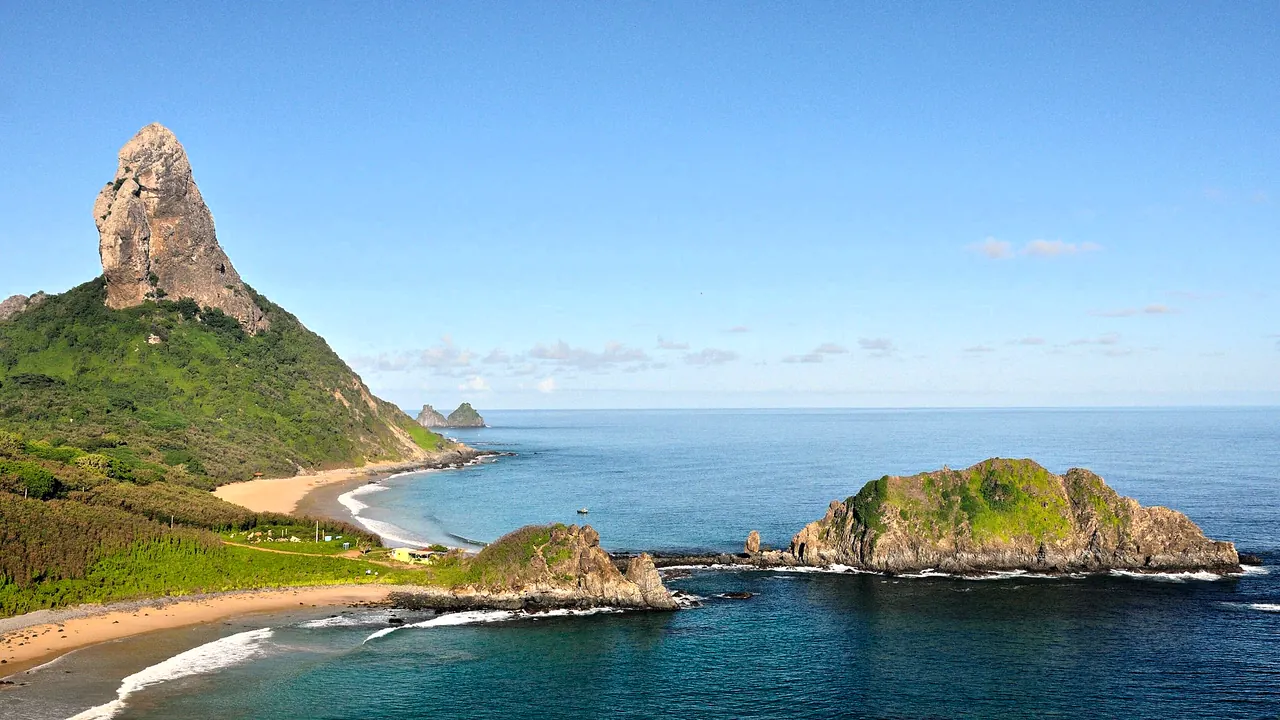
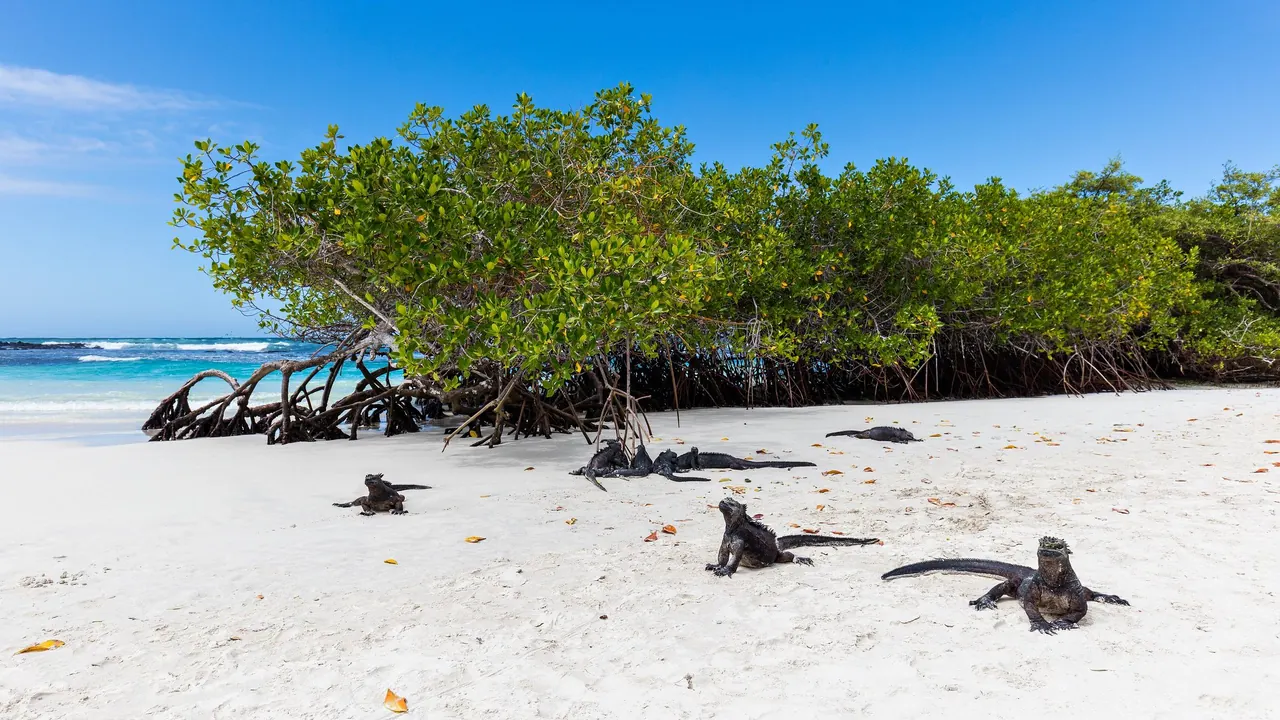
Photos: Fernando de Noronha by Brunno Monteiro Lira, CC BY-SA 3.0, cropped; Galápagos by Diego Delso, CC BY-SA 4.0, cropped.
Fernando de Noronha or Galápagos?
Our verdict in twelve categories, each scored against the same fixed benchmark cities, and the climate month by month, so you can choose for your trip.
Choose Fernando de Noronha for
- beaches
- getting around
- wellness
Choose Fernando de Noronha if the sea itself is the vacation. Its sheltered bays have warm, clear water all year, the single island is easy to cover by buggy, and the days settle into a slow loop of swims, long lunches and sunsets from the cliffs. Its wildlife is mostly underwater: dolphins, turtles and reef sharks for people who snorkel and dive. It suits couples and adults who want to rest as much as explore.
Choose Galápagos for
- families
- nature and the outdoors
- day trips
The Galápagos is for travellers who want to stand a metre from a blue-footed booby and watch giant tortoises graze in the highlands. Its wildlife and volcanic landscapes are unlike anywhere else, and it has several islands to move between, either from a port town or on a live-aboard cruise. The cost is effort. Days start early, crossings can be rough and most sites are visited with a guide, so expect to come home amazed rather than rested. Older children often love it.
Scoreboard
Twelve categories on one fixed scale from 0 to 100. The shaded stretch is the gap between the two.
Your match
Pick a travel style or drag the sliders, and both match scores follow your weighting.
Too close to call, 1 point apart
Wins on beaches and getting around with your weighting.
Wins on families and nature and the outdoors with your weighting.
What matters to you?
Category by category
What the scores mean for a trip.
Beaches & swimming
On beaches Fernando de Noronha is well ahead. The sea is warm all year, the water is often clear to the bottom, and the inner coast facing Brazil has some of the finest swimming bays in the country: Baía do Sancho down its cliff ladders, Baía dos Porcos below Morro Dois Irmãos, and the long sand of Cacimba do Padre. When the December to March swells reach that side and the surfers arrive, the Atlantic coast at Leão and Sueste is calm instead.
The Galápagos has beautiful beaches, with white sand, black lava and sea lions lying on the shore. Even so, Tortuga Bay, Playa Mansa and the long beach at Puerto Villamil fill only a few hours of most stays. The water is cooler than you might expect on the equator, swimming usually means snorkelling, and from June to November many people wear a wetsuit to do it.
Food & drink
Neither place is a food destination, but Fernando de Noronha eats somewhat better. Its menus draw on the cooking of Brazil's Northeast, with moquecas, cashew and coconut alongside grilled fish. Some pousadas hold chef-led dinners, and these are the most memorable meals on either island.
The Galápagos is plainer, though it has something Noronha lacks. In Puerto Ayora, a side street of open-air kiosks grills the day's catch at shared tables in the evening. Ceviche and spiny lobster are the dishes to order. On both islands almost everything else is shipped in, so the menus start to repeat after a few days.
Culture & sights
The Galápagos has a little more to see, and its heritage is scientific. The Charles Darwin Research Station on Santa Cruz explains evolution and the work to save the giant tortoises. The penal-colony Wall of Tears on Isabela and the whalers' barrel post office on Floreana add some human history.
On Fernando de Noronha, the whitewashed church and the ruins of the Forte dos Remédios in the village take about an hour, and most people see them on the way to a sunset viewpoint.
Nightlife
Both islands go to bed early, but Fernando de Noronha has slightly more going on. Evenings begin with a sunset drink at the old fort at Boldró, and on some nights forró dancing in Vila dos Remédios brings visitors, guides and island workers onto the same small floor.
In the Galápagos, Puerto Ayora has a few waterfront bars and a modest place to dance at weekends. Cruise passengers spend the night anchored offshore, so the most memorable sight after dark is often sea lions asleep on the harbour benches.
Nature & outdoors
The Galápagos is in a class of its own. Animals that evolved without predators ignore people, so you walk past sea lions, boobies, marine iguanas and frigatebird colonies at close range. Giant tortoises graze in the Santa Cruz highlands. The volcanic scenery runs from the spatter cones on Bartolomé to the Sierra Negra caldera on Isabela, and divers at Gordon Rocks meet schools of hammerheads. The trade-off is that most of the park can only be visited with a guide on fixed trails.
Fernando de Noronha is a fine marine park, but a smaller one. The highlights are hundreds of spinner dolphins at dawn in Baía dos Golfinhos, turtles and reef sharks in the shallows, and dives with visibility that can reach 40m. On land a few days cover the trails to Atalaia, Capim-Açu and Pontinha.
Day trips
The Galápagos gives you more places to go. From a base on Santa Cruz, speedboats take about two hours to reach Isabela, San Cristóbal or Floreana, and each island has its own wildlife sites, though the port towns are small.
Fernando de Noronha has only one inhabited island, so the outings are boat tours, dives and guided trails along its own coast. On both, the mainland is a flight away.
Good for families
The Galápagos is the stronger family choice, as long as the children are old enough to snorkel and walk for a few hours. Sea lion pups play in the shallows and the tortoise breeding centres hold children's attention. The calm coves at Playa Mansa and Concha de Perla are good places for a first look under the water. The downsides are long flights, rough inter-island boats that can cause seasickness, and minimum ages on some cruises.
Fernando de Noronha works for water-loving children too. They can see turtles at Sueste, snorkel the tide pools at Atalaia and go to evening talks at the turtle centre. However, several of the best beaches need ladders or hot walks, and summer swells on the inner coast need watching. Neither island has anything built for toddlers.
Getting around
Getting around Fernando de Noronha is simple. One paved road runs about 10km from end to end, with a bus, taxis and rented beach buggies, so every bay is a few minutes away and only the final scramble to the sand takes effort.
In the Galápagos the port towns are walkable and white pickup taxis run up to the highlands, but moving between islands is the hard part. It means two-hour speedboat rides over choppy water or small planes, and most sites need a booked guided boat. A live-aboard cruise avoids this by moving while you sleep, and it reaches distant islands that day boats cannot.
Shopping & style
Shopping is not a reason to visit either island, and you will find about the same amount. On Fernando de Noronha it means beachwear, surf clothes and island T-shirts in a few boutiques around the village and harbour. Bring sun cream and snorkel gear from the mainland.
The Galápagos adds a few galleries with paintings and jewellery by local artists along Avenida Charles Darwin. For Ecuadorian textiles and chocolate, though, it is better to shop on the mainland.
Affordability
Both are expensive, and neither has a cheap way to visit. Fernando de Noronha adds a daily environmental charge and a marine park fee to pousada rates that are high even by Brazilian standards. Family-run guesthouses and lunch-by-weight restaurants only take the edge off.
The Galápagos has park entry fees on top of the flights, and almost every site needs a guided tour. Your choice of trip makes more difference here. A land-based stay in Puerto Ayora or Puerto Villamil costs clearly less than a live-aboard cruise, though the daily boat trips still add up.
Live music & performing arts
There is almost nothing here on either island. On Fernando de Noronha, live music means a forró band or an acoustic set in a village bar. In the Galápagos, it means an occasional local band at a waterfront bar or a community event in one of the port towns.
Wellness & relaxation
Fernando de Noronha is the more restful island. With visitor numbers capped, days follow an easy pattern of early swims and sunsets on the cliffs, and some of the better pousadas have massage rooms and yoga decks facing the sea.
The Galápagos can be peaceful in the evenings, especially in Puerto Villamil with its sandy streets, but a typical trip is full of early starts, guided walks and rough crossings. Neither island has a spa tradition, so on Noronha the rest comes from the setting rather than treatments.
When should you go?
Pick your month. The climate figures are measured averages, not a forecast.
Fernando de Noronha in July
Galápagos in July
Daytime high, °C
Rainfall in the month, mm
Where the figures come from
Fernando de Noronha has no rain gauge within 25 km of the centre, so its rainfall comes from a gridded climate dataset read at the destination rather than from a gauge further away.
Galápagos's temperatures are measured 81 km from the centre, at San Cristobal Galapagos.
Galápagos has no rain gauge within 25 km of the centre, so its rainfall comes from a gridded climate dataset read at the destination rather than from a gauge further away.
Temperature and rainfall are climate normals, averaged over the years shown. Fernando de Noronha: 1943-2025, 29 years observed (rainfall 1991-2020) normals, Fernando De Noronha (0.4 km from centre). Galápagos: 1961-1990 (rainfall 1991-2020) normals, San Cristobal Galapagos (81.3 km from centre).
Fernando de Noronha is hot and the sea is warm every month, with highs around 30°C, so the choice comes down to rain. The wet season runs from March to July and peaks in April at about 299mm, when the trails turn muddy and showers interrupt beach days. From August to January it is dry, and September to November is the steadiest stretch, with flat water on the inner beaches and good conditions for walking. From December the northern swells start to reach the sheltered side.
The Galápagos is drier all year, but its seasons change more. From January to May it is warm and sunny with occasional showers. The sea warms to about 27°C and stays calm, so this is the easiest time to snorkel. From June to November highs drop to around 25°C, the sky is often duller and the sea cools to about 22°C, so most snorkellers wear a wetsuit. Those cooler months also bring richer marine life. In short, go to the Galápagos early in the year for warm, calm water. On Noronha, aim for the dry months from August to January, ideally before the December swells if you want the inner bays flat.
Which traveller are you?
For a beach and sun trip, Fernando de Noronha is the clear choice. Its water stays warm all year and you can swim at bays like Sancho and Sueste, whereas Galápagos beaches are mostly a stop between wildlife outings, and the water there is cool for half the year.
On an outdoors trip built around wildlife, choose the Galápagos. Tortoises, albatrosses, penguins and hammerhead schools live among volcanic calderas and lava fields, a range of animals and landscapes that small, sea-focused Noronha cannot match, however good its dolphins and diving are.
For a relaxing and wellness trip, Fernando de Noronha is better. Visitor numbers are capped, everything is a short buggy ride away, and some pousadas have yoga decks and massages. In the Galápagos the early starts and choppy crossings leave most visitors tired rather than rested.
Before you go
| Measure | Fernando de Noronha | Galápagos |
|---|---|---|
| Official language | Portuguese | Spanish, Shuar, Northern Quichua |
| Currency | Brazilian Real (BRL) | US Dollar (USD) |
| Sockets | CN60 Hz | AB120 V, 60 Hz |
| Driving side | Right | Right |
| Time zone | UTC-2 | UTC-6 |
| Emergency number | Police 190, ambulance 192, fire 193 | 911 |
| Main airport | Fernando de Noronha Airport (FEN)2 non-stop destinations | Seymour Galapagos Ecological Airport (GPS)3 non-stop destinations |
| Public holidays this year | 14 days | 11 days |
By the numbers
| Measure | Fernando de Noronha | Galápagos |
|---|---|---|
| Population | 3,167 | 25,000 |
| People per km² | 122 | - |
| Swim season, months above 21 °C | 12 months | 12 months |
Where else could you go?
Every comparison below shares a destination with this one, so you can follow Fernando de Noronha or Galápagos somewhere new.
- Buziosvs Fernando de Noronha
- Florianopolisvs Fernando de Noronha
- Easter Islandvs Galápagos
- Hawaiivs Galápagos