Brazil
Fernando de Noronha
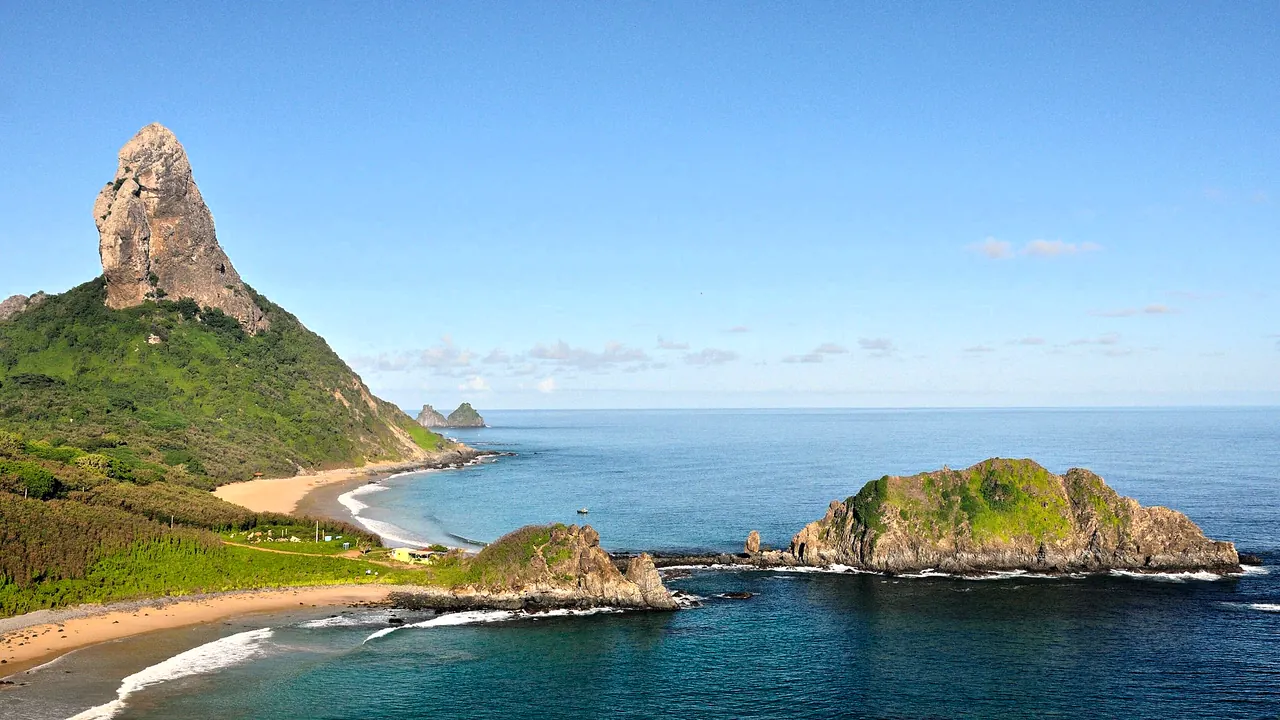
Morro do Pico and Praia da Conceicao from the old fort
- Beaches94
- Nature & outdoors80
- Getting around52
Photo: Brunno Monteiro Lira, CC BY-SA 3.0, cropped
Match
34
Every category weighted equally
- Beach & sun43
- Culture & arts25
- Food & nightlife28
- Family trip41
- Outdoors40
- Relax & unwind42
- Shopping & style28
- On a budget32
Fernando de Noronha in twelve categories
Our verdict on each, scored 0 to 100 against the same fixed benchmark cities, so a score means the same thing on every page.
Beaches & swimming. Scores 94 out of 100.
Food & drink. Scores 36 out of 100.
Culture & sights. Scores 14 out of 100.
Nightlife. Scores 16 out of 100.
Nature & outdoors. Scores 80 out of 100.
Day trips. Scores 3 out of 100.
Good for families. Scores 40 out of 100.
Getting around. Scores 52 out of 100.
Shopping & style. Scores 10 out of 100.
Affordability. Scores 13 out of 100.
Live music & performing arts. Scores 5 out of 100.
Wellness & relaxation. Scores 44 out of 100.
Fernando de Noronha category by category
Beaches & swimming
94The water is the reason people come. It is warm all year, around 26°C to 28°C, and often clear enough to see the bottom at depth. The best beaches sit on the sheltered side of the island facing Brazil, the mar de dentro. Baía do Sancho is reached down ladders set in a cleft in the cliff, Baía dos Porcos looks out at the twin peaks of Morro Dois Irmãos, and Cacimba do Padre is a long, open stretch of sand. The Atlantic-facing side, the mar de fora, has Praia do Leão, wild and wide, and Baía do Sueste, a calm bay where green turtles feed in shallow water.
The seasons decide which side to swim on. From about December to March, northern swells reach the inner beaches and Cacimba do Padre fills with surfers, while the outer side stays calm. For the rest of the year the inner sea is often flat as a lake. Visitor numbers are capped, so even the famous beaches are never crowded, and some of the natural pools at Atalaia are open only at low tide to small, controlled groups.
Food & drink
36For an island of a few thousand people, the eating is better than you might expect, because many visitors are well-off Brazilians on a special trip. The centre of it is fresh fish: grilled catch of the day, moquecas, and dishes with cashew, coconut and the cooking of Brazil's Northeast. Some pousadas host chef-led dinners that are an event in themselves, and the village of Vila dos Remédios has a handful of good restaurants. Sunset caipirinhas and tapioca pancakes are part of the routine.
The range is still narrow. There is no market and no real street food, almost everything is shipped or flown in from the mainland, and after a week the menus start to repeat.
Culture & sights
14The island's history is short but real. The Portuguese fortified it in the eighteenth century, and later it served as a prison and a wartime base. Vila dos Remédios keeps the whitewashed Nossa Senhora dos Remédios church, the ruins of the Forte dos Remédios above the bay, and a few old administrative buildings around a small square. An hour covers all of it. Nobody comes for the sights, and the heritage is best treated as a pleasant extra on the way to a sunset viewpoint.
Nightlife
16Evenings start with the sunset, watched with a drink from the old fort at Boldró or above Praia da Conceição. After dinner, Vila dos Remédios has a few bars, and on some nights forró dancing draws visitors, guides and island workers together onto one small dance floor. That is about the extent of it. Most people are in bed early, ready for morning boat trips and dives, and anyone hoping for clubs or a late bar scene will find the island very quiet.
Nature & outdoors
80Noronha is a sea-life destination first. Most of the archipelago is a protected marine national park. At dawn, spinner dolphins gather by the hundreds in Baía dos Golfinhos, watched from a clifftop viewpoint above the bay. Green and hawksbill turtles feed close to shore, lemon and reef sharks patrol the shallows, and the diving is among the finest in Brazil, with warm water and visibility that can reach 40m around reefs, walls and an old shipwreck. Boat trips along the coast, snorkelling, sea kayaking and stand-up paddling are all easy to arrange.
On land the island is dramatic but small, and a few days cover it. Morro Dois Irmãos and the volcanic spire of Morro do Pico rise above green hills. Guided trails such as Atalaia, Capim-Açu and the coastal path to Pontinha lead to cliffs, tide pools and nesting seabirds, but there are no long hikes and no wilderness to disappear into. From about December to March, northern swells bring good surf. The drier months, from August to January, are the best time for walking, and the hills turn brown late in the dry season.
Day trips
3There are no day trips here. The archipelago has only one inhabited island and it lies far out in the Atlantic, so the mainland is a flight away. The outings people take, boat tours around the coast, dives and guided trails, are about the sea and the landscape, not other places to visit.
Good for families
40Families with school-age children who like the water do well here. The island is safe and relaxed, and seeing turtles at Baía do Sueste, or snorkelling in the shallow pools at Atalaia at low tide, makes a lasting impression. The turtle conservation centre in the village gives evening talks. Calmer beaches such as Praia do Porto and Sueste are easy with small children when the sea is flat.
There is nothing built for children, though: no attractions, playgrounds or entertainment. Several of the best beaches need steep ladders, steps or hot trail walks, and the strong summer swells on the inner coast need watching. Toddlers get less out of it than teenagers.
Getting around
52The island is only about 10km long, and a single paved road runs from end to end. A local bus goes up and down it, taxis are easy to find, and many visitors rent a beach buggy, which is the classic way to move between bays. Distances are short, so no beach is more than a few minutes' drive away. The last stretch is the effort: dirt tracks, trails, cliff steps and the heat between road and sand. Getting there means a flight from Recife or Natal on the mainland.
Shopping & style
10Shopping is limited to a few small boutiques in Vila dos Remédios and around the harbour, selling beachwear, surf clothing, island-themed T-shirts and local crafts. Prices are high because everything is shipped in. Bring what you need from the mainland, sun cream and snorkel gear included.
Affordability
13This is one of the most expensive places to travel in Brazil. Every visitor pays a daily environmental preservation charge as well as a fee for the marine national park. Even simple pousadas cost a lot by mainland standards, and the better ones are priced as luxury retreats. Restaurant and supermarket prices reflect the fact that nearly everything is flown or shipped in, and boat trips, dives and buggy rental all add up. Simpler family-run guesthouses and lunch-by-weight places soften it somewhat, but there is no budget way to do the island.
Live music & performing arts
5There is essentially no performing arts scene. Live music means a forró band or an acoustic set at a bar some evenings in Vila dos Remédios. There is no theatre and no concert programme.
Wellness & relaxation
44The pace of the island is its own form of rest. Visitor numbers are capped, the village is small, and days follow the sun: an early swim, a long lunch, a sunset from a cliff, an early night. Several of the higher-end pousadas offer massages and small spa rooms, and some have yoga decks looking out to sea. There is no bathing tradition, thermal water or spa culture of any depth, so the unwinding comes from the setting and the quiet rather than from treatments.
Where to stay in Fernando de Noronha
Noronha is small enough that one base covers the whole trip. The island is about 10km long with a single road, so every beach is a short buggy, bus or taxi ride from wherever you sleep, and nobody needs to move. Nearly all beds are in pousadas, from simple family-run guesthouses to secluded retreats. The real choice is between staying in the village and staying out on the quieter slopes.
Vila dos Remédios suits travellers who like to walk to dinner. The island's few good restaurants, its bars and the forró nights are here, along with the church, the fort ruins and the turtle centre's evening talks. That makes it the easy choice for families with older children and for anyone who would rather not rent a buggy. Close by, the area around Boldró puts you near the inner-sea beaches and the old fort where people gather for sunset. It is a good base for swimmers and snorkellers from April to November, when that side is calm.
Couples looking for rest often choose the higher-end pousadas spread across the green hillsides, some with yoga decks facing the sea. The area near the harbour and Praia do Porto is handy for early boat trips and dives, and when the sea is flat its calm water suits small children.
When should you go?
Pick a month to see what it is like. The climate figures are measured averages, not a forecast.
Fernando de Noronha in July
Daytime high, °C
Rainfall in the month, mm
The whole year
Shaded against this destination’s own year: the deepest cell is its best month for that figure and the palest its weakest.
Where the figures come from
Fernando de Noronha has no rain gauge within 25 km of the centre, so its rainfall comes from a gridded climate dataset read at the destination rather than from a gauge further away.
Temperature and rainfall are climate normals, averaged over the years shown. Fernando de Noronha: 1943-2025, 29 years observed (rainfall 1991-2020) normals, Fernando De Noronha (0.4 km from centre).
Before you go
| Measure | Fernando de Noronha |
|---|---|
| Official language | Portuguese |
| Currency | Brazilian Real (BRL) |
| Sockets | CN60 Hz |
| Driving side | Right |
| Time zone | UTC-2 |
| Emergency number | Police 190, ambulance 192, fire 193 |
| Main airport | Fernando de Noronha Airport (FEN)2 non-stop destinations |
| Public holidays this year | 14 days |
By the numbers
| Measure | Fernando de Noronha |
|---|---|
| Population | 3,167 |
| People per km² | 122 |
| Swim season, months above 21 °C | 12 months |
Compare Fernando de Noronha with
Every comparison with a written verdict behind it.