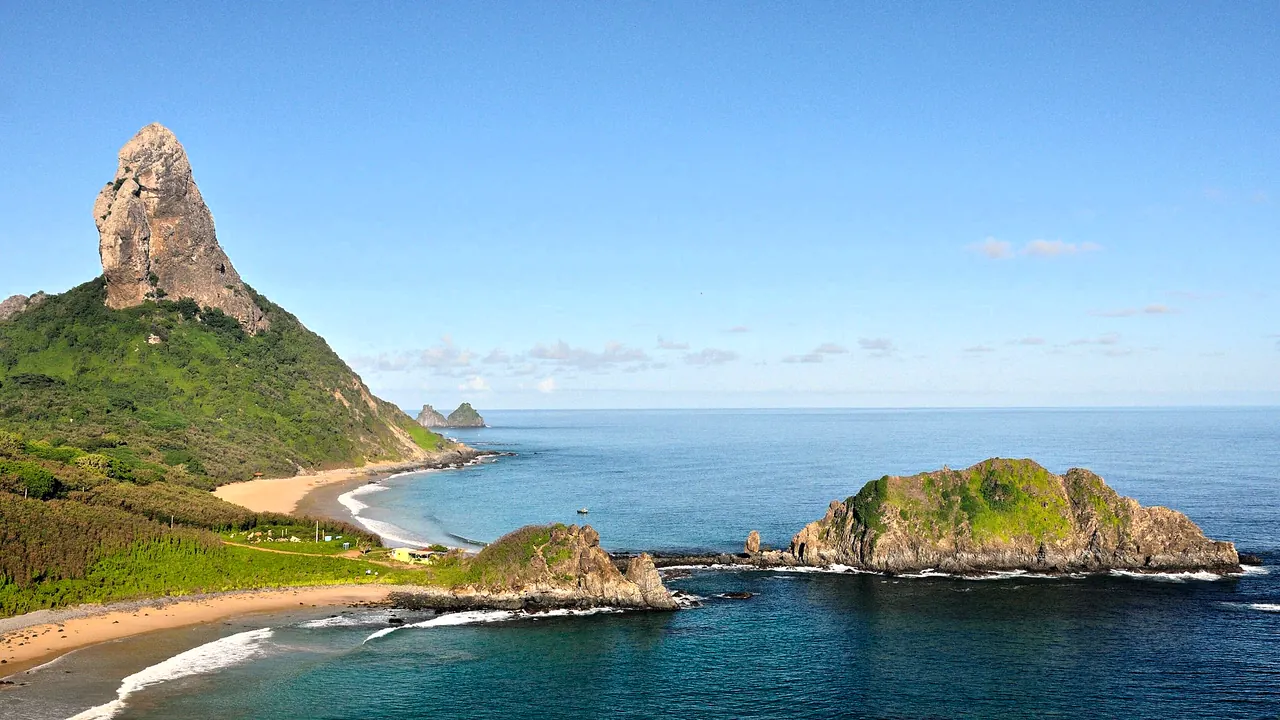
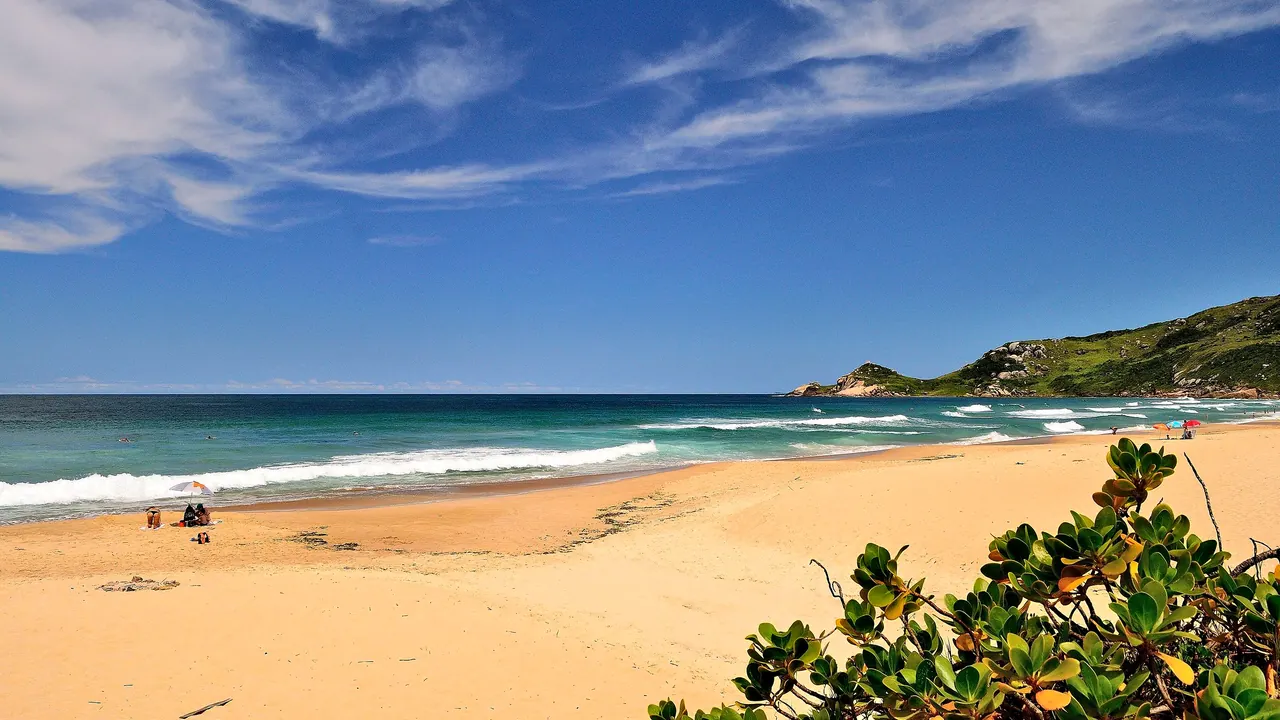
Photos: Fernando de Noronha by Brunno Monteiro Lira, CC BY-SA 3.0, cropped; Florianopolis by Papa Pic, CC0.
Fernando de Noronha or Florianopolis?
Our verdict in twelve categories, each scored against the same fixed benchmark cities, and the climate month by month, so you can choose for your trip.
Choose Fernando de Noronha for
- getting around
- beaches
- nature and the outdoors
Fernando de Noronha suits a trip built around the water and very little else. If you want to swim in clear, warm sea, dive among turtles and reef sharks, and end each day at a cliff-top sunset before an early night, nowhere on Florianopolis's coast quite matches it. The catch is the cost, the lack of anything to do after dark or on a rainy day, and the fact that a week here is a week on one small island.
Choose Florianopolis for
- day trips
- prices
- nightlife
Florianopolis is the better choice for a longer, more varied beach vacation where evenings and appetite matter as much as the sand. It has dozens of beaches, a summer party scene, oyster villages on the bay, trails and a lagoon, and a mainland within reach for German-settled towns and surf villages. It also costs far less to stay. In return the sea is cooler, the island is spread out and congested in summer, and the swimming has a season.
Scoreboard
Twelve categories on one fixed scale from 0 to 100. The shaded stretch is the gap between the two.
Your match
Pick a travel style or drag the sliders, and both match scores follow your weighting.
Wins on getting around and beaches with your weighting.
Wins on day trips and prices with your weighting.
What matters to you?
Category by category
What the scores mean for a trip.
Beaches & swimming
Noronha has the finer sea. The water stays warm and so clear you can see the bottom at depth, whether at Baía do Sancho, reached down ladders in the cliff, or at Baía do Sueste, where turtles feed in the shallows. Because visitor numbers are capped, even the famous bays never feel crowded. The two coasts take turns being calm, so there is always a sheltered side to swim on.
Florianopolis gives you range rather than perfection: calm, warmer bays in the north at Jurere and Daniela, open surf beaches on the east coast at Mole and Joaquina, and wild coves in the south reached on foot. The drawback is the season, since the sea is only really inviting from December to March.
Food & drink
Florianopolis eats better. The Azorean fishing tradition and the island's oyster farms mean oysters served raw, gratinated or steamed at waterside tables in Ribeirao da Ilha and Santo Antonio de Lisboa, alongside the long shrimp feast called the sequencia de camarao and snacks among the fishmongers at the Mercado Publico.
Noronha does good grilled fish and Northeastern moquecas, and some pousadas hold chef-led dinners. But with no market, no street food and nearly everything flown in, the choice shrinks quickly over a week.
Culture & sights
Neither is a sightseeing trip, but Florianopolis gives you more to fill a day. You can see the Hercilio Luz bridge, the square around Praca XV with its cathedral and state history museum, the whitewashed Azorean villages, and the old bay fortresses, with Anhatomirim reached by boat.
On Noronha the history fits into an hour in Vila dos Remédios: the church, the ruined fort and a small square, best seen on the way to a sunset.
Nightlife
Florianopolis is the one for going out. In summer the Jurere beach clubs run from afternoon into the night with visiting DJs, and the younger crowd drinks in the bars and streets around Lagoa da Conceicao. Out of season the beach venues shut and the night shrinks to Lagoa and the centre.
Noronha's evening peaks at sunset, drink in hand at the Boldró fort. After that there are a few bars and the occasional forró night in the village, and most people are asleep early, ready for the morning boat.
Nature & outdoors
Both are outstanding outdoors, but in different elements. Noronha belongs to the sea: spinner dolphins gather at dawn in Baía dos Golfinhos, turtles and reef sharks feed in the shallows, and the diving is among Brazil's best. On land it is dramatic but small, and its guided trails are done in a few days.
Florianopolis is stronger on land and on wind and waves. Atlantic forest trails lead to Lagoinha do Leste and along the Costa da Lagoa, the lagoon is good for kitesurfing and paddling, you can sandboard on the Joaquina dunes, and the east coast has consistent surf. From July to November southern right whales calve along the coast to the south.
Day trips
This is the starkest gap of all. Noronha is a single inhabited island far out in the Atlantic, so anything beyond its own boat trips and trails means a flight to the mainland.
From Florianopolis the mainland is open to you. Blumenau and Pomerode have half-timbered houses and a German beer tradition, Garopaba and Praia do Rosa are relaxed surf towns, Laguna has a colonial centre, and the Anhatomirim fortress makes an easy half day by boat.
Good for families
Florianopolis is easier with children, especially young ones. The northern beaches at Canasvieiras, Jurere and Daniela have shallow, gentle water and plenty of room, older children enjoy sandboarding at Joaquina, and the Beto Carrero World theme park is within a day's reach. Long summer traffic jams are the main strain.
Noronha suits water-loving older children and teenagers. Seeing turtles at Sueste or snorkelling the Atalaia pools stays with them, and the conservation centre gives evening talks. But with steep ladders, hot trail walks and nothing built for children, it is harder going with toddlers.
Getting around
Once you have landed, Noronha is simpler. A single road runs the 10km length of the island, served by a bus and taxis, and a rented beach buggy gets you to any bay within minutes. The only real effort is the final scramble down to the sand, and the flight from Recife or Natal to get there at all.
Florianopolis stretches across about 50km of narrow roads. Buses run via hub terminals, and summer traffic jams clog the bridges and the roads north and to Lagoa, so most visitors hire a car and stay near the beaches they like best.
Shopping & style
On Noronha, buying things barely comes into it. A few small boutiques in Vila dos Remédios and by the harbour sell beachwear, surf clothing and island T-shirts, all at high prices because they arrive by sea, so pack sun cream and snorkel gear before you fly out.
Florianopolis is the easier place to replace a forgotten swimsuit or find something to take home. Its malls carry Brazilian fashion and beachwear labels, and Jurere and Lagoa have surf and swimwear shops. In Santo Antonio de Lisboa you can buy renda de bilro, the fine bobbin lace made by women in the Azorean villages.
Affordability
On Noronha you start paying before you reach the sand. There is a preservation charge for every day on the island and a separate fee for the marine park. After that, rooms, meals and groceries all cost more because they have to be flown or shipped in. The boat trips and dives that bring you here in the first place are extra on top, and a family-run guesthouse helps only at the margins.
On Florianopolis the bill depends mostly on where you sleep and when. A room in the weeks around New Year and Carnival can take most of a budget, and Jurere Internacional charges luxury rates all year. Stay elsewhere outside December to March, though, and the island is good value, because eating out and getting around never cost much.
Live music & performing arts
Florianopolis offers at least an evening out. The 19th-century Teatro Alvaro de Carvalho and the Centro Integrado de Cultura stage theatre, dance and concerts, and bars in Lagoa and the centre play samba and MPB on many nights.
Noronha has no theatre or concerts, only the odd forró band or acoustic set in a village bar.
Wellness & relaxation
Both rest you through their pace rather than through treatments, but they do it differently. Noronha is quiet all year because visitor numbers are capped, and some pousadas have massage rooms and yoga decks facing the sea.
Florianopolis is calm in its southern villages outside summer, but crowded and loud at its peak. What it adds is real thermal bathing at the mineral springs of Santo Amaro da Imperatriz, under an hour inland.
When should you go?
Pick your month. The climate figures are measured averages, not a forecast.
Fernando de Noronha in July
Florianopolis in July
Daytime high, °C
Rainfall in the month, mm
Where the figures come from
Fernando de Noronha has no rain gauge within 25 km of the centre, so its rainfall comes from a gridded climate dataset read at the destination rather than from a gauge further away.
Temperature and rainfall are climate normals, averaged over the years shown. Fernando de Noronha: 1943-2025, 29 years observed (rainfall 1991-2020) normals, Fernando De Noronha (0.4 km from centre). Florianopolis: 1991-2020 normals, Florianopolis (1.7 km from centre).
Fernando de Noronha is hot all year, and the sea never drops below 26°C, so the beach is always warm enough. Rain is what changes. From March to June it is heavy, with over 240mm in most of those months, and the dry spell from August to January is the best time to go, both for clear water and for walking the trails. Swell reaches the inner beaches from about December to March, which suits surfers more than swimmers.
Florianopolis has real seasons. December to March is the warm beach season, but it is also the wettest stretch, with 243mm in January, so expect summer downpours between sunny days. From June to September daytime highs fall to about 21°C and the sea cools to 18°C. That is pleasant weather for walking the trails and the Azorean villages but cold for swimming. April and November make a useful middle ground, warm and less wet than midsummer.
Which traveller are you?
For divers and snorkellers, Fernando de Noronha is the clear pick. Its marine national park has warm water, visibility that can reach 40m, reefs, walls and a wreck, and turtles and sharks close to shore. Florianopolis has surf and a lagoon, but nothing comparable underwater.
On a food and nightlife trip, Florianopolis wins easily. You can eat raw oysters by the water in Ribeirao da Ilha, have a chope at the Mercado Publico, then spend the night at a Jurere beach club or in the bars around Lagoa. On Noronha the evening ends after a forró dance.
On a tight budget, Florianopolis is the only realistic option. Buses, simple seafood places and bakeries keep daily costs moderate, and rooms get much cheaper outside summer. On Noronha the daily environmental charges, island prices and paid boat trips leave no cheap way to visit.
Before you go
| Measure | Fernando de Noronha | Florianopolis |
|---|---|---|
| Official language | Portuguese | Portuguese |
| Currency | Brazilian Real (BRL) | Brazilian Real (BRL) |
| Sockets | CN60 Hz | CN60 Hz |
| Driving side | Right | Right |
| Time zone | UTC-2 | UTC-3 |
| Emergency number | Police 190, ambulance 192, fire 193 | Police 190, ambulance 192, fire 193 |
| Elevation | - | 3 m |
| Main airport | Fernando de Noronha Airport (FEN)2 non-stop destinations | Hercílio Luz International Airport (FLN)9 km from centre23 non-stop destinations |
| Public holidays this year | 14 days | 14 days |
By the numbers
| Measure | Fernando de Noronha | Florianopolis |
|---|---|---|
| Population | 3,167 | 587,486 |
| People per km² | 122 | 870 |
| Museums within 10 km | - | 11 |
| UNESCO World Heritage sites within 50 km | - | 0 |
| Swim season, months above 21 °C | 12 months | 7 months |
Where else could you go?
Every comparison below shares a destination with this one, so you can follow Fernando de Noronha or Florianopolis somewhere new.
- Sao Paulovs Florianopolis
- Paratyvs Florianopolis
- Foz do Iguacuvs Florianopolis
- Rio de Janeirovs Florianopolis
- Buziosvs Florianopolis
- Punta del Estevs Florianopolis