Florianopolis or Punta del Este?
Our verdict in twelve categories, each scored against the same fixed benchmark cities, and the climate month by month, so you can choose for your trip.
Choose Florianopolis for
- prices
- nature and the outdoors
- beaches
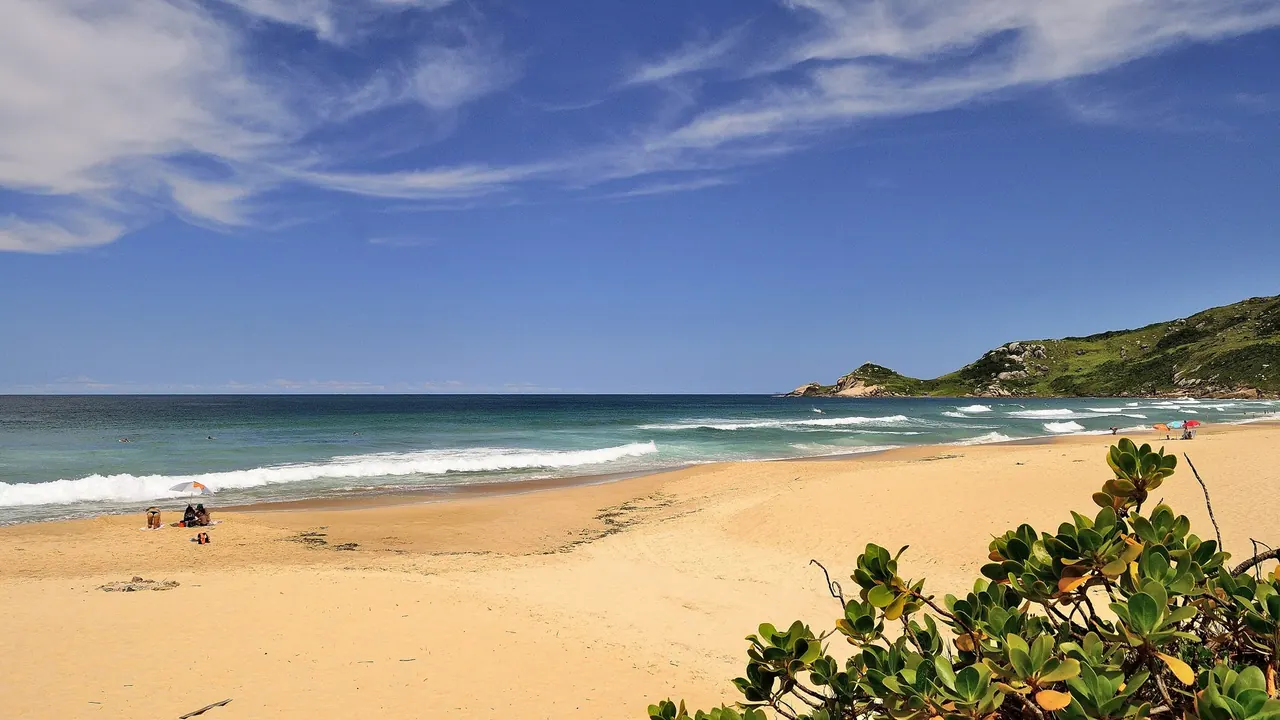
Florianopolis suits travellers who want the beach to be the whole trip and want plenty of choice in it. One island gives you sheltered bays in the north, surf on the east coast and wild coves in the south that you reach on forest trails. The sea is warmer, the oysters come straight from the bay, and outside high summer it costs far less than its Uruguayan rival. Expect to spend time in traffic, though.
Choose Punta del Este for
- shopping
- getting around
Punta del Este is for a more polished stay, where the money goes on style rather than variety. The peninsula is easy to walk, summer days are sunnier and drier, and there are seasonal designer boutiques, long winery lunches around Garzón and late Río de la Plata nights in La Barra. It makes most sense for travellers who don't mind the cost and come for the social season as much as the sea.
Scoreboard
Twelve categories on one fixed scale from 0 to 100. The shaded stretch is the gap between the two.
Your match
Pick a travel style or drag the sliders, and both match scores follow your weighting.
Wins on prices and nature and the outdoors with your weighting.
Wins on shopping and getting around with your weighting.
What matters to you?
Category by category
What the scores mean for a trip.
Beaches & swimming
Florianopolis has more beaches and more variety, because a single island gives you three kinds of coast. The northern bays around Jurere and Daniela are calm and warm, Mole, Joaquina and Campeche face open surf, and Lagoinha do Leste and Naufragados in the south can only be reached on foot or by boat. The water is also several degrees warmer at the height of summer.
Punta del Este has a simpler setup. On the peninsula you choose between still Playa Mansa and surf-pounded Playa Brava, and then wide sandy beaches run east past La Barra and Manantiales towards José Ignacio. Each beach draws its own crowd, but the sea is cool even in January.
Food & drink
Florianopolis has the stronger table, and it is built on the sea. Oysters farmed in the island's own waters are served by the water in Ribeirao da Ilha and Santo Antonio de Lisboa, and the sequencia de camarao turns lunch into a long run of shrimp dishes. Away from seafood the choice is thin.
In Punta del Este you eat Uruguayan food: beef and lamb from the parrilla, chivito sandwiches and fish from the port stalls. Its real strength is the wine country around Garzón, with Albariño and Tannat at a long winery lunch. Many of its best dining rooms close once summer ends.
Culture & sights
Neither city is a sightseeing destination, but Florianopolis gives you a little more to explore. It has colonial and Azorean heritage in the whitewashed villages along the bay, 18th-century fortresses such as Anhatomirim, and the old square around Praca XV with its cathedral and pink palace.
Punta del Este grew up as a 20th-century resort, so there is little history in its streets. What it has is art and design. Casapueblo, Carlos Páez Vilaró's white cliffside house-studio at Punta Ballena, is the one sight not to miss, best seen at sunset.
Nightlife
Both are big summer party destinations, and both go quiet in winter. In Florianopolis there are two scenes: glossy beach clubs with big-name DJs in Jurere Internacional, and a looser, younger night of bars and street drinking around Lagoa da Conceicao. The busy season runs from December through Carnival.
Punta del Este keeps Río de la Plata hours. Dinner starts late, bars fill after midnight and the clubs in La Barra keep going past sunrise, with a dressed-up, moneyed crowd. Its peak is shorter, though, from Christmas to the end of January.
Nature & outdoors
Florianopolis has far more varied outdoor life. Much of the island is protected Atlantic forest crossed by trails to remote beaches. The Lagoa da Conceicao draws kitesurfers and paddlers, sandboarders use the Joaquina dunes, and the east-coast surf is consistent.
The landscape around Punta del Este is gentler and flatter, with dunes, pine woods and quiet lagoons for birdwatching. Boats go out to the sea lions of Isla de Lobos, and the only hikes are short ones in low hills. Southern right whales visit both coasts in spring.
Day trips
The day trips are about as good in both, but they are very different. From Florianopolis you can visit the German-settled towns of Blumenau and Pomerode with their half-timbered houses and beer, the high-rises of Balneario Camboriu, or the laid-back surf towns of Garopaba and Praia do Rosa.
From Punta del Este you can reach a capital city: Montevideo, with its old town and riverside promenade, is about two hours away. Closer in are the wineries around Pueblo Garzón and old-fashioned Piriápolis.
Good for families
Either works for a simple beach vacation with children, though they are set up differently. Florianopolis has the gentle northern bays, sandboarding for older children and the Beto Carrero World theme park up the coast. The cost is long summer traffic jams between beaches.
Punta del Este has calmer days on a smaller scale. Small children can swim in the shallow Mansa side, the residential streets are green and safe, and young families stay out late with everyone else. Apart from the sea lions, there is almost nothing built for children.
Getting around
Punta del Este is a little easier to get around. The peninsula is compact enough to walk, a seaside path along the coast road suits walking and cycling, and local buses run to Maldonado and La Barra. To reach José Ignacio or the wineries you will still want a car.
Florianopolis is harder work. The island is about 50km long and has only a few narrow roads, buses run through hub terminals, and in summer the bridges slow to a crawl. The best plan is to choose a base close to the beaches you want.
Shopping & style
Florianopolis is a place to shop for what you need rather than for fun. The city malls stock Brazilian fashion and beachwear, and Jurere and Lagoa add a few surf and swimwear boutiques. The one thing really worth taking home is renda de bilro, the bobbin lace still made by hand in Santo Antonio de Lisboa and the other Azorean villages.
Punta del Este gives a shopper more to do, as long as you come in summer. That is when seasonal designer boutiques join the chains on Avenida Gorlero, and La Barra and José Ignacio fill up with linen and design pieces for second-home owners. Its local crafts come from Uruguay's ranching country, not Azorean fishing villages, so at the Plaza Artigas market you find leather, woollens and mate gourds where Florianopolis has lace. Come in winter and most of this is shut.
Affordability
Here the gap is wide. Florianopolis is pricey for Brazil but feels moderate to most foreign visitors, and once the summer peak passes it is good value. Jurere Internacional, though, is priced as a luxury enclave.
Punta del Este is expensive all round, in one of the costliest countries in the region. Hotel rooms, beach-club loungers and dinners in January are priced for its wealthy summer crowd. The shoulder months bring room rates down, but fewer places are open.
Live music & performing arts
Neither city is a place to go for performances, but Florianopolis has more on through the year. The 19th-century Teatro Alvaro de Carvalho and the Centro Integrado de Cultura stage plays and concerts, and many evenings bring samba and MPB in the bars around Lagoa.
Punta del Este packs most of its performances into a short season. The main event is a long-established international jazz festival every January on a country estate, alongside chamber concerts near José Ignacio. For the rest of the year you have to go to Montevideo.
Wellness & relaxation
Florianopolis has more on offer for a restful trip, mainly because of the hot springs at Santo Amaro da Imperatriz and Aguas Mornas, less than an hour inland. It also has yoga studios and small retreats for surfers, and the southern villages are calm outside high season.
Punta del Este has no bathing tradition, only hotel spas and studios that open in summer. Its calm comes from setting instead: pine-shaded streets and the slow lagoon country beyond José Ignacio, best in the shoulder months.
When should you go?
Pick your month. The climate figures are measured averages, not a forecast.
Florianopolis in July
Punta del Este in July
Daytime high, °C
Rainfall in the month, mm
Where the figures come from
Punta del Este's temperatures are measured 79 km from the centre, at Rocha.
Punta del Este has no rain gauge within 25 km of the centre, so its rainfall comes from a gridded climate dataset read at the city rather than from a gauge further away.
Temperature and rainfall are climate normals, averaged over the years shown. Florianopolis: 1991-2020 normals, Florianopolis (1.7 km from centre). Punta del Este: 1991-2020 normals, Rocha (78.5 km from centre).
Both cities are summer places, from December to March, but their summers feel different. Florianopolis is hotter and more humid, with highs around 30°C in January and February and a sea that reaches 26°C, which is properly warm. It is also the wettest time of year there, with about 243mm of rain in January, so expect heavy showers between sunny spells. Punta del Este is a little cooler and noticeably sunnier in the same months, with rain spread evenly through the year. Its sea peaks at about 23°C and feels brisk, especially on the Atlantic side.
Away from summer the two drift further apart. Florianopolis stays mild through winter, with highs in the low twenties that are pleasant for walking trails and villages, though the sea gets too cool for most swimmers. Punta del Este gets cool and grey from June to August, with highs near 15°C and a sea far too cold to swim in. It is a place for beach walks, not swimming, until spring warms things up again in November.
Which traveller are you?
On a trip on a tight budget, Florianopolis is much easier on the wallet. Simple seafood places, bakeries and buses are reasonable, and rooms are cheap outside summer. Punta del Este is priced for wealthy Argentines and Brazilians, and in January it gets very expensive.
For an outdoors trip, Florianopolis has much more to do. You can hike through Atlantic forest to Lagoinha do Leste, kitesurf on the Lagoa da Conceicao, sandboard the Joaquina dunes and surf the east coast. Punta del Este has gentler lagoons, sea lions and low hills instead.
On a shopping trip, Punta del Este is the better choice, at least in summer. Avenida Gorlero, seasonal designer boutiques and the linen and homeware shops of La Barra and José Ignacio offer far more than Florianopolis, which has malls, surfwear and Azorean bobbin lace.
Before you go
| Measure | Florianopolis | Punta del Este |
|---|---|---|
| Official language | Portuguese | - |
| Currency | Brazilian Real (BRL) | Peso Uruguayo (UYU) |
| Sockets | CN60 Hz | CFIL230 V, 50 Hz |
| Driving side | Right | Right |
| Time zone | UTC-3 | UTC-3 |
| Emergency number | Police 190, ambulance 192, fire 193 | 911 |
| Elevation | 3 m | 11 m |
| Main airport | Hercílio Luz International Airport (FLN)9 km from centre21 non-stop destinations | Capitan Corbeta CA Curbelo International Airport (PDP)18 km from centre6 non-stop destinations |
| Public holidays this year | 14 days | 15 days |
By the numbers
| Measure | Florianopolis | Punta del Este |
|---|---|---|
| City population | 587,486 | 9,277 |
| People per km² | 870 | 455 |
| Museums within 10 km | 11 | 5 |
| UNESCO World Heritage sites within 50 km | 0 | 0 |
| Swim season, months above 21 °C | 7 months | 3 months |
Where else could you go?
Every comparison below shares a destination with this one, so you can follow Florianopolis or Punta del Este somewhere new.