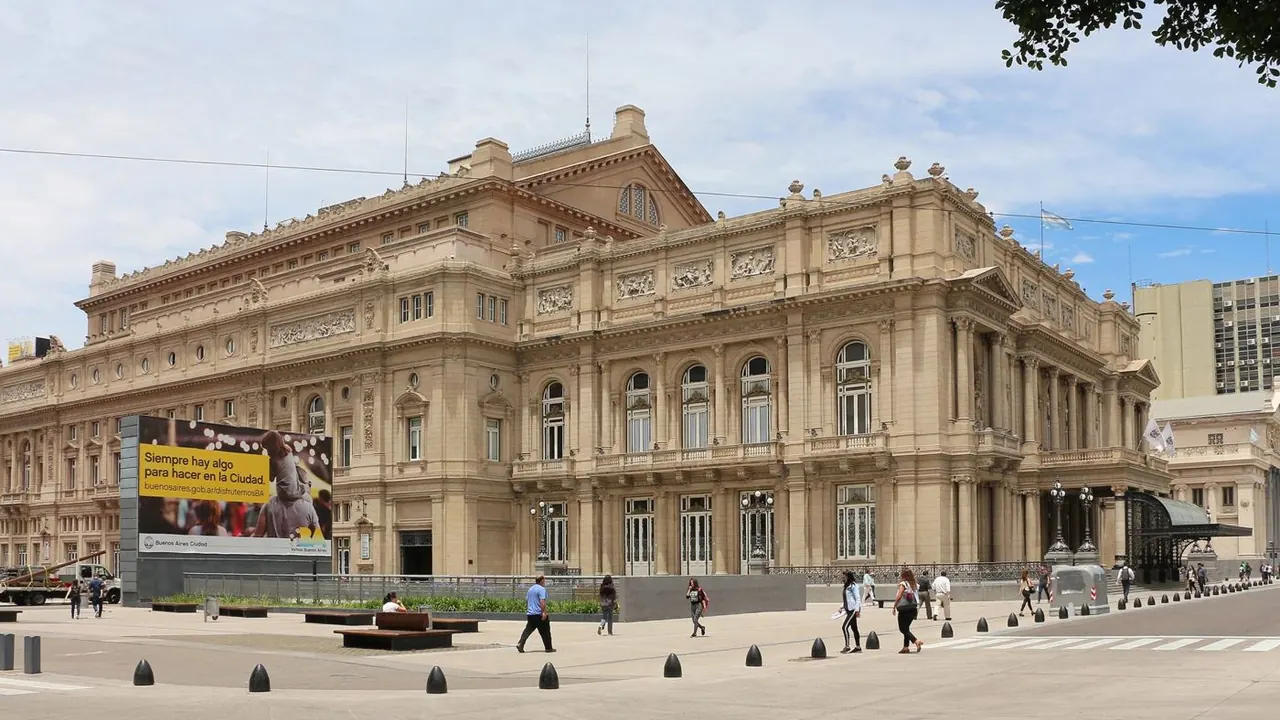
Photos: Buenos Aires by Bernard Gagnon, CC BY-SA 4.0, cropped.
Buenos Aires or Punta del Este?
Our verdict in twelve categories, each scored against the same fixed benchmark cities, and the climate month by month, so you can choose for your trip.
Choose Buenos Aires for
- live music and the arts
- culture and sights
- nightlife
Buenos Aires is the choice for a city trip built around evenings. It has grand boulevards to walk, serious museums, the Teatro Colón and the milongas, one of the great nightlife scenes on the continent and a food culture of parrillas, pizzerias and old cafés. It is also the cheaper of the two by a wide margin. What it cannot give you is a swim, because the river on its doorstep is not for bathing.
Choose Punta del Este for
- beaches
- nature and the outdoors
- wellness
Pick Punta del Este if the beach is the point. Calm water on one side of the peninsula, Atlantic surf on the other and long sands running towards José Ignacio make it a proper summer resort, with lagoons, sea lions and whales close by. It costs a good deal more, its culture fits into a day, and its restaurants and parties are at their best only in high summer.
Scoreboard
Twelve categories on one fixed scale from 0 to 100. The shaded stretch is the gap between the two.
Your match
Pick a travel style or drag the sliders, and both match scores follow your weighting.
Wins on live music and the arts and culture and sights with your weighting.
Wins on beaches and nature and the outdoors with your weighting.
What matters to you?
Category by category
What the scores mean for a trip.
Beaches & swimming
This is Punta del Este's category by a long way. The peninsula gives it two kinds of beach side by side: the sheltered, shallow Playa Mansa for easy swimming and the open-Atlantic Playa Brava for surf. Beyond them, wide sandy stretches run past La Barra and Manantiales towards José Ignacio. The water stays bracing even in summer, but it is a real beach resort.
Buenos Aires faces the brown, silty Rio de la Plata, which is not fit for swimming. The Costanera lawns are for lying in the sun, and a dip means a hotel or club pool. If you want both, the capital and Punta del Este sit across the estuary from each other and combine well in one trip.
Food & drink
Both kitchens are built on meat over fire, but Buenos Aires has much more to eat. Its parrillas sit alongside a deep Italian strand of thick-crust pizza, fresh pasta and excellent ice cream, along with choripán from street stalls, dulce de leche pastries and grand coffee houses where you can sit for hours. Palermo adds ambitious modern cooking and wine bars, and all of it runs year-round.
Punta del Este's strengths are seafood from the port, chivitos and wood-fired lamb, plus winery lunches among the Albariño and Tannat vineyards around Garzón. The best tables in La Barra and José Ignacio are seasonal, so outside summer the choice shrinks.
Culture & sights
Buenos Aires gives you days of sightseeing. Avenida de Mayo runs from the Casa Rosada to Congress, Recoleta has its cemetery and Belle Époque streets, and San Telmo and La Boca keep the older port city alive. The Bellas Artes and MALBA hold major collections of European and Latin American art.
Punta del Este is a 20th-century resort with little history. Casapueblo on the cliffs at Punta Ballena is worth the trip at sunset, and the hand sculpture and lighthouse round out an easy single day.
Nightlife
The two keep the same late hours, with dinner after ten and clubs going until sunrise. The difference is the calendar. Buenos Aires runs like this all year, with hidden cocktail bars and rooftops in Palermo, serious electronic clubs, scruffier bars in San Telmo and tango milongas that last until the small hours.
Punta del Este has a fierce but short season, from Christmas to the end of January, built around La Barra's clubs and afternoon beach-club parties. By March it has largely gone quiet, and out of season a night out means a few bars on the peninsula.
Nature & outdoors
Punta del Este has more nature on its doorstep. There are dunes, pine woods and rocky points, sea lions on Isla de Lobos, whales passing in spring, and lagoons around José Ignacio and Garzón for kayaking, kitesurfing and birdwatching. Surfers have breaks at La Barra and Manantiales, and the low hills near Piriápolis offer gentle walks, though the wind rarely lets up.
Buenos Aires sits on flat pampas. Its green space is the Bosques de Palermo and the wetland reserve at Costanera Sur, and its best escape is the boat-and-kayak maze of the Paraná Delta beyond Tigre.
Day trips
Buenos Aires has the stronger list. The ferry to Colonia del Sacramento puts a UNESCO-listed Uruguayan old town within reach for the day. Tigre and the delta, gaucho country at San Antonio de Areco, the basilica at Luján and the planned city of La Plata are all easy outings.
From Punta del Este, the main excursion is Montevideo, a couple of hours away. Closer options are Piriápolis, José Ignacio, Maldonado's colonial core and the wine village of Pueblo Garzón, but Colonia and Cabo Polonio need an overnight stay.
Good for families
The two are about even for children, in quite different ways. Buenos Aires has more to do: the lakes, pedal boats and planetarium in the Palermo parks, the Museo de los Niños for a rainy day, and Temaikèn and Tigre's amusement park further out. It also involves long distances, heavy traffic and broken pavements.
Punta del Este is the simpler beach stay, with shallow water on the Mansa side and safe, green residential streets. Beyond sea lion boat trips and the arboretum, there is little built for children.
Getting around
Buenos Aires is far easier without a car. The Subte covers the centre and Palermo, colectivo buses reach everywhere day and night on one card, and taxis are plentiful. The catch is the size of the city, since its main neighbourhoods are a long walk apart.
In Punta del Este only the peninsula is walkable, along with the seaside path on the coast road. Local buses reach Maldonado and La Barra, but anyone staying further east or heading to José Ignacio, the wineries or the beach clubs will usually hire a car or take taxis, and summer traffic slows the coast road.
Shopping & style
Buenos Aires is the better place to shop. Leather jackets, bags and shoes from the workshops of Villa Crespo are the classic buy. Palermo Soho is good for independent Argentine designers, and the Sunday antiques fair on Calle Defensa in San Telmo and the painted domes of Galerías Pacífico add character.
Punta del Este has chain stores on Avenida Gorlero, a mall, summer-only designer boutiques and linen and homeware shops in La Barra and José Ignacio, plus a craft market on Plaza Artigas. Much of it closes when the season ends.
Affordability
Buenos Aires costs far less. Public transport is very cheap, neighbourhood parrillas and wine are good value, and hotels undercut a European capital, though Palermo and Puerto Madero can charge European prices. Argentina's currency swings are worth checking before you travel.
Punta del Este is the playground of wealthy South Americans in an already expensive country, and in January rooms, dinners and beach-club loungers are priced to match. December, March and the shoulder months bring much lower rates, but fewer places are open.
Live music & performing arts
Buenos Aires has a world-class stage. The Teatro Colón holds a full season of opera, ballet and symphony, Avenida Corrientes is lined with theatres, and the independent theatre scene is huge. Tango, at its best in the neighbourhood milongas with live orchestras, is reason enough to come.
Punta del Este has a long-established January jazz festival on a country estate, summer chamber concerts around José Ignacio and casino shows, but no regular season at all.
Wellness & relaxation
Neither has a bathing tradition, and in both, wellness comes down to hotel and day spas. The difference is the pace. Buenos Aires is loud and intense, and its rest lies in the long café sit and the after-dinner sobremesa, along with very quiet Sunday mornings.
Punta del Este offers real calm outside the January crush, with pine-shaded streets, empty beaches and the slow lagoon country around José Ignacio in the shoulder months.
When should you go?
Pick your month. The climate figures are measured averages, not a forecast.
Buenos Aires in July
Punta del Este in July
Daytime high, °C
Rainfall in the month, mm
Where the figures come from
Punta del Este's temperatures are measured 79 km from the centre, at Rocha.
Punta del Este has no rain gauge within 25 km of the centre, so its rainfall comes from a gridded climate dataset read at the city rather than from a gauge further away.
Temperature and rainfall are climate normals, averaged over the years shown. Buenos Aires: 1991-2020 normals, Aeroparque Bs. As. Aerodrome (4.9 km from centre). Punta del Este: 1991-2020 normals, Rocha (78.5 km from centre).
The two share almost the same temperatures, warm in January and cool in July, but the rain falls differently. Buenos Aires is hot and often humid from December to February, with highs near 29°C and its heaviest rain, around 135mm in January, often in short, hard summer storms. Its winter is mild, about 15°C, and the driest part of the year. For long walks between neighbourhoods, March to April and October to November are the most comfortable. The river warms up in summer, but it is not water you swim in.
Punta del Este is a January and February place. That is when the sea reaches about 23°C at its warmest and the days are sunniest. Rain is spread more evenly through its year, so its summer is drier than the capital's, and the wetter spell comes in winter, at about 100mm a month from July to August. From May to October it is cool, windy and too cold in the water for most swimmers. Spring brings the whales offshore, but not yet the beach weather.
Which traveller are you?
On a beach and sun trip, Buenos Aires cannot help: its river is not for swimming, and the Atlantic coast means a separate stay of several days. Punta del Este has calm water at Playa Mansa, surf at Playa Brava and long sands beyond.
For a culture and arts trip, Buenos Aires wins clearly. Recoleta's cemetery, the Casa Rosada, the Bellas Artes and MALBA, opera and ballet at the Colón and tango in neighbourhood halls fill a week. Punta del Este has little beyond Casapueblo.
On a tight budget, Buenos Aires makes the money last. Long walks through Recoleta and San Telmo, the Sunday fair on Calle Defensa and pizza by the slice cost little. In Punta del Este, saving means cooking for yourself, or coming off-season when much is shut.
Before you go
| Measure | Buenos Aires | Punta del Este |
|---|---|---|
| Official language | Spanish | - |
| Currency | Argentine Peso (ARS) | Peso Uruguayo (UYU) |
| Sockets | CI220 V, 50 Hz | CFIL230 V, 50 Hz |
| Driving side | Left | Right |
| Time zone | UTC-3 | UTC-3 |
| Emergency number | 117 or 911 | 911 |
| Elevation | 25 m | 11 m |
| Main airport | Ezeiza International Airport - Ministro Pistarini (EZE)28 km from centre48 non-stop destinations | Capitan Corbeta CA Curbelo International Airport (PDP)18 km from centre6 non-stop destinations |
| Public holidays this year | 16 days | 15 days |
By the numbers
| Measure | Buenos Aires | Punta del Este |
|---|---|---|
| City population | 3,121,707 | 9,277 |
| People per km² | 15,355 | 455 |
| Museums within 10 km | 76 | 5 |
| UNESCO World Heritage sites within 50 km | 1 | 0 |
| Swim season, months above 21 °C | 4 months | 3 months |
Where else could you go?
Every comparison below shares a destination with this one, so you can follow Buenos Aires or Punta del Este somewhere new.