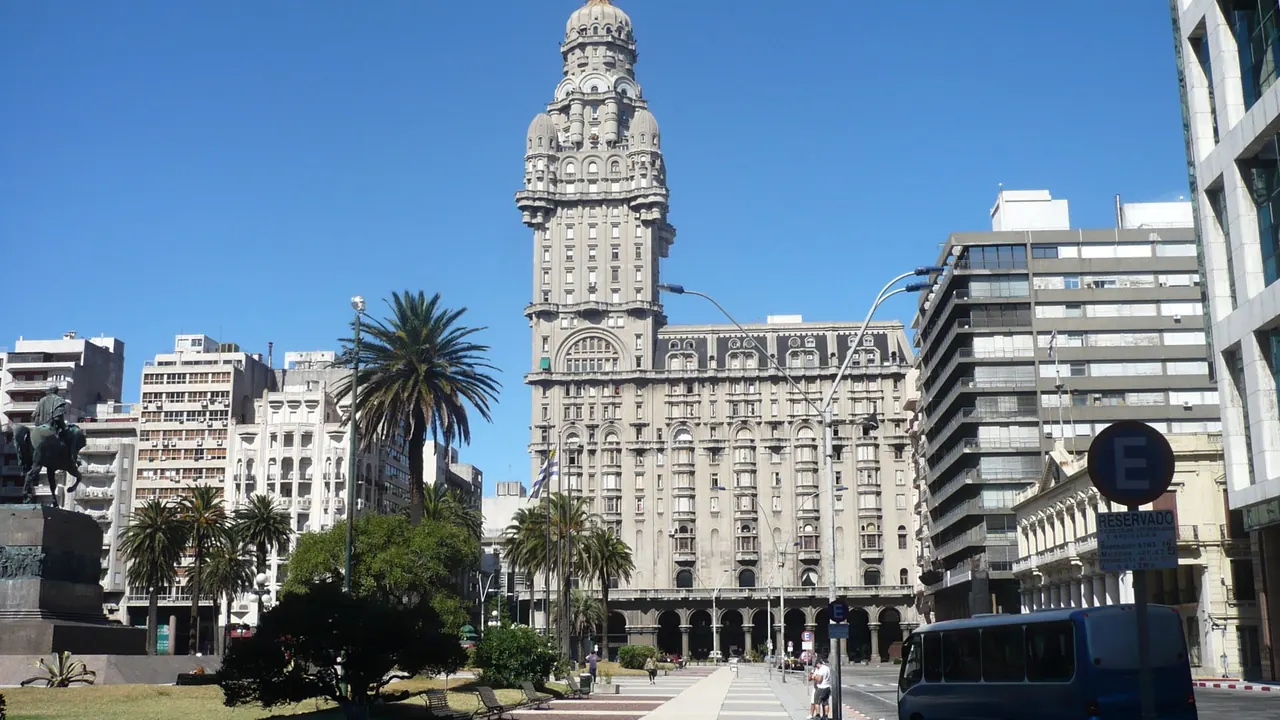
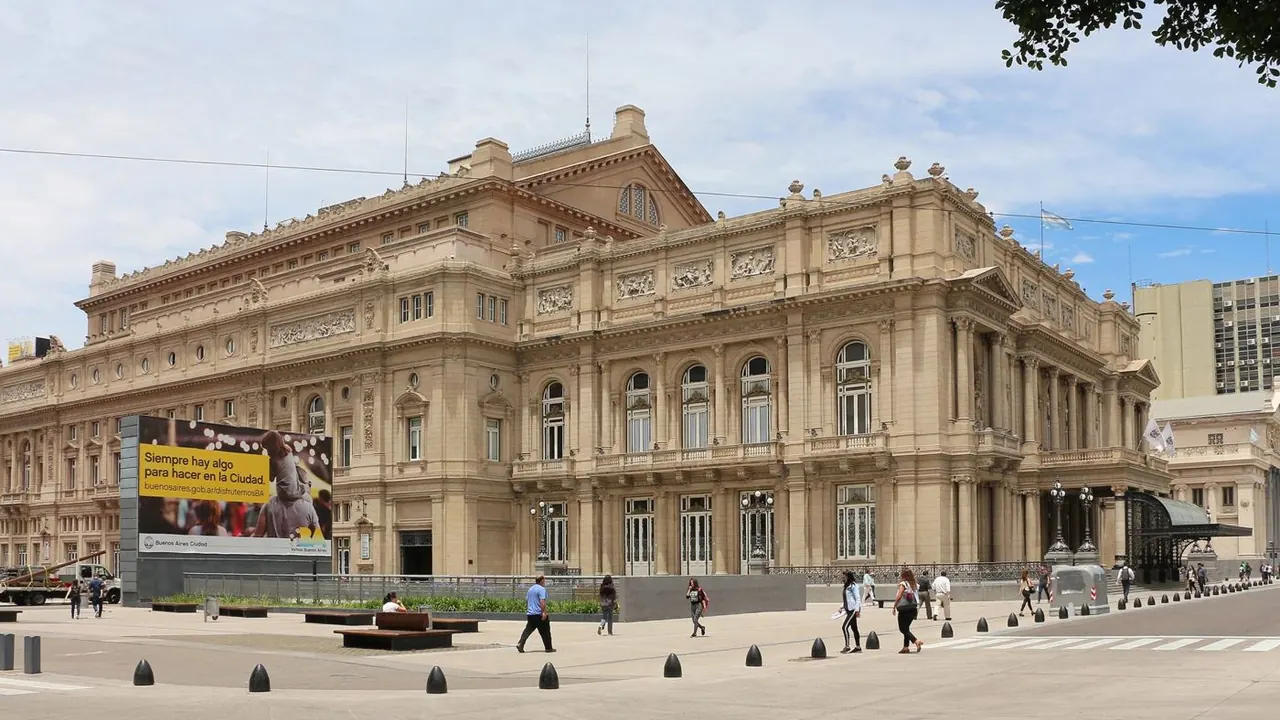
Photos: Montevideo by Andrés Franchi Ugart…, CC BY-SA 3.0, cropped; Buenos Aires by Bernard Gagnon, CC BY-SA 4.0, cropped.
Montevideo or Buenos Aires?
Our verdict in twelve categories, each scored against the same fixed benchmark cities, and the climate month by month, so you can choose for your trip.
Choose Montevideo for
- beaches
- wellness
- families
Pick Montevideo if you would rather slow down. Its sandy city beaches along the Rambla make a summer stay feel like a seaside trip. Evenings pass with mate on the waterfront, and the old town and the Teatro Solís fill two or three easy days. It suits couples and families who would choose a gentle pace over a long list of sights and late nights, as long as they accept prices closer to those of Southern Europe.
Choose Buenos Aires for
- nightlife
- shopping
- food and drink
Buenos Aires is the stronger choice if you want a big city at full stretch. You get grand boulevards and the marble streets of Recoleta by day, long dinners at the parrilla, then the Teatro Colón or a neighbourhood milonga, and nights in Palermo that end after sunrise. It also has more to buy and usually costs a little less once you are there. In return it gives you nothing to swim in and very little calm.
Scoreboard
Twelve categories on one fixed scale from 0 to 100. The shaded stretch is the gap between the two.
Your match
Pick a travel style or drag the sliders, and both match scores follow your weighting.
Wins on beaches and wellness with your weighting.
Wins on nightlife and shopping with your weighting.
What matters to you?
Category by category
What the scores mean for a trip.
Beaches & swimming
Buenos Aires faces the Río de la Plata but has no beach at all. The Costanera has grassy riverside promenades for sunbathing, but the water is too silty and polluted for swimming. To swim you need a hotel or club pool, or a separate stay on the Atlantic coast at Mar del Plata.
Montevideo is the only one of the two where a beach afternoon is part of city life. Sandy beaches run along the Rambla from Ramírez and Pocitos to the wider, quieter sands of Carrasco. The water is the same brownish estuary, though, and swimming is sometimes advised against after heavy rain.
Food & drink
Both cities put beef grilled over wood embers at the centre of the table, but Buenos Aires has more around it. There is an Italian strand of thick pizza, fresh pasta and excellent ice cream, and grand coffee houses such as Café Tortoni. Palermo has ambitious modern kitchens and wine bars, and Mendoza Malbec comes with all of it.
Montevideo's signature meal is a session at the smoking grills of the Mercado del Puerto with a glass of medio y medio, along with the chivito and Tannat from nearby wineries. It satisfies for a few days, but there is little street food and fewer kinds of kitchen to rotate through.
Culture & sights
Buenos Aires gives you more to see, and on a bigger scale. You can walk from the Casa Rosada along Avenida de Mayo to Congress and lose an hour among the mausoleums of Recoleta Cemetery. The Bellas Artes and MALBA are two serious art collections, and San Telmo and La Boca add older streets.
Montevideo's sights fit into the Ciudad Vieja and Avenida 18 de Julio. The highlights are the Palacio Salvo, the Torres García museum and the museum of the 1972 Andes crash. Two or three days cover it, and parts of the old town look neglected.
Nightlife
This is one of the widest gaps between the two. Buenos Aires has a full nightlife scene: cocktail bars behind unmarked doors and rooftop terraces in Palermo Soho and Hollywood, electronic clubs that run past dawn, scruffier bars in San Telmo, and milongas into the small hours. Even weeknights have life.
Montevideo keeps the same late hours on a smaller scale. There are friendly bars in Pocitos, Punta Carretas and the Ciudad Vieja and a student crowd in Cordón, but weeknights are quiet, and in summer much of the party crowd heads to the coast.
Nature & outdoors
Neither city has hills or wild country nearby, so the outdoors means parks and water in both. Buenos Aires has the jogging and cycling loops of the Bosques de Palermo and the wetland birdlife of the Costanera Sur reserve. About an hour north are the brown channels of the Paraná Delta, which you can explore by kayak or launch.
Montevideo's strength is the long waterfront Rambla, made for evening walks, cycling and sunsets, with kitesurfing on windy days. The low Cerro gives a view back over the bay, and gentle walks in the sierras near Minas are about an hour and a half away.
Day trips
Both cities send you to Colonia del Sacramento, but the journey differs. From Buenos Aires a fast ferry crosses the river in a little over an hour, while from Montevideo it is about two and a half hours by bus. Buenos Aires also has inland outings to Tigre and the delta, the gaucho town of San Antonio de Areco, the basilica at Luján and the planned city of La Plata.
Montevideo looks along the coast instead, to old-fashioned Piriápolis and to Punta del Este with Casapueblo nearby. The Tannat wineries of Canelones are less than an hour away.
Good for families
Late dinners with children in tow are normal on both shores, so what separates them is the kind of day out. Buenos Aires has more attractions built for children: the planetarium and pedal boats among the Palermo lakes, the Museo de los Niños in Abasto for a rainy afternoon, and the Temaikèn biopark about an hour north. Getting to them takes effort, though, because of the long distances, heavy traffic and broken pavements.
Montevideo has no major aquarium, science museum or theme park, but its days are simpler to run. Children can scoot and cycle along the Rambla, paddle in the shallow, calm water of the city beaches in summer and go on the rides at the small old-fashioned amusement park in Parque Rodó. Distances are moderate, so families spend less time in taxis.
Getting around
Buenos Aires is easier to cover because of the Subte, which links the centre with Palermo. The colectivo buses run day and night, and one card works on both. The catch is size: San Telmo, Recoleta and Palermo are each a long walk from the next, and La Boca is not on the metro.
Montevideo has no metro or tram, so you rely on buses, which are slow at busy times, or on taxis. The old town and 18 de Julio are easy on foot, and the Rambla makes walking or cycling between the coastal districts pleasant, but the city stretches a long way along the shore.
Shopping & style
Buenos Aires is the place for a proper shopping trip. You can buy leather jackets and bags around Villa Crespo, browse independent designers in Palermo Soho and visit the upmarket boutiques of Avenida Alvear and the painted domes of Galerías Pacífico. On Sundays the Defensa fair in San Telmo runs for blocks of antiques.
Montevideo's shopping is mostly crafts: knitwear, leather, silver-trimmed mate cups and gaucho knives. The Sunday Tristán Narvaja market is the one outing worth planning, and beyond that it is malls.
Affordability
Buenos Aires usually makes a budget go further. Transport is very cheap, neighbourhood parrillas and pizzerias serve generous portions, and good wine costs little. Palermo and Puerto Madero charge European prices, though, and the currency's long history of swings makes costs hard to predict.
Montevideo costs about what Southern Europe does for restaurants and hotels, and hotels in Pocitos and Punta Carretas are priced like a European capital in summer. Cheap buses, free museums and set lunch menus help, but it is not a budget city.
Live music & performing arts
Buenos Aires has the bigger stage. The Teatro Colón is one of the world's great houses for opera, ballet and symphony. The playhouses of Avenida Corrientes and a large independent theatre scene add plenty more, and tango is at its fullest in neighbourhood milongas with live orchestras.
Montevideo is smaller but has Carnaval, a tradition Buenos Aires cannot match. It lasts more than a month, with murga choral satire on neighbourhood stages and candombe drumming in Barrio Sur and the city's own Palermo district. The Teatro Solís and the SODRE carry the opera and ballet, though the programme thins outside summer.
Wellness & relaxation
In Buenos Aires you have to find the calm at the right hour. The sobremesa, the long talk at the table after a meal, can quietly fill an afternoon, and on Sunday mornings the avenues empty and fall silent. For massages there are hotel and day spas in Palermo and Recoleta, and Argentina's thermal springs are provinces away.\n\nMontevideo is the more restful stay because its calm needs no timing. Even the centre feels unpressured on an ordinary weekday, and the city asks little of you from morning to night. Treatments are again limited to upmarket hotels, and Uruguay's hot springs lie too far north for a day out.
When should you go?
Pick your month. The climate figures are measured averages, not a forecast.
Montevideo in July
Buenos Aires in July
Daytime high, °C
Rainfall in the month, mm
Temperature and rainfall are climate normals, averaged over the years shown. Montevideo: 1991-2020 normals, Carrasco (19.2 km from centre). Buenos Aires: 1991-2020 normals, Aeroparque Bs. As. Aerodrome (4.9 km from centre).
The two cities share almost the same seasons. Summer highs reach about 29°C in Buenos Aires in January and only a degree less in Montevideo. Winter highs sit around 15°C in July, which is cool but perfectly good for walking the streets. December to February is the only real beach season, and it applies to Montevideo, where the estuary warms to about 24°C and the long sunny days draw locals to the sand. Spring and autumn are mild in both cities and the most comfortable time for sightseeing on foot.
Where they differ is in the rain. Buenos Aires gets its wettest weather in summer, with about 135mm in January, and has fairly dry winters. Montevideo's rain is spread evenly across the year, so its winter is damper than the winter across the river, with around 104mm in June.
Which traveller are you?
For a food and nightlife trip, Buenos Aires wins clearly. Its parrillas, Italian-style pizza and pasta and grand old cafés give you more range than Montevideo's grills. Palermo's cocktail bars, the riverside clubs and the late milongas keep going long after Montevideo has gone quiet on a weeknight.
On a beach and sun trip, choose Montevideo. The Rambla links a string of sandy city beaches from Pocitos out to Carrasco, where summer afternoons are spent by the water. Buenos Aires has no beach, so swimmers end up in hotel pools or on the distant Atlantic coast.
For a relaxing and wellness trip, Montevideo is the gentler base. Neither city offers much beyond hotel spas, but Montevideo's slow pace, unhurried cafés and sunsets with mate on the Rambla suit unwinding far better than Buenos Aires, with its traffic, crowds and nights that run until dawn.
Before you go
| Measure | Montevideo | Buenos Aires |
|---|---|---|
| Official language | - | Spanish |
| Currency | Peso Uruguayo (UYU) | Argentine Peso (ARS) |
| Sockets | CFIL230 V, 50 Hz | CI220 V, 50 Hz |
| Driving side | Right | Left |
| Time zone | UTC-3 | UTC-3 |
| Emergency number | 911 | 117 or 911 |
| Elevation | 41 m | 25 m |
| Main airport | Carrasco General Cesáreo L. Berisso International Airport (MVD)17 km from centre15 non-stop destinations | Ezeiza International Airport - Ministro Pistarini (EZE)28 km from centre48 non-stop destinations |
| Public holidays this year | 15 days | 16 days |
By the numbers
| Measure | Montevideo | Buenos Aires |
|---|---|---|
| City population | 1,302,954 | 3,121,707 |
| People per km² | 1,785 | 15,355 |
| Museums within 10 km | 36 | 76 |
| UNESCO World Heritage sites within 50 km | 1 | 1 |
| Swim season, months above 21 °C | 4 months | 4 months |
Where else could you go?
Every comparison below shares a destination with this one, so you can follow Montevideo or Buenos Aires somewhere new.