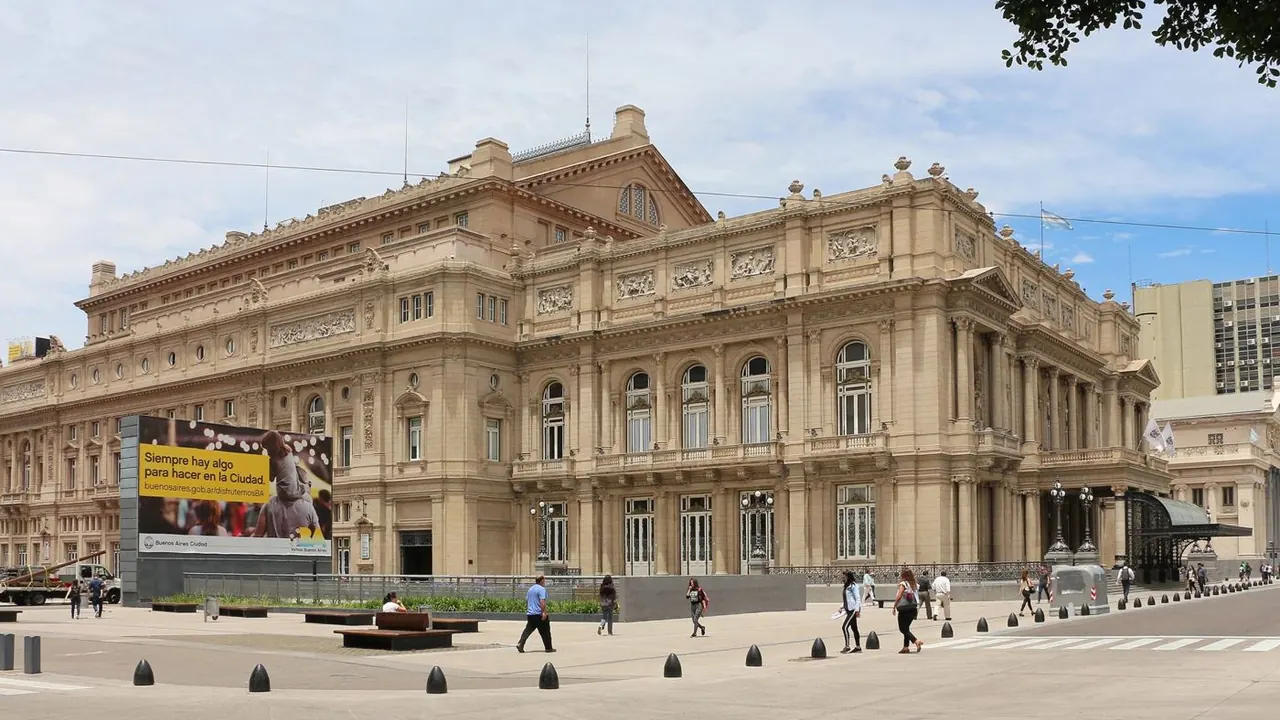
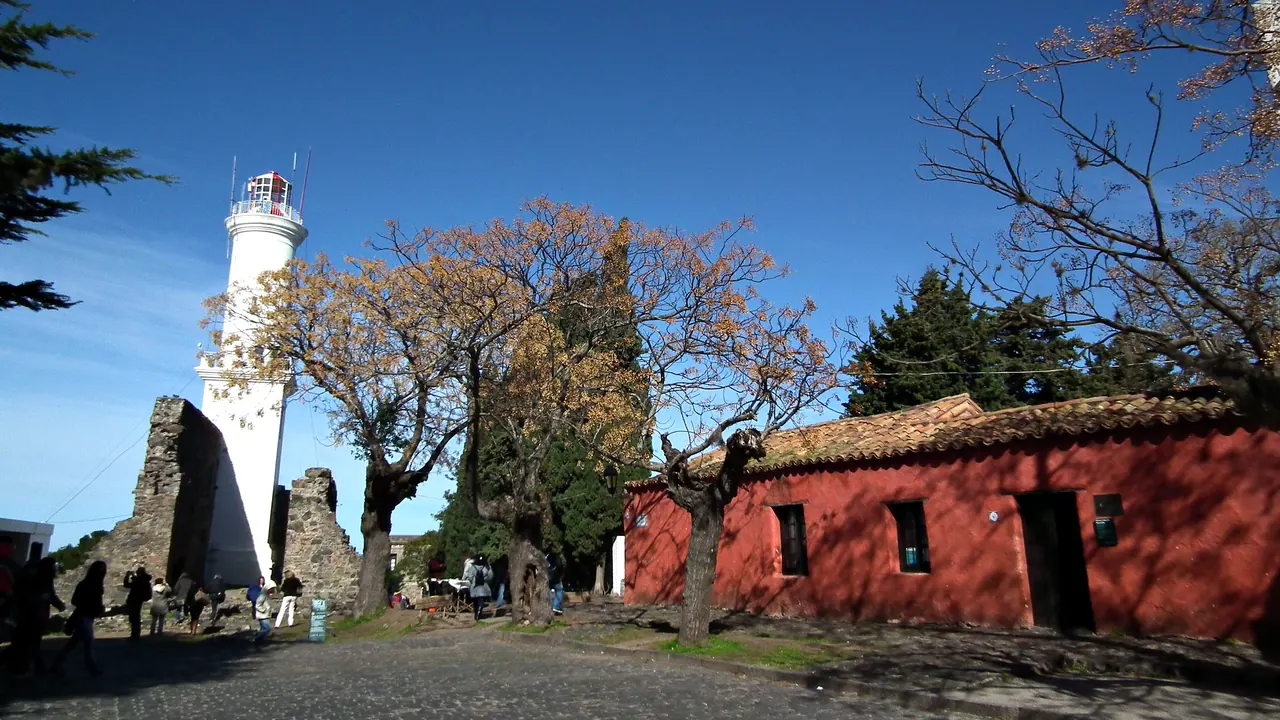
Photos: Buenos Aires by Bernard Gagnon, CC BY-SA 4.0, cropped; Colonia del Sacramento by Fulviusbsas, CC BY-SA 3.0, cropped.
Buenos Aires or Colonia del Sacramento?
Our verdict in twelve categories, each scored against the same fixed benchmark cities, and the climate month by month, so you can choose for your trip.
Choose Buenos Aires for
- nightlife
- live music and the arts
- food and drink
Buenos Aires suits the traveller who wants a big city with a lot going on. It has parrillas and old coffee houses, the Teatro Colón and the milongas, Palermo's bars running until sunrise, and whole neighbourhoods of grand boulevards to walk. Food, nightlife, performing arts and shopping are where it pulls furthest ahead, and you need several days and some stamina to get the most from it.
Choose Colonia del Sacramento for
- beaches
- wellness
Colonia del Sacramento is for a slower trip: a small Portuguese colonial town of cobbled lanes, river sunsets and quiet evenings once the day-trippers have gone. Choose it if you want to unwind, cycle the riverside and paddle off a sandy beach in summer rather than stay out late. It also works well as a gentle base with the big city an easy ferry ride away.
Scoreboard
Twelve categories on one fixed scale from 0 to 100. The shaded stretch is the gap between the two.
Your match
Pick a travel style or drag the sliders, and both match scores follow your weighting.
Wins on nightlife and live music and the arts with your weighting.
Wins on beaches and wellness with your weighting.
What matters to you?
Category by category
What the scores mean for a trip.
Beaches & swimming
Neither is a beach destination, but only Colonia lets you get in the water. Its sandy river beaches run out towards Real de San Carlos and Playa Ferrando, and families paddle there on summer afternoons, though the water is brown, there are no waves, and algae sometimes rule out swimming.
In Buenos Aires the same estuary is too polluted to swim in, so the Costanera is for lying on the grass, and cooling off means a pool or a long trip to Mar del Plata.
Food & drink
Both grill beef over wood embers, but Buenos Aires eats on another scale. On top of the parrillas it has thick Italian-style pizza, ice cream as good as Europe's, choripán from street stalls, the grand coffee houses of Avenida de Mayo such as Café Tortoni, and Palermo's more ambitious kitchens.
Colonia offers the chivito, milanesas and a dinner by the river at sunset, with local Tannat from around Carmelo as its real strength. With a few dozen restaurants, many of them geared to day-trippers, you will have eaten your way round it within a couple of days.
Culture & sights
Buenos Aires has more to see and more of it is varied: Parisian-style boulevards from the Casa Rosada to Congress, the marble mausoleums of the Recoleta Cemetery, MALBA and the Museo Nacional de Bellas Artes, plus San Telmo's tango halls and the painted houses of La Boca.
Colonia rests on one remarkable thing, its UNESCO-listed Barrio Histórico founded by the Portuguese in 1680. The cobbles of the Calle de los Suspiros, the town gate and the lighthouse view make a lovely day, but its small museums will not hold you for longer than that.
Nightlife
This is the widest gap between the two. Buenos Aires keeps going all night: bars fill at midnight, the clubs in Palermo's warehouse streets and by the river play serious electronic music until well after dawn, and San Telmo's milongas offer a night out you will not find anywhere else.
Colonia's evening is dinner, sunset and perhaps a wine bar, and the town is asleep long before Buenos Aires gets going. Anyone who wants a late night out takes the ferry back to Buenos Aires.
Nature & outdoors
Both lie on flat land beside the same wide brown river, but Buenos Aires has a bit more within reach. The Reserva Ecológica's wetlands and birdlife are a walk from Puerto Madero, and an hour north the Paraná Delta's channels and wooded islands can be explored by launch or kayak.
Colonia's best outdoors is its riverside rambla, which runs for several kilometres past beaches and small headlands and is easy to cycle at sunset. Beyond that, the countryside is just gentle pasture.
Day trips
Each city is the other's best day trip, and the ferry takes about an hour in either direction. From Buenos Aires you can also take the train to Tigre for the delta, visit the gaucho town of San Antonio de Areco, Luján's basilica or the planned city of La Plata.
From Colonia, the other options are rural and quieter: small family wineries around Carmelo, cheese in the Swiss-founded Nueva Helvecia, and the British-built village of Conchillas.
Good for families
Buenos Aires gives children more to do: pedal boats and the planetarium in the Palermo parks, the Museo de los Niños, and the Temaikèn biopark and Tigre's amusement park further out. The cost is long distances, heavy traffic, broken pavements and very late dinners.
Colonia is the reverse: safe, small and calm, with golf carts, bikes and shallow beaches to keep children happy, but no zoo or theme park, and cobbles that make pushchairs hard work. Expect a few easy days rather than a full week.
Getting around
Buenos Aires is a huge flat grid where you walk within a neighbourhood and ride between them. The Subte and the colectivo buses, both on one card, cover the long gaps between San Telmo, Recoleta and Palermo, and taxis fill in for La Boca, which the metro misses.
Colonia is small enough to need almost nothing. The ferry and bus terminals are a few minutes' walk from the tiny old town, and for the beaches and Real de San Carlos you hire a bike or golf cart along the flat riverside road. You only need a car or a tour for the wineries.
Shopping & style
Buenos Aires is a real shopping city. There is leather from the workshops of Villa Crespo, independent designers along the leafy streets of Palermo Soho, boutiques on Avenida Alvear, and the long Sunday antiques fair on Calle Defensa in San Telmo.
Colonia's craft shops sell mate gourds, silver bombillas, knitwear and ceramics, which makes for a nice browse and a souvenir, with no fashion shopping to speak of.
Affordability
Buenos Aires is the easier on the wallet. Its public transport, neighbourhood parrillas and good wine are all cheap, though Palermo and Puerto Madero charge European prices, and Argentina's currency swings can change how expensive it feels from one trip to the next.
Colonia reflects how costly Uruguay is for South America. Old-town hotels and restaurants charge about what a Southern European resort would, and weekends and summer push room rates up. Staying a few streets out and drinking local wine helps.
Live music & performing arts
For live performance, Buenos Aires is in a different class. The Teatro Colón stages opera, ballet and symphony concerts with famous acoustics, Avenida Corrientes and the large independent scene fill dozens of stages, and neighbourhood milongas have live tango orchestras late into the night.
Colonia has a small cultural centre in a riverside bastion and the odd guitarist or candombe set at dinner in summer. For a proper show, you go to Buenos Aires.
Wellness & relaxation
Neither has a bathing tradition, so the difference is pace, and Colonia wins easily. Once the day-trippers leave, the old town goes quiet for siestas, slow lunches and sunsets, and a few countryside winery stays add pools and treatments.
Buenos Aires runs loud and late. You find calm in a long sobremesa over a café table or on a silent Sunday morning, rather than in its hotel spas.
When should you go?
Pick your month. The climate figures are measured averages, not a forecast.
Buenos Aires in July
Colonia del Sacramento in July
Daytime high, °C
Rainfall in the month, mm
Temperature and rainfall are climate normals, averaged over the years shown. Buenos Aires: 1991-2020 normals, Aeroparque Bs. As. Aerodrome (4.9 km from centre). Colonia del Sacramento: 1991-2020 (sunshine 1961-1990) normals, Colonia (2.4 km from centre).
The two sit almost directly across the same river, so their climates are nearly the same. December to March is the warm season, with daytime highs of about 29°C in January. That is when Colonia's river beaches are at their best, with the water warm enough to wade in. It is also the wettest stretch, and Buenos Aires gets its heaviest rain in January at about 135mm, while in Colonia the wettest months are February and March, and March is noticeably duller there too.
For walking the streets, the most comfortable months are April and October to November, which are mild and bright in both places. June and July bring cool highs of around 15°C. They are the driest months in Buenos Aires and fine for museums, theatre and cafés, but in Colonia, where so much of the pleasure is sitting outdoors by the river, the town loses much of its appeal.
Which traveller are you?
On a food and nightlife trip, Buenos Aires is the clear choice. Late dinners at neighbourhood parrillas lead into cocktail bars in Palermo, clubs from two in the morning and tango in the milongas, while Colonia winds down quietly after a glass of Tannat at sunset.
For a relaxing and wellness trip, Colonia suits better. Its old town falls silent in the evenings, and the days settle into slow lunches, siestas and bike rides along the rambla. Buenos Aires has spas, but its traffic and all-night streets work against rest.
On a culture and arts trip, Buenos Aires gives you far more: the Teatro Colón, MALBA, the Recoleta Cemetery and Avenida Corrientes's playhouses. Colonia's UNESCO-listed old town is beautiful but compact, and best seen as a single rewarding day.
Before you go
| Measure | Buenos Aires | Colonia del Sacramento |
|---|---|---|
| Official language | Spanish | - |
| Currency | Argentine Peso (ARS) | Peso Uruguayo (UYU) |
| Sockets | CI220 V, 50 Hz | CFIL230 V, 50 Hz |
| Driving side | Left | Right |
| Time zone | UTC-3 | UTC-3 |
| Emergency number | 117 or 911 | 911 |
| Elevation | 25 m | 27 m |
| Main airport | Ezeiza International Airport - Ministro Pistarini (EZE)28 km from centre53 non-stop destinations | Carrasco General Cesáreo L. Berisso International Airport (MVD)171 km from centre15 non-stop destinations |
| Public holidays this year | 16 days | 15 days |
By the numbers
| Measure | Buenos Aires | Colonia del Sacramento |
|---|---|---|
| City population | 3,121,707 | 31,720 |
| People per km² | 15,355 | 1,385 |
| Museums within 10 km | 77 | 7 |
| UNESCO World Heritage sites within 50 km | 1 | 2 |
| Swim season, months above 21 °C | 4 months | 4 months |
Where else could you go?
Every comparison below shares a destination with this one, so you can follow Buenos Aires or Colonia del Sacramento somewhere new.
- Montevideovs Colonia del Sacramento
- Montevideovs Buenos Aires
- Punta del Estevs Colonia del Sacramento
- Punta del Estevs Buenos Aires
- Mendozavs Buenos Aires
- Puerto Iguazuvs Buenos Aires