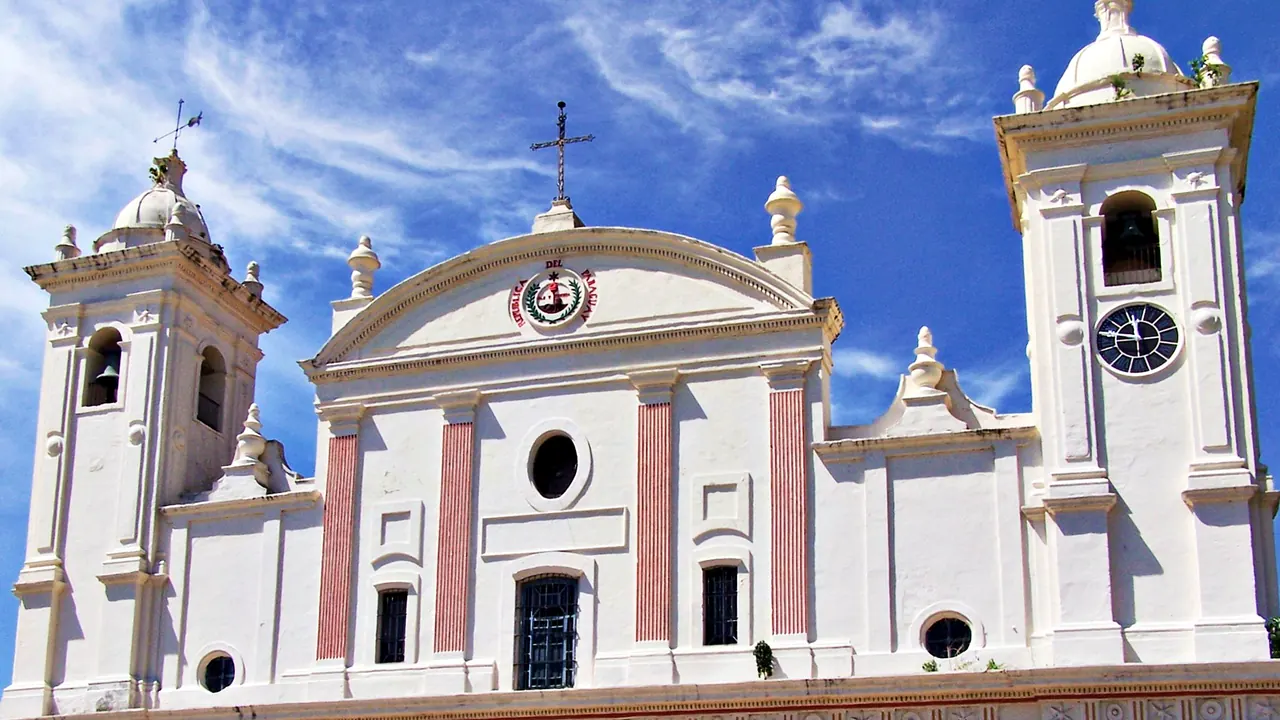
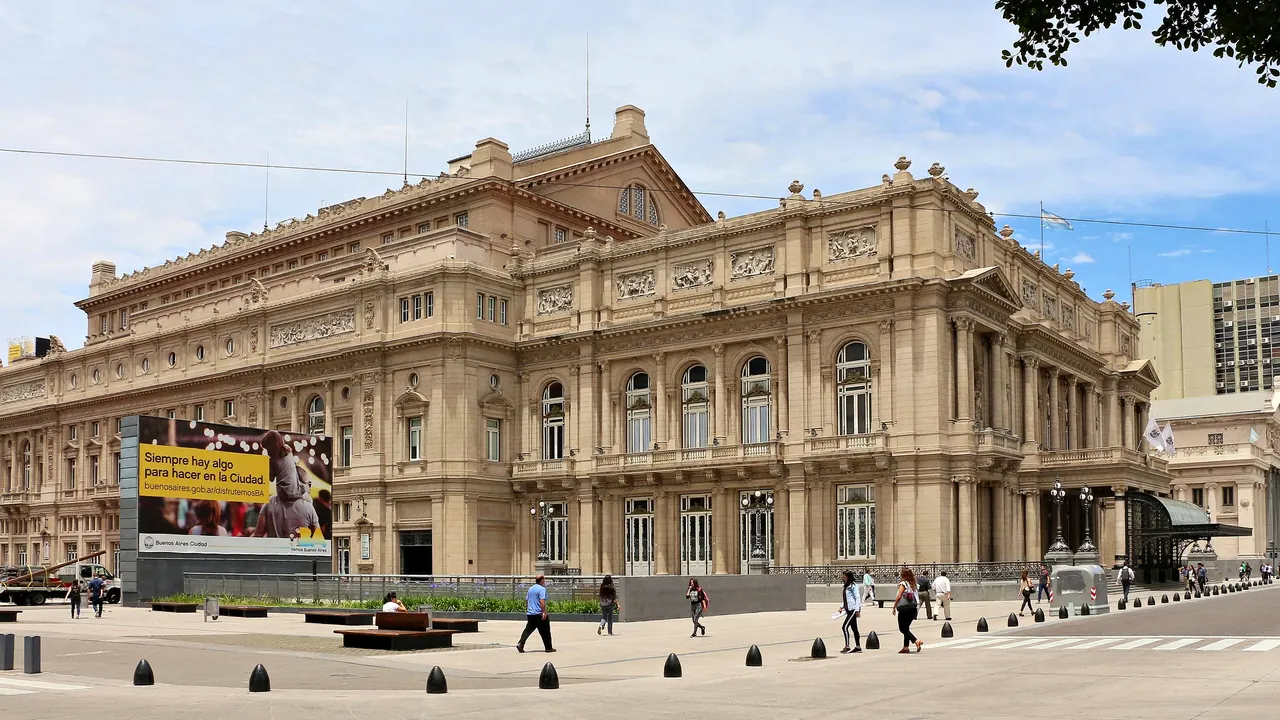
Photos: Asunción by Tom D'Arby, Pexels License; Buenos Aires by Bernard Gagnon, CC BY-SA 4.0, cropped.
Asunción or Buenos Aires?
Our verdict in twelve categories, each scored against the same fixed benchmark cities, and the climate month by month, so you can choose for your trip.
Choose Asunción for
- prices
- beaches
Asunción suits a traveller who wants an inexpensive, unhurried look at a capital few visitors reach. You get two days of riverside palaces and the Museo del Barro, an evening of harp music, and a drive round the craft towns of the Circuito Central. It works best as a stop on a wider journey through Paraguay or the region, and your money goes much further there.
Choose Buenos Aires for
- nightlife
- live music and the arts
- getting around
Buenos Aires is the better pick for anyone who wants a big city that can fill a week. It has grand boulevards and Recoleta, opera at the Teatro Colón, tango in the milongas, parrillas, and nights that end at dawn. It costs more and its neighbourhoods are far apart, but there is far more to do. Getting around is easier, and a ferry to Colonia makes a fine day out.
Scoreboard
Twelve categories on one fixed scale from 0 to 100. The shaded stretch is the gap between the two.
Your match
Pick a travel style or drag the sliders, and both match scores follow your weighting.
Wins on prices and beaches with your weighting.
Wins on nightlife and live music and the arts with your weighting.
What matters to you?
Category by category
What the scores mean for a trip.
Beaches & swimming
Neither city is a place to swim. Asunción's Costanera has a sandy stretch on the bay that is good for sitting in the evening. Lake Ypacaraí at San Bernardino is only an hour away, though algae often makes its water unwise.
Buenos Aires has only riverside grass for sunbathing beside the silty Rio de la Plata. Its real beaches are on the Atlantic, at resorts such as Mar del Plata, and need a separate stay of several days. In both cities a hotel pool is the realistic way to cool off.
Food & drink
Grilled beef matters in both cities, but Buenos Aires does far more around it. It has neighbourhood parrillas with Malbec, an Italian layer of thick pizza, fresh pasta and ice cream, and grand coffee houses where nobody hurries you. Palermo adds the most ambitious modern kitchens and wine bars.
Asunción's cooking is plainer but entirely its own, built on corn, cassava and cheese. You find warm chipa on street corners, sopa paraguaya and bori bori, with tereré passed round everywhere. Outside Villa Morra and Las Carmelitas the choice thins, so it rewards curiosity more than appetite.
Culture & sights
Asunción's sights fit into two days. There is the white Palacio de López by the river, the domed Panteón Nacional de los Héroes and the small Casa de la Independencia. The Museo del Barro is the place to see Chaco Indigenous art and folk ceramics. Little of the city's 16th-century colonial fabric survives.
Buenos Aires has enough for a week of walking. Avenida de Mayo runs from the Casa Rosada to the Congress, and there are the marble mausoleums of Recoleta Cemetery and the old streets of San Telmo. Its museums go deeper too, with European and Argentine art at Bellas Artes and Latin American modern work at MALBA.
Nightlife
Both cities go out late and dress smartly, but on a very different scale. In Asunción, going out is confined to Las Carmelitas and Villa Morra, mostly from Thursday to Saturday. Its beer gardens and boliches are friendly and easy to join, but there are few of them.
Buenos Aires is one of the great late-night cities and stays lively even on weeknights. Palermo Soho and Hollywood have cocktail bars behind unmarked doors and rooftop terraces, and the warehouse clubs take electronic music seriously. The milongas, where locals dance tango until the small hours, offer a night out Asunción cannot match.
Nature & outdoors
Both sit in flat country on a big river, but Buenos Aires has more within easy reach. The Bosques de Palermo have long running and cycling loops, and the Costanera Sur wetland is full of birdlife beside Puerto Madero. Beyond Tigre, the channels of the Paraná Delta can be explored by launch or kayak.
Asunción's outdoors is smaller. It offers the Jardín Botánico, the view from Cerro Lambaré across to the Chaco, and slow boat trips on the river. Ybycuí National Park, two hours south, has forest trails and waterfalls, but summer heat limits outdoor time to early mornings.
Day trips
Buenos Aires has the stronger day out in Colonia del Sacramento, a cobbled UNESCO old town in Uruguay reached by fast ferry. Closer in are Tigre by train, the gaucho town of San Antonio de Areco and the great basilica at Luján.
Asunción's Circuito Central is gentler and centres on crafts. You can watch lace being made in Itauguá, browse pottery in Areguá and see the painted Franciscan church at Yaguarón. The towns are small and easiest with a driver, and the Jesuit missions are too far for a day.
Good for families
Families are welcome at dinner late into the evening in both cities, but Buenos Aires has much more for children to do. The Palermo parks have pedal boats, playgrounds and the planetarium, and there is a children's museum in the Abasto area. The Temaikèn biopark and Tigre's amusement park are about an hour out.
Asunción has little beyond a dated zoo in the Jardín Botánico, the Costanera and the air-conditioned malls. Its heat and broken pavements make sightseeing hard on small children, so it works better as a short stop with a hotel pool.
Getting around
Buenos Aires is much easier to get around without a car. The Subte covers the centre and Palermo, and buses run day and night on the same card. The flat grid makes each neighbourhood pleasant on foot, though the neighbourhoods are a long way from each other.
Asunción has no metro, and its buses are hard for a visitor to work out. The compact centre can be walked but has little shade. Most people take a taxi or ride-hailing car out to Villa Morra and Las Carmelitas, and hire a driver for the towns beyond.
Shopping & style
Buenos Aires has far more to browse. You will find leather workshops in Villa Crespo, independent designers in Palermo Soho, expensive boutiques on Avenida Alvear and the long Sunday antiques fair along Calle Defensa in San Telmo.
Asunción is narrower, but it has crafts you will not find in Buenos Aires: ñandutí lace from Itauguá, embroidered ao po'i cloth and Paraguayan harps. It also has the crowded working market of Mercado 4 and modern malls in the east.
Affordability
Asunción is the cheaper city by a wide margin. Comfortable hotels, taxis and steak dinners cost little, and most sights are free or nearly so. Only hired drivers and international chains add up.
Buenos Aires sits in the middle. Transport, parrillas and wine are good value, but Palermo, Recoleta and Puerto Madero charge much as a European city would. The swings of Argentina's currency also make costs hard to predict before you go.
Live music & performing arts
Buenos Aires is one of the continent's great stages. It has opera and ballet at the Teatro Colón, the playhouses of Avenida Corrientes and a huge independent theatre scene. Tango is danced to live orchestras in neighbourhood milongas.
Asunción's scene is modest and poorly publicised, but it has a sound of its own. The Paraguayan harp, the slow guarania and the polka paraguaya can be heard at peñas and dinner shows. The national orchestra plays at the restored Teatro Municipal.
Wellness & relaxation
Neither city has a bathing tradition, and both rely on hotel spas and day spas. Buenos Aires has more of these in Palermo and Recoleta. Its days are loud, but cafés let you linger and the long sobremesa after a meal can fill an afternoon.
Asunción is slower by nature, with afternoons that stop in the heat and tereré shared in the shade. Beyond a good hotel pool, though, it has even less to build a relaxing trip around.
When should you go?
Pick your month. The climate figures are measured averages, not a forecast.
Asunción in July
Buenos Aires in July
Daytime high, °C
Rainfall in the month, mm
Temperature and rainfall are climate normals, averaged over the years shown. Asunción: 1991-2020 normals, Asuncion / Aeropuerto (1.5 km from centre). Buenos Aires: 1991-2020 normals, Aeroparque Bs. As. Aerodrome (4.9 km from centre).
Asunción is hot for much of the year. Daytime highs sit around 33°C from December to February, and heavy rain arrives in late spring, peaking near 193mm in November. Its best months are May to September. Afternoons then settle at about 25°C, July and August are the driest stretch, and walking the centre or touring the Circuito Central becomes comfortable.
Buenos Aires is cooler all year. Its summer is warm and sunny rather than fierce, while July drops to about 15°C, so you will want a coat in the evenings. The river reaches 25°C in January, but the estuary is not for swimming. For long walks the mild months are best, March to April and October to November, when highs sit in the low twenties. Neither city has a beach season worth planning around.
Which traveller are you?
On a trip on a tight budget, Asunción makes your money go much further. Hotels, taxis, market lunches and steak dinners cost little, and most sights are free. Buenos Aires charges close to European prices in its smarter districts, and its currency makes costs hard to predict.
For a food and nightlife trip, Buenos Aires is the clear choice. Parrillas, fresh pasta and grand old cafés fill the day. At night, Palermo's cocktail bars, the warehouse clubs and San Telmo's milongas run until dawn, even on weeknights, far beyond Asunción's small weekend scene.
On a culture and arts trip, Buenos Aires has far more to offer. There are Recoleta's boulevards and cemetery, MALBA and Bellas Artes, opera at the Teatro Colón and theatre on Avenida Corrientes. Asunción's palaces, museum and modest stages are pleasant but can be covered in two days.
Before you go
| Measure | Asunción | Buenos Aires |
|---|---|---|
| Official language | Spanish, Guarani | Spanish |
| Currency | Guarani (PYG) | Argentine Peso (ARS) |
| Sockets | C220 V, 50 Hz | CI220 V, 50 Hz |
| Driving side | Right | Left |
| Time zone | UTC-3 | UTC-3 |
| Emergency number | 911 | 117 or 911 |
| Elevation | 43 m | 25 m |
| Main airport | Silvio Pettirossi International Airport (ASU)12 km from centre14 non-stop destinations | Ezeiza International Airport - Ministro Pistarini (EZE)28 km from centre55 non-stop destinations |
| Public holidays this year | 12 days | 16 days |
By the numbers
| Measure | Asunción | Buenos Aires |
|---|---|---|
| Population | 462,241 | 3,121,707 |
| People per km² | 3,951 | 15,355 |
| Museums within 10 km | 5 | 77 |
| UNESCO World Heritage sites within 50 km | 0 | 1 |
| Swim season, months above 21 °C | - | 4 months |
Where else could you go?
Every comparison below shares a destination with this one, so you can follow Asunción or Buenos Aires somewhere new.
- Colonia del Sacramentovs Buenos Aires
- Montevideovs Buenos Aires
- Encarnaciónvs Asunción
- Ciudad del Estevs Asunción
- Foz do Iguacuvs Asunción
- Puerto Iguazuvs Asunción