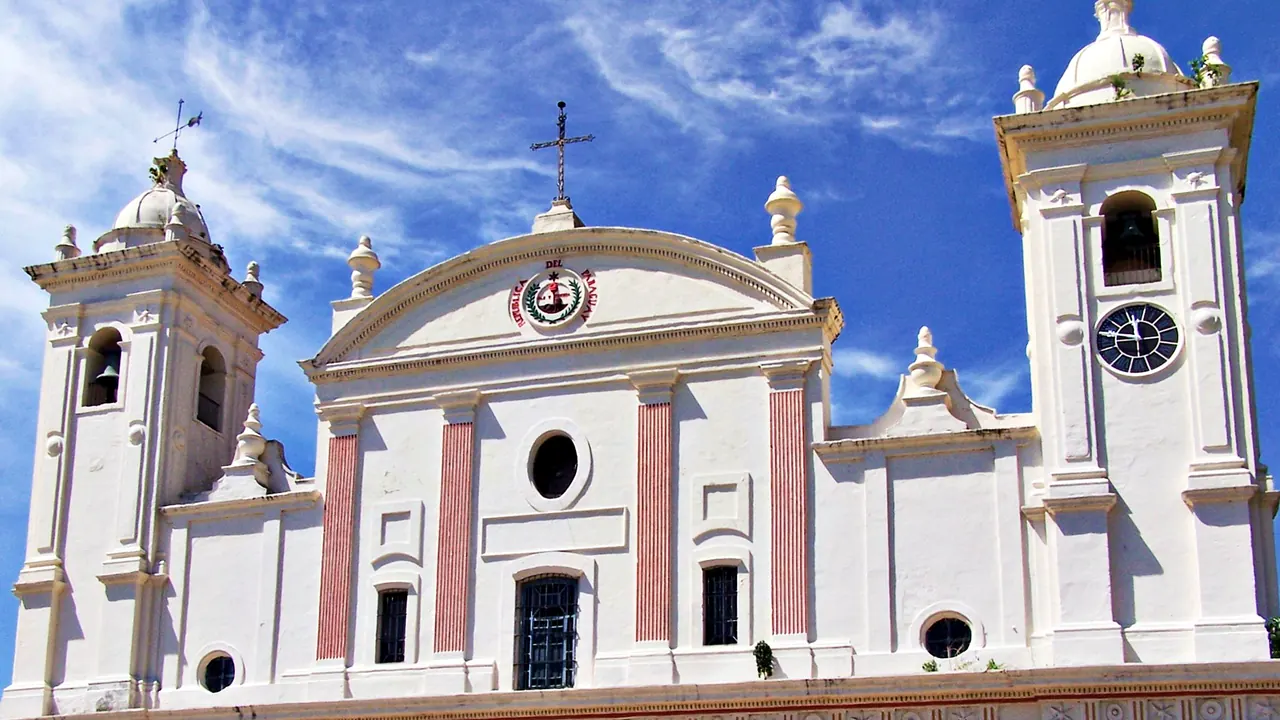
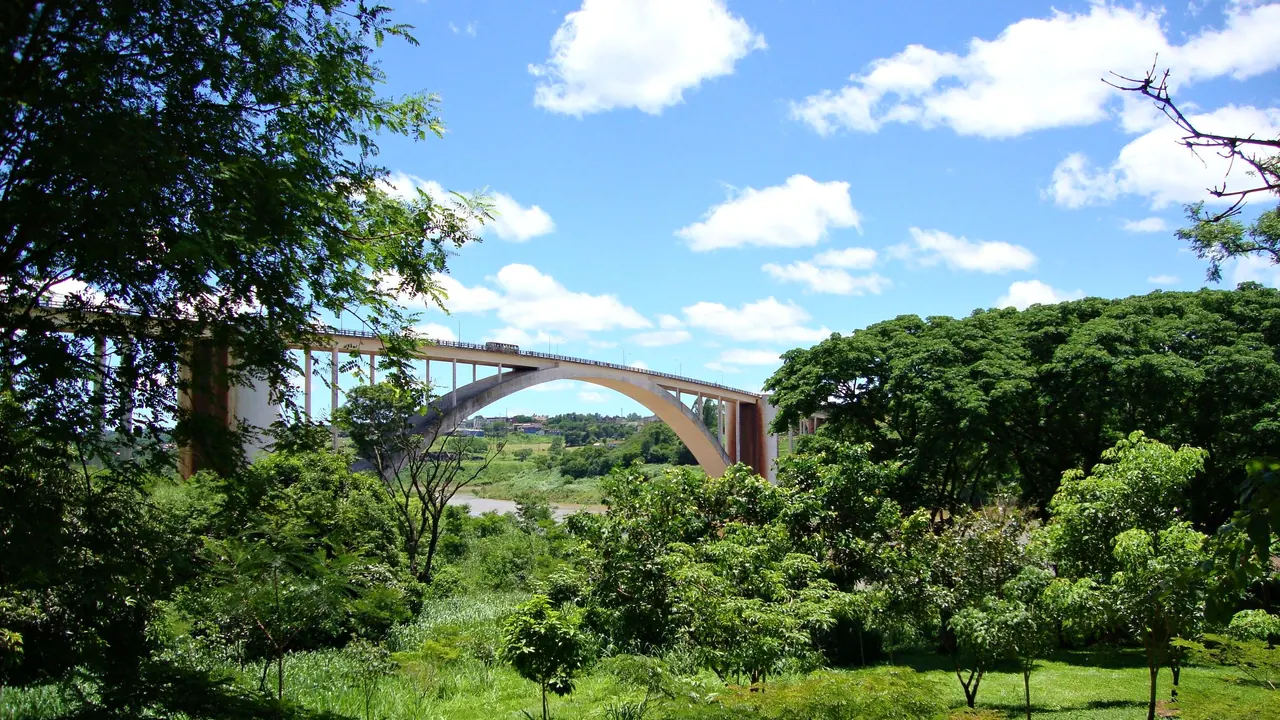
Photos: Asunción by Tom D'Arby, Pexels License; Ciudad del Este by Liam King, CC BY 2.0, cropped.
Asunción or Ciudad del Este?
Our verdict in twelve categories, each scored against the same fixed benchmark cities, and the climate month by month, so you can choose for your trip.
Choose Asunción for
- culture and sights
- live music and the arts
- nightlife
Asunción suits the traveller who wants to understand Paraguay itself. It has the country's historic centre, with the Palacio de López, the Panteón de los Héroes and the Casa de la Independencia. The Museo del Barro is the best museum in either city, the dinner shows bring harp music, and Villa Morra and Las Carmelitas have proper restaurants and weekend nightlife. The Circuito Central of craft and church towns lies just outside the city. Two or three unhurried days here give you more of the country's history and daily life than Ciudad del Este can.
Choose Ciudad del Este for
- nature and the outdoors
- shopping
- families
Ciudad del Este is a base for the Iguazú Falls. The falls lie across the Friendship Bridge, and the Itaipu dam and the Saltos del Monday are close by. The city also suits buyers who come for duty-free electronics and perfume in the microcentro. There is little to see in town and the streets go quiet at dusk, but anyone whose trip is built around waterfalls, forest and the three-country border will be better placed here.
Scoreboard
Twelve categories on one fixed scale from 0 to 100. The shaded stretch is the gap between the two.
Your match
Pick a travel style or drag the sliders, and both match scores follow your weighting.
Too close to call, level with your weighting
Wins on culture and sights and live music and the arts with your weighting.
Wins on nature and the outdoors and shopping with your weighting.
What matters to you?
Category by category
What the scores mean for a trip.
Beaches & swimming
Neither city is a beach destination, and both leave most visitors cooling off in a hotel pool. The difference is the kind of water nearby. Asunción's Costanera has a sandy bay for evening strolls but no swimming, and its weekend escape, Lake Ypacaraí at San Bernardino, often has algae blooms. Ciudad del Este has simple sandy banks on the Paraná and the Itaipu reservoir, where local families do bathe on hot weekends.
Food & drink
Asunción eats better. Mercado 4 has cheap lunch counters selling chipa, mbejú and bori bori. In Villa Morra and Las Carmelitas you can have a fine steak dinner or try modern Paraguayan cooking, which you will not find in Ciudad del Este.
Ciudad del Este has the same staples, but most of what it serves is quick lunches for shoppers. What sets it apart is the border mix: Lebanese shawarma and Arab bakeries, Cantonese and Taiwanese kitchens, and Brazilian buffets where you pay by weight. That variety is interesting, but there is little here for an evening out over dinner.
Culture & sights
Asunción has a real historic core. It was founded in 1537 and keeps the Palacio de López on the river, the domed Panteón Nacional de los Héroes, and the small colonial house where the break from Spain was planned. The Museo del Barro, with its Chaco Indigenous art and folk ceramics, is worth a morning on its own.
Ciudad del Este began in 1957 as a frontier trading post and has almost nothing to visit. Its main sights are the concrete-roofed Cathedral of San Blas and the lakeside promenade. Its real interest is the border market itself, where several nationalities trade side by side.
Nightlife
Asunción is the better night out. From Thursday to Saturday, the beer gardens, cocktail terraces and boliches of Las Carmelitas and Villa Morra stay busy until close to dawn. The crowd is young, local and smartly dressed, and newcomers are easily welcomed.
Ciudad del Este goes to sleep when the shops shut. The microcentro is best avoided on foot after dark, and going out means a few bars and clubs in the residential districts, plus the casino. Some overnight visitors simply cross the bridge to the Brazilian side for their evening.
Nature & outdoors
This is where Ciudad del Este pulls far ahead. The Iguazú Falls are close by: hundreds of cascades seen from Brazilian catwalks and from Argentine walkways that lead to the Devil's Throat, set in protected Atlantic forest. The Saltos del Monday just south of town and the forest reserves around Itaipu give you more to see besides.
Asunción's outdoors are quieter and smaller. Sunset on the Costanera, the view from Cerro Lambaré over the Chaco, and a boat trip on the slow, reed-lined river are pleasant rather than memorable. The waterfalls of Ybycuí National Park are a two-hour drive away.
Day trips
Both cities have a similar range of outings, but of very different kinds. From Asunción, the Circuito Central is a loop of small Paraguayan towns. Areguá has pottery, Itauguá its spiderweb lace, Yaguarón a painted Franciscan church, and Caacupé the national basilica.
From Ciudad del Este, the short trips cross borders and show off engineering. You can tour the vast Itaipu dam, see the Three Frontiers landmark in Foz do Iguaçu, or visit relaxed Puerto Iguazú in Argentina. From either city, the Jesuit missions at Trinidad are too far to manage comfortably in a day.
Good for families
Neither city is easy with young children, and in both a hotel pool and a driver make life simpler. What differs is what lies outside town. Near Ciudad del Este, children get the falls, with coatis on the paths and soaking boat rides, as well as walk-through aviaries at the bird park. In town, though, the shopping streets are loud and impossible with a pushchair.
Asunción's centre is calmer, and families are welcome at restaurants late into the evening. However, the only attractions built for children are a dated zoo, the riverfront and air-conditioned malls.
Getting around
Both cities rely on taxis and ride-hailing, because the buses are hard for visitors to use. In Asunción the trouble is distance. The walkable old centre is a few kilometres from the hotels and restaurants in the east, but that taxi ride is quick and cheap.
Ciudad del Este has a different problem: the border. Trips to the falls or Foz do Iguaçu mean passport controls and frequent queues on the Friendship Bridge. Walking in the market district means pushing through crowds, motorbikes and pickpockets.
Shopping & style
Ciudad del Este is the shopping city, but only for one kind of shopping. Its microcentro packs multi-storey stores and stalls with duty-free electronics, cameras, perfume and spirits. Low import duties bring in buyers from Brazil and Argentina, and anyone who checks warranties and spots fakes can save on a specific gadget.
Asunción is the place for Paraguayan things. You can find ñandutí lace, ao po'i shirts, harps, leather and tereré gourds, with the craft towns of Itauguá and Areguá close by. Mercado 4 is a genuine working market. Neither city has fashion boutiques or design streets.
Affordability
Both are very cheap places to stay, with low hotel prices, street chipa that costs almost nothing and generous grilled-meat lunches. The extra costs come from different places. In Asunción, most museums and sights cost little or nothing, and you mainly pay extra for imported goods or a driver for the countryside loop.
In Ciudad del Este, the city itself is cheap, but the region is not. Park entry at the falls is charged on the Brazilian and Argentine sides, and taxis or drivers for every outing take a large share of the budget.
Live music & performing arts
Asunción has a small but real stage scene. The restored Teatro Municipal Ignacio A. Pane is home to the national symphony orchestra and ballet, and peñas and dinner shows put on Paraguayan harp, guarania and polka. Listings are mostly in Spanish and poorly publicised, so ask around when you arrive.
Ciudad del Este has no orchestral season or theatre to speak of. The harp and polka you hear in its restaurants are pleasant, but you cannot plan an evening around them.
Wellness & relaxation
Asunción is the more restful of the two, and that comes from its pace rather than any facilities. Afternoons slow down in the heat, people pass round tereré in the shade, and the evening walk on the Costanera is unhurried. For treatments, you are limited to a hotel spa or one of a few day spas in the eastern districts.
Ciudad del Este runs on traffic and trade, and its one calm spot is the lakeside promenade at dusk. Beyond that there are hotel pools and not much else. Travellers who want rest near the falls usually book a forest resort over the border.
When should you go?
Pick your month. The climate figures are measured averages, not a forecast.
Asunción in July
Ciudad del Este in July
Daytime high, °C
Rainfall in the month, mm
Where the figures come from
Ciudad del Este's sunshine is measured 28 km from the centre, at Iguazu Aerodrome.
Temperature and rainfall are climate normals, averaged over the years shown. Asunción: 1991-2020 normals, Asuncion / Aeropuerto (1.5 km from centre). Ciudad del Este: 1992-2020 (sunshine 1991-2020, rainfall 1991-2020) normals, Foz Do Iguacu Aeroporto (3.4 km from centre).
The two cities have the same hot summer. From December to February highs sit around 33°C, so walking the streets is hard work by midday. The comfortable stretch is May to August, when afternoons ease to about 25°C, and Ciudad del Este is a touch cooler still in June and July. Asunción has the drier and sunnier winter, with only about 40mm of rain in August. Its wettest months come in late spring, in November and December.
Ciudad del Este is wetter over the year as a whole and gets less sunshine in every month. Its rain peaks in October at about 227mm, and its winter is damper than Asunción's, with a wet May as well. Winter is still the easier season for the forest walkways at the falls. To see the cascades at full power, go after the heavy rains and put up with the heat.
Which traveller are you?
For an outdoors trip, Asunción has little beyond river walks and the view from Cerro Lambaré. Ciudad del Este is far better placed, with the Iguazú Falls across the bridge, boat rides into the spray and Atlantic forest full of toucans and coatis.
On a culture and arts trip, Asunción wins easily. It has its grand 19th-century centre, the Museo del Barro, symphony and ballet at the Teatro Municipal and harp music at the peñas. Ciudad del Este, a young frontier town, has almost no heritage.
For a shopping trip, Asunción suits anyone after ñandutí lace, ao po'i embroidery, harps and craft-town pottery. Ciudad del Este is the bigger draw, though. Its microcentro is a vast duty-free market for electronics and perfume, as long as you watch for fakes.
Before you go
| Measure | Asunción | Ciudad del Este |
|---|---|---|
| Official language | Spanish, Guarani | Spanish, Guarani |
| Currency | Guarani (PYG) | Guarani (PYG) |
| Sockets | C220 V, 50 Hz | C220 V, 50 Hz |
| Driving side | Right | Right |
| Time zone | UTC-3 | UTC-3 |
| Emergency number | 911 | 911 |
| Elevation | 43 m | 185 m |
| Main airport | Silvio Pettirossi International Airport (ASU)12 km from centre14 non-stop destinations | Guaraní International Airport (AGT)24 km from centre |
| Public holidays this year | 12 days | 12 days |
By the numbers
| Measure | Asunción | Ciudad del Este |
|---|---|---|
| Population | 462,241 | 350,000 |
| People per km² | 3,951 | 2,349 |
| Museums within 10 km | 5 | 1 |
| UNESCO World Heritage sites within 50 km | 0 | 1 |
Where else could you go?
Every comparison below shares a destination with this one, so you can follow Asunción or Ciudad del Este somewhere new.
- Foz do Iguacuvs Ciudad del Este
- Puerto Iguazuvs Ciudad del Este
- Encarnaciónvs Ciudad del Este
- Encarnaciónvs Asunción
- Foz do Iguacuvs Asunción
- Puerto Iguazuvs Asunción