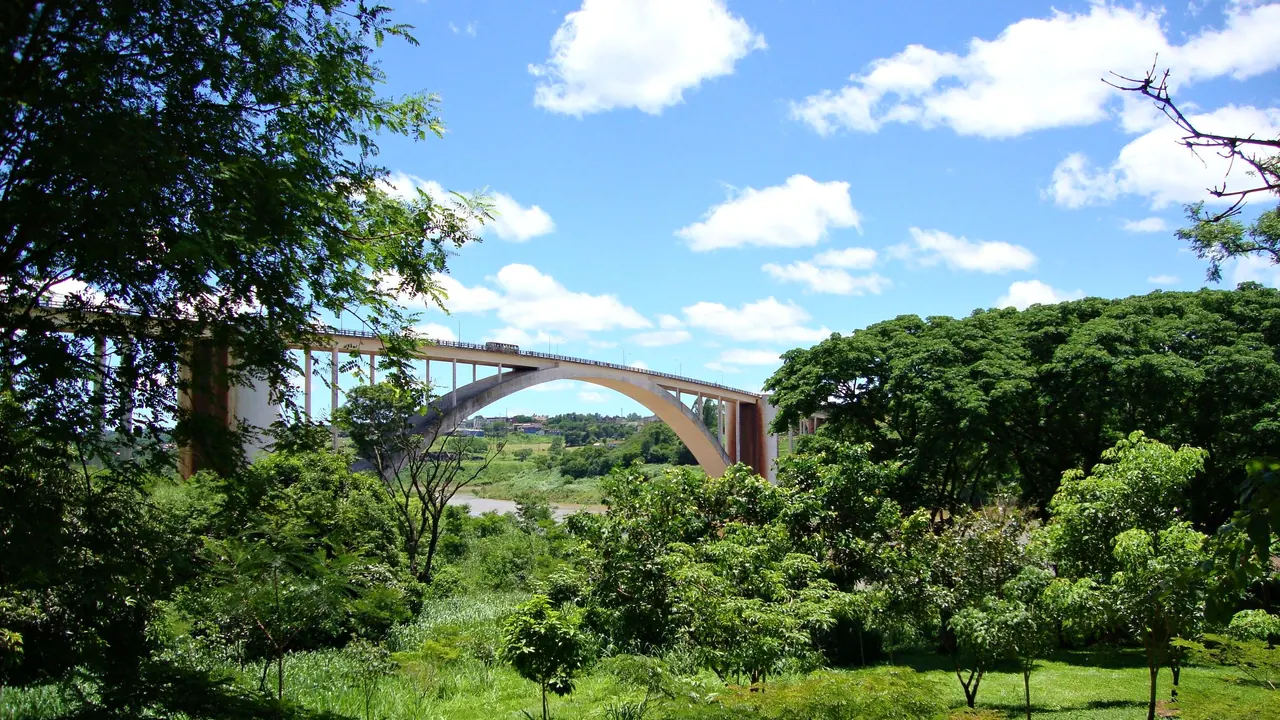
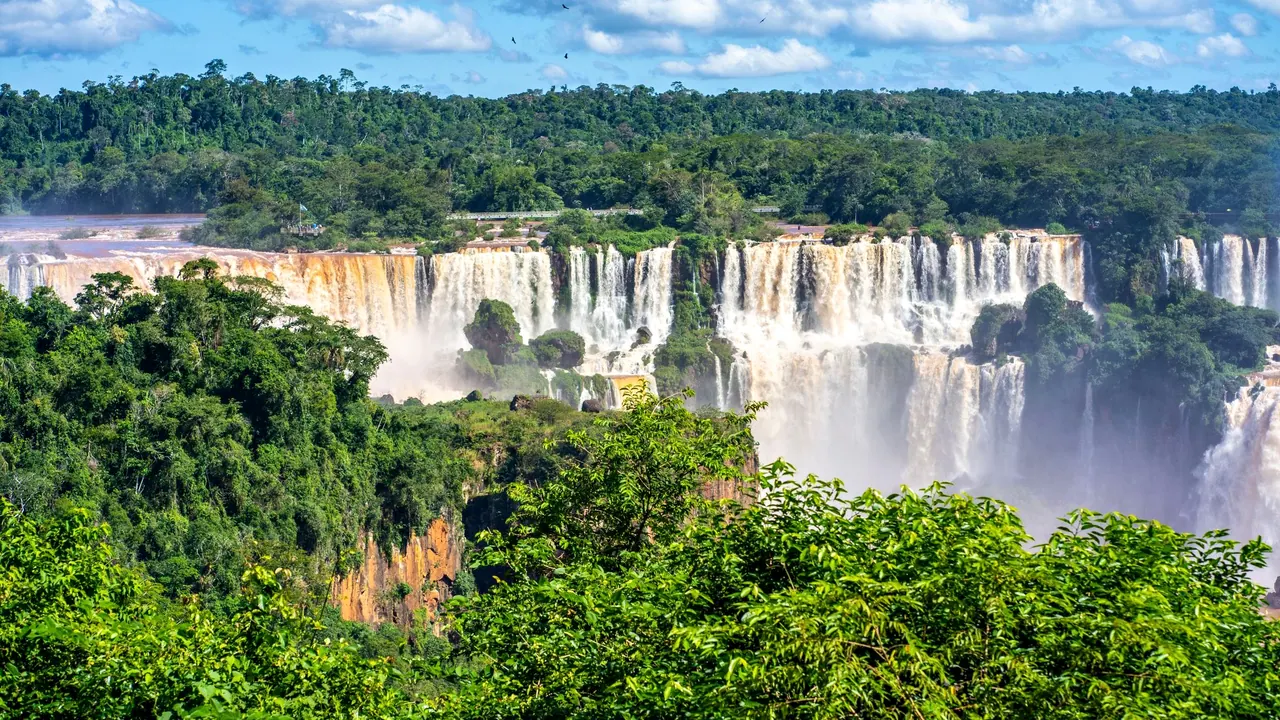
Photos: Ciudad del Este by Liam King, CC BY 2.0, cropped; Puerto Iguazu by Muhammed Ballan, Pexels License.
Ciudad del Este or Puerto Iguazu?
Our verdict in twelve categories, each scored against the same fixed benchmark cities, and the climate month by month, so you can choose for your trip.
Choose Ciudad del Este for
- shopping
- prices
- nightlife
Ciudad del Este suits a traveller who comes to buy: electronics, perfume and spirits at border-market prices, with business hotels that cost far less than across the river. It also makes a cheaper base for the triple frontier, with the Itaipu dam on its doorstep and a few more bars and nightclubs than its neighbour. In return you accept heavy traffic, crowded streets and a taxi or driver for every outing.
Choose Puerto Iguazu for
- getting around
- families
- nature and the outdoors
For the falls themselves, Puerto Iguazu is the better choice. The Argentine park, with its catwalks, forest train and walkway to the Devil's Throat, is a short bus ride away, the small centre is easy on foot, and forest lodges with pools and spas keep the evenings calm. Families and anyone who puts nature at the heart of the trip will find it much easier, though it costs more and offers little to do after dark.
Scoreboard
Twelve categories on one fixed scale from 0 to 100. The shaded stretch is the gap between the two.
Your match
Pick a travel style or drag the sliders, and both match scores follow your weighting.
Too close to call, 2 points apart
Wins on shopping and prices with your weighting.
Wins on getting around and families with your weighting.
What matters to you?
Category by category
What the scores mean for a trip.
Beaches & swimming
Neither town has a beach, and in both a hotel pool is the realistic way to swim. The small difference is that Ciudad del Este has a few sandy banks on the Paraná and the Itaipu reservoir where local families bathe on summer weekends. At Puerto Iguazu the rivers run fast and brown, and swimming below the falls is not allowed, so the pool at your lodge is the only option.
Food & drink
Ciudad del Este has the more varied food. Alongside chipa, sopa paraguaya and asado, its Lebanese and Chinese communities bring shawarma counters, Arab bakeries and Cantonese and Taiwanese kitchens, and Brazilian buffets by weight add another layer.
Puerto Iguazu sticks closer to Argentine basics: parrillas, empanadas, milanesas and river fish such as surubi. Its best evening is a long picada of cheese, cured meat and wine at the old Feirinha market, a more relaxed setting than the quick lunch counters of the Paraguayan shopping district, but the choice is narrower.
Culture & sights
Both are young gateway towns with little heritage. Ciudad del Este has the concrete-roofed Cathedral of San Blas and the odd sight of a border market where half a dozen communities trade side by side. Puerto Iguazu has the Hito Tres Fronteras obelisk looking across to Brazil and Paraguay, plus the chance to visit a Mbya Guarani community in the forest, but neither has museums or an old quarter to plan around.
Nightlife
Ciudad del Este has more going on after dark, though not in the centre. The microcentro empties once the shops shut, and evenings move to the residential districts and main avenues, where bars and nightclubs fill with young locals at weekends, alongside beer terraces and a casino.
Puerto Iguazu is quieter still: a few bars and beer gardens full of travellers after a late Argentine dinner, then an early night before the park opens. From either town, the bigger night out is across the river in Foz do Iguaçu.
Nature & outdoors
Ciudad del Este reaches the falls only by crossing into Brazil, about 30km away, and the Argentine side means a second border. Its own rewards are the powerful Saltos del Monday just south of town and the forest reserves around the Itaipu reservoir, which are good for birdwatching.
Puerto Iguazu sits right beside the Argentine side of the falls, the half with catwalks over the drops, the forest train, the walkway to the Devil's Throat and the Macuco trail to a quieter cascade. It is easy to go back on a second or third day, and the coatis, toucans, capuchin monkeys and butterflies are part of every visit.
Day trips
Ciudad del Este has the fuller list on its doorstep. The Itaipu dam is a short drive north at Hernandarias, Foz do Iguaçu and the Argentine town are across the bridge, and the forest house and museum of the naturalist Moisés Bertoni lies to the south.
Puerto Iguazu reaches Itaipu and Ciudad del Este too, but each trip means one or two border crossings. Its own Argentine outing is the amethyst and quartz mines at Wanda, about an hour south. From both, the Jesuit missions are too far for a comfortable day.
Good for families
Ciudad del Este gives children the same falls and bird park, but only after a border crossing. The city in between is crowded, loud and hard going with a pushchair, with heavy traffic and little for children beyond the lakeside park.
Puerto Iguazu is much the easier family base. The town is small and calm, the main trails are paved or boarded, the forest train is a treat, and lodges with pools fill the hot afternoons. The main thing to watch is the coatis, which will bite or scratch for food.
Getting around
Ciudad del Este is hard work. Walking its compact centre means squeezing past stalls, touts and motorbikes on broken pavements while pickpockets work the crowds, and local buses are hard for a visitor to use. Every trip to the falls crosses the Friendship Bridge, where traffic can back up badly, so most people rely on taxis, ride-hailing or a hired driver.
In Puerto Iguazu the bus terminal, restaurants and guesthouses are a few blocks apart, and regular buses run to the park entrance, so a car is not needed. Only trips into Brazil or Paraguay call for a taxi or a transfer.
Shopping & style
Ciudad del Este is a shopping destination in its own right. Low import duties fill the microcentro with multi-storey stores and stalls selling electronics, cameras, perfume and spirits, and buyers arrive by the busload. It rewards anyone who checks models and warranties carefully, as fakes and grey-market goods are common.
Puerto Iguazu offers souvenirs rather than shopping: Argentine cheese, wine and yerba mate at the Feirinha, Guarani carvings and baskets, and local amethyst. Its bargain hunters cross the border to the Paraguayan stalls. Neither town is the place for fashion or design.
Affordability
Ciudad del Este is clearly cheaper day to day. Business hotels with pools cost far less than across the river, grilled-meat lunches and chipa are cheap, and imported goods undercut the neighbouring countries. The main extra cost is taxis and drivers.
Puerto Iguazu is moderate, with affordable parrillas, hostels and park buses, but costs gather around the falls: higher park entry for foreigners, boat trips, guided excursions and jungle lodges at resort rates. Its prices for visitors also swing with Argentina's exchange rate.
Live music & performing arts
Neither town has anything to plan a trip around. In Ciudad del Este live music means Paraguayan harp, guarania and polka paraguaya in restaurants and at festivities, plus the occasional touring concert. In Puerto Iguazu it is a folk dinner show or chamamé accordion music at a local gathering, so what differs is each country's sound rather than how much there is.
Wellness & relaxation
Ciudad del Este is a city of trade and noise, and wellness stops at hotel pools and the occasional hotel spa. Its calm moments are an evening on the lakeside promenade or a tereré in the shade.
Puerto Iguazu is the better place to slow down. The lodges on the road to the falls have pools, massage rooms and terraces where you hear birds rather than traffic, and the town goes quiet once the day's excursions are over.
When should you go?
Pick your month. The climate figures are measured averages, not a forecast.
Ciudad del Este in July
Puerto Iguazu in July
Daytime high, °C
Rainfall in the month, mm
Where the figures come from
Ciudad del Este's sunshine is measured 28 km from the centre, at Iguazu Aerodrome.
Temperature and rainfall are climate normals, averaged over the years shown. Ciudad del Este: 1992-2020 (sunshine 1991-2020, rainfall 1991-2020) normals, Foz Do Iguacu Aeroporto (3.4 km from centre). Puerto Iguazu: 1991-2020 normals, Iguazu Aerodrome (17.8 km from centre).
The two towns get the same rain and sunshine, but Ciudad del Este is a degree or two hotter all year. The southern winter, June to August, is the most comfortable time for long days on foot at the falls. Highs are in the low twenties, the air feels lighter and July is the driest month at 76mm, though June has the fewest hours of sun. Just before winter, May has a wet spell of its own, so the drier weeks really begin in July.
The heat builds again from September. October to January is the wet stretch, with rain heaviest in October at 227mm. In January Ciudad del Este reaches 33°C, while Puerto Iguazu stays near 31°C. From February to April it is still hot but clearly less wet. The summer rain feeds the falls, so they run fullest then, but walking the shopping streets of Ciudad del Este at midday is hard work. Neither town has a beach season to plan around, and in the heat a hotel pool is where you cool off.
Which traveller are you?
For an outdoors trip, Puerto Iguazu wins clearly. The Argentine side of the falls, with its catwalks, Devil's Throat walkway, boat rides into the spray and jungle trails, is half an hour away by bus, and you can go back without crossing a border.
On a shopping trip, Ciudad del Este is the obvious choice. Its duty-free microcentro is packed with electronics, cameras, perfume and spirits that cost less than in Brazil or Argentina, while Puerto Iguazu offers little beyond cheese, wine, yerba mate and amethyst souvenirs.
On a tight budget, Ciudad del Este makes money go further. Hotels with pools, grilled-meat lunches and street chipa all cost less. In Puerto Iguazu costs climb around the falls, with park fees, boat trips and jungle lodges charging international resort rates.
Before you go
| Measure | Ciudad del Este | Puerto Iguazu |
|---|---|---|
| Official language | Spanish, Guarani | Spanish |
| Currency | Guarani (PYG) | Argentine Peso (ARS) |
| Sockets | C220 V, 50 Hz | CI220 V, 50 Hz |
| Driving side | Right | Left |
| Time zone | UTC-3 | UTC-3 |
| Emergency number | 911 | 117 or 911 |
| Elevation | 185 m | 162 m |
| Main airport | Guaraní International Airport (AGT)24 km from centre | Cataratas Del Iguazú International Airport (IGR)18 km from centre8 non-stop destinations |
| Public holidays this year | 12 days | 16 days |
By the numbers
| Measure | Ciudad del Este | Puerto Iguazu |
|---|---|---|
| Population | 350,000 | 54,903 |
| People per km² | 2,349 | - |
| Museums within 10 km | 1 | 0 |
| UNESCO World Heritage sites within 50 km | 1 | 1 |
Where else could you go?
Every comparison below shares a destination with this one, so you can follow Ciudad del Este or Puerto Iguazu somewhere new.
- Foz do Iguacuvs Ciudad del Este
- Foz do Iguacuvs Puerto Iguazu
- Encarnaciónvs Puerto Iguazu
- Encarnaciónvs Ciudad del Este
- Asunciónvs Ciudad del Este
- Asunciónvs Puerto Iguazu