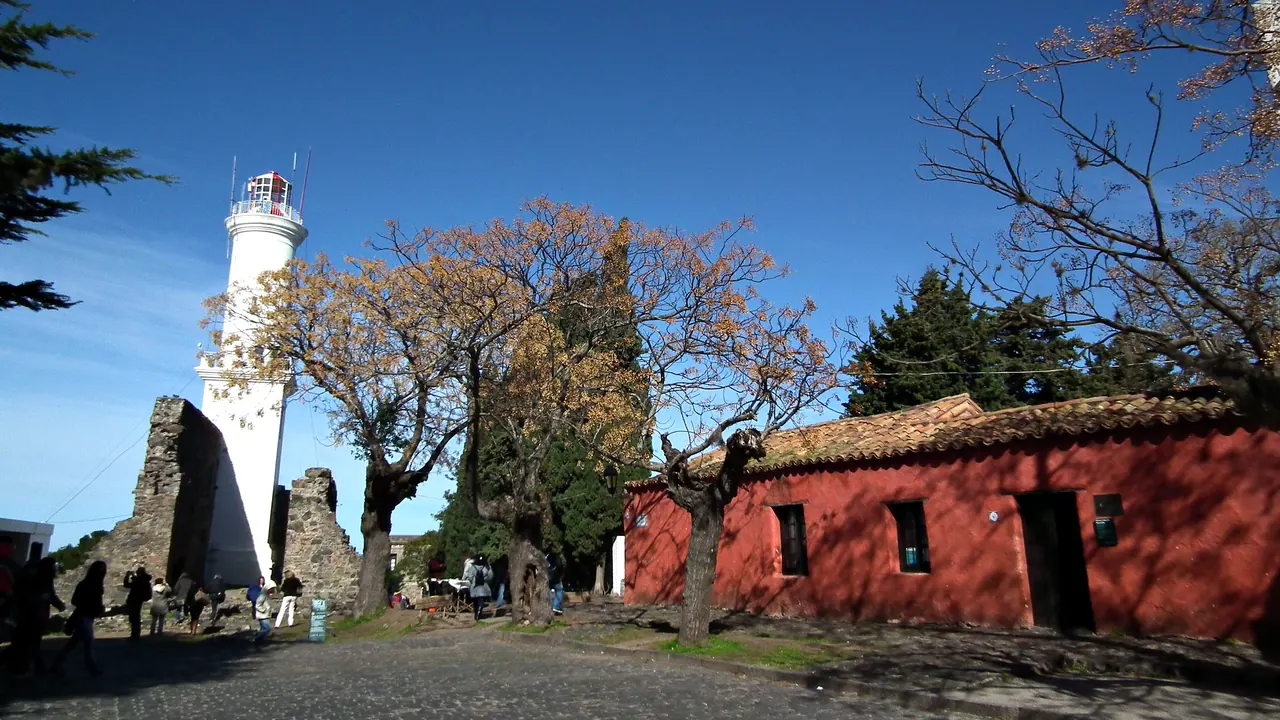
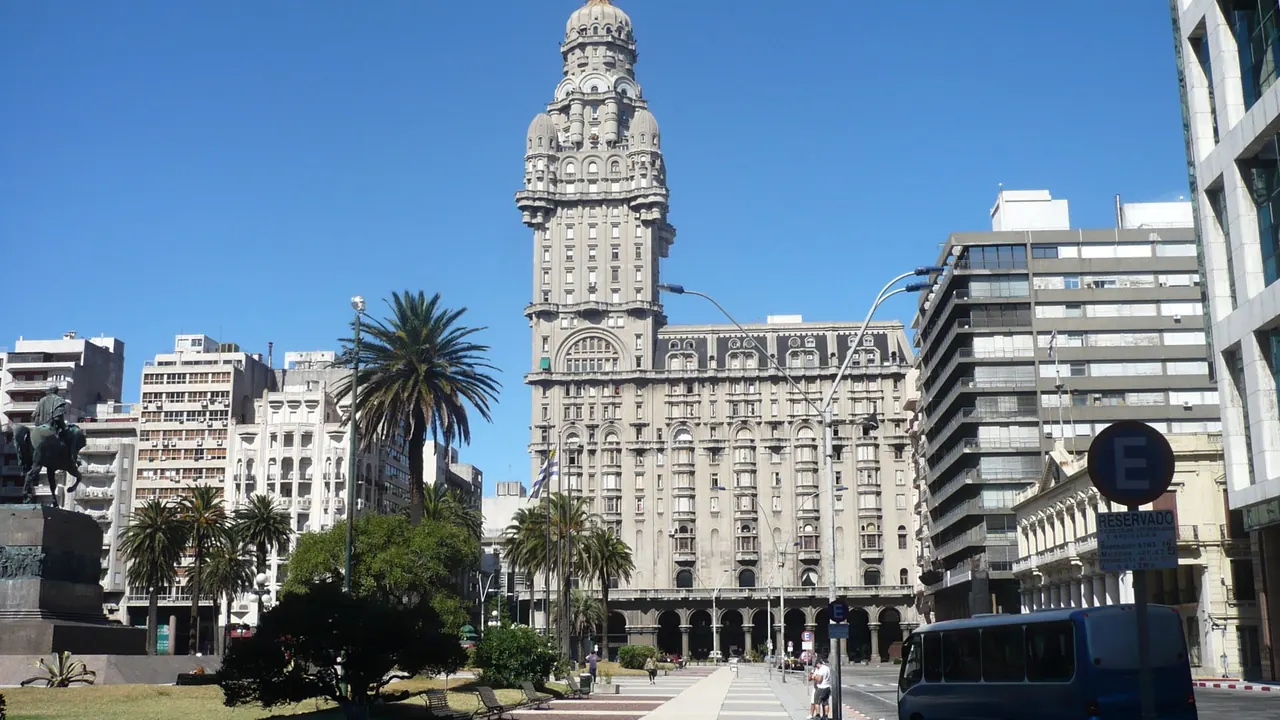
Photos: Colonia del Sacramento by Fulviusbsas, CC BY-SA 3.0, cropped; Montevideo by Andrés Franchi Ugart…, CC BY-SA 3.0, cropped.
Colonia del Sacramento or Montevideo?
Our verdict in twelve categories, each scored against the same fixed benchmark cities, and the climate month by month, so you can choose for your trip.
Choose Colonia del Sacramento for
- getting around
- wellness
Colonia del Sacramento suits a traveller who wants a slow, small-scale stay: a day or two among the cobbled lanes and tiled roofs of the Barrio Histórico, bicycles along the river, wine at sunset and early nights. It is also the better base if you want Buenos Aires on the same trip, because the fast ferry gets you into the Argentine capital in about an hour.
Choose Montevideo for
- live music and the arts
- nightlife
- food and drink
Montevideo is the better pick for a trip with more going on at the table and after dark. It is a working capital, with the grills of the Mercado del Puerto, late bars in Pocitos and the Ciudad Vieja, opera and ballet at the Teatro Solís and the SODRE, and candombe drums in Barrio Sur. It also has longer city beaches and more for children to do. Getting about takes more effort, but it rewards a stay of several days.
Scoreboard
Twelve categories on one fixed scale from 0 to 100. The shaded stretch is the gap between the two.
Your match
Pick a travel style or drag the sliders, and both match scores follow your weighting.
Wins on getting around and wellness with your weighting.
Wins on live music and the arts and nightlife with your weighting.
What matters to you?
Category by category
What the scores mean for a trip.
Beaches & swimming
Both towns swim in the same brown, silty estuary rather than the sea. Neither has waves, and in both, algae can make swimming inadvisable in hot weather. The real difference is how much beach there is and where. Colonia has small sandy strips by the old town and longer beaches out towards Real de San Carlos and Playa Ferrando, which most visitors reach by bike or golf cart.
Montevideo has a whole run of city beaches along the Rambla, from Ramírez and Pocitos to the wider sands of Carrasco. In summer, afternoons on the beach with mate and folding chairs are part of daily life. For clear water and surf, both send you east to the Atlantic coast, which is a long day out from the capital and well beyond one from Colonia.
Food & drink
The menus overlap almost completely, with parrilla beef, chivitos, milanesas and Tannat in both. Colonia serves them at courtyard tables under plane trees, but it has only a few dozen restaurants, many aimed at day-trippers. Its best card is the wine from the estates around Carmelo.
Montevideo has the depth Colonia lacks. The Mercado del Puerto, an iron market hall full of smoking grills, is worth seeing in its own right. The old cafés of the centre add coffee and pastries, and there are empanadas, fainá and medio y medio to try. Neither town is strong on street food or international cooking, but in the capital you could eat well for a week without repeating yourself.
Culture & sights
The two are close here but different in kind. Colonia is one complete historic quarter: the UNESCO-listed Barrio Histórico, with its mixed Portuguese and Spanish street plan, the Calle de los Suspiros, the town gate and the view from the lighthouse. Add the small museums and the Moorish-style bullring at Real de San Carlos, and a day covers it.
Montevideo's sights are spread more widely and take two or three days. They include Plaza Independencia and the Palacio Salvo, the marble Palacio Legislativo, the Torres García museum, the national collection of Uruguayan painting and the museum of the 1972 Andes air crash. The capital offers more variety and more art. Colonia offers the more complete colonial townscape.
Nightlife
In Colonia the evening ends with dinner and a glass of wine by the river. A few wine bars and pubs stay open, but there are no clubs of note and the town is quiet well before late.
Montevideo keeps late Rioplatense hours, with bars filling at midnight and clubs starting around two. The bars are spread across Pocitos, Punta Carretas, the student streets of Cordón and Parque Rodó, and the old town. It is relaxed rather than wild and quiet on weeknights, but it is a proper night out. From Colonia, a night like that means taking the ferry across the river.
Nature & outdoors
Neither has hills or wilderness, and in both the outdoors means a riverside promenade with the sun setting over the estuary. Colonia's rambla runs for a few kilometres past beaches and small headlands. You can kayak on calm days or take gentle rides through the cattle country inland.
Montevideo's Rambla is much longer, over 20km from the port to Carrasco. The capital also has more variety around it: the old trees of Parque Rodó and the Prado, the view from the Cerro across the bay, kitesurfing on windy days, and the low sierras around Piriápolis and Minas for a gentle walk.
Day trips
The two point in opposite directions. Colonia's best outing crosses a border. The fast ferry puts you in Buenos Aires in about an hour, and Argentine and Uruguayan officers check passports together before you board, so a day in another country's capital is easy to manage. The other trips from Colonia are small and rural: the family wineries around Carmelo, the Swiss-founded town of Nueva Helvecia with its cheese, and the British-built core of the old mining village of Conchillas.
Montevideo looks east along the coast instead. Its trips include the old-fashioned seaside town of Piriápolis with hills behind it, Punta del Este and Casapueblo about two hours away, and the easy run out to Atlántida, while the Canelones wineries are less than an hour away. The two towns are a little under three hours apart by bus, so each makes a long day out from the other, and Colonia's cobbled old town repays the ride better. Choose Colonia to add a second country and Montevideo to see the Uruguayan coast.
Good for families
Colonia is safe and small with little traffic. Children enjoy a golf cart ride along the river and the climb up the lighthouse, but after that there is little aimed at them, and the cobbles are hard going with a pushchair.
Montevideo gives a family more to do over a longer stay: playgrounds in the parks, the old-fashioned amusement park and pedal boats at Parque Rodó, scooters on the Rambla and a choice of shallow city beaches. Neither town has an aquarium or theme park, and in both, children are welcome at late dinners.
Getting around
Colonia is the easier of the two. The ferry terminal and bus station are a short walk from the historic quarter, and everything inside the quarter is minutes apart. A bicycle or golf cart on the flat river road gets you to the beaches. The only problems are the uneven cobbles and the wine estates further out, which need a car or a tour.
Montevideo has no metro or tram. The city is long and stretched along the shore, so the old town, Pocitos and Carrasco are linked by buses whose routes confuse newcomers. Taxis and ride-hailing fill the gap, and the centre is flat and walkable, but expect to take a bus or cab most days.
Shopping & style
Both sell the same Uruguayan crafts: leather goods, wool knitwear and silver-trimmed mate gourds. In Colonia that is the whole story, a browse through the craft and antique shops of the old town plus weekend stalls in season.
Montevideo adds the long Sunday street market on Tristán Narvaja, with its books, old records and antiques. For everyday needs there are malls in Pocitos and Punta Carretas, the second in a converted prison. It is still not a place for fashion shopping.
Affordability
Neither is cheap, and in both the bill is much like Southern Europe. In Colonia the extra cost comes from the boutique hotels and restaurants of the old town, which are priced for visitors, and summer weekends are the dearest time. Sleeping a few streets out and sticking to the free sights keeps costs down.
Montevideo has more ways to save, with cheap city buses, free museums and good-value set lunches. Against that, hotels in Pocitos and Punta Carretas cost as much as in a European capital in summer. In both towns, a steak with local wine is the best value on the menu.
Live music & performing arts
This is the widest gap between the two. Colonia has a small cultural centre in a riverside bastion and the odd guitarist or tango set in a restaurant on summer nights. Anyone wanting theatre or a tango show goes across the river.
Montevideo has a real live culture. There is opera and the philharmonic at the Teatro Solís, the national ballet at the SODRE and milongas all year. Above all there is Carnaval, with satirical murga troupes on neighbourhood stages and candombe drumming in the Llamadas parades. Outside the season, drum groups still practise in Barrio Sur and Palermo on weekend evenings.
Wellness & relaxation
Both are restful for the same reason, their slow pace, and neither has a spa or thermal-bath tradition. Colonia is the quieter of the two. Once the day-trippers leave, the old town empties, and winery and resort stays in the countryside add pools and treatments.
Montevideo is calm in the way of an unhurried capital, with people sharing mate on the Rambla walls at sunset. Spa treatments are mostly found in upmarket hotels. For simply switching off, the small town comes out slightly ahead.
When should you go?
Pick your month. The climate figures are measured averages, not a forecast.
Colonia del Sacramento in July
Montevideo in July
Daytime high, °C
Rainfall in the month, mm
Temperature and rainfall are climate normals, averaged over the years shown. Colonia del Sacramento: 1991-2020 (sunshine 1961-1990) normals, Colonia (2.4 km from centre). Montevideo: 1991-2020 (rainfall 1971-2000) normals, Carrasco (19.2 km from centre).
The two towns sit on the same estuary and have much the same climate. In both, summer runs from December to February and is the beach season. In January, daytime highs in Colonia reach about 29°C and the river water warms to around 25°C. Off Montevideo the water is a degree or so cooler. Spring and autumn, roughly October to November and March to April, are the most comfortable months for walking the streets. June and July are cool, with highs near 15°C, which is fine for sightseeing but too cold for the beach.
The real difference is when the rain falls and the sun shines. Colonia is wettest in late summer, in February and March, and in March it gets far less sunshine. Montevideo stays bright through March. Its wettest month is October and its driest is December, when it gets little more than half as much rain as Colonia. That makes the capital the safer bet for clear skies in December or March. In October it is the other way round, and Colonia is a little drier and sunnier.
Which traveller are you?
For a food and nightlife trip, Montevideo is the clear choice. It has the grills of the Mercado del Puerto, more parrillas and old cafés, and bars that fill around midnight in Pocitos, Cordón and the Ciudad Vieja. Colonia goes quiet well before late.
For a short city break, Colonia works neatly. The ferry and bus terminals are a few minutes' walk from the old town, the Barrio Histórico can be seen on foot in a day, and the riverside sunset needs no planning. Montevideo's sights are strung out along a long shore.
On a family trip with children, Montevideo has more to fill the days. There is the Rambla for scooters and bikes, a string of calm city beaches, playgrounds in the parks, and the amusement park and pedal boats at Parque Rodó. Colonia is charming for a night or two but has little built for children.
Before you go
| Measure | Colonia del Sacramento | Montevideo |
|---|---|---|
| Currency | Peso Uruguayo (UYU) | Peso Uruguayo (UYU) |
| Sockets | CFIL230 V, 50 Hz | CFIL230 V, 50 Hz |
| Driving side | Right | Right |
| Time zone | UTC-3 | UTC-3 |
| Emergency number | 911 | 911 |
| Elevation | 27 m | 41 m |
| Main airport | Carrasco General Cesáreo L. Berisso International Airport (MVD)171 km from centre15 non-stop destinations | Carrasco General Cesáreo L. Berisso International Airport (MVD)17 km from centre15 non-stop destinations |
| Public holidays this year | 15 days | 15 days |
By the numbers
| Measure | Colonia del Sacramento | Montevideo |
|---|---|---|
| City population | 31,720 | 1,302,954 |
| People per km² | 1,385 | 1,785 |
| Museums within 10 km | 7 | 36 |
| UNESCO World Heritage sites within 50 km | 2 | 1 |
| Swim season, months above 21 °C | 4 months | 4 months |
Where else could you go?
Every comparison below shares a destination with this one, so you can follow Colonia del Sacramento or Montevideo somewhere new.
- Buenos Airesvs Colonia del Sacramento
- Punta del Estevs Montevideo
- Buenos Airesvs Montevideo
- Punta del Estevs Colonia del Sacramento
- Florianopolisvs Montevideo
- Valparaisovs Colonia del Sacramento