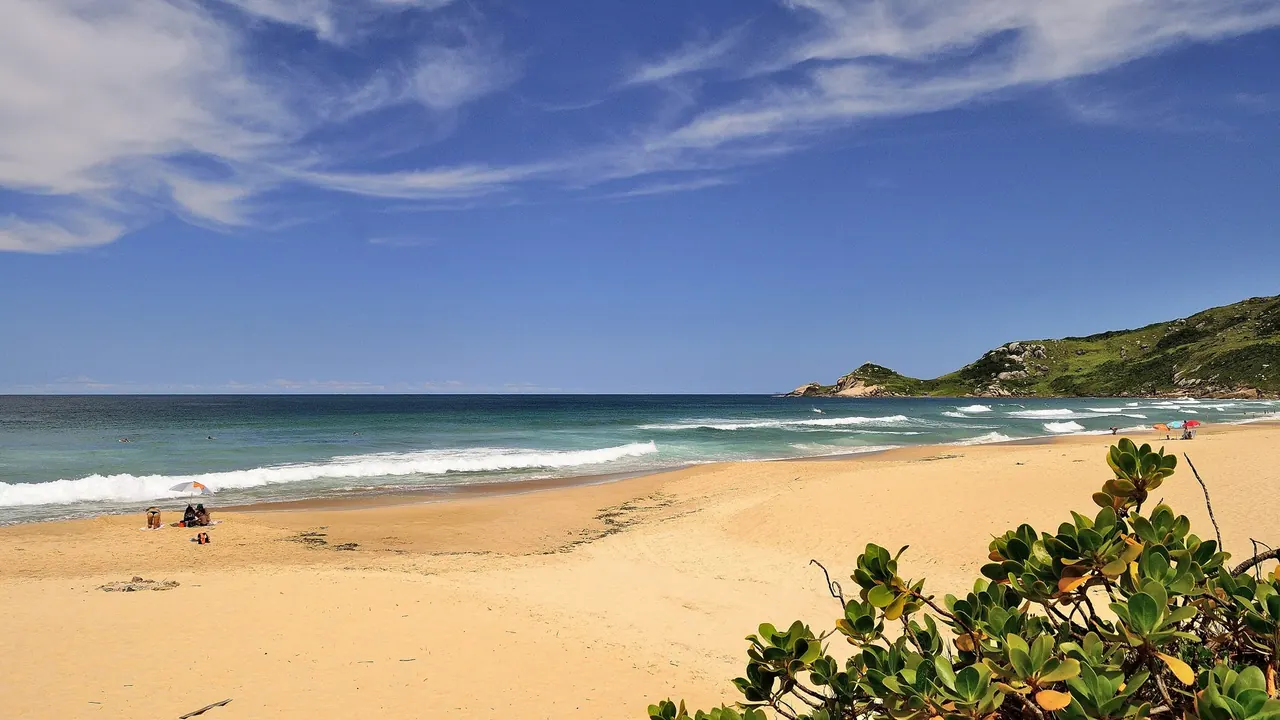
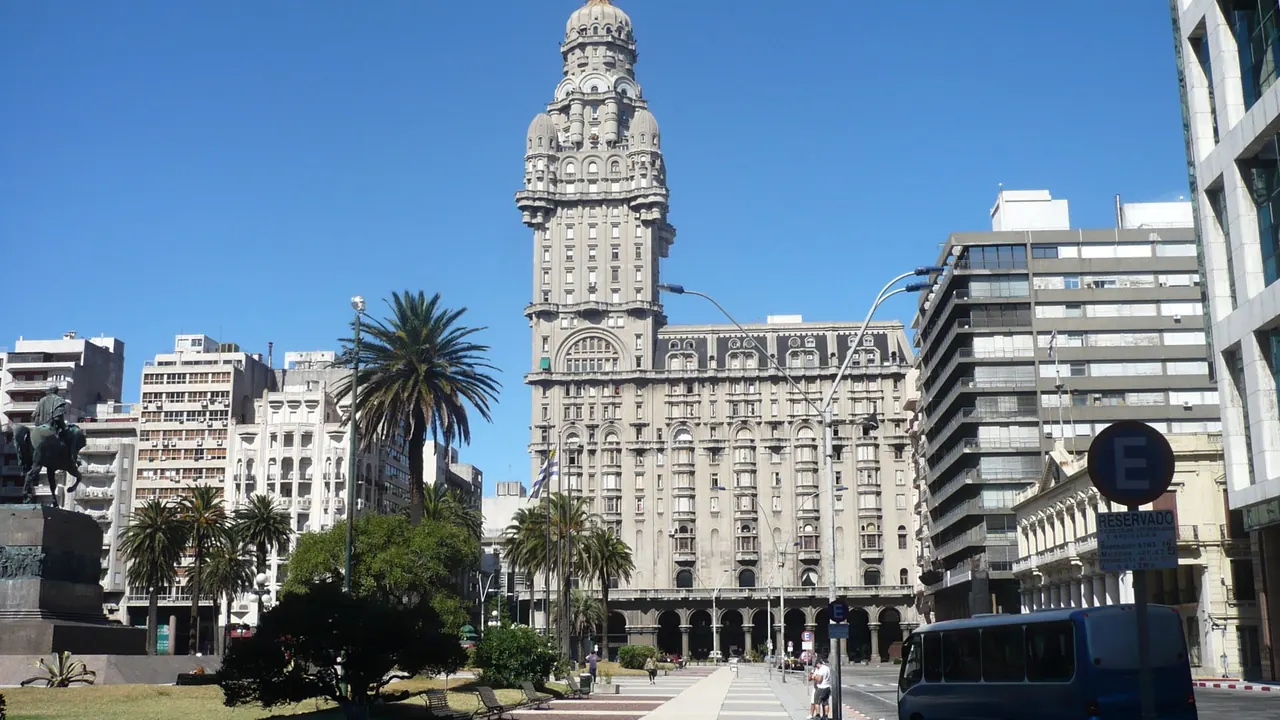
Photos: Florianopolis by Papa Pic, CC0; Montevideo by Andrés Franchi Ugart…, CC BY-SA 3.0, cropped.
Florianopolis or Montevideo?
Our verdict in twelve categories, each scored against the same fixed benchmark cities, and the climate month by month, so you can choose for your trip.
Choose Florianopolis for
- nature and the outdoors
- beaches
- prices
Pick Florianopolis if the trip is about the outdoors. The island has beaches ranging from calm northern bays to Atlantic surf, forest trails that lead to coves with no road access, and a lagoon for kitesurfing. In summer the Jurere beach clubs and the bars around Lagoa give it a party side Montevideo cannot match, and the island is generally easier on the budget. Stay near the beaches you like, though, because crossing the island is slow.
Choose Montevideo for
- live music and the arts
- getting around
- culture and sights
Montevideo suits travellers who would rather explore a city than a coastline. The Ciudad Vieja, the Teatro Solís and the Torres García museum fill two or three days of proper sightseeing. Carnaval murga and candombe drumming give it a live stage tradition the island lacks, and its flat centre and the Rambla make it easier to get around. Its estuary beaches are good for a summer afternoon but are not a reason to go.
Scoreboard
Twelve categories on one fixed scale from 0 to 100. The shaded stretch is the gap between the two.
Your match
Pick a travel style or drag the sliders, and both match scores follow your weighting.
Wins on nature and the outdoors and beaches with your weighting.
Wins on live music and the arts and getting around with your weighting.
What matters to you?
Category by category
What the scores mean for a trip.
Beaches & swimming
Florianopolis is far stronger here. Santa Catarina island has dozens of beaches on the open ocean. They range from the calm, warm bays of Jurere and Canasvieiras to the surf at Joaquina and Mole and the roadless sand of Lagoinha do Leste.
Montevideo's beaches along the Rambla, from Pocitos to Carrasco, are pleasant for a summer afternoon with mate. The water is the Río de la Plata, though, often brown with silt, and swimming is sometimes advised against after rain. From Montevideo, clear Atlantic water means a long day out east along the coast.
Food & drink
The two are evenly matched but very different. Florianopolis eats from the sea. Oysters are farmed in its own bays and served at the water's edge in Ribeirao da Ilha, and the sequencia de camarao is a long meal of shrimp dishes.
Montevideo cooks beef over wood embers, and the grills of the Mercado del Puerto are the classic place to try it. The chivito is the snack, and Tannat from nearby wineries is in the glass. Both menus are narrow outside their speciality, so choose by whether you would rather eat shellfish or steak.
Culture & sights
Montevideo has more to see. Plaza Independencia, the Palacio Salvo, the old town's Art Deco façades, the marble Palacio Legislativo and the museums of Uruguayan painting fill two or three days, even if parts of the Ciudad Vieja look neglected.
Florianopolis can be covered in a day or two. The main sights are the Hercilio Luz bridge, the square around Praca XV and the Azorean villages with their whitewashed churches. The villages are worth seeing more for their waterfront setting than for any single landmark.
Nightlife
In high summer Florianopolis has the bigger nightlife. At Jurere Internacional, beach clubs with big-name DJs run from the afternoon into the night, and a younger crowd fills the bars and streets around Lagoa da Conceicao. It depends on the season, though, and much of it closes in winter.
Montevideo is steadier but quieter. It keeps late Rioplatense hours, its bars in Pocitos, Cordón and the Ciudad Vieja are friendly, and weeknights are quiet. In summer its party crowd leaves for the coastal resorts, which is exactly when Florianopolis is at its fullest.
Nature & outdoors
Florianopolis is far ahead for the outdoors. Atlantic forest trails lead to beaches with no road access, and the Costa da Lagoa path can only be reached on foot or by boat. The lagoon suits kitesurfing and paddling, and the Joaquina dunes are used for sandboarding. Southern right whales calve off the coast to the south from July to November.
Montevideo's main outdoor space is the Rambla, a long seafront promenade for evening walks, runs and bike rides, along with some fine old parks. The surrounding land is flat farmland, and the nearest hills, near Piriápolis and Minas, are only good for gentle walks.
Day trips
The day trips are about equally good but different in character. From Montevideo the highlight is the cobbled colonial lanes of Colonia del Sacramento. Punta del Este's resort glamour and the Canelones wineries are the alternatives, though the best of these are at the far limit of a comfortable day.
From Florianopolis you head into mainland Santa Catarina. Choices include the German-settled towns of Blumenau and Pomerode, the surf towns of Garopaba and Praia do Rosa, and the high-rises of Balneario Camboriu. A boat trip to the Anhatomirim fortress is the easiest half day.
Good for families
Both cities welcome children and neither has much built for them, but the kind of stay differs. Florianopolis works as a beach vacation. Canasvieiras and Daniela have shallow, gentle water, there is sandboarding for older children, and the Beto Carrero World theme park is within reach. On the downside, summer traffic is heavy and the surf beaches need watching.
Montevideo makes for a calmer city stay. Children can ride scooters and bikes on the Rambla, there are pedal boats and an old-fashioned amusement park in Parque Rodó, and the parks have playgrounds, all within manageable distances.
Getting around
Montevideo is much easier to get around. It has no metro, but buses cover the whole city and taxis are simple to use. The old town and Avenida 18 de Julio are walkable, and the Rambla makes cycling to the coastal neighbourhoods pleasant.
Florianopolis spreads its beaches along narrow island roads, its buses run through hub terminals, and summer traffic slows to a crawl. Most visitors rent a car, or base themselves near the beaches they like and stay there.
Shopping & style
Neither city is worth visiting for the shopping, and in both you go to the malls for clothes. The difference is in the crafts. Florianopolis has bobbin lace from the Azorean villages and surf and swimwear shops in Jurere and Lagoa. Montevideo has leather, hand-knitted wool and silver-trimmed mate cups, plus the Sunday market on Tristán Narvaja with its antiques and old records, which is the better place to browse.
Affordability
Florianopolis is the cheaper of the two. Simple seafood restaurants, buses and car hire are reasonable, and rooms get much cheaper outside December to March. Jurere Internacional and the Carnival and New Year weeks are the exceptions, and they are expensive.
Montevideo costs roughly what Southern Europe does, and in summer the hotels in Pocitos and Punta Carretas are priced like those in a European capital. Free museums, cheap buses and good-value set lunches help, but it is not a budget destination.
Live music & performing arts
Florianopolis has nothing to match the candombe drums that echo through Montevideo's Barrio Sur and Palermo. On the island, live performance stays in the background. The 19th-century Teatro Alvaro de Carvalho and the Centro Integrado de Cultura host touring Brazilian shows, bars around Lagoa have samba and MPB nights, and the boi-de-mamao pageant appears only at festivals.
In Montevideo, Carnaval runs for more than a month, with satirical murga on neighbourhood tablados and the Llamadas parades through the streets. Drum groups also practise on weekend evenings for much of the year, and anyone can follow along. The Teatro Solís and the SODRE put on opera, ballet and orchestral concerts, and the milongas keep tango going all year.
Wellness & relaxation
Neither city is known for spas, but Florianopolis has the edge. Yoga studios and small retreats serve the surf crowd, and the southern villages are quiet outside high season. The hot springs of Santo Amaro da Imperatriz are under an hour inland, though peak summer makes the island crowded and loud.
Montevideo has no thermal springs within reach, and its spa treatments are mostly found in upmarket hotels. Its restfulness comes from the slow pace instead, with mate shared at sunset on the Rambla walls and unhurried cafés.
When should you go?
Pick your month. The climate figures are measured averages, not a forecast.
Florianopolis in July
Montevideo in July
Daytime high, °C
Rainfall in the month, mm
Temperature and rainfall are climate normals, averaged over the years shown. Florianopolis: 1991-2020 normals, Florianopolis (1.7 km from centre). Montevideo: 1991-2020 normals, Carrasco (19.2 km from centre).
Florianopolis is at its best in summer. From December to March highs are near 30°C and the sea warms to about 26°C, which is ideal for swimming. This is also the wettest time of year, with heavy downpours peaking at around 243mm in January. April and May stay warm with less rain and are good months for the trails. From June to August the days are still mild enough for walking, but the sea is too cool for most swimmers.
Montevideo is cooler and drier for most of the year, and its rain is spread fairly evenly across the months. January and February are its beach season, warm and very sunny, with the estuary at about 23°C. Spring and autumn are good for walking the Rambla and the old town. Winter is grey and chilly, with highs around 15°C and water far too cold to swim in.
Which traveller are you?
On a beach and sun trip, Florianopolis is the clear choice. The island has sheltered northern bays for easy swimming, open Atlantic beaches with surf on the east coast and wild coves in the south, all on clear ocean water rather than silty estuary.
For a culture and arts trip, Montevideo is the better choice. The Ciudad Vieja, the Teatro Solís and its galleries of Uruguayan painting fill several days. Carnaval murga, candombe drumming and tango add a live tradition that Florianopolis, with its short heritage circuit, cannot match.
For a short city break, Montevideo is easier. Its sights are in a flat, walkable centre, taxis and buses cover the rest, and the Rambla links the neighbourhoods. Florianopolis spreads its attractions along slow island roads that use up a short stay.
Before you go
| Measure | Florianopolis | Montevideo |
|---|---|---|
| Official language | Portuguese | - |
| Currency | Brazilian Real (BRL) | Peso Uruguayo (UYU) |
| Sockets | CN60 Hz | CFIL230 V, 50 Hz |
| Driving side | Right | Right |
| Time zone | UTC-3 | UTC-3 |
| Emergency number | Police 190, ambulance 192, fire 193 | 911 |
| Elevation | 3 m | 41 m |
| Main airport | Hercílio Luz International Airport (FLN)9 km from centre21 non-stop destinations | Carrasco General Cesáreo L. Berisso International Airport (MVD)17 km from centre15 non-stop destinations |
| Public holidays this year | 14 days | 15 days |
By the numbers
| Measure | Florianopolis | Montevideo |
|---|---|---|
| City population | 587,486 | 1,302,954 |
| People per km² | 870 | 1,785 |
| Museums within 10 km | 11 | 36 |
| UNESCO World Heritage sites within 50 km | 0 | 1 |
| Swim season, months above 21 °C | 7 months | 4 months |
Where else could you go?
Every comparison below shares a destination with this one, so you can follow Florianopolis or Montevideo somewhere new.