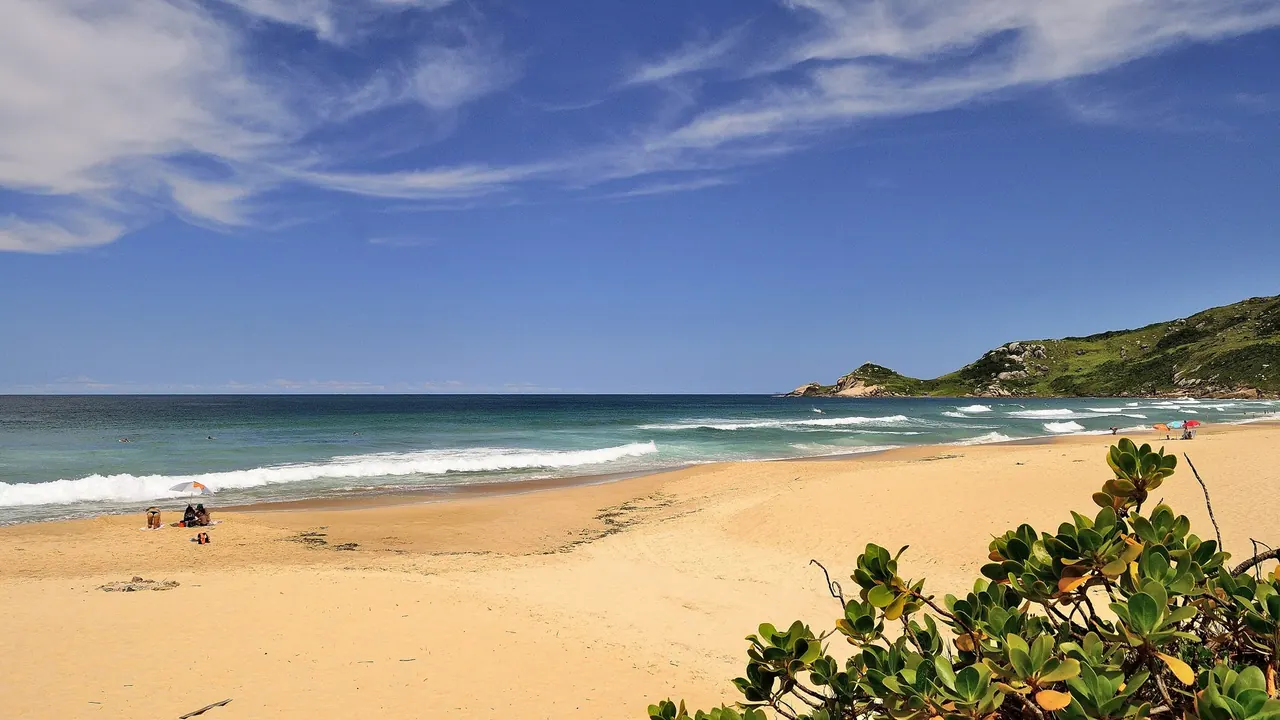
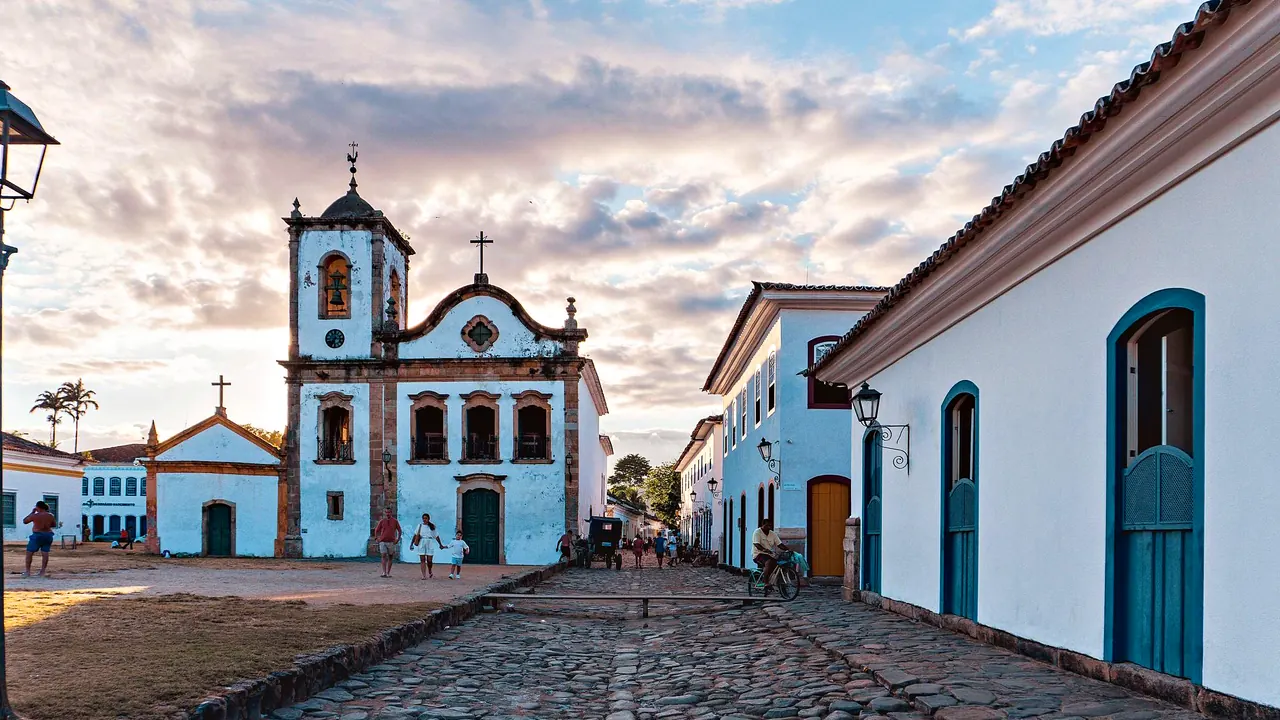
Photos: Florianopolis by Papa Pic, CC0; Paraty by Gabriel Zachi, Pexels License.
Florianopolis or Paraty?
Our verdict in twelve categories, each scored against the same fixed benchmark cities, and the climate month by month, so you can choose for your trip.
Choose Florianopolis for
- nightlife
- day trips
- families
Florianopolis suits a longer beach vacation with a social side. The island gives you a real choice of shore, from calm northern bays for small children to open Atlantic surf on the east coast. From December to Carnival, the beach clubs of Jurere and the bars around Lagoa da Conceicao keep going late. Plan on a car and a base near the beaches you like best, because crossing the island is slow.
Choose Paraty for
- culture and sights
- getting around
- nature and the outdoors
Paraty is the better pick for a slower, smaller trip built around one handsome colonial town. You walk the UNESCO-listed old centre on foot, spend days on schooners among the bay's islands and head into the rainforest of the Serra da Bocaina for waterfalls and stretches of the old Gold Trail. Nights mean dinner and a guitarist rather than clubs, which is exactly the appeal for couples who want quiet.
Scoreboard
Twelve categories on one fixed scale from 0 to 100. The shaded stretch is the gap between the two.
Your match
Pick a travel style or drag the sliders, and both match scores follow your weighting.
Wins on nightlife and day trips with your weighting.
Wins on culture and sights and getting around with your weighting.
What matters to you?
Category by category
What the scores mean for a trip.
Beaches & swimming
Florianopolis is a beach destination first, and its range is wider. Sheltered, warmer bays line the north shore at Jurere and Daniela, long surf beaches with stronger currents run along the east at Joaquina and Mole, and wild coves such as Lagoinha do Leste in the south can only be reached on foot or by boat. Wherever you stay, good sand is close by.
Paraty's own town beaches are poor, so the swimming there comes by schooner to small, forest-backed island coves in a calm, warmer bay, or by road to Trindade's open-sea beaches and the clear rock pool at Cachadaço. It is lovely, but more of it has to be reached by boat or trail.
Food & drink
Both kitchens rest on seafood, but Florianopolis eats better. Its farmed oysters, served at waterfront tables in Santo Antonio de Lisboa and Ribeirao da Ilha, and the long run of shrimp dishes in a sequencia de camarao are real reasons to book a table. The Mercado Publico adds a lively spot for a cold chope among the fishmongers.
Paraty has its blue-green azul marinho stew and a few ambitious candlelit dining rooms in the old town, but much of the centre's cooking is aimed at visitors and there is no market. Its stronger card is cachaça, tasted at small distilleries in the hills.
Culture & sights
In Paraty, the colonial centre is the attraction. It is an intact grid of 18th and 19th century whitewashed houses on big stones, with the baroque Santa Rita church on the waterfront, and the whole setting of town, forest and bay is listed by UNESCO. It fills one unhurried day of walking, and a memorable one.
Florianopolis has more heritage than you might expect, but it is scattered: the Hercilio Luz bridge, the pink palace on Praca XV, the Azorean villages with their whitewashed churches and the old fortresses around the bay. It makes a good afternoon away from the beach rather than the point of the trip.
Nightlife
In season Florianopolis is a real party island. Jurere Internacional's beach clubs run from afternoon into the night, big-name DJs play in high season and Carnival, and younger crowds drink in the street around Lagoa da Conceicao. In winter it shrinks to bars.
Paraty has no clubs to speak of. Its evenings are a long dinner and caipirinhas to live guitar in the old town, with beach parties at Trindade for backpackers, and outside busy weekends it goes quiet early.
Nature & outdoors
Both have Atlantic forest meeting the sea, but Paraty's setting is more dramatic. The Serra do Mar rises straight from the bay into the Serra da Bocaina national park, with cobbled Gold Trail paths, waterfalls and swimming holes. Out on the water, the bay's islands and the fjord-like Saco do Mamanguá make superb country for kayaking and snorkelling.
Florianopolis answers with sport. It has consistent surf on the east coast, kitesurfing and windsurfing on the Lagoa da Conceicao, sandboarding on the Joaquina dunes and trail walks to Lagoinha do Leste. From July to November, southern right whales calve off the coast to the south.
Day trips
Florianopolis has more to choose from on the mainland. You can visit the German-settled towns of Blumenau and Pomerode about two hours inland, the high-rise beach city of Balneario Camboriu, surf towns such as Praia do Rosa and the colonial centre of Laguna.
Paraty is somewhere to stay put. Trindade is the easy outing and the pottery town of Cunha is a pleasant drive over the mountains. Ilha Grande needs a night of its own, though, and Rio is too far for a day.
Good for families
Florianopolis is easier with children. The northern beaches at Canasvieiras and Daniela have shallow, gentle water and room to spread out, older children can sandboard at Joaquina, and the Beto Carrero World theme park is within a day's reach to the north. Summer traffic between beaches is the main drawback.
Paraty works for families who enjoy simple outdoor days, such as boat trips with swimming stops, Trindade's rock pools and the natural waterfall slide. Nothing there is built for children, though, and the old town's rounded stones are hard on pushchairs.
Getting around
Paraty is the easier place to manage without a car, at least in town. The car-free historic centre takes ten minutes to cross, even if the stones slow you down, and boats leave from the quay for the bay beaches. Only the waterfalls, distilleries and Mamanguá call for a taxi or a tour.
Florianopolis spreads its beaches along some 50km of narrow island roads. The hub-based buses make short hops slow, and in summer, traffic jams clog the bridges and the roads to Lagoa and the north. Choose a base close to the beaches you want and plan on a hire car or ride-hailing.
Shopping & style
Neither is a shopping destination, and what differs is the kind of browsing. Paraty's colonial shopfronts hold galleries, linen clothing, handmade jewellery and craft such as indigenous basketry, painted wooden boats and hand-labelled cachaça, which makes for a pleasant evening stroll.
Florianopolis has large air-conditioned malls for Brazilian fashion and swimwear, plus surf boutiques in Jurere and Lagoa. Its own souvenir is the bobbin lace made in the Azorean villages.
Affordability
Costs are much alike. Both are pricey by Brazilian standards but moderate for most foreign visitors, and in each the simple fish restaurants and local buses are good value.
The pressure points differ. On the island, summer rooms climb steeply and Jurere Internacional is priced as a luxury enclave, while the months outside December to March bring real savings. In Paraty the old-town pousadas cost most, long weekends and the literary festival push rates up, and staying just outside the centre is noticeably cheaper.
Live music & performing arts
Neither is a place to plan a trip around performances. Florianopolis has formal stages, the 19th-century Teatro Alvaro de Carvalho and the Centro Integrado de Cultura, which host touring Brazilian artists, plus samba and MPB in the bars at Lagoa. Paraty's music is informal, with bossa nova and samba in old-town restaurants, and its puppet theatre tradition and festival concerts add colour.
Wellness & relaxation
Both offer calm more than treatments, and both are best for it out of season. Florianopolis has the only proper bathing option of the two, the warm mineral springs at Santo Amaro da Imperatriz and Aguas Mornas, under an hour inland, as well as yoga studios for the surf crowd.
Paraty's version is slow mornings in the car-free old town, garden pousadas with hammocks and pools, and small retreats in the forest or on the bay for switching off completely.
When should you go?
Pick your month. The climate figures are measured averages, not a forecast.
Florianopolis in July
Paraty in July
Daytime high, °C
Rainfall in the month, mm
Where the figures come from
Paraty has no weather station within reach, so its figures come from a gridded climate model rather than a measured record, and read a broad area rather than the city itself.
Temperature and rainfall are climate normals, averaged over the years shown. Florianopolis: 1991-2020 normals, Florianopolis (1.7 km from centre). Paraty: 1991-2020 normals, TerraClimate 4 km grid at the town, no weather station within 90 km.
Both places are hottest from December to March, with highs around 30°C, and both get their heaviest rain then too. Florianopolis is the more dependable summer beach choice, with warm sea and long sunny days. Its rain, though frequent, is lighter than on the Paraty coast, which gets over 300mm in its wettest months, much of it in heavy afternoon downpours. From June to August the island cools to mild walking weather and the sea drops to about 18°C, too cold for most swimmers. April and May are a good middle ground there, still warm and fairly dry.
Paraty is the better bet in the southern winter. From June to September it is at its driest, days stay warm at around 25°C and the bay is still pleasant for swimming. That makes it the season for schooner trips, forest trails and slow walks over the old town's stones without the steamy summer heat.
Which traveller are you?
For a food and nightlife trip, Florianopolis is the clear choice. Summer nights run from the beach clubs of Jurere Internacional to street drinking around Lagoa da Conceicao, and oysters at Ribeirao da Ilha or a sequencia de camarao beat Paraty's narrower menus.
On a culture and arts trip, Paraty wins on atmosphere. Its whole UNESCO-listed colonial centre, with whitewashed houses on stone streets around Santa Rita church, is the sight itself, while Florianopolis offers a bridge, a square and scattered Azorean villages.
On a family trip with young children, Florianopolis has more to work with: shallow, gentle water at Canasvieiras and Daniela, sandboarding for older children and a large theme park within reach. Paraty's boat days are lovely, but its paving stones defeat pushchairs.
Before you go
| Measure | Florianopolis | Paraty |
|---|---|---|
| Official language | Portuguese | Portuguese |
| Currency | Brazilian Real (BRL) | Brazilian Real (BRL) |
| Sockets | CN60 Hz | CN60 Hz |
| Driving side | Right | Right |
| Time zone | UTC-3 | UTC-3 |
| Emergency number | Police 190, ambulance 192, fire 193 | Police 190, ambulance 192, fire 193 |
| Elevation | 3 m | 5 m |
| Main airport | Hercílio Luz International Airport (FLN)9 km from centre23 non-stop destinations | Rio de Janeiro Galeão – Tom Jobim International Airport (GIG)157 km from centre54 non-stop destinations |
| Public holidays this year | 14 days | 14 days |
By the numbers
| Measure | Florianopolis | Paraty |
|---|---|---|
| City population | 587,486 | 47,668 |
| People per km² | 870 | 51 |
| Museums within 10 km | 11 | 2 |
| UNESCO World Heritage sites within 50 km | 0 | 1 |
| Swim season, months above 21 °C | 7 months | 12 months |
Where else could you go?
Every comparison below shares a destination with this one, so you can follow Florianopolis or Paraty somewhere new.
- Rio de Janeirovs Paraty
- Sao Paulovs Paraty
- Buziosvs Paraty
- Sao Paulovs Florianopolis
- Foz do Iguacuvs Florianopolis
- Rio de Janeirovs Florianopolis