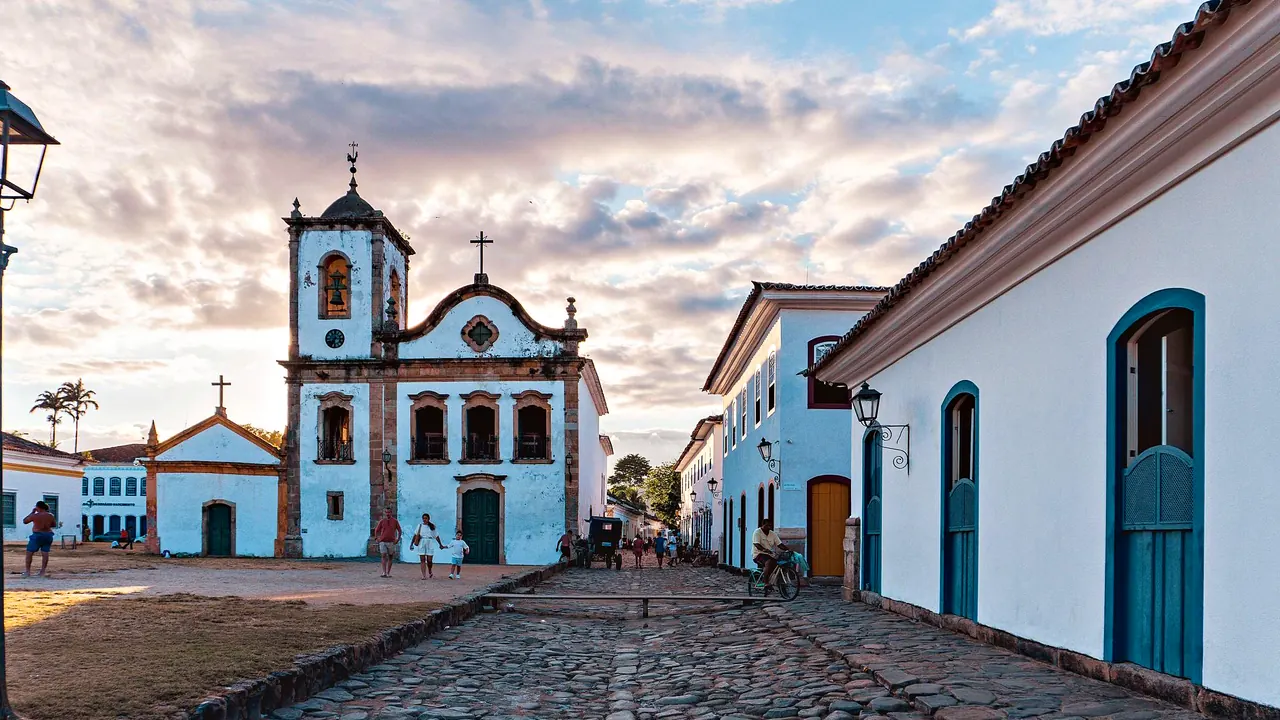
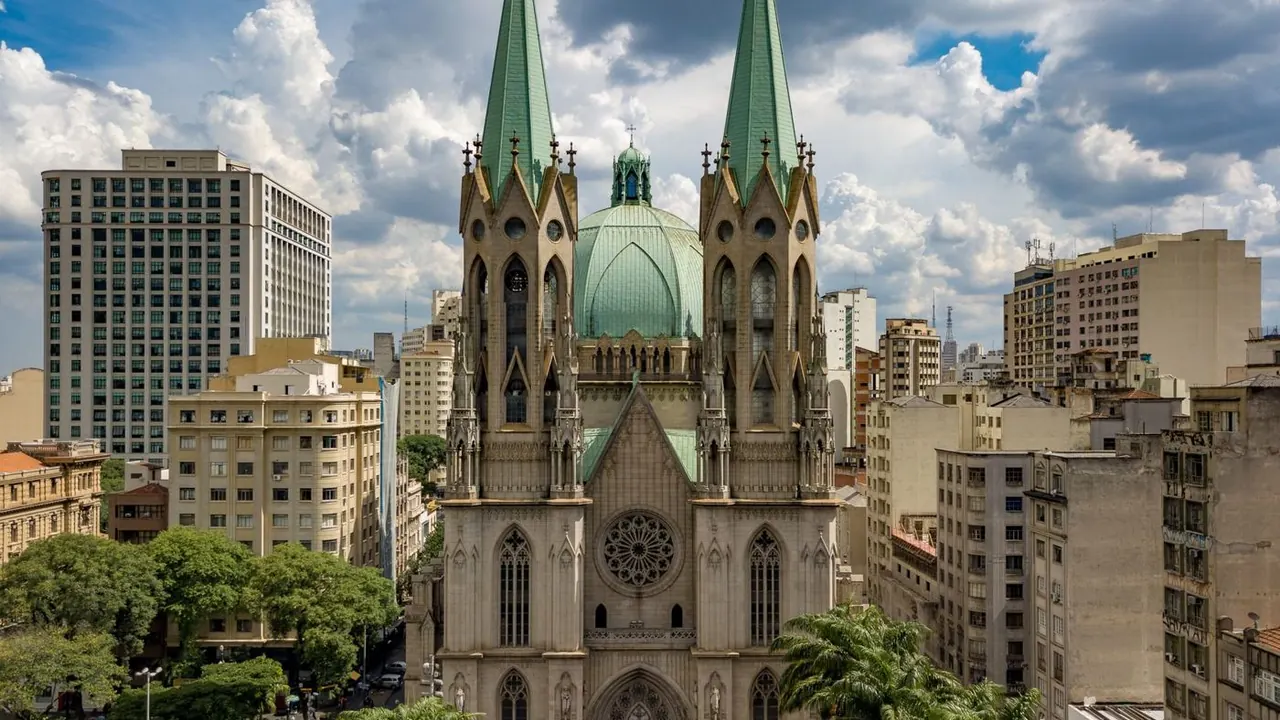
Photos: Paraty by Gabriel Zachi, Pexels License; Sao Paulo by Webysther Nunes, CC BY-SA 4.0, cropped.
Paraty or Sao Paulo?
Our verdict in twelve categories, each scored against the same fixed benchmark cities, and the climate month by month, so you can choose for your trip.
Choose Paraty for
- beaches
- nature and the outdoors
- wellness
Paraty suits travellers who want a slow coastal stay: a car-free colonial town to wander, boat days among the islands of the bay, forest trails and waterfalls behind it, and evenings that end after a long dinner and a caipirinha. It is the better choice for a couple or a family who want water, landscape and quiet more than things to do, and who are happy to stay put for a few days.
Choose Sao Paulo for
- nightlife
- live music and the arts
- food and drink
Sao Paulo is for the traveller who comes for the city itself. It wins clearly on eating, going out, shopping and live performance, with immigrant food traditions, clubs that run until morning, a real concert and theatre calendar and serious modern architecture. Expect long journeys between districts and no beach to speak of, and treat the sea and the forest as somewhere you go away to.
Scoreboard
Twelve categories on one fixed scale from 0 to 100. The shaded stretch is the gap between the two.
Your match
Pick a travel style or drag the sliders, and both match scores follow your weighting.
Wins on beaches and nature and the outdoors with your weighting.
Wins on nightlife and live music and the arts with your weighting.
What matters to you?
Category by category
What the scores mean for a trip.
Beaches & swimming
Paraty is the beach destination of the two, though not because of its own town beaches, which are shallow and murky. The real pleasure is a boat trip to the forest-backed coves around the islands of the bay. Trindade, about forty minutes away, adds open-sea beaches and the clear rock pool at Cachadaço.
Sao Paulo sits inland on its plateau. Its nearest sand, at Santos and Guarujá, is an hour or more away, and those beaches are wide and urban rather than pretty. The lovely north coast around Ubatuba needs a whole weekend, and the weekend traffic heading down to the sea makes even that a slog.
Food & drink
Sao Paulo is one of the main reasons to visit Brazil for food: the Japanese counters of Liberdade, Bixiga's pizza and cantinas, Lebanese and Syrian cooking, feijoada days, the Mercado Municipal and some of South America's most ambitious kitchens in Jardins and Pinheiros.
Paraty's table is narrower and coastal, with grilled fish, shrimp and the blue-green azul marinho stew served in candlelit townhouses. Its real speciality is cachaça, tasted at small distilleries in the hills, but there are no markets or street food to explore.
Culture & sights
The two offer heritage of opposite kinds. Paraty is a single, intact UNESCO-listed ensemble of whitewashed colonial houses and baroque churches such as Santa Rita, built on the gold trade, and its charm lies in the whole streetscape rather than individual sights, which are covered in a day.
Sao Paulo has much more to visit, though almost all of it is modern: MASP's glass easels, Brazilian art at the Pinacoteca, the language museum in Luz station and the architecture of Niemeyer and Lina Bo Bardi. Colonial buildings are scarce and the sights are spread far apart.
Nightlife
Sao Paulo goes out all night, moving from pavement botecos to cocktail bars to clubs after 2am, with Vila Madalena, Baixo Augusta, Pinheiros and República each drawing a different crowd, internationally known electronic venues and one of Latin America's largest LGBTQ+ scenes.
Paraty's evenings are a long dinner and a drink with a guitarist playing. The centre stays lively late only at weekends and in high season, Trindade's beach parties suit backpackers, and there are no real clubs.
Nature & outdoors
Paraty is surrounded by its landscape: Atlantic rainforest rising into Serra da Bocaina, the old Gold Trail, waterfalls and swimming holes, a bay of green islands for kayaking and snorkelling, and the fjord-like Saco do Mamanguá reached by boat.
In Sao Paulo, nature mostly means Ibirapuera Park and the Cantareira hills on the edge of the city. The Serra do Mar trails and Paranapiacaba are an hour or two out, and traffic turns most outdoor plans into early starts or weekends away.
Day trips
Sao Paulo gives you a longer, if modest, list of outings: historic Santos and its coffee exchange, the craft market at Embu das Artes, wineries at São Roque and interior towns such as Itu and Holambra, all best done on a weekday to dodge traffic.
Paraty is more somewhere to stay put. Trindade is the easy trip, while pottery studios in Cunha and the beaches of Ubatuba each take a longer drive, and Ilha Grande really deserves its own night or two.
Good for families
Sao Paulo has more organised for children: the hands-on Catavento science museum, a zoo with a drive-through safari, a large aquarium, Ibirapuera's playgrounds and theme parks near Vinhedo. The price is long car journeys, crowded pavements and staying alert in the centre.
Paraty's appeal for children is simpler and outdoors, with swimming stops on calm island beaches, the rock pools at Trindade and the waterfall slide. There is nothing built for them, and the old town's big uneven stones are hard work with a pushchair.
Getting around
Both are awkward in their own way. Paraty's car-free centre crosses in ten minutes on slow, rounded stones, but the beaches, waterfalls and distilleries need a boat, bus, taxi or tour.
Sao Paulo has a clean, easy metro that is simply too small for the city, so ride-hailing fills the gaps through heavy traffic. Districts like Jardins and Vila Madalena walk well on their own, but walking between sights rarely works.
Shopping & style
Sao Paulo is Brazil's shopping capital, from Brazilian labels and swimwear on Rua Oscar Freire and lavish malls to the wholesale chaos of Rua 25 de Março, the garment district of Bom Retiro and design studios in Pinheiros.
Paraty offers a pleasant evening browse instead: galleries, linen and jewellery boutiques in colonial shopfronts, and souvenirs such as hand-labelled cachaça, indigenous basketry and painted wooden boats, with no fashion shopping at all.
Affordability
For visitors from Europe or North America both feel moderately priced, and the difference lies in where the money goes. Sao Paulo's everyday life is cheap, with set lunches, padaria coffee, botecos, metro rides and free museum days, while its smart hotels and acclaimed restaurants approach Southern European prices.
Paraty charges resort prices for old-town pousadas and its better restaurants, especially on long weekends and at festival time, but shared schooner trips, kiosks and simple fish places are good value, and staying just outside the centre saves noticeably.
Live music & performing arts
Sao Paulo has a full calendar: the state symphony at Sala São Paulo, opera and ballet at the Theatro Municipal, Portuguese-language musicals, samba circles, choro and jazz clubs, low-cost SESC programmes and the all-night Virada Cultural.
In Paraty, music is samba and bossa nova played over dinner, with puppet theatre and festival street performance now and then. Its famous literary festival is about books and talks rather than performance.
Wellness & relaxation
Neither has a bathing tradition, but Paraty is far easier to unwind in. A quiet car-free old town out of season, garden pousadas with hammocks and pools, and forest or bayside retreats make it a place to switch off.
Sao Paulo offers polished day spas in Jardins and Itaim, salons and a few Japanese-style relaxation spots, yet the city's pace works against rest; a Sunday on car-free Paulista or under Ibirapuera's trees is the nearest it comes.
When should you go?
Pick your month. The climate figures are measured averages, not a forecast.
Paraty in July
Sao Paulo in July
Daytime high, °C
Rainfall in the month, mm
Where the figures come from
Paraty has no weather station within reach, so its figures come from a gridded climate model rather than a measured record, and read a broad area rather than the city itself.
Temperature and rainfall are climate normals, averaged over the years shown. Paraty: 1991-2020 normals, TerraClimate 4 km grid at the town, no weather station within 90 km. Sao Paulo: 1991-2020 normals, Sao Paulo (5.9 km from centre).
Both cities follow the same pattern: hot, very wet summers and drier, milder winters. In Paraty the heavy rain runs from December to March, often more than 300mm a month and mostly in afternoon downpours. The sea is warmest then, at about 27°C. The drier months from May to September are often nicer for boat trips and walking the old town, with warm but not oppressive days and the sea cooling to around 21°C in August. April and October fall in between, with warm water and much less rain than high summer.
Sao Paulo is a little cooler all year and dries out more sharply in winter. From May to August the days are mild and rain is light. August is the driest month, at 26mm, and also the sunniest, so late winter is the easiest time to get around the city on foot between metro stops. January is the wettest month, and summer storms slow the city's traffic badly.
Which traveller are you?
On a beach and sun trip, Paraty is the clear choice. Schooner days out to calm island coves in the bay and the wider sea-facing beaches of Trindade are on the doorstep, while from Sao Paulo the coast means a drive down the escarpment and crowded roads.
For a food and nightlife trip, Sao Paulo is in another league. Japanese Liberdade, Italian Bixiga, padarias, botecos and ambitious tasting menus fill the days, and Vila Madalena, Baixo Augusta and the club scene keep going until morning, where Paraty winds down after dinner.
On a culture and arts trip, Sao Paulo offers far more to see and attend: MASP, the Pinacoteca, Niemeyer's Ibirapuera, opera at the Theatro Municipal and the symphony at Sala São Paulo. Paraty's beautifully preserved old town fills one unhurried day, with mostly informal music.
Before you go
| Measure | Paraty | Sao Paulo |
|---|---|---|
| Official language | Portuguese | Portuguese |
| Currency | Brazilian Real (BRL) | Brazilian Real (BRL) |
| Sockets | CN60 Hz | CN60 Hz |
| Driving side | Right | Right |
| Time zone | UTC-3 | UTC-3 |
| Emergency number | Police 190, ambulance 192, fire 193 | Police 190, ambulance 192, fire 193 |
| Elevation | 5 m | 760 m |
| Main airport | Rio de Janeiro Galeão – Tom Jobim International Airport (GIG)157 km from centre54 non-stop destinations | São Paulo/Guarulhos–Governor André Franco Montoro International Airport (GRU)21 km from centre104 non-stop destinations |
| Public holidays this year | 14 days | 15 days |
By the numbers
| Measure | Paraty | Sao Paulo |
|---|---|---|
| City population | 47,668 | 11,451,999 |
| People per km² | 51 | 7,519 |
| Museums within 10 km | 2 | 90 |
| UNESCO World Heritage sites within 50 km | 1 | 0 |
| Swim season, months above 21 °C | 12 months | - |
Where else could you go?
Every comparison below shares a destination with this one, so you can follow Paraty or Sao Paulo somewhere new.
- Rio de Janeirovs Paraty
- Buziosvs Paraty
- Rio de Janeirovs Sao Paulo
- Florianopolisvs Sao Paulo
- Buziosvs Sao Paulo
- Florianopolisvs Paraty