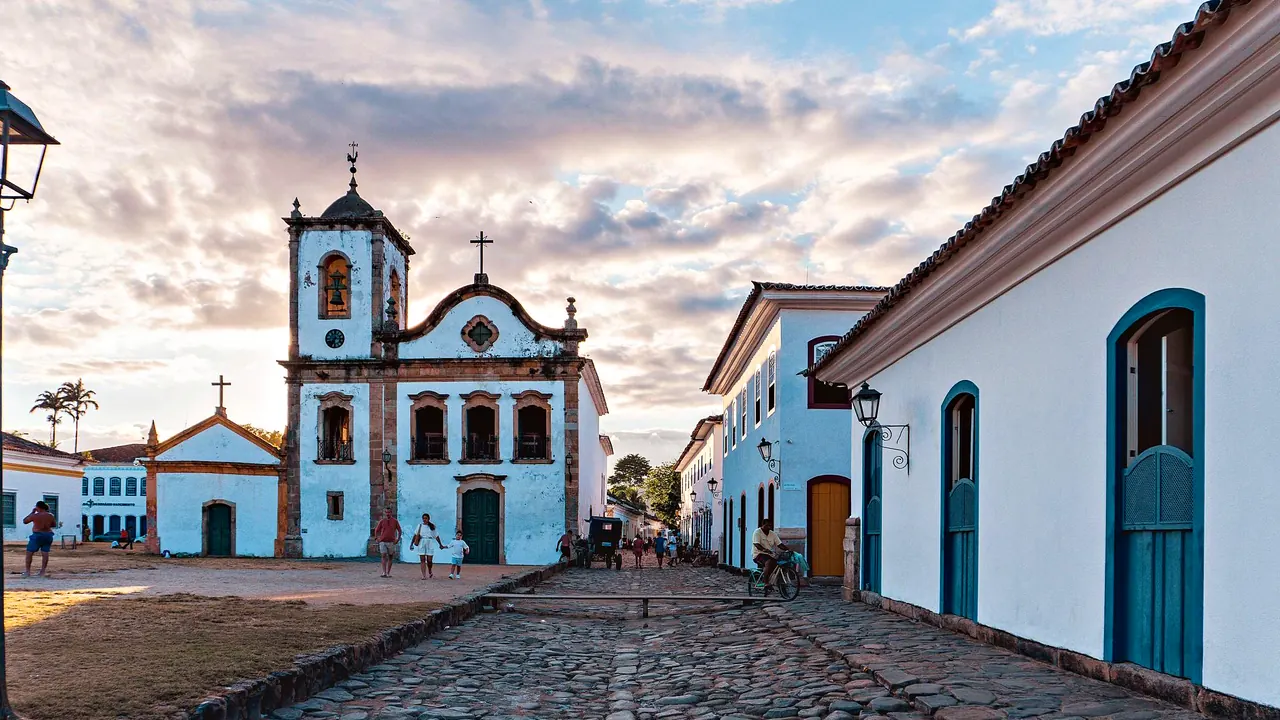
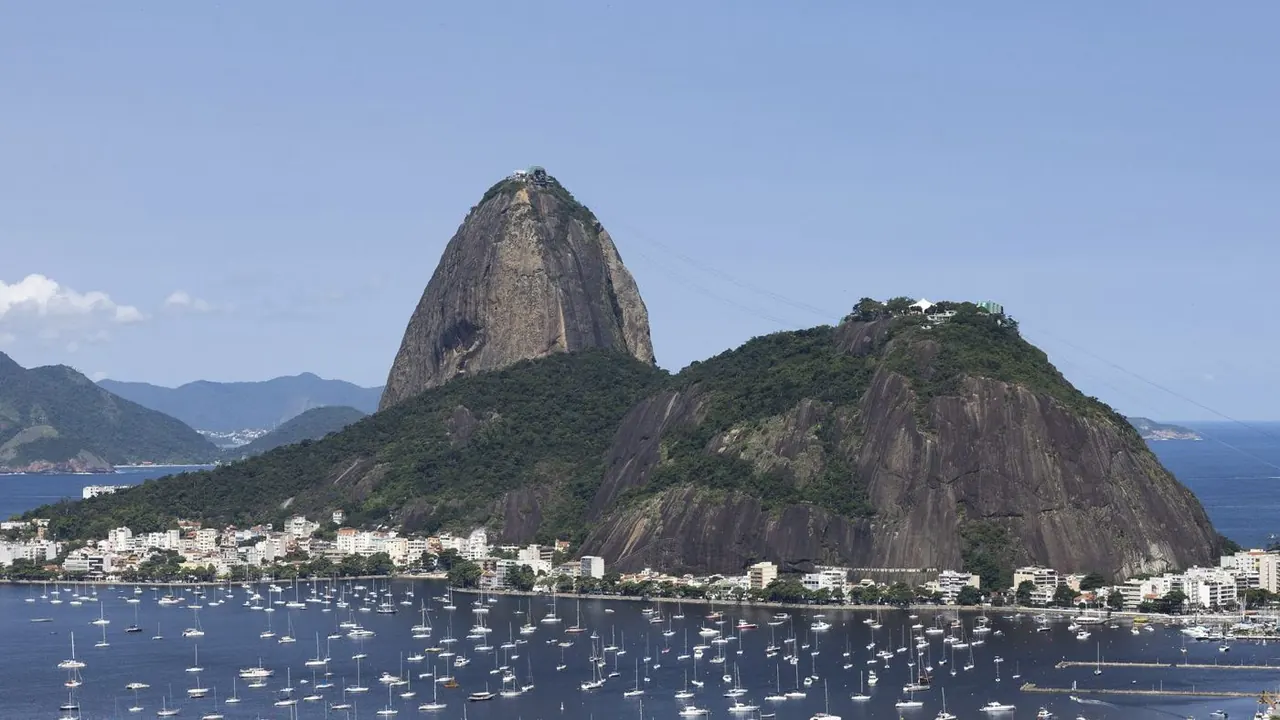
Photos: Paraty by Gabriel Zachi, Pexels License; Rio de Janeiro by Arne Müseler, CC BY-SA 3.0 DE, cropped.
Paraty or Rio de Janeiro?
Our verdict in twelve categories, each scored against the same fixed benchmark cities, and the climate month by month, so you can choose for your trip.
Choose Paraty for
- wellness
- getting around
Paraty suits travellers who want to slow down in one small, car-free colonial town. Mornings go on a schooner among the bay's islands, afternoons on forest trails and waterfalls, and evenings on a long dinner in a whitewashed street. The pleasures are quiet ones. If you need late nights, live samba or a long list of sights, you will run out of things to do quickly.
Choose Rio de Janeiro for
- nightlife
- live music and the arts
- culture and sights
Choose Rio for a city with far more going on. The ocean beaches start at the end of the street, Lapa and Botafogo stay up until dawn, and samba plays somewhere most nights. Corcovado, Sugarloaf and the Tijuca forest give it a setting few cities can match. It is louder, hotter and more demanding than Paraty, and it suits travellers looking for energy rather than rest.
Scoreboard
Twelve categories on one fixed scale from 0 to 100. The shaded stretch is the gap between the two.
Your match
Pick a travel style or drag the sliders, and both match scores follow your weighting.
Wins on wellness and getting around with your weighting.
Wins on nightlife and live music and the arts with your weighting.
What matters to you?
Category by category
What the scores mean for a trip.
Beaches & swimming
Paraty's best beaches are not on its doorstep. The town's own strips are shallow and murky, so good swimming means a boat out to forest-backed coves in the bay, where the water is calm, green and warm. The other option is the forty-minute trip south to Trindade and the clear rock pool at Cachadaço. Each beach day is an outing, though a lovely one.
In Rio the beach is part of daily life. Copacabana, Ipanema and Leblon start at the end of the hotel street, busy with volleyball and vendors from morning to sunset, and Prainha and Grumari offer emptier sand further west. The trade-off is open-ocean surf and currents where Paraty's bay is still, and you need to keep a closer eye on your belongings.
Food & drink
Paraty's cooking is narrow but local: grilled fish, shrimp and azul marinho, the fish stew turned blue-green by unripe banana, served in candlelit townhouse restaurants. Small distilleries in the hills offer cachaça tastings. Much of the old-town cooking is aimed at visitors, and there is no market or street food to explore.
Rio has more range, and its eating is more social. Botecos serve pastéis and bolinhos de bacalhau with ice-cold chopp, Saturday is for feijoada, and there are juice bars on every corner of the Zona Sul. Leblon, Ipanema and Botafogo have the more interesting modern kitchens.
Culture & sights
Paraty's culture is one very handsome whole. Whitewashed houses from the gold-shipping era stand on huge paving stones, with the baroque church of Santa Rita by the water and a small fort on the hill, all listed by UNESCO. You can see it in a day's slow walk, and the town itself is the sight.
Rio has far more to see, on a much bigger scale. Christ the Redeemer and Sugarloaf frame the city, the old centre has São Bento, the Paço Imperial and the Real Gabinete Português de Leitura, and the port has the Museu do Amanhã. The sights fill several full days, though the history is scattered among modern blocks rather than gathered in one place as in Paraty.
Nightlife
A night in Paraty means a long dinner, then a caipirinha while a guitarist plays. The streets are busier at weekends and in summer, and Trindade has beach parties for a younger crowd, but out of season the town goes quiet early.
Rio is a city for going out late. Crowds fill Lapa under the aqueduct arches, Botafogo's bars put their tables out on the pavements, Leblon and Ipanema's cocktail bars stay open past midnight, and the clubs run until dawn. In the weeks before Carnival the street blocos take over whole districts.
Nature & outdoors
Both are set where forested mountains meet the sea, and both are superb for nature, but in different ways. Paraty's nature is the water and wild country around a small town: kayaking and snorkelling among the bay's islands, the fjord-like inlet of Saco do Mamanguá, and the old Gold Trail and waterfalls of the Serra da Bocaina.
Rio comes out slightly ahead because so much of it lies inside the city. The Tijuca forest has trails, waterfalls, marmosets and toucans, and Dois Irmãos and Pedra da Gávea are short, steep climbs with views over the beaches. Hang-gliders land at São Conrado, and Arpoador and Prainha have surf, which Paraty's calm bay lacks.
Day trips
Paraty is a place to stay put. Trindade is the easy outing, Cunha's pottery studios and the beaches at Ubatuba are each an hour or more away, and Ilha Grande really needs a night of its own.
Rio has better choices within reach. Imperial Petrópolis sits in the cool hills, Niterói and its Niemeyer museum are a ferry ride across the bay, and Teresópolis and the old coffee towns lie further inland. Paraty is one of the longer trips from Rio and works better as an overnight stay than a day out.
Good for families
Neither place is built for children, and in both, families can count on how warmly Brazilians treat children. Paraty's offer is nature: boat days with swims at calm island beaches, Trindade's rock pools and the waterfall rock that children slide down. The old town's stones are hopeless for pushchairs, though.
Rio has things made for children that Paraty lacks, such as AquaRio, the BioParque zoo and the Sugarloaf cable car, and gentler water at Leme and Praia Vermelha. It asks more of parents, with heavy traffic, strong heat and the need to watch belongings.
Getting around
Each is awkward in its own way. Paraty's centre is tiny and car-free but slow to walk on its rounded stones, and everything beyond it, from the bay beaches to the waterfalls, means a boat, a bus, a taxi or a tour.
Rio has a clean metro on just the line a visitor needs, from the centre through Botafogo to Copacabana, Ipanema and Leblon, and a flat promenade to walk. Off that line, Santa Teresa, the Tijuca forest and the western beaches need taxis or ride-hailing, and traffic through the tunnels is slow.
Shopping & style
Shopping in Paraty is an evening stroll through galleries and craft shops in colonial shopfronts. The things to take home are hand-labelled cachaça, indigenous basketry and painted wooden boats.
Rio has more shops and more variety. Ipanema and Leblon boutiques sell swimwear and resort linen, there are big malls, a Sunday hippie fair at Praça General Osório and the crowded Saara streets downtown. For crafts with a real sense of place, though, Paraty's small selection is the more distinctive.
Affordability
Overall costs are much the same, but they fall in different places. In Paraty the old-town pousadas and better restaurants charge resort rates and long weekends push rooms up, while shared schooner trips, local buses and simple fish places stay good value. In Rio everyday spending is cheap, from kilo lunches to the metro, and the beaches and trails cost nothing, but hotels near the sand are poor value and rates rise steeply around Carnival and New Year.
Live music & performing arts
In Paraty, music is mostly a backdrop to dinner: samba, bossa nova and MPB in old-town restaurants. There is also a puppet theatre tradition and some festival concerts, but little formal programme for most of the year.
Rio is the home of samba. Bands play samba and choro in Lapa's old houses, rodas de samba gather in squares, the samba schools open their rehearsals before Carnival, and bossa nova still has small venues in Ipanema and Copacabana, where it was born. The Theatro Municipal adds opera, ballet and concerts.
Wellness & relaxation
Neither city has a bathing or spa tradition of its own, so it comes down to how easily each lets you unwind. Paraty has the edge because calm is its natural state. Treatments come from the pousadas and a handful of yoga and massage studios, but the main benefit is a small town with little to rush between, where a quiet morning needs no planning.
In Rio, relaxing takes more effort. The big beachfront hotels have the better spas, yoga on the sand is easy to find, and a sunset walk along the promenade or around the lagoon slows the pace. For real quiet, though, you have to leave the beach districts for the cooler hills of Santa Teresa or the mountain towns inland, which you never need to do in Paraty.
When should you go?
Pick your month. The climate figures are measured averages, not a forecast.
Paraty in July
Rio de Janeiro in July
Daytime high, °C
Rainfall in the month, mm
Where the figures come from
Paraty has no weather station within reach, so its figures come from a gridded climate model rather than a measured record, and read a broad area rather than the city itself.
Rio de Janeiro has no weather station within reach, so its figures come from a gridded climate model rather than a measured record, and read a broad area rather than the city itself.
Temperature and rainfall are climate normals, averaged over the years shown. Paraty: 1991-2020 normals, TerraClimate 4 km grid at the town, no weather station within 90 km. Rio de Janeiro: 2001-2020 normals, NASA POWER reanalysis grid, no weather station within 90 km.
Both places are warm all year and wettest in the southern summer, but Paraty is the hotter and much rainier of the two. Its summer brings daytime highs around 30°C and over 300mm of rain a month from January to March, mostly in heavy afternoon downpours, although the bay is at its warmest then. From May to September the rain eases and the heat drops to the mid twenties, which makes the town far more comfortable to walk. The sea cools to about 21°C by August, which is still fine for swimming.
Rio is milder at both ends of the year. Summer highs stay in the high twenties and the wettest stretch runs from November to January. June to August is properly dry, with about 45mm a month, so it is the best time for hiking and long days on foot. Rio's sea is a little cooler than Paraty's in summer and much the same in winter. The bigger difference is that Rio's winter brings far less rain.
Which traveller are you?
On a relaxing and wellness trip, Paraty is the better choice. With few sights to tick off and little to keep you up at night, the days settle into a slow rhythm. In Rio, rest is something you have to look for.
For a food and nightlife trip, Rio wins easily. Eating and drinking are social and spill onto the street, evenings start late and keep going, and each district has its own scene. In Paraty the evening is pleasant, but it ends after dinner.
On a culture and arts trip, Rio gives you far more. World-famous landmarks and an old centre fill your days, and the city's music is a living tradition that carries on into the night. Paraty offers one beautifully preserved colonial streetscape rather than a programme of sights and shows.
Before you go
| Measure | Paraty | Rio de Janeiro |
|---|---|---|
| Official language | Portuguese | Portuguese |
| Currency | Brazilian Real (BRL) | Brazilian Real (BRL) |
| Sockets | CN60 Hz | CN60 Hz |
| Driving side | Right | Right |
| Time zone | UTC-3 | UTC-3 |
| Emergency number | Police 190, ambulance 192, fire 193 | Police 190, ambulance 192, fire 193 |
| Elevation | 5 m | 31 m |
| Main airport | Rio de Janeiro Galeão – Tom Jobim International Airport (GIG)157 km from centre54 non-stop destinations | Rio de Janeiro Galeão – Tom Jobim International Airport (GIG)12 km from centre54 non-stop destinations |
| Public holidays this year | 14 days | 14 days |
By the numbers
| Measure | Paraty | Rio de Janeiro |
|---|---|---|
| City population | 47,668 | 6,211,223 |
| People per km² | 51 | 4,930 |
| Museums within 10 km | 2 | 69 |
| UNESCO World Heritage sites within 50 km | 1 | 3 |
| Swim season, months above 21 °C | 12 months | 12 months |
Where else could you go?
Every comparison below shares a destination with this one, so you can follow Paraty or Rio de Janeiro somewhere new.
- Buziosvs Rio de Janeiro
- Sao Paulovs Paraty
- Buziosvs Paraty
- Sao Paulovs Rio de Janeiro
- Florianopolisvs Paraty
- Florianopolisvs Rio de Janeiro