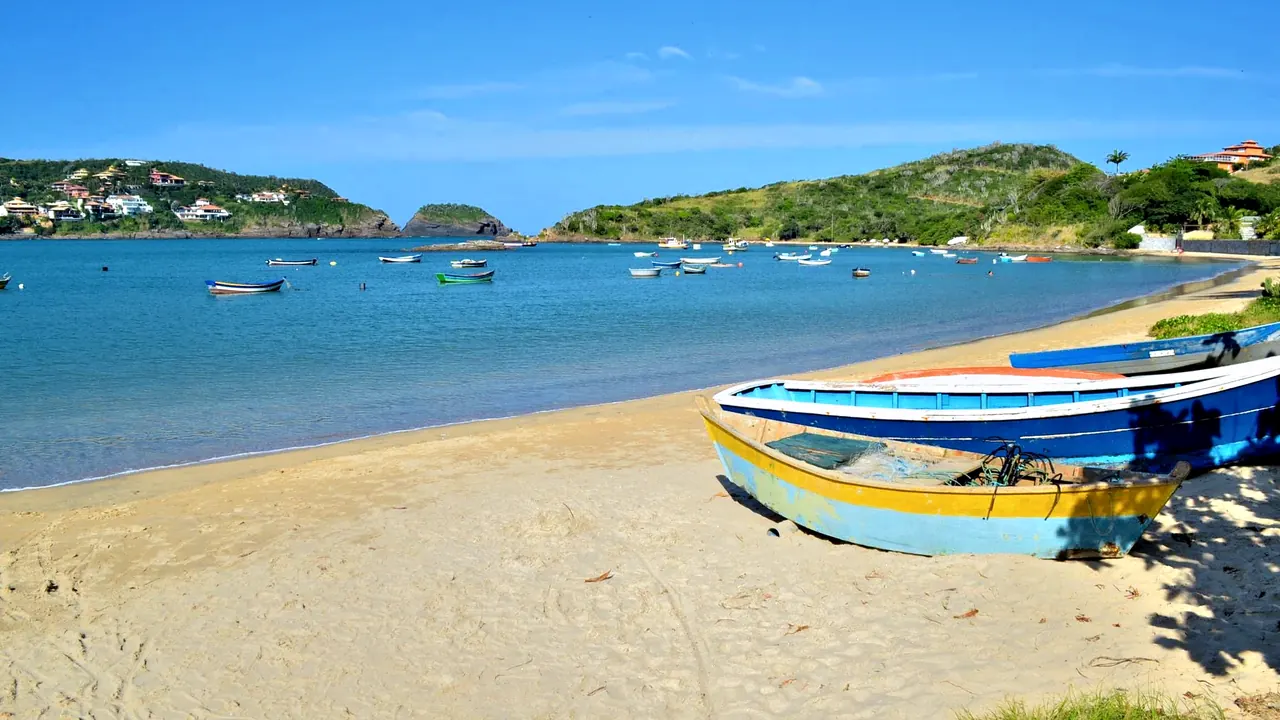
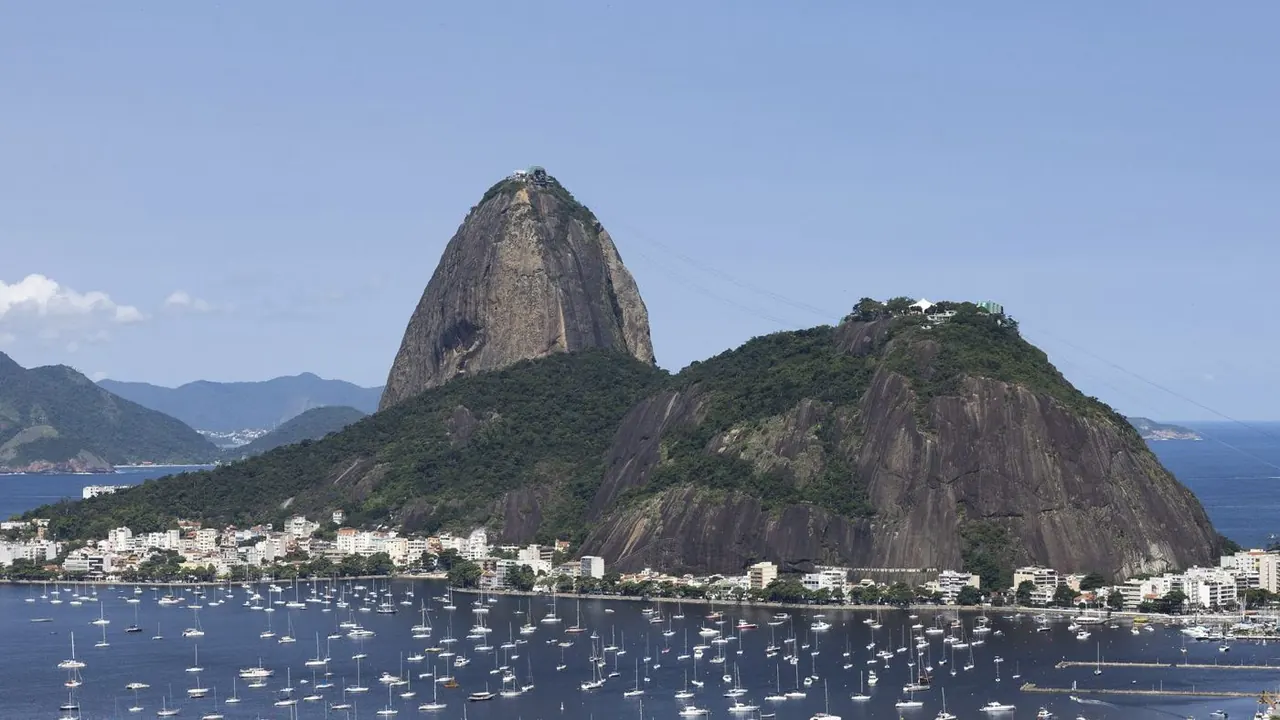
Photos: Buzios by Alberto1939, CC BY-SA 4.0, cropped; Rio de Janeiro by Arne Müseler, CC BY-SA 3.0 DE, cropped.
Buzios or Rio de Janeiro?
Our verdict in twelve categories, each scored against the same fixed benchmark cities, and the climate month by month, so you can choose for your trip.
Choose Buzios for
- wellness
Buzios is for travellers who want a slow beach vacation and little else. Its peninsula of calm bay coves and open surf beaches, linked by water taxis and schooners, makes each day a choice of where to swim, and the evenings end over grilled fish on the waterfront. It is the more restful of the two, especially outside the summer peak, but there is almost nothing to visit once you leave the sand.
Choose Rio de Janeiro for
- culture and sights
- live music and the arts
- nightlife
Rio de Janeiro suits almost every other kind of trip. You get beaches on a grand scale, and also forested mountains in the middle of the city, samba in Lapa, landmark sights on Corcovado and Sugarloaf, and a street nightlife that runs until dawn. It is louder and more tiring, but it gives you far more to fill your days with, and everyday costs are lower.
Scoreboard
Twelve categories on one fixed scale from 0 to 100. The shaded stretch is the gap between the two.
Your match
Pick a travel style or drag the sliders, and both match scores follow your weighting.
Wins on wellness with your weighting.
Wins on culture and sights and live music and the arts with your weighting.
What matters to you?
Category by category
What the scores mean for a trip.
Beaches & swimming
Both are serious beach destinations, but Rio has the edge. Copacabana, Ipanema and Leblon are within walking distance of the hotels, the sea is warm through much of the year, and further west Prainha and Grumari offer wilder surf under forested hills. The trade-offs are strong currents on the open beaches, polluted water inside Guanabara Bay and the need to keep an eye on your belongings.
Buzios offers something different: more than twenty smaller beaches on two contrasting sides of the peninsula. Sheltered coves such as Ferradura and Tartaruga are better for snorkelling and calm floating than anything on Rio's ocean front, while Geriba gives you surf and beach bars. The water there can be noticeably cooler, though.
Food & drink
Rio gives you more to eat. Its boteco culture of draught chopp and shared pastéis, Saturday feijoada, rodízio grills, cheap kilo lunches and juice bars on every corner add up to an everyday food life that goes well beyond the tourist trade.
Buzios eats well for a small resort, mostly grilled fish, moqueca and shrimp at tables along the Orla Bardot and Rua das Pedras, and the sunset views add a lot. However, it is cooking for visitors, with no markets or street food to explore.
Culture & sights
The gap here is wide. In Buzios an hour's stroll covers the sights: the whitewashed lanes of the old fishing village, the chapel of Sant'Ana and the Brigitte Bardot statue.
In Rio there are several full days of sightseeing, from Corcovado and Sugarloaf to the churches and Paço Imperial of the old centre, the museums around Praça Mauá, Santa Teresa's mansions and the Selarón steps.
Nightlife
Rio's nights are bigger, louder and less tied to the season. Crowds fill Lapa under the aqueduct arches, the pavement bars of Botafogo and Humaitá spill from one corner to the next, and in the weeks before Carnival the street blocos take over whole neighbourhoods.
In Buzios, nights out come down to Rua das Pedras, with lounge bars and small clubs full of a smart crowd in summer. Outside that season, a night out may mean little more than a drink by the water.
Nature & outdoors
Rio is in another league for the outdoors. The Tijuca forest covers the mountains in the middle of the city, short steep climbs up Dois Irmãos and Pedra da Gávea look down on the beaches, and hang-gliders land on the sand at São Conrado. The Serra dos Órgãos, with its multi-day hikes, is within about two hours.
Buzios is best seen from the water. Boat trips take you round headlands and islands, snorkellers find turtles in the bays, and the steady wind at Rasa and Manguinhos is good for kitesurfing. Inland the land is low and dry, with no forest trails.
Day trips
Rio has more within reach. Petrópolis offers imperial history and cooler mountain air, Niterói is a short ferry ride away for the Niemeyer museum, and Teresópolis and the old coffee towns make quieter outings.
From Buzios, the options are Cabo Frio's seventeenth-century fort and the boat trips at Arraial do Cabo, and then the list runs out. The three-hour road between the two works against both: neither makes a sensible day trip from the other.
Good for families
Both work about equally well for families, in different ways. Buzios is mostly about the water: shallow, calm coves at Ferradura and Joao Fernandes, pousadas with pools and snorkelling stops on boat trips, but nothing else built for children.
Rio adds the Sugarloaf cable car, the Corcovado railway, AquaRio and the BioParque zoo. The cost is summer heat, heavy traffic and constant watchfulness in the streets.
Getting around
Rio is easier to get around, as long as you stay along the coast. The metro links the centre with Botafogo, Copacabana, Ipanema and Leblon, and the beachfront promenades are flat and pleasant to walk. For the forest, Santa Teresa and the western beaches you'll need taxis or ride-hailing.
In Buzios you can walk the compact centre, but the rest of the hilly peninsula means taxis, hired buggies or water taxis, as buses are infrequent and some roads lack pavements. You also have about three hours by road from Rio's airport.
Shopping & style
Both are good for Brazilian swimwear, linen and resort fashion, but Rio has much more range. Alongside the Ipanema and Leblon boutiques it has large malls, the Sunday hippie fair, the crowded Saara streets for Carnival gear and the Feira de São Cristóvão for northeastern crafts.
In Buzios, shopping is an after-dinner stroll along Rua das Pedras, past galleries, jewellery shops and an evening craft fair, and that is about all there is.
Affordability
Rio is the cheaper of the two day to day. Kilo lunches, boteco snacks, the metro and ride-hailing cost little, and the beaches and forest trails are free. Accommodation near the sand is where the money goes.
Buzios charges resort prices for nearly everything, and getting around by taxi and boat adds up quickly on a spread-out peninsula. Going between April and November and eating at beach kiosks makes it more manageable. Both cities raise prices sharply around New Year and Carnival.
Live music & performing arts
Rio has a real music scene. Samba and choro bands play in Lapa's old houses, rodas de samba gather in squares, and samba school rehearsals in the months before Carnival are well worth seeing. The Theatro Municipal adds opera and ballet.
In Buzios, live music means bossa nova or samba playing in the background at a waterfront dinner, and there is no venue to plan an evening around.
Wellness & relaxation
Buzios is the easier place to unwind. Neither has a bathing tradition, but the hillside pousadas offer small spas and pools looking out to sea, and away from Rua das Pedras the days pass quietly, especially once the summer crowds leave.
Rio has good hotel spas and yoga on the sand, and an evening walk around the lagoon is restful. Outside those moments, though, the city is hot and noisy, and for real calm people head for the hills.
When should you go?
Pick your month. The climate figures are measured averages, not a forecast.
Buzios in July
Rio de Janeiro in July
Daytime high, °C
Rainfall in the month, mm
Where the figures come from
Buzios's temperatures are measured 46 km from the centre, at Macae / Barra.
Buzios has no rain gauge within 25 km of the centre, so its rainfall comes from a gridded climate dataset read at the city rather than from a gauge further away.
Rio de Janeiro has no weather station within reach, so its figures come from a gridded climate model rather than a measured record, and read a broad area rather than the city itself.
Temperature and rainfall are climate normals, averaged over the years shown. Buzios: 2007-2020 (rainfall 1991-2020) normals, Macae / Barra (45.7 km from centre). Rio de Janeiro: 2001-2020 normals, NASA POWER reanalysis grid, no weather station within 90 km.
Buzios has a hot, wet summer from November to March, with highs of about 33°C in February and the heaviest rain in March. A dry spell then runs from June to September, when rain stays under 50mm a month. Rio follows the same pattern with a milder summer, its highs staying near 28°C, but its storms are heavier and peak in November and December. Its dry season is also shorter, lasting from June to August, and the rain starts to pick up again in September.
The sea off both is around 25°C from January to April and cools to about 21°C by late winter. Cold upwelling can make some days off Buzios feel much colder than that. April and May are the best balance for both, with the sea still warm, the rain easing and the Buzios heat soft enough for walking around. From June to August, Rio's mild, dry days suit hiking and sightseeing, while the coves at Buzios stay dry and calm but the water is cool.
Which traveller are you?
For a relaxing and wellness trip, Buzios is the better choice. Pousadas on the hillsides have small spas and pools facing the sea, and a day spent at a quiet cove followed by a sunset over the bay is far calmer than Rio's hot, loud streets.
On a culture and arts trip, Rio wins easily. Christ the Redeemer, the gilded São Bento monastery, the Real Gabinete reading room and the port museums fill several days, and in the evenings there is samba in Lapa or opera at the Theatro Municipal.
For a food and nightlife trip, Rio is the clear choice. Its botecos, Saturday feijoada and juice bars give you more to eat, and Lapa, Botafogo and Leblon offer nights out all year. In Buzios the evenings centre on one street and slow down sharply out of season.
Before you go
| Measure | Buzios | Rio de Janeiro |
|---|---|---|
| Official language | Portuguese | Portuguese |
| Currency | Brazilian Real (BRL) | Brazilian Real (BRL) |
| Sockets | CN60 Hz | CN60 Hz |
| Driving side | Right | Right |
| Time zone | UTC-3 | UTC-3 |
| Emergency number | Police 190, ambulance 192, fire 193 | Police 190, ambulance 192, fire 193 |
| Elevation | 5 m | 31 m |
| Main airport | Rio de Janeiro Galeão – Tom Jobim International Airport (GIG)140 km from centre54 non-stop destinations | Rio de Janeiro Galeão – Tom Jobim International Airport (GIG)12 km from centre54 non-stop destinations |
| Public holidays this year | 14 days | 14 days |
By the numbers
| Measure | Buzios | Rio de Janeiro |
|---|---|---|
| City population | 40,006 | 6,211,223 |
| People per km² | 577 | 4,930 |
| Museums within 10 km | 0 | 69 |
| UNESCO World Heritage sites within 50 km | 0 | 3 |
| Swim season, months above 21 °C | 12 months | 12 months |
Where else could you go?
Every comparison below shares a destination with this one, so you can follow Buzios or Rio de Janeiro somewhere new.
- Paratyvs Rio de Janeiro
- Paratyvs Buzios
- Sao Paulovs Rio de Janeiro
- Sao Paulovs Buzios
- Florianopolisvs Rio de Janeiro
- Florianopolisvs Buzios