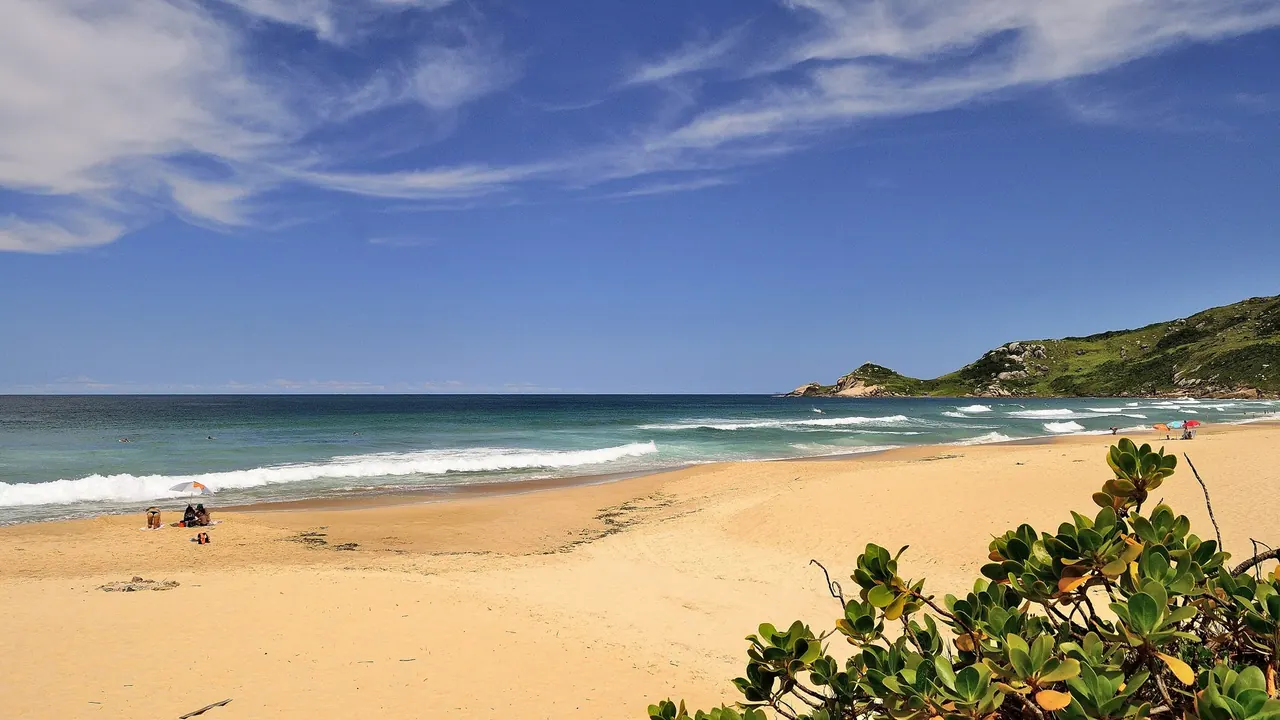
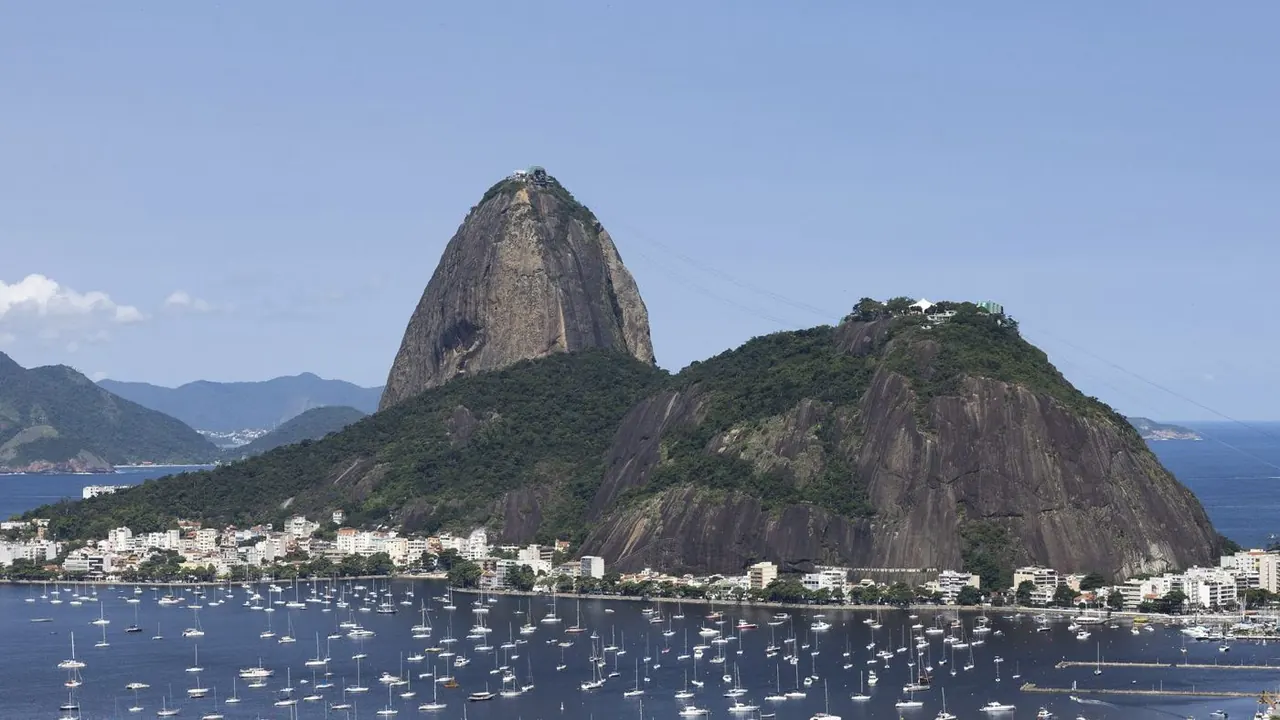
Photos: Florianopolis by Papa Pic, CC0; Rio de Janeiro by Arne Müseler, CC BY-SA 3.0 DE, cropped.
Florianopolis or Rio de Janeiro?
Our verdict in twelve categories, each scored against the same fixed benchmark cities, and the climate month by month, so you can choose for your trip.
Choose Florianopolis for
- wellness
- families
Florianopolis suits travellers who want the beach to be the whole trip, with a different stretch of sand for every mood: calm northern bays for small children, Atlantic surf on the east coast, and wild coves in the south that you reach on foot. It also has a slower pace, forest trails and lagoon water sports. Choose it if you are happy to rent a car, stay near the beaches you like best and skip museums and big-city sights.
Choose Rio de Janeiro for
- live music and the arts
- culture and sights
- nightlife
Rio de Janeiro is the better pick if you want a real city with your beach. Copacabana and Ipanema are a short walk from your hotel, Christ the Redeemer and Sugarloaf are a short ride away, the forested peaks of Tijuca rise in the middle of town, and samba plays somewhere most nights. It suits couples and friends who like to go out late, see the sights by day and cover a lot in one trip.
Scoreboard
Twelve categories on one fixed scale from 0 to 100. The shaded stretch is the gap between the two.
Your match
Pick a travel style or drag the sliders, and both match scores follow your weighting.
Wins on wellness and families with your weighting.
Wins on live music and the arts and culture and sights with your weighting.
What matters to you?
Category by category
What the scores mean for a trip.
Beaches & swimming
Both are serious beach destinations, but Rio comes out ahead for daily beach life. Copacabana, Ipanema and Leblon start at the edge of the main hotel districts, the water is warm in every month, and the sand is the city's social centre, with footvolley, vendors and crowds until sunset. Just don't swim in Guanabara Bay.
Florianopolis has more variety. You can choose between sheltered warm bays in the north, open surf at Joaquina and Mole, and remote coves such as Lagoinha do Leste. The catch is that these beaches are spread around a large island, and from June to August the sea is cold.
Food & drink
The two eat at about the same level but in different styles. Florianopolis is about seafood by the water: oysters from the island's own farms at Ribeirao da Ilha and Santo Antonio de Lisboa, and long shrimp feasts.
Rio's eating is centred on the boteco, with shared snacks, cold chopp, Saturday feijoada and a juice bar on almost every Zona Sul corner. Leblon and Botafogo have more modern restaurants. Neither city is a destination for food lovers.
Culture & sights
Rio has far more to see. Christ the Redeemer and Sugarloaf are only the beginning: the old centre has the gilded São Bento monastery, the Theatro Municipal and the Real Gabinete Português de Leitura, the port has its two museums, and Santa Teresa leads down to the Lapa Arches. It takes a few full days to see it properly.
Florianopolis has less, but it has charm: the Hercilio Luz bridge, the square around the cathedral and the old market, the whitewashed Azorean villages and the 18th-century forts around the bay. That is a day or two between beaches.
Nightlife
Rio has the stronger nightlife, and it lasts all year. On weekends Lapa fills with street drinking under the aqueduct arches, Botafogo's bars spill onto the pavements, and Leblon has a smarter crowd that stays out past midnight. Before Carnival, the street blocos take over whole neighbourhoods.
Florianopolis is a summer scene. From December to Carnival, the beach clubs of Jurere host big DJs and the bars around Lagoa da Conceicao stay busy late. In winter many venues close, and going out comes down to a few bars.
Nature & outdoors
Both are green, hilly and surrounded by water, but Rio's setting is more dramatic. A huge forest covers the mountains in the middle of the city. You can make short, steep climbs up Dois Irmãos or Pedra da Gávea, hang-glide down to São Conrado, and hike for several days in the Serra dos Órgãos about two hours away.
Florianopolis is better for water sports. You can kitesurf and paddle on the lagoon, surf consistent breaks on the east coast, and walk forest paths to beaches that have no roads. From July to November you can also see whales offshore to the south.
Day trips
Day trips are about equal in both cities, though the kind of outing differs. From Florianopolis you can visit the German-settled towns of Blumenau and Pomerode, the high-rise resort of Balneario Camboriu, or the relaxed surf towns to the south.
Rio's best day trips are the imperial mountain town of Petrópolis and the ferry to Niterói. Its most famous nearby places, Paraty, Búzios and Ilha Grande, are too far for a day and need an overnight stay.
Good for families
Florianopolis is easier with children. The beaches at Canasvieiras, Jurere and Daniela are shallow and calm, sandboarding and boat trips keep older children busy, and Beto Carrero World is a day trip away. On the other hand, there is little else for children on the island, and summer traffic jams between beaches can wear them out.
Rio has some memorable children's outings, such as the Sugarloaf cable car, the Corcovado train, AquaRio and the BioParque. But the heat, the uneven pavements and the need to keep an eye on your belongings make a family trip there harder work.
Getting around
Rio is easier to get around. The metro runs along the stretch most visitors use, from the centre through Botafogo to Copacabana, Ipanema and Leblon, and the flat seafront promenade is easy to walk. You will need taxis or ride-hailing for Santa Teresa, the forest and the western beaches.
Florianopolis is spread along roughly 50km of narrow island roads, and the buses run through hub terminals, so you often have to change. Most visitors rent a car or use ride-hailing. Base yourself on the coast you like best rather than crossing the island every day.
Shopping & style
Bobbin lace is the one thing to look for in Florianopolis: renda de bilro, made by women in the Azorean villages and sold in Santo Antonio de Lisboa and around the Mercado Publico. Beyond that, the island's malls and a few surf and swimwear boutiques in Jurere and Lagoa cover practical needs.
Beachwear is Rio's strength, and there is far more of it to browse. The boutiques of Ipanema and Leblon do Brazilian swimwear, linen and resort fashion well, the Sunday hippie fair on Praça General Osório adds crafts and leather, and downtown the Saara streets are packed with cheap fabric and Carnival costumes. For a real shopping afternoon, Rio gives you much more choice.
Affordability
Overall costs are much the same, and in both cities rooms get expensive at Carnival and New Year. Rio's main attractions, the beaches, the promenade and the forest trails, cost nothing, and the metro is cheap. Hotels close to the sand in the Zona Sul are poor value, though.
In Florianopolis you will probably need to rent a car, and Jurere is priced as a luxury enclave. Outside the summer months rooms get much cheaper, so an off-season trip is the best deal of all.
Live music & performing arts
Live performance in Florianopolis comes down to two stages in the centre, the 19th-century Teatro Alvaro de Carvalho and the Centro Integrado de Cultura, where touring Brazilian acts appear, plus samba and acoustic sets in the bars around Lagoa. The Azorean boi-de-mamao pageant turns up only at festivals.
Samba makes Rio a different proposition altogether. Samba and choro bands play most nights in Lapa's old two-storey houses, rodas gather around tables in squares and courtyards, and before Carnival the samba schools open their rehearsals in their home districts. Bossa nova keeps small rooms in Ipanema and Copacabana, and the Theatro Municipal stages opera and ballet. If live music matters to your trip, Rio wins easily.
Wellness & relaxation
Florianopolis is the better place to slow down, at least outside high season. The southern villages and quieter parts of the lagoon are peaceful, there are small yoga retreats, and the hot springs at Santo Amaro da Imperatriz are less than an hour inland. In peak summer it gets crowded and noisy.
Rio has good hotel spas and yoga on the sand, but no thermal baths, and the city stays loud and hot. For real quiet, you have to go up to Santa Teresa or out to the mountain towns.
When should you go?
Pick your month. The climate figures are measured averages, not a forecast.
Florianopolis in July
Rio de Janeiro in July
Daytime high, °C
Rainfall in the month, mm
Where the figures come from
Rio de Janeiro has no weather station within reach, so its figures come from a gridded climate model rather than a measured record, and read a broad area rather than the city itself.
Temperature and rainfall are climate normals, averaged over the years shown. Florianopolis: 1991-2020 normals, Florianopolis (1.7 km from centre). Rio de Janeiro: 2001-2020 normals, NASA POWER reanalysis grid, no weather station within 90 km.
Florianopolis has much sharper seasons. From December to March it is hot, often near 30°C, and the sea is at its warmest, but this is also the wettest stretch, with about 243mm of rain in January, usually in short heavy bursts. From June to August the days drop to around 21°C and the sea gets too cold for most swimmers. These are the drier months, though, and good for forest trails and walks around the villages. Sunshine holds up fairly well all year and dips a little in early spring.
Rio barely changes through the year. Daytime highs stay in the mid to high twenties, and the sea never falls below 21°C, so you can swim in any month. Most of the rain falls from November to January. The best time for hiking, the viewpoints and walking the old centre is June to August, when rainfall drops to about 45mm a month and the humidity eases.
Which traveller are you?
On a culture and arts trip, Florianopolis gives you a pleasant day among Azorean churches and colonial forts, but Rio fills several. Its old centre, port museums and hilltop landmarks come with live samba and choro after dark, which the island cannot match.
On a family trip with young children, Florianopolis suits parents who want a simple routine: one base beside a calm bay, short walks to the water and little reason to drive. Rio asks more, with city heat, crowds and constant attention to bags and small hands.
For a relaxing and wellness trip, Florianopolis suits those who come outside high season, when the island slows to a surf-and-yoga rhythm and thermal waters are an easy outing. Rio rewards energy rather than rest, and real quiet means leaving town.
Before you go
| Measure | Florianopolis | Rio de Janeiro |
|---|---|---|
| Official language | Portuguese | Portuguese |
| Currency | Brazilian Real (BRL) | Brazilian Real (BRL) |
| Sockets | CN60 Hz | CN60 Hz |
| Driving side | Right | Right |
| Time zone | UTC-3 | UTC-3 |
| Emergency number | Police 190, ambulance 192, fire 193 | Police 190, ambulance 192, fire 193 |
| Elevation | 3 m | 31 m |
| Main airport | Hercílio Luz International Airport (FLN)9 km from centre21 non-stop destinations | Rio de Janeiro Galeão – Tom Jobim International Airport (GIG)12 km from centre54 non-stop destinations |
| Public holidays this year | 14 days | 14 days |
By the numbers
| Measure | Florianopolis | Rio de Janeiro |
|---|---|---|
| City population | 587,486 | 6,211,223 |
| People per km² | 870 | 4,930 |
| Museums within 10 km | 11 | 69 |
| UNESCO World Heritage sites within 50 km | 0 | 3 |
| Swim season, months above 21 °C | 7 months | 12 months |
Where else could you go?
Every comparison below shares a destination with this one, so you can follow Florianopolis or Rio de Janeiro somewhere new.