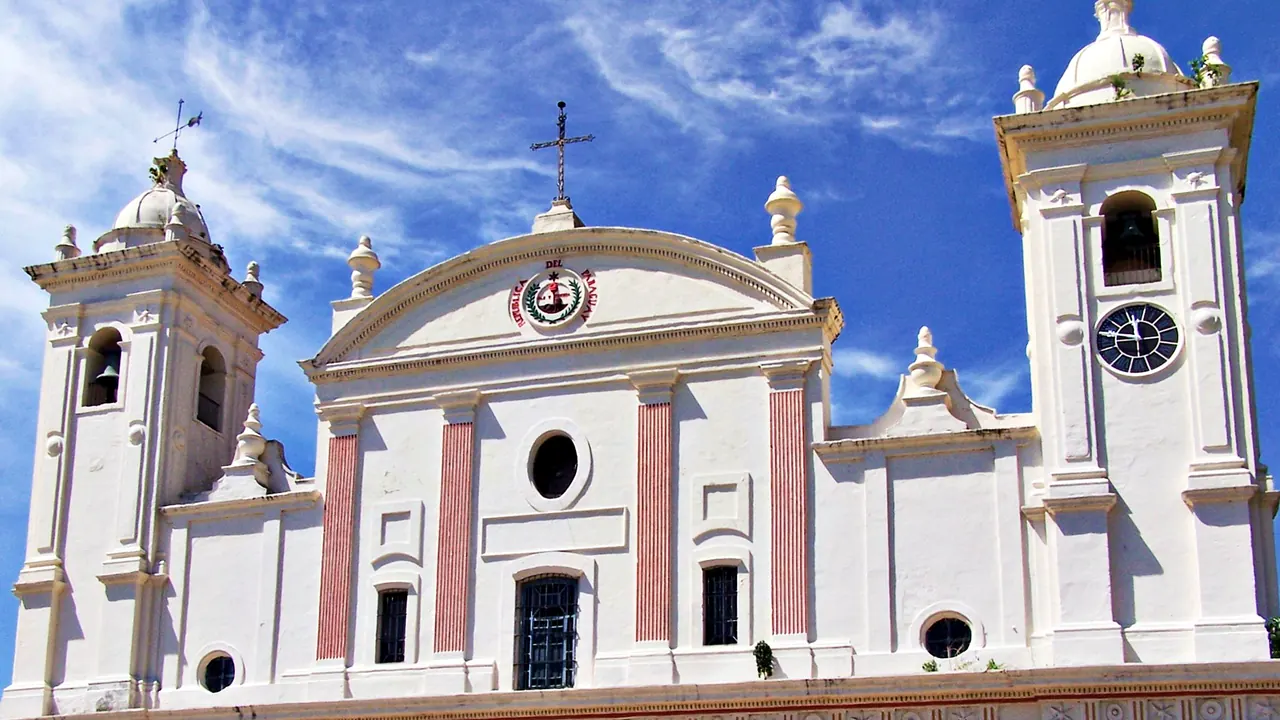
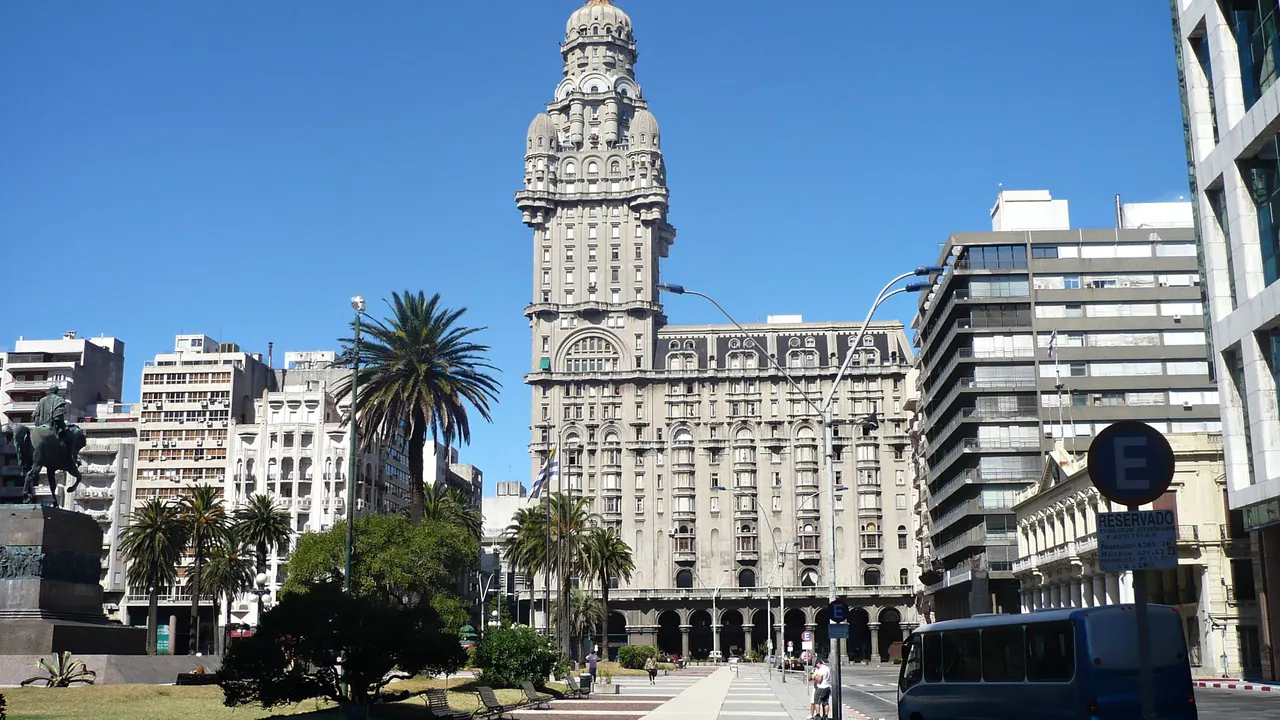
Photos: Asunción by Tom D'Arby, Pexels License; Montevideo by Andrés Franchi Ugart…, CC BY-SA 3.0, cropped.
Asunción or Montevideo?
Our verdict in twelve categories, each scored against the same fixed benchmark cities, and the climate month by month, so you can choose for your trip.
Choose Asunción for
- prices
Asunción is for a traveller who wants a South American capital at its least polished and least expensive. The appeal lies in small things: chipa from a street basket, tereré passed round in the shade, harp music at a peña, the lace and pottery towns of the Circuito Central. Comfortable hotels and steak dinners cost little. Two days covers the city, so it works best as a curious, low-cost stop for someone happy without beaches or big sights.
Choose Montevideo for
- beaches
- getting around
- families
Montevideo gives more back on almost every other front. In summer it has city beaches along the Rambla, it has the old town and the Teatro Solís, and it has Carnaval drumming in the streets. Colonia del Sacramento and the Atlantic resorts are within reach, and the city is easy going with children. You pay roughly Southern European prices for that, but for a rounded trip with more to do each day, it is the safer choice.
Scoreboard
Twelve categories on one fixed scale from 0 to 100. The shaded stretch is the gap between the two.
Your match
Pick a travel style or drag the sliders, and both match scores follow your weighting.
Wins on prices with your weighting.
Wins on beaches and getting around with your weighting.
What matters to you?
Category by category
What the scores mean for a trip.
Beaches & swimming
Asunción lies more than 1,000km from the sea on a wide, muddy river that is uninviting for swimming. The sandy bay on the Costanera is for sitting at dusk, and the warm lake at San Bernardino is often spoiled by algae, so in summer people cool off in pools.
Montevideo has a whole chain of city beaches along the Rambla, from Pocitos to the broader sands of Carrasco, and in January and February summer life revolves around them. The water is estuary rather than sea, often silty and sometimes off limits after rain, but it is a beach city in a way Asunción never is.
Food & drink
Beef sits at the centre of both tables, but Montevideo serves it with more ceremony and more choice. The grills of the Mercado del Puerto, the chivito sandwich and Tannat from the nearby vineyards make eating a real part of the trip, even if the range narrows beyond meat and Italian-style dishes.
Asunción's cooking is plainer and more unusual, built on corn, cassava and cheese: warm chipa, the solid cornbread called sopa paraguaya, bori bori soup and cheap counters at Mercado 4. Outside Villa Morra and Las Carmelitas the choice thins quickly, so it rewards curiosity more than appetite.
Culture & sights
Both cities have kept their history in 19th-century public buildings rather than colonial streets. Asunción's centre is small: the white Palacio de López, the domed Panteón de los Héroes and the modest house where independence was planned. Its standout is the Museo del Barro, with Indigenous and folk art you will not see elsewhere.
Montevideo offers more to fill the days. The Ciudad Vieja mixes colonial houses with Art Deco façades, Plaza Independencia has the odd Palacio Salvo tower and the Teatro Solís, and the museums run from Torres García to the Andes air crash. Allow two or three days here, against two in Asunción.
Nightlife
Going out in Asunción means the eastern districts of Villa Morra and Las Carmelitas from Thursday to Saturday. You will find beer gardens, terraces and boliches running towards dawn, with a young, smartly dressed local crowd. It is friendly but contained, and the rest of the week is quiet.
Montevideo spreads its evenings across more neighbourhoods and keeps even later hours. There are pubs on the leafy streets of Pocitos and Punta Carretas, student bars in Cordón and Parque Rodó, and late venues in the Ciudad Vieja. It is still relaxed rather than wild, and in high summer part of the crowd moves to the coast.
Nature & outdoors
Neither city is an outdoors destination, but Montevideo has the edge on everyday open air. The Rambla runs for more than 20km along the water, with wide skies for running, cycling and sunset walks, and the older parks add shade.
Asunción's version is shorter: the Costanera, the riverside Jardín Botánico and the view from Cerro Lambaré. The heat limits time outside for much of the year. Further out, though, Ybycuí's forest trails and waterfalls offer more real nature than the gentle sierras near Piriápolis.
Day trips
Montevideo's day trips have bigger names. Colonia del Sacramento's cobbled Portuguese lanes, the seaside resorts of Piriápolis and Punta del Este, and wine tastings in Canelones give a varied choice, although the best of them make for a long day.
Asunción's outings are smaller and more about crafts and faith: lace makers in Itauguá, potters in Areguá, the painted Franciscan church at Yaguarón and the basilica at Caacupé. A hired car or driver is close to essential, and the Jesuit missions are too far to see in a day.
Good for families
Children are made welcome in both, including at late dinners, but Montevideo is far easier to manage day to day. It has the long, flat Rambla, shallow beaches in summer, playgrounds in every park and the old-fashioned rides and pedal boats of Parque Rodó.
Asunción offers little beyond a dated zoo, the Costanera and air-conditioned malls. Summer heat and rough pavements wear small children out quickly, so a hotel pool and taxis for every outing become part of the plan.
Getting around
Asunción is the harder city to move around. Its buses are old, crowded and poorly marked, the walkable centre is shadeless in summer, and the hotels and restaurants sit a few kilometres east, so most visitors take taxis or ride-hailing for nearly everything.
Montevideo has no metro either, but its buses take one rechargeable card on every line, the old town and 18 de Julio are flat for walking, and the Rambla links the coastal districts by bike or on foot. Only the city's long shape along the shore calls for a bus or cab on the longer runs.
Shopping & style
Shopping is about equal in the two cities: there are malls for everyday needs and crafts worth carrying home, but no luxury streets. The difference is in the crafts. Asunción has ñandutí lace, embroidered ao po'i cloth and Paraguayan harps, best bought in the villages that make them, plus the chaotic working market of Mercado 4.
Montevideo leans to leather, hand-knitted wool and silver-trimmed mate cups. The Sunday sprawl of Tristán Narvaja is the place to browse antiques and old records, and one of its malls is a converted former prison.
Affordability
Here Asunción is clearly ahead. Good hotels, taxis and market lunches cost very little, a smart steak dinner is modest by any measure, and most sights are free. Only imported goods and hired drivers push the bill up.
Montevideo catches out anyone expecting South American prices. Hotels and restaurants cost about what they would in Southern Europe, and more in summer near the beaches. Cheap buses, free museums and good-value set lunches help, but it remains a mid-priced city.
Live music & performing arts
Montevideo has a much stronger live scene. Carnaval runs for more than a month, with murga troupes on neighbourhood tablados and candombe drums leading the Llamadas through Barrio Sur and Palermo. The Teatro Solís and the SODRE host opera, ballet and orchestras, and tango plays all year.
Asunción's stage life is smaller and less well publicised. Its charm is the Paraguayan harp and the slow guarania at peñas and folk dinner shows, with the national symphony and ballet at the restored Teatro Municipal.
Wellness & relaxation
Asunción's calm comes mostly from the afternoon heat slowing everything down. There is no bathing culture, only hotel spas and a few day spas in the eastern districts, so unwinding means sharing tereré in the shade and an evening stroll on the Costanera.
Montevideo is the more restful of the two, though treatments there also mean an upmarket hotel, and the country's thermal springs are far to the north. What it does have is mate on the Rambla walls at sunset, unhurried cafés and a milder climate, which make for a genuinely low-stress stay.
When should you go?
Pick your month. The climate figures are measured averages, not a forecast.
Asunción in July
Montevideo in July
Daytime high, °C
Rainfall in the month, mm
Temperature and rainfall are climate normals, averaged over the years shown. Asunción: 1991-2020 normals, Asuncion / Aeropuerto (1.5 km from centre). Montevideo: 1991-2020 (rainfall 1971-2000) normals, Carrasco (19.2 km from centre).
Asunción is hot for most of the year. From December to February highs sit around 33°C, which makes walking the streets heavy going at midday. The comfortable stretch runs from May to August, when days ease to about 25°C, the sky stays fairly sunny and July and August are the driest months. Rain returns in spring and peaks in November at around 193mm, with heavy showers through the summer.
Montevideo follows a more temperate pattern with clear seasons. January and February are the beach months: highs near 28°C, the estuary warming to about 24°C and very long sunny days. By June and July the city turns cool and grey, fine for museums and cafés but too chilly for the sand. Rain is spread fairly evenly through the year, with no real dry season. The easiest way to put it: Montevideo is best in the southern summer, Asunción in the southern winter.
Which traveller are you?
For a beach and sun trip, Montevideo is the only real option. Its sandy city beaches along the Rambla fill on summer afternoons, and the Atlantic resorts lie further east. Asunción's river is no good for swimming, so a hotel pool is the best it can offer.
On a trip on a tight budget, Asunción goes much further. Hotels, taxis, market lunches and even a smart steak dinner cost far less than in Montevideo, where restaurants and rooms run at roughly Southern European prices, especially by the coast in summer.
On a family trip with young children, Montevideo is far easier. The Rambla suits scooters and bikes, the beaches are shallow and calm, and Parque Rodó has pedal boats and rides. In Asunción, heat, broken pavements and little built for children make every outing hard work.
Before you go
| Measure | Asunción | Montevideo |
|---|---|---|
| Official language | Spanish, Guarani | - |
| Currency | Guarani (PYG) | Peso Uruguayo (UYU) |
| Sockets | C220 V, 50 Hz | CFIL230 V, 50 Hz |
| Driving side | Right | Right |
| Time zone | UTC-3 | UTC-3 |
| Emergency number | 911 | 911 |
| Elevation | 43 m | 41 m |
| Main airport | Silvio Pettirossi International Airport (ASU)12 km from centre14 non-stop destinations | Carrasco General Cesáreo L. Berisso International Airport (MVD)17 km from centre15 non-stop destinations |
| Public holidays this year | 12 days | 15 days |
By the numbers
| Measure | Asunción | Montevideo |
|---|---|---|
| Population | 462,241 | 1,302,954 |
| People per km² | 3,951 | 1,785 |
| Museums within 10 km | 5 | 36 |
| UNESCO World Heritage sites within 50 km | 0 | 1 |
| Swim season, months above 21 °C | - | 4 months |
Where else could you go?
Every comparison below shares a destination with this one, so you can follow Asunción or Montevideo somewhere new.
- Punta del Estevs Montevideo
- Colonia del Sacramentovs Montevideo
- Buenos Airesvs Montevideo
- Encarnaciónvs Asunción
- Ciudad del Estevs Asunción
- Foz do Iguacuvs Asunción