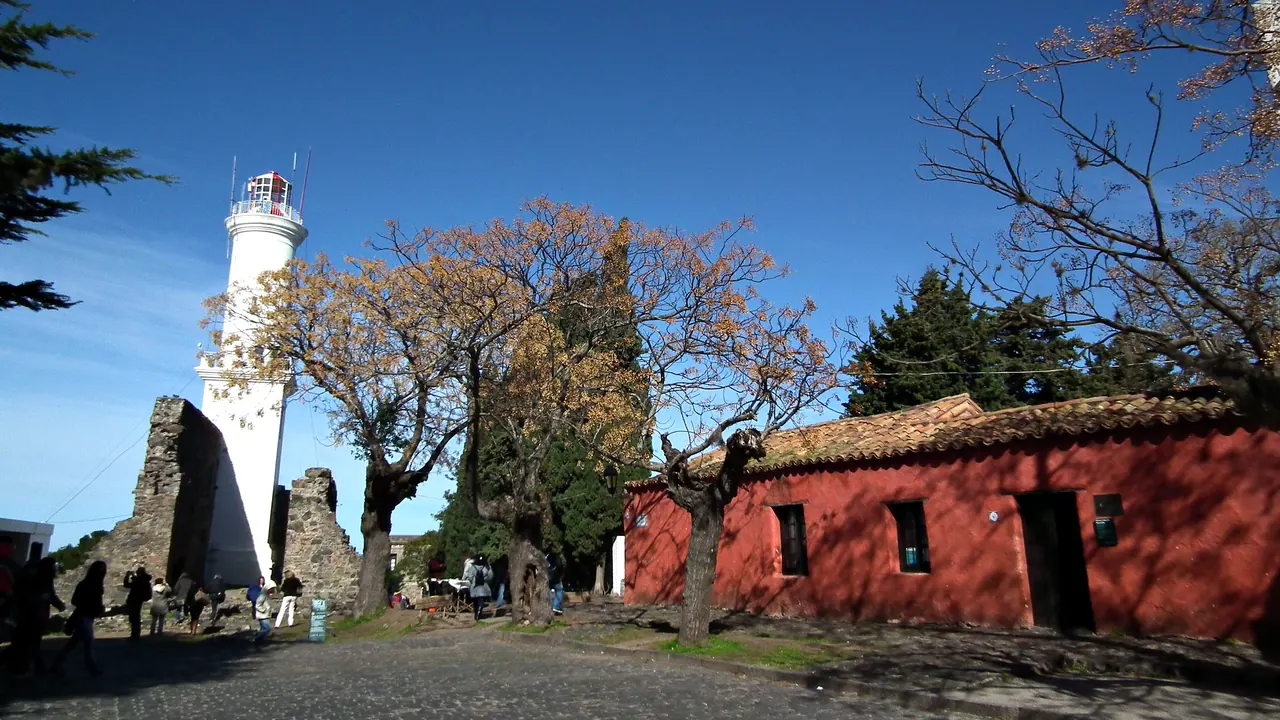
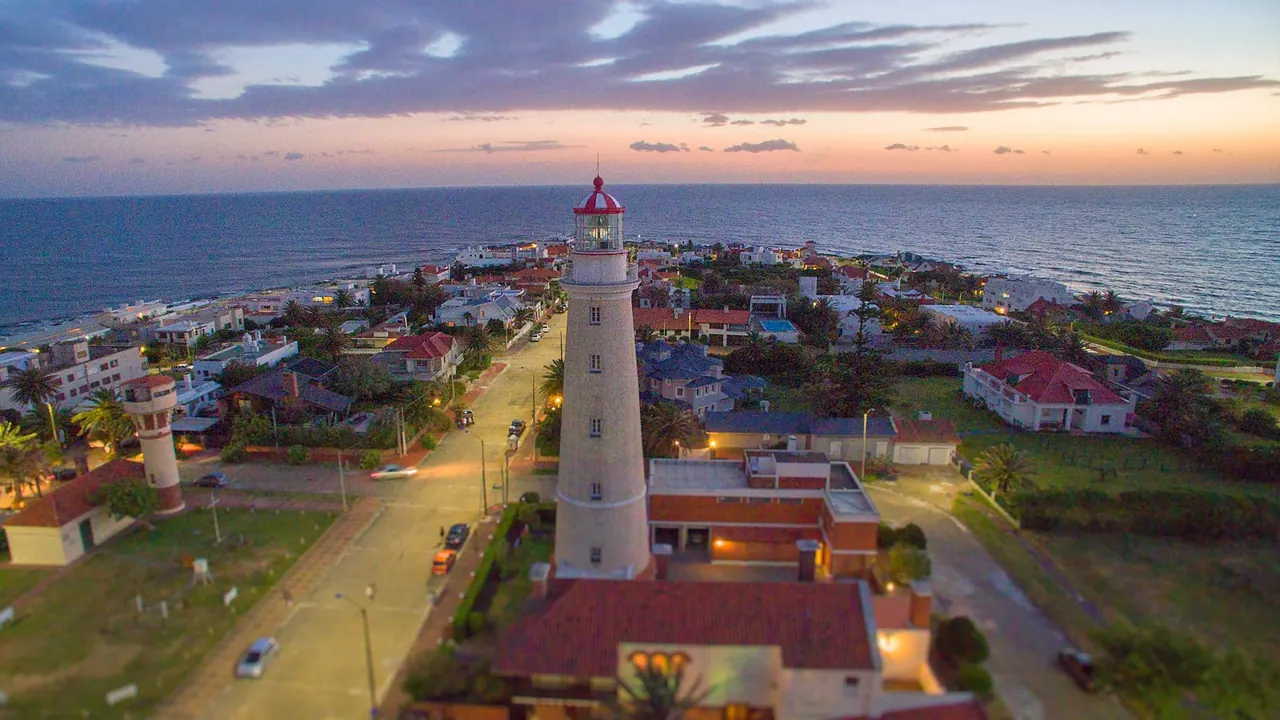
Photos: Colonia del Sacramento by Fulviusbsas, CC BY-SA 3.0, cropped; Punta del Este by Marcelo Campi, CC BY-SA 2.0, cropped.
Colonia del Sacramento or Punta del Este?
Our verdict in twelve categories, each scored against the same fixed benchmark cities, and the climate month by month, so you can choose for your trip.
Choose Colonia del Sacramento for
- culture and sights
- getting around
- prices
Colonia del Sacramento suits a traveller who wants history at a slow pace. Its cobbled Portuguese and Spanish old town is the most complete colonial quarter on this stretch of the river, everything sits within a short walk of the ferry, and Buenos Aires is close enough for a day out. Come for two or three quiet days of lanes, long lunches and sunsets, and come knowing the beaches are river beaches and the evenings end early.
Choose Punta del Este for
- nightlife
- beaches
- nature and the outdoors
Punta del Este is the choice for a summer beach vacation. It has calm water on one side of the peninsula, Atlantic surf on the other and miles of sand running east towards José Ignacio. In high season it adds late nights, beach clubs and better restaurants, and sea lions, lagoons and passing whales give it more nature as well. In return it costs more, it sprawls, so you will want a car, and it has little history to explore.
Scoreboard
Twelve categories on one fixed scale from 0 to 100. The shaded stretch is the gap between the two.
Your match
Pick a travel style or drag the sliders, and both match scores follow your weighting.
Wins on culture and sights and getting around with your weighting.
Wins on nightlife and beaches with your weighting.
What matters to you?
Category by category
What the scores mean for a trip.
Beaches & swimming
This is Punta del Este's home ground. Playa Mansa offers calm, shallow water for easy swimming and Playa Brava has Atlantic waves, and beyond them a string of wide beaches runs past La Barra and Manantiales, each with its own crowd.
Colonia's beaches face the brown, waveless Río de la Plata. The water is pleasantly warm in midsummer, but algae can rule out swimming in hot spells. They are good for a paddle and a sunset, but they are not a reason to choose the town.
Food & drink
Both serve the Uruguayan repertoire of wood-fired parrilla, chivito and milanesa, but Punta del Este offers more range. Fish and seafood land at the port on the peninsula, and in summer polished dining rooms open in La Barra and José Ignacio, with winery lunches among the Garzón hills.
Colonia's appeal is the setting: courtyard tables under plane trees, dinner facing the river at sunset, and Tannat from nearby Carmelo. The choice is smaller, though, and many places cater to day-trippers.
Culture & sights
Colonia is far ahead here. Its old town was founded by the Portuguese in 1680, and the walls, the Calle de los Suspiros, the rebuilt Portón de Campo and the convent ruins under the lighthouse still show a century of rivalry with Spain. Small museums, the basilica and the Moorish-style bullring at Real de San Carlos fill out a rewarding day.
Punta del Este is a 20th-century resort. Its highlight is Páez Vilaró's white Casapueblo on the cliffs at Punta Ballena, and the rest is a short list of the hand sculpture, the lighthouse and a private art museum.
Nightlife
From Christmas to the end of January, Punta del Este becomes the region's party town. People eat late and the bars fill after midnight, the clubs in La Barra run past dawn, and beach clubs host afternoon parties for a young, dressed-up crowd.
Colonia offers a wine bar or a small pub after dinner, and the streets are quiet well before late. Its nearest real nightlife is in Buenos Aires, across the river.
Nature & outdoors
Punta del Este has much more to do outdoors. Boats run to the sea lion colony on Isla de Lobos, southern right whales pass in spring, the lagoons near José Ignacio suit kayaking and birdwatching, and La Barra has reliable surf.
Colonia's outdoors comes down to the flat riverside rambla, which is lovely by bike at sunset, plus some calm-day kayaking. Inland there is cattle country rather than trails or wildlife.
Day trips
Colonia has the more striking day out: a fast ferry of about an hour to Buenos Aires, with border formalities handled at a single desk. Closer to home there are family wineries around Carmelo, Swiss-founded Nueva Helvecia and the British-built mining village of Conchillas.
Punta del Este's outings are good but closer to home. Montevideo is about two hours west, and old-fashioned Piriápolis, José Ignacio and the restored village of Pueblo Garzón are nearer. Colonia itself is too far from Punta del Este for a day trip and is better kept for an overnight stay.
Good for families
Punta del Este makes the easier beach vacation with children. The Mansa side has shallow, calm water, the summer crowd is largely local families with children up late, and sea lion boat trips add some excitement, though parents should watch the currents on the Atlantic side.
Colonia is safe and small, and children enjoy riding golf carts along the river, but it fills a few days rather than a week. Pushchairs struggle on the cobbles.
Getting around
Colonia is much simpler to get around. The ferry terminal and bus station are a few minutes' walk from the old town, and a hired bike or golf cart covers the flat road out to the beaches and Real de San Carlos.
In Punta del Este only the peninsula is walkable. The resort stretches for many kilometres along the coast, so anyone staying past La Barra, or heading for the wineries and beach clubs, usually ends up hiring a car or using taxis in slow summer traffic.
Shopping & style
Both sell leather, wool and mate gourds, but Punta del Este has proper shopping too: fashion chains along Avenida Gorlero, a large mall, designer boutiques in season, and homeware and linen shops in La Barra and José Ignacio. Much of it closes once summer ends.
Colonia offers craft shops, antiques and weekend stalls in the old town, which is enough for a souvenir mate set and not much more.
Affordability
Neither town is cheap, since Uruguay costs more than most of the region, but Colonia is the gentler on the wallet. Guesthouses a few streets from the old town cost noticeably less, and most sights are free or close to it.
Punta del Este in January is priced for wealthy Argentines and Brazilians, from rentals to beach-club loungers. December, March and the shoulder months bring room rates down sharply.
Live music & performing arts
Neither town is a place for a regular theatre or concert season. Punta del Este has more to offer in summer: a long-established international jazz festival every January on a country estate, chamber concerts around José Ignacio and touring Argentine shows.
Colonia has occasional events in its restored riverside bastion and a guitarist or tango set in some restaurants. For proper opera or tango, people take the ferry to Buenos Aires.
Wellness & relaxation
Colonia comes out ahead because its quiet lasts all year. It is a small town with little traffic in the old quarter. When the afternoon visitors drift away, the evenings belong to a glass of wine and the river at dusk, whatever the month. A few hotel spas and countryside winery stays with pools add treatments if you want them.
In Punta del Este the restful side depends on the calendar. In January the beaches, beach clubs and coast road are packed. Its pine-shaded streets and the slow lagoon country past José Ignacio only feel peaceful in the shoulder months. Resort spas and summer yoga studios do not make up for that, and neither town has thermal water or a bathing tradition.
When should you go?
Pick your month. The climate figures are measured averages, not a forecast.
Colonia del Sacramento in July
Punta del Este in July
Daytime high, °C
Rainfall in the month, mm
Where the figures come from
Punta del Este's temperatures are measured 79 km from the centre, at Rocha.
Punta del Este has no rain gauge within 25 km of the centre, so its rainfall comes from a gridded climate dataset read at the city rather than from a gauge further away.
Temperature and rainfall are climate normals, averaged over the years shown. Colonia del Sacramento: 1991-2020 (sunshine 1961-1990) normals, Colonia (2.4 km from centre). Punta del Este: 1991-2020 normals, Rocha (78.5 km from centre).
Both towns follow the same broad pattern. Summers run from December to March, with highs in the high twenties, and winters are cool, around 15°C in June and July. That is too chilly for the beach but fine for walking. In Colonia the river is the warmer water, about 25°C in January and February. Summer is also its wettest time, though, with February and March each bringing more than 120mm of rain, and March turns noticeably cloudier. For walking the old town, April and May are kinder: mild, drier and comfortable on the cobbles.
Punta del Este's sea stays a little cooler, peaking near 23°C in February, but its summer is the drier one. December and January are its least rainy months and March stays sunny, so the beach season holds up to the end. Over the year the rain is spread fairly evenly, with a modest peak in July and August, when the coast turns grey and cool.
Which traveller are you?
On a beach and sun trip, Punta del Este is the clear pick. It has true sea water, a calm side for swimming and a surf side for waves, and long sandy beaches stretching to José Ignacio. Colonia's silty river beaches are more for sunsets than swimming.
For a culture and arts trip, choose Colonia del Sacramento. Its UNESCO-listed Barrio Histórico, with its cobbled lanes, the old town gate, the lighthouse and small museums on the colonial period, gives you real history. Punta del Este's sights, Casapueblo apart, take only an afternoon.
For a food and nightlife trip in summer, Punta del Este wins easily. Seafood comes straight from the port, there are beachfront dining rooms in La Barra and clubs that run until sunrise. In Colonia the evening ends with a riverside dinner and a glass of Tannat.
Before you go
| Measure | Colonia del Sacramento | Punta del Este |
|---|---|---|
| Currency | Peso Uruguayo (UYU) | Peso Uruguayo (UYU) |
| Sockets | CFIL230 V, 50 Hz | CFIL230 V, 50 Hz |
| Driving side | Right | Right |
| Time zone | UTC-3 | UTC-3 |
| Emergency number | 911 | 911 |
| Elevation | 27 m | 11 m |
| Main airport | Carrasco General Cesáreo L. Berisso International Airport (MVD)171 km from centre15 non-stop destinations | Capitan Corbeta CA Curbelo International Airport (PDP)18 km from centre6 non-stop destinations |
| Public holidays this year | 15 days | 15 days |
By the numbers
| Measure | Colonia del Sacramento | Punta del Este |
|---|---|---|
| City population | 31,720 | 9,277 |
| People per km² | 1,385 | 455 |
| Museums within 10 km | 7 | 5 |
| UNESCO World Heritage sites within 50 km | 2 | 0 |
| Swim season, months above 21 °C | 4 months | 3 months |
Where else could you go?
Every comparison below shares a destination with this one, so you can follow Colonia del Sacramento or Punta del Este somewhere new.
- Buenos Airesvs Colonia del Sacramento
- Montevideovs Punta del Este
- Montevideovs Colonia del Sacramento
- Buenos Airesvs Punta del Este
- Florianopolisvs Punta del Este
- Valparaisovs Colonia del Sacramento