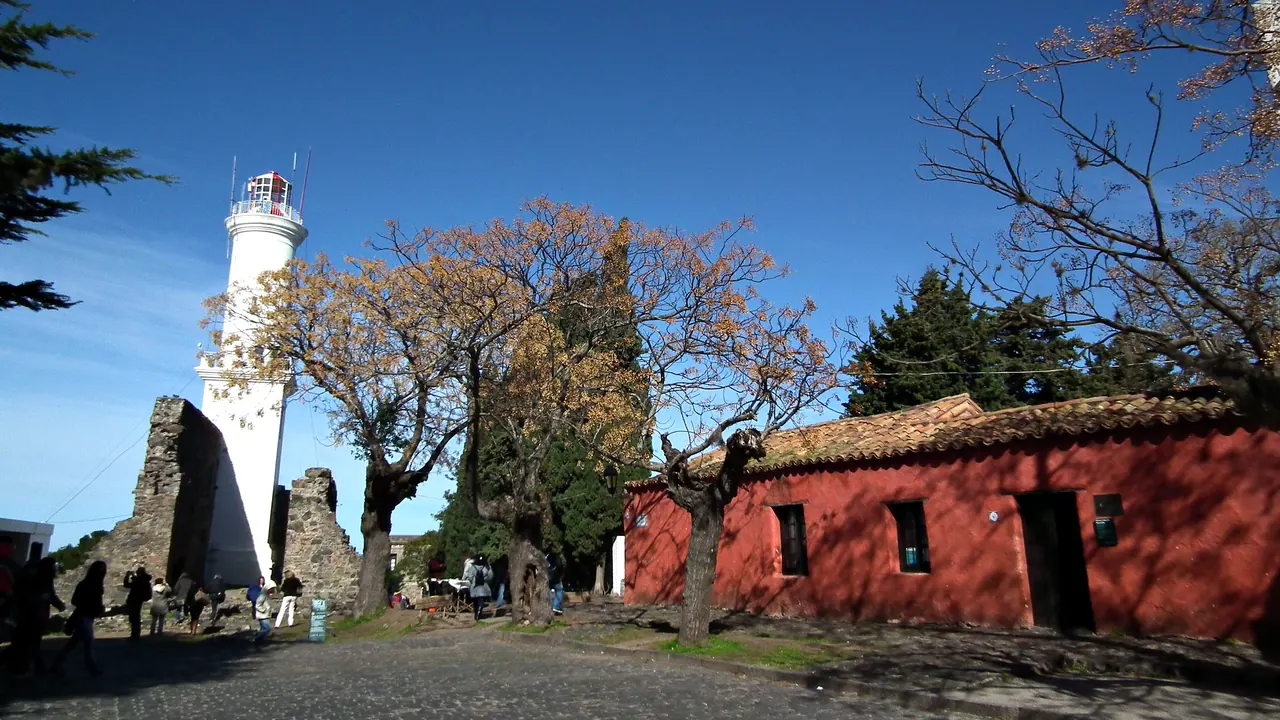
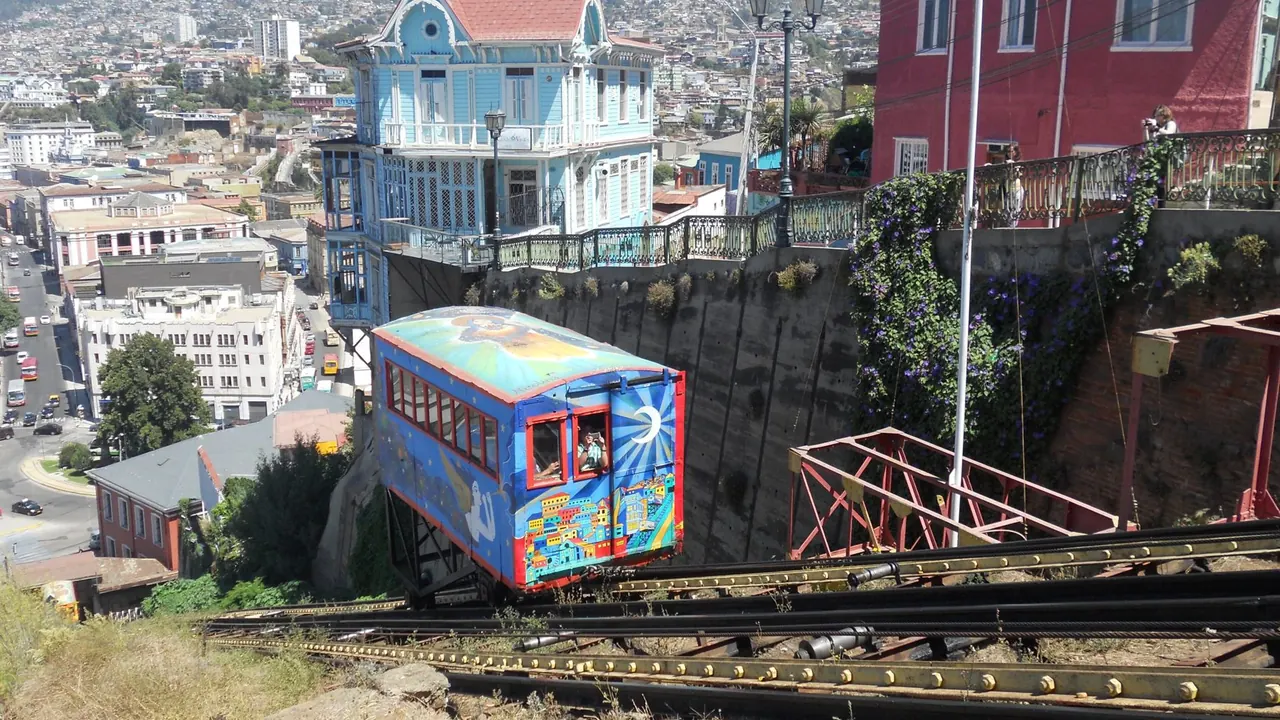
Photos: Colonia del Sacramento by Fulviusbsas, CC BY-SA 3.0, cropped; Valparaiso by Maclemo, CC BY-SA 3.0, cropped.
Colonia del Sacramento or Valparaiso?
Our verdict in twelve categories, each scored against the same fixed benchmark cities, and the climate month by month, so you can choose for your trip.
Choose Colonia del Sacramento for
- wellness
- getting around
- families
Colonia del Sacramento suits a slow, short trip: a night or two in a small colonial town where the cobbled lanes are all a short walk apart, dinner comes with a sunset over the river, and the quiet after the day-trippers leave is the point. It is the easier choice with young children or for simply unwinding. Buenos Aires is an hour across the water, so you can add a big-city day without changing hotels.
Choose Valparaiso for
- nightlife
- nature and the outdoors
- live music and the arts
Travellers who want more going on will do better in Valparaíso. The painted hills, funiculars and Neruda's house give it the richer sightseeing, while the port cooking and the bars from Cerro Alegre down to the lower town give it real evenings. On the Pacific coast there are cliff walks, sea lions and penguin islets. It is harder on the legs, but it costs less day to day.
Scoreboard
Twelve categories on one fixed scale from 0 to 100. The shaded stretch is the gap between the two.
Your match
Pick a travel style or drag the sliders, and both match scores follow your weighting.
Wins on wellness and getting around with your weighting.
Wins on nightlife and nature and the outdoors with your weighting.
What matters to you?
Category by category
What the scores mean for a trip.
Beaches & swimming
Neither city is a beach destination, and the difference is in kind. Colonia's sandy river beaches start at the edge of the old town, and the Río de la Plata is warm enough for a long wade in midsummer. But the water is brown and still, and algae can make swimming unwise in hot spells.
Valparaíso's sand is a train ride away in Viña del Mar, Reñaca and Concón. These are proper ocean beaches with waves and clear water, but the Humboldt Current keeps the sea so cold that most people only take a quick dip. For warm, calm paddling choose Colonia; for surf and open sea choose the Chilean coast.
Food & drink
Valparaíso has the more interesting food. It has dishes of its own: fish straight from the coves at Caleta Portales, conger eel soup, machas and the shared chorrillana of the port bars. The restaurants on Cerros Alegre and Concepción add more ambitious Chilean cooking with Casablanca Valley whites.
Colonia's range is narrower: grills, chivitos and pasta served in courtyards under the plane trees, many of them aimed at day-trippers. Its strength is the Tannat from the vineyards around Carmelo, and dinner by the river at sunset is a pleasure even if the food is not the reason to come.
Culture & sights
Both have a UNESCO-listed historic quarter, but Valparaíso gives you more to explore. Its hills of painted corrugated-iron houses, the 19th-century funiculars, the merchant banks of the old port, Neruda's La Sebastiana and the Open Air Museum murals fill two or three days of wandering.
Colonia's Barrio Histórico is smaller and more unified. Its Portuguese and Spanish colonial lanes, the Calle de los Suspiros, the lighthouse over the convent ruins and a cluster of small museums are easy to see in a single day.
Nightlife
This is where the two differ most. An evening in Colonia means dinner, wine and the sunset, perhaps a last drink in a small pub, and the town is asleep long before late. Anyone who wants a real night out takes the ferry to Buenos Aires.
Valparaíso has a student-driven scene. It moves from cocktail bars on the hills down to the port bars and the clubs around Subida Ecuador, where people stay out until dawn at weekends, and Viña del Mar adds clubs and a casino. It is rough around the edges, so taking taxis between areas late at night is sensible.
Nature & outdoors
Valparaíso sits on a far more varied coast. There are cliff walks towards Laguna Verde and Quintay, the Concón dunes, surf at Ritoque, sea lions in the bay and Humboldt penguins off Cachagua. Darwin's summit hike in La Campana National Park adds a mountain day, so an active traveller can stay busy for several days.
Colonia's landscape is flat river shore and cattle pasture. The riverside rambla is lovely for a sunset cycle and calm days allow some kayaking, but there are no hills or wildlife sites to head for.
Day trips
Colonia has the most striking single outing: Buenos Aires, about an hour away by fast ferry, with one joint passport check per crossing. Beyond that the trips are gentle ones: the family wineries of Carmelo, Swiss-founded Nueva Helvecia and the British-built core of Conchillas.
Valparaíso's list is longer and more varied. Viña del Mar is on the doorstep, Santiago makes a full day by bus and the Casablanca wineries are under an hour inland. Along the coast there are Neruda's house at Isla Negra, the old whaling cove of Quintay and the villas of Zapallar, enough for several days without repeating yourself.
Good for families
Colonia is the easier place with children. It is small, calm and safe, and riding golf carts or bikes along the river, paddling in shallow summer water and climbing the lighthouse keep most children happy, though the cobbles are hard work with a pushchair.
Valparaíso has its treats in the funiculars, the harbour boat trips and the murals. But the constant stairs, broken pavements, traffic and street dogs wear families out, which is why many stay in Viña del Mar, with its beaches and summer fun fair, and visit for the day.
Getting around
Getting around Colonia is much simpler. The old town is tiny, the ferry and bus terminals are a few minutes' walk away, and a bike or golf cart on the flat riverside road reaches the beaches and Real de San Carlos. The only real nuisances are the rough cobbles and wineries too far out to reach without a car.
In Valparaíso every neighbourhood sits up a hill, so you rely on funiculars that do not always run, buses and shared colectivos. The trolleybuses in the flat lower town and the coastal train to Viña del Mar are useful and you need no car, but expect a lot of climbing.
Shopping & style
Neither city is a shopping destination, and both are about crafts rather than fashion. Valparaíso has a little more to browse: galleries and studios on Cerros Alegre and Concepción selling prints, ceramics and lapis lazuli, and a weekend antiques market near Plaza O'Higgins for old maps and nautical oddments. Colonia's craft shops and seasonal stalls are best for leather, wool and a mate gourd with a silver bombilla.
Affordability
Valparaíso is the cheaper base. Guesthouses in the lower town and quieter hills, set lunches at the picadas and almost free buses, colectivos and funiculars keep daily spending low. The stairways, murals and viewpoints cost nothing, and only the polished hilltops charge international prices.
Colonia's old town prices itself for visitors, with hotels and restaurants costing about what a Southern European resort would, and weekends push room rates up further. Staying a few streets out and drinking the local wine helps.
Live music & performing arts
Valparaíso has a living music culture that Colonia lacks. Cueca porteña, boleros and old waltzes in the traditional bars and street musicians on the cerros give you something to hear on most nights. The Teatro Municipal and the arts centre in the old prison add formal performances, and Viña del Mar's song festival each February is a national event.
Colonia has occasional concerts in its restored riverside bastion and the odd guitarist or tango set over dinner in summer. For proper theatre or a tango show, you take the ferry to Buenos Aires.
Wellness & relaxation
Colonia is the place to unwind. Once the day-trippers leave the old town goes quiet, and slow lunches, siestas and riverside rides set the pace. A few hotel spas and countryside winery stays add pools and treatments, though there is no bathing tradition.
Valparaíso is noisy, steep and gritty, and its spa offer is a few massage rooms, with larger hotel spas over in Viña del Mar. Rest there means a slow morning on a terrace above the bay or a cliff-top promenade watching the ships.
When should you go?
Pick your month. The climate figures are measured averages, not a forecast.
Colonia del Sacramento in July
Valparaiso in July
Daytime high, °C
Rainfall in the month, mm
Where the figures come from
Valparaiso has no rain gauge within 25 km of the centre, so its rainfall comes from a gridded climate dataset read at the city rather than from a gauge further away.
Temperature and rainfall are climate normals, averaged over the years shown. Colonia del Sacramento: 1991-2020 (sunshine 1961-1990) normals, Colonia (2.4 km from centre). Valparaiso: 2010-2025 (rainfall 1991-2020) normals, Viña Del Mar / Montemar (17 km from centre).
Colonia has a proper hot summer. From December to March it is warm enough for the river beaches, January reaches 29°C and the water is around 25°C, the closest thing to a warm swim in either city. Rain falls in good amounts all year, most heavily in late summer and spring, so expect the odd stormy afternoon. Winter is cool and greyer. The most comfortable time for walking the old town is October and November, which are warm and sunny without the midsummer heat.
Valparaíso's year is gentler and more predictable. Summer highs stay around 22°C and November to March is almost rainless, which is ideal for climbing the cerros, though the sea never gets much past 17°C. The rain comes in winter, with June the wettest month at around 120mm. Spring turns the hills green, so September to November is another good time to go.
Which traveller are you?
For a relaxing and wellness trip, Colonia is the better choice. The old town goes quiet once the day-trippers leave, and slow riverside cycling, winery stays with pools and sunsets over the water make an easy retreat. Valparaíso's steep, noisy streets rarely let you switch off.
On a family trip with young children, Colonia is easier. Short, flat distances, little traffic, shallow warm water for paddling and golf carts along the river suit small legs. In Valparaíso, endless stairs, broken pavements and street dogs make every outing hard work.
For a food and nightlife trip, Valparaíso is clearly ahead. It has seafood from the fishermen's coves, chorrillanas in old port bars, cueca in traditional taverns and clubs that stay open until dawn at weekends. In Colonia, the night ends after dinner and a glass of Tannat.
Before you go
| Measure | Colonia del Sacramento | Valparaiso |
|---|---|---|
| Official language | - | Spanish |
| Currency | Peso Uruguayo (UYU) | Chilean Peso (CLP) |
| Sockets | CFIL230 V, 50 Hz | CL220 V, 50 Hz |
| Driving side | Right | Right |
| Time zone | UTC-3 | UTC-4, UTC-3 in summer |
| Emergency number | 911 | Police 133/134, ambulance 131, fire 132 |
| Elevation | 27 m | 21 m |
| Main airport | Carrasco General Cesáreo L. Berisso International Airport (MVD)171 km from centre15 non-stop destinations | Comodoro Arturo Merino Benítez International Airport (SCL)87 km from centre67 non-stop destinations |
| Public holidays this year | 15 days | 16 days |
By the numbers
| Measure | Colonia del Sacramento | Valparaiso |
|---|---|---|
| City population | 31,720 | 296,655 |
| People per km² | 1,385 | 6,180 |
| Museums within 10 km | 7 | 17 |
| UNESCO World Heritage sites within 50 km | 2 | 1 |
| Swim season, months above 21 °C | 4 months | None |
Where else could you go?
Every comparison below shares a destination with this one, so you can follow Colonia del Sacramento or Valparaiso somewhere new.
- Vina del Marvs Valparaiso
- Buenos Airesvs Colonia del Sacramento
- Santiagovs Valparaiso
- Montevideovs Colonia del Sacramento
- Mendozavs Valparaiso
- Punta del Estevs Colonia del Sacramento