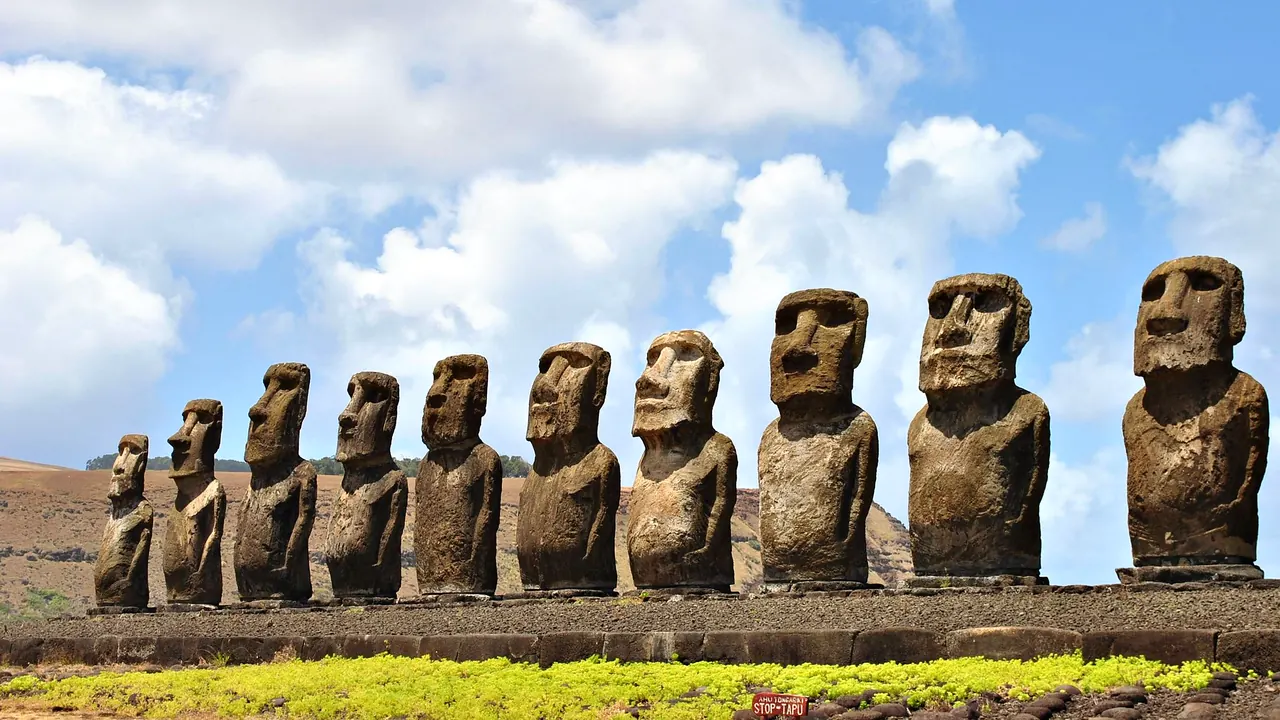
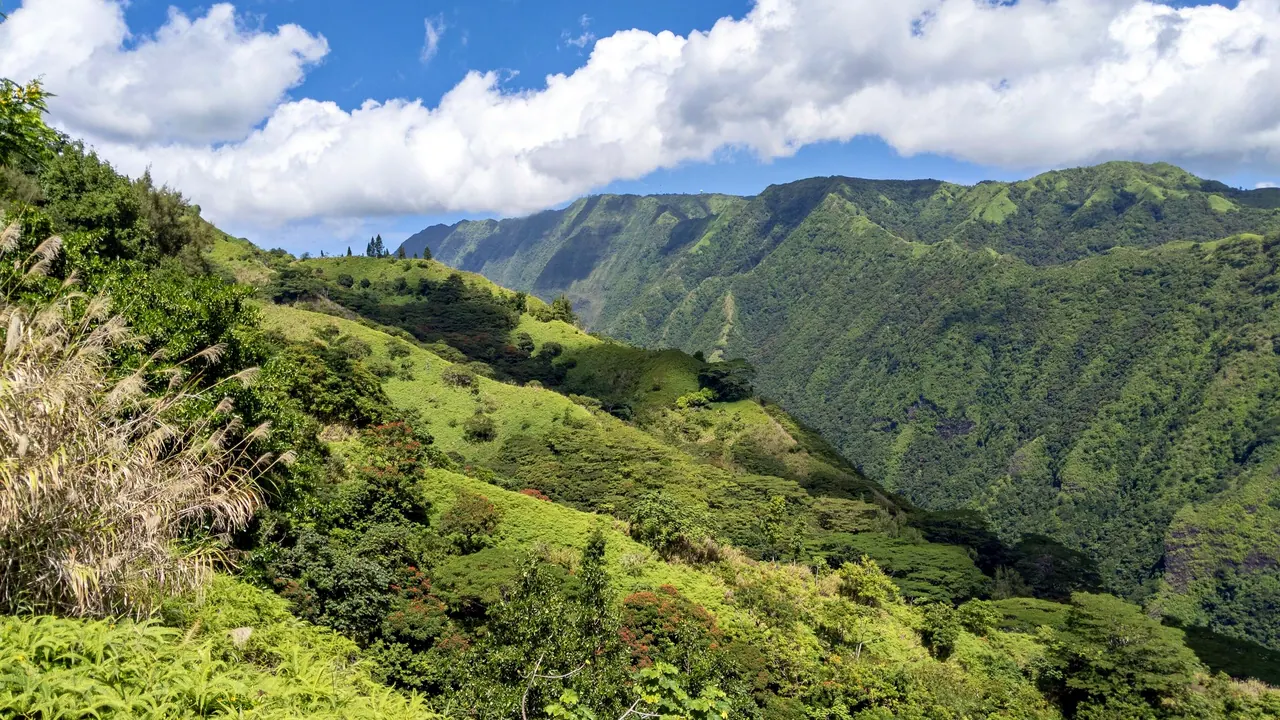
Photos: Easter Island by Vanessa.blasco, CC BY-SA 3.0, cropped; Tahiti by Matthew Dillon from Hollywood, CA, USA, CC BY 2.0, cropped.
Easter Island or Tahiti?
Our verdict in twelve categories, each scored against the same fixed benchmark cities, and the climate month by month, so you can choose for your trip.
Choose Easter Island for
- culture and sights
- getting around
- prices
Easter Island is for the traveller who wants to stand among the moai and understand them. The whole island is an archaeological landscape, from the quarry at Rano Raraku to the birdman village at Orongo, and it suits four or five unhurried days of site visits, early starts and quiet evenings. In exchange you give up good beaches, varied food and any trips off the island.
Choose Tahiti for
- day trips
- nature and the outdoors
- food and drink
Choose Tahiti for a tropical island trip built around warm water and steep green mountains. The lagoons are calm enough to swim in all year, the interior has rainforest valleys and ridge hikes, and Moorea is a short ferry ride away for whiter sand. There is less history to see, and the museum and the marae fill a day or two at most.
Scoreboard
Twelve categories on one fixed scale from 0 to 100. The shaded stretch is the gap between the two.
Your match
Pick a travel style or drag the sliders, and both match scores follow your weighting.
Wins on culture and sights and getting around with your weighting.
Wins on day trips and nature and the outdoors with your weighting.
What matters to you?
Category by category
What the scores mean for a trip.
Beaches & swimming
On Easter Island, beach time means Anakena and Ovahe on the north coast, about half an hour from town. Both have pale coral sand, with moai standing behind the bathers at Anakena. The rest of the shore is lava rock facing open swell, and the water cools to about 20°C in winter.
Tahiti is better for swimming. Its lagoon stays warm all year and is calm inside the reef, though the island's own sand is modest: black on the east and north coasts, paler around Punaauia. Many visitors spend their beach days on Moorea, which is better than either.
Food & drink
Neither island is a food trip, but you eat noticeably better on Tahiti. Polynesian, French and Chinese cooking all meet there, giving you poisson cru, village bakeries and the roulottes at Place Vaiete, where dinner at shared tables is also the island's social evening.
Easter Island has much less to offer. The tuna is good, as ceviche or in empanadas, and you may get an umu feast if a gathering falls during your stay. Otherwise the menus along Hanga Roa's main street start to repeat themselves within the week.
Culture & sights
Culture is the main reason to go to Easter Island. Ahu Tongariki's fifteen moai, the half-carved figures on the slope of Rano Raraku and the birdman village of Orongo turn the national park into a place to explore for days, and the museum in Hanga Roa explains the background.
Tahiti's heritage is real but thinner. It has the Musée de Tahiti et des Îles at Punaauia, forest marae such as Arahurahu, and Pointe Venus, where Cook observed the transit of Venus in 1769. Papeete adds little, and a day or two covers it all.
Nightlife
An evening in Hanga Roa usually ends early. You might have a pisco sour at one of the few bars on the main street or by the harbour, watch the sun go down at Tahai and go to bed before a dawn start at the moai. There is some dancing at weekends, but the crowd is mostly islanders.
Papeete gives you more choice, though it still isn't a reason to go. On Friday and Saturday nights its waterfront bars and clubs fill with locals and sailors from the harbour. Away from town, evenings on Tahiti end at the hotel bar.
Nature & outdoors
Tahiti is the wilder and greener island. Its interior rises to jagged ridges above 2,000m, with rainforest valleys and waterfalls, and hikes such as the Fautaua valley and Mount Aorai. Offshore there is the famous wave at Teahupo'o, sharks and rays in the reef passes, and humpback whales from July to October.
Easter Island is a completely different landscape of open grassland, few trees and three volcanoes. The walk to the crater lake of Rano Kau and the view from Terevaka stay with you, and the island's isolation makes the water unusually clear for diving. What it offers is space and light rather than variety.
Day trips
Easter Island has no day trips in the usual sense. The nearest inhabited land is over 2,000km away, so every outing is to one of the island's own sites.
Tahiti has a proper one in Moorea, half an hour away by ferry and easy to tour by car in a day. There is also the drive around Tahiti Iti to Teahupo'o, and boat trips to Tetiaroa. Bora Bora and Huahine are short flights away, but they work better as stays of their own.
Good for families
Both islands are safe and friendly to families, and neither has anything built for children, but Tahiti gives a family more to do. The warm, calm lagoons are good for first snorkels, older children have waterfalls, outrigger canoes and whale-watching boats, and a resort with a pool makes an easy base.
Easter Island works mainly for older children who are curious about the moai and will be thrilled by them. Younger ones have the sand at Anakena, but otherwise face long drives, exposed walks on the volcanoes and little shade at the sites.
Getting around
Easter Island is easier to get around because it is so small. It is only about 24km across, you can walk Hanga Roa from one end to the other, and every site is a short drive away on quiet roads, the main ones paved. There are no buses, so you need a hire car, scooter, bike, taxi or tour.
On Tahiti you also need a car, because the buses on the coast road are of little use to visitors and rush-hour traffic into Papeete is slow. The mountainous interior can only be reached on foot or by four-wheel drive. Going further means the ferry to Moorea or a domestic flight from Faa'a.
Shopping & style
Tahiti has one thing really worth buying: black pearls, which you can compare across Papeete's jewellers. The handicraft floor of the Marché de Papeete adds pareos, vanilla and monoi oil scented with tiare. Easter Island's shopping is limited to the artisans' market and souvenir shops of Hanga Roa, where carving in toromiro and other woods is the piece to look for.
Affordability
Both islands are expensive, and for the same reason: almost everything arrives by ship or plane. On Tahiti, everyday costs run above European levels and the west-coast resorts cost far more again. Pensions and meals at the roulottes are the ways to soften the bill.
On Easter Island the costs build up through the park fee, car hire and guided tours, and there is little cheap accommodation between simple guesthouses and expensive lodges. Self-catering and sharing a hire car help.
Live music & performing arts
The two islands are on much the same footing here. Both offer Polynesian dance and drumming, and neither has any real theatre, opera or classical music. The difference is how you come across it. In Hanga Roa, island troupes dance on most evenings in the town itself, and on a Sunday morning you can simply join the congregation at Holy Cross to hear them sing. On Tahiti, outside festival time, you mostly see ori Tahiti as part of a hotel dinner, with an occasional concert at the Maison de la Culture in Papeete.
The big festivals fall at opposite ends of the year. Tapati Rapa Nui takes up late January and February, during Easter Island's warm, sunny season. The Heiva i Tahiti fills several weeks in Papeete in July, when Tahiti is at its driest. If dance matters to your trip, the month you travel will make more difference than the island you choose.
Wellness & relaxation
The two islands offer different kinds of rest. Tahiti has the treatments: taurumi massage with warm monoi oil in the lagoon-facing spas of the west-coast hotels around Punaauia. The busy road there means real quiet is found on Tahiti Iti and the east coast.
Easter Island has little beyond the spas of a few upmarket lodges, but it is calmer: one small town, empty roads and long, dark nights under the stars. It is a good place to switch off between site visits.
When should you go?
Pick your month. The climate figures are measured averages, not a forecast.
Easter Island in July
Tahiti in July
Daytime high, °C
Rainfall in the month, mm
Temperature and rainfall are climate normals, averaged over the years shown. Easter Island: 1991-2020 normals, Isla De Pascua (1.3 km from centre). Tahiti: 1991-2020 normals, Tahiti-Faaa (5.3 km from centre).
Easter Island has a mild subtropical climate rather than a tropical one. Around Hanga Roa, January to March is the time for Anakena, with highs of about 26°C, the sea at its warmest and the longest sunny days. From April the rain picks up and the winter months turn cool, around 21°C, with the sea near 20°C. Only keen swimmers go in then, but it is comfortable weather for walking between the sites.
Tahiti is hot all year, around 30°C near Papeete, and the sea is warm enough to swim in every month. What changes is the rain. December to February is the wet season, with heavy downpours, while June to September is dry and sunnier and the best time for hiking. The two islands are at their best at opposite times of year: Easter Island in the southern summer, Tahiti in the southern winter.
Which traveller are you?
On a culture and arts trip, Easter Island is the clear choice. Close to a thousand moai, the quarry at Rano Raraku and the petroglyphs at Orongo make the whole island one archaeological site, while Tahiti's heritage fits into a museum visit and a few marae.
For a beach and sun trip, Tahiti wins on the water. Its lagoons are warm and calm all year and good for swimming and snorkelling, and Moorea's white sand is half an hour away. Easter Island has Anakena and Ovahe, and almost nothing else.
On an outdoors trip, Tahiti offers much more: rainforest valleys, waterfalls, the ridge climb to Mount Aorai, surf at Teahupo'o and whale-watching in season. Easter Island has rewarding volcano walks and very clear water for diving, but its landscape is small and bare.
Before you go
| Measure | Easter Island | Tahiti |
|---|---|---|
| Official language | Spanish | French |
| Currency | Chilean Peso (CLP) | CFP Franc (XPF) |
| Sockets | CL220 V, 50 Hz | - |
| Driving side | Right | Right |
| Time zone | UTC-6, UTC-5 in summer | UTC-10 |
| Emergency number | Police 133/134, ambulance 131, fire 132 | 112 |
| Main airport | Mataveri International Airport (IPC)1 non-stop destination | Fa'a'ā International Airport (PPT)30 non-stop destinations |
| Public holidays this year | 16 days | 16 days |
By the numbers
| Measure | Easter Island | Tahiti |
|---|---|---|
| Population | 4,800 | 178,133 |
| People per km² | 29 | 171 |
| Swim season, months above 21 °C | 8 months | 12 months |
Where else could you go?
Every comparison below shares a destination with this one, so you can follow Easter Island or Tahiti somewhere new.
- Mooreavs Tahiti
- Bora Boravs Tahiti
- Cook Islandsvs Tahiti
- American Samoavs Tahiti
- Galápagosvs Easter Island
- New Caledoniavs Tahiti